HelloGrowthCRM software
Built for real small-business sales teams
HelloGrowthCRM helps reps qualify faster, follow up on time, and close more deals—with practical automation in one place.
- AI lead scoring and pipeline visibility
- Built-in dialer, WhatsApp, and email automation
- Sales forecasting and RevOps-ready reporting
B2B customer segmentation means dividing your business customers into groups based on common characteristics such as industry, company size, purchase behavior, or needs. This helps you focus your sales and marketing efforts on the right customers with tailored messages and services, improving efficiency and results.
Why this comes up / what goes wrong
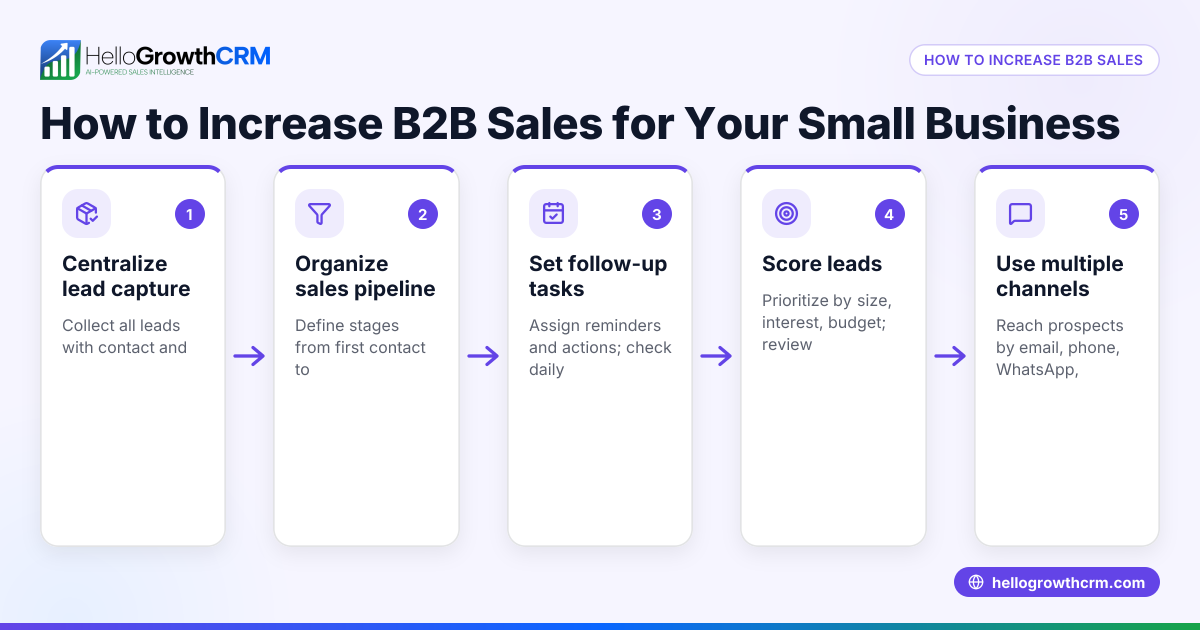
Small and mid-sized business owners often face challenges managing a diverse range of B2B customers. Without proper segmentation, sales teams treat all customers the same, leading to slow follow-up and lost deals. For example, a software reseller might spend equal time on small startups and large enterprises without adjusting their approach. This wastes time and lowers conversion rates. Segmentation helps prioritize leads and customize communication, which is crucial when sales rely on text messages, email, and spreadsheets without a unified system.
Step-by-step
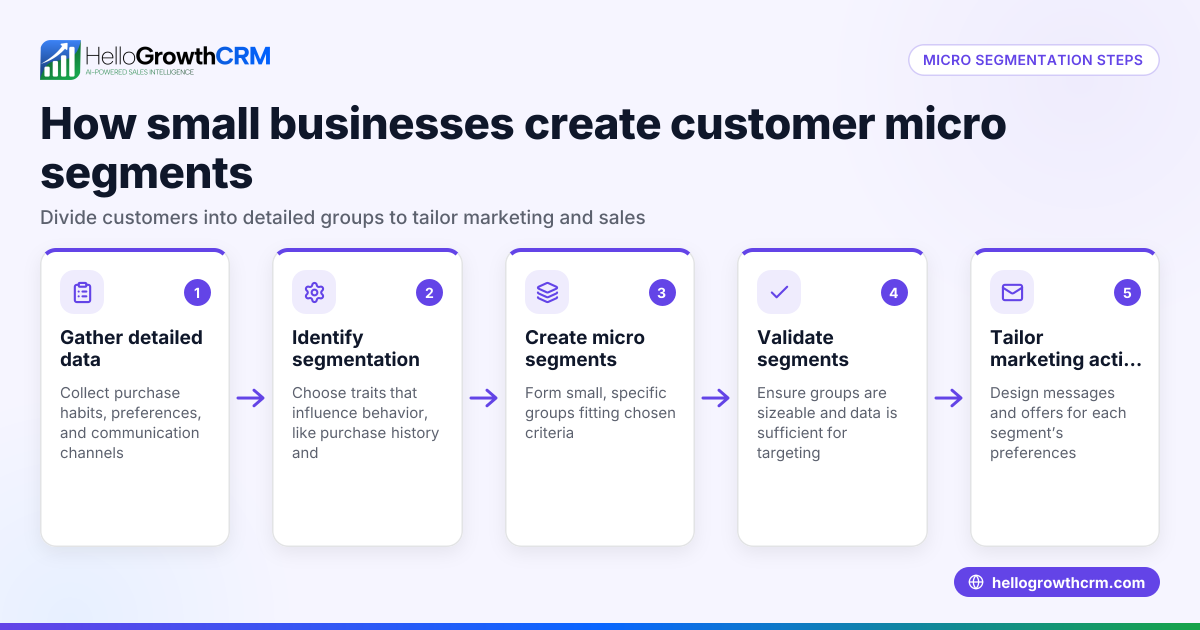
- Collect Customer Data: Gather details such as industry, company size, location, purchase history, and communication preferences. Make sure your data is accurate and current.
- Identify Segmentation Criteria: Choose factors most relevant to your business. Common B2B criteria include:
- Industry or sector
- Company size (revenue or employee count)
- Purchase frequency or volume
- Customer needs or challenges
- Group Customers: Create segments by grouping customers who share these criteria. For example, separate mid-sized tech companies from large manufacturing firms.
- Analyze Segments: Evaluate each segment’s potential value, buying behavior, and challenges. Check which segments respond better to your sales efforts.
- Tailor Sales and Marketing: Develop messaging, offers, and follow-up processes specific to each segment. For instance, use technical details for engineering firms and cost-saving benefits for startups.
- Monitor and Adjust: Track sales performance by segment and refine your criteria and approaches regularly. Use tools like a customer health score to prioritize follow-up.
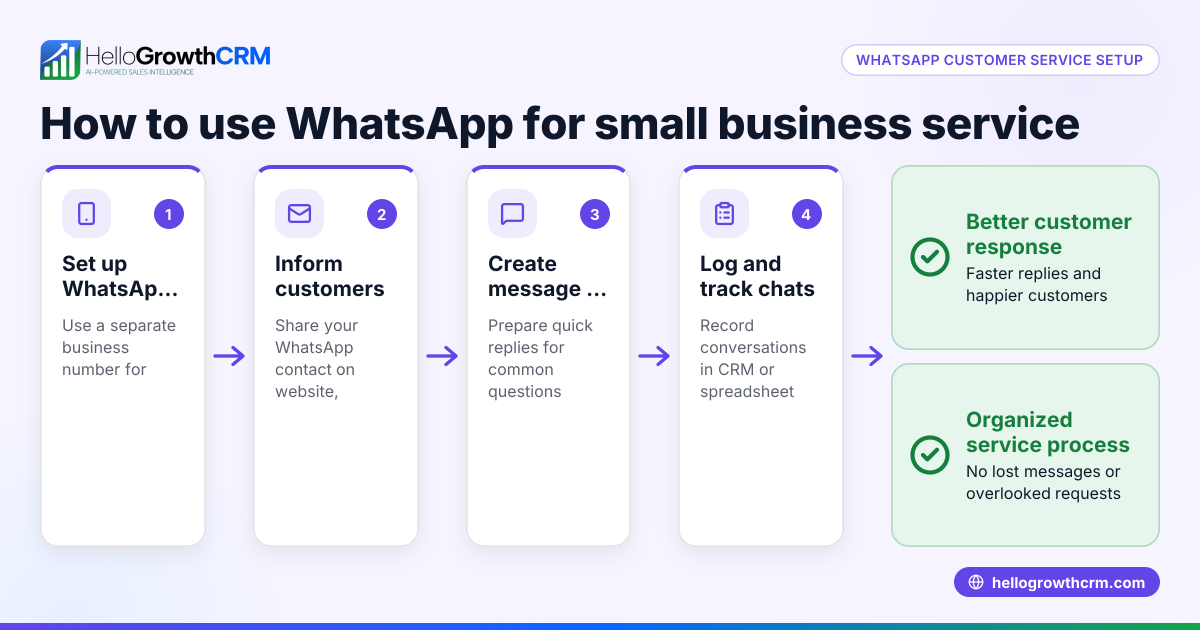
- Integrate Communication Tools: Avoid managing segments in disconnected spreadsheets or messaging apps. Use CRM features like WhatsApp and SMS CRM to speed up communication and keep all customer interactions in one place.
Example (fictional figures)
A B2B software reseller in Denver, Colorado, analyzes its customer segments for the quarter ending 06/30/2026.
- Total customers: 100
- Segmentation criteria: company size (small: <50 employees, medium: 50-200 employees)
Customer distribution:
- Small companies: 60 customers
- Medium companies: 40 customers
Average quarterly revenue:
- Small companies: $1,000 each
- Medium companies: $5,000 each
Calculate total revenue by segment:
Small companies revenue = 60 × $1,000 = $60,000 Medium companies revenue = 40 × $5,000 = $200,000
Total revenue = $60,000 + $200,000 = $260,000
This shows medium companies, though fewer in number, contribute more revenue. The reseller decides to focus more sales efforts on medium companies with tailored messaging.
Common mistakes
- Ignoring data quality: Using outdated or incomplete data leads to poor segmentation. Prevent this by regularly updating and verifying customer information.
- Using too many segments: Over-segmentation complicates management and dilutes efforts. Limit segments to a manageable number based on clear criteria.
- Not aligning segments to sales strategy: Segments must inform how you approach customers. Avoid creating groups without actionable differences.
- Neglecting to review segments: Markets and customers change. Schedule regular reviews to adjust segmentation.
- Failing to integrate segmentation with tools: Using separate spreadsheets or messaging apps without integration causes slow follow-up. Use CRM features like WhatsApp and SMS CRM to streamline communication.
Doing this in HelloGrowthCRM
HelloGrowthCRM helps you manage B2B customer segmentation by keeping all customer information, service requests, and sales deals on the same record. After the sale, support tickets and knowledge base articles stay linked to the customer record, simplifying ongoing relationship management. Referral program tracking and a branded self-service customer portal also help you engage each segment effectively. Learn more about these features in HelloGrowthCRM for the United States at hellogrowthcrm.com/usa.
Frequently asked questions
What is the best way to segment B2B customers? The best way depends on your business but typically includes industry, company size, and purchase behavior. Start with the data you have and focus on segments that impact sales results.
How often should I update my customer segments? Review and update segments quarterly or when you notice changes in customer behavior or market conditions. Frequent updates keep your sales efforts relevant.
Can I automate B2B customer segmentation? Automation is possible with CRM tools that score leads and classify customers based on data. However, manual review ensures segments remain meaningful and actionable.
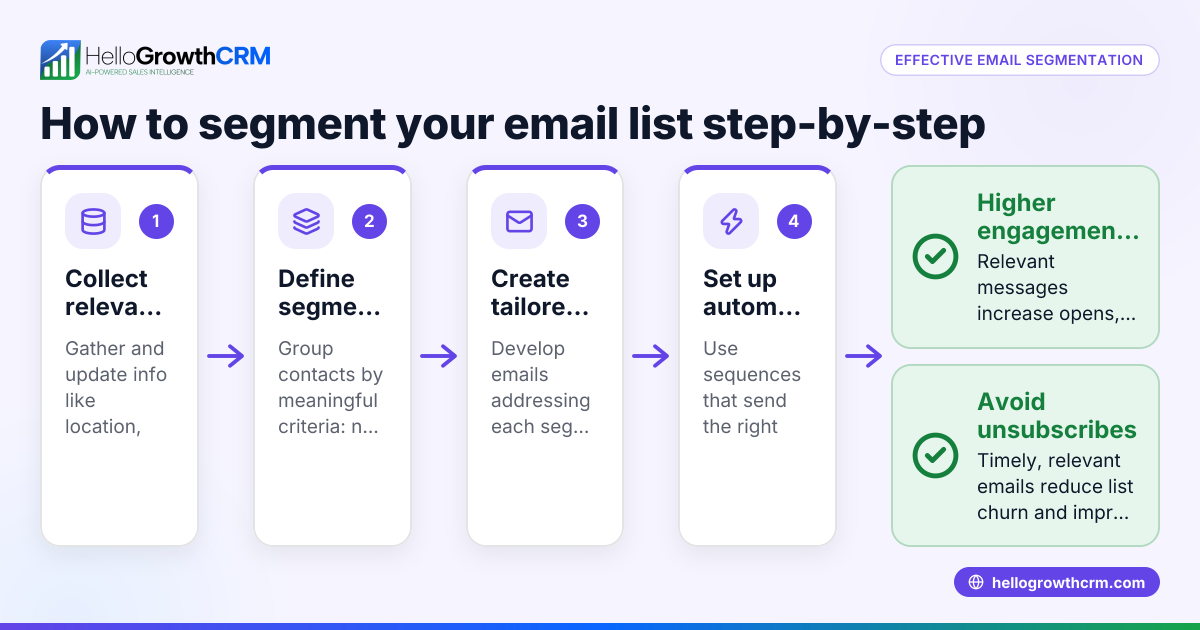
How does segmentation improve sales follow-up? Segmentation lets you prioritize leads and customize communication, reducing slow follow-up. Using CRM features like WhatsApp and SMS integration can speed up outreach and keep conversations organized.
Is customer segmentation only for marketing teams? No, segmentation benefits sales, customer service, and product teams by providing insights to tailor their approach and improve the overall customer experience.
Key takeaways
- B2B customer segmentation divides customers into groups based on shared traits to improve targeting.
- Start by collecting accurate data and choosing relevant segmentation criteria.
- Limit segments to those that directly impact sales and marketing actions.
- Regularly review and adjust segments to reflect changing customer needs.
- Integrate communication with CRM features like WhatsApp and SMS CRM to avoid slow follow-up.
- HelloGrowthCRM keeps customer service and sales data unified for better relationship management.
Start segmenting your B2B customers today to boost sales efficiency and customer satisfaction. You can Start on the Free Forever plan (200 leads, no credit card) and see how HelloGrowthCRM supports your segmentation and sales follow-up.
Ready to put this into practice?
Set up your pipeline, WhatsApp follow-ups, and AI lead scoring in minutes — free, no credit card.
Try HelloGrowthCRM freeGet CRM tips in your inbox
Join thousands of sales professionals who get weekly insights on CRM strategy, AI automation, and pipeline optimization.

The HelloGrowthCRM team publishes guides on CRM strategy, AI sales tools, and revenue operations for small business sales teams.