HelloGrowthCRM software
Built for real small-business sales teams
HelloGrowthCRM helps reps qualify faster, follow up on time, and close more deals—with practical automation in one place.
- AI lead scoring and pipeline visibility
- Built-in dialer, WhatsApp, and email automation
- Sales forecasting and RevOps-ready reporting
B2B inside sales means conducting business-to-business sales primarily through remote communication channels instead of in-person visits. This approach allows small and mid-sized businesses to reach more prospects efficiently, manage leads digitally, and close deals faster. The article covers why inside sales is relevant, step-by-step guidance to implement it, a practical example, common pitfalls, and how HelloGrowthCRM can assist.
Why this comes up / what goes wrong
Small business owners often face challenges selling to other businesses because they rely on slow or inconsistent follow-up methods like spreadsheets, text messages, or scattered emails. Without a centralized system, leads get lost or forgotten, and sales cycles drag on. Many founders and sales teams run inside sales without clear processes or tools, leading to missed opportunities and frustrated prospects. Understanding B2B inside sales helps owners organize their sales efforts, speed up follow-up, and increase conversion rates.
Step-by-step
- Define your target business customers and territories
- Identify the industries, company sizes, and geographic areas you want to sell to.
- Check that your sales team understands these segments clearly.
- Set up lead capture and tracking
- Use web forms or integrations to capture leads automatically.
- Record all leads in a central CRM system with contact details and source.
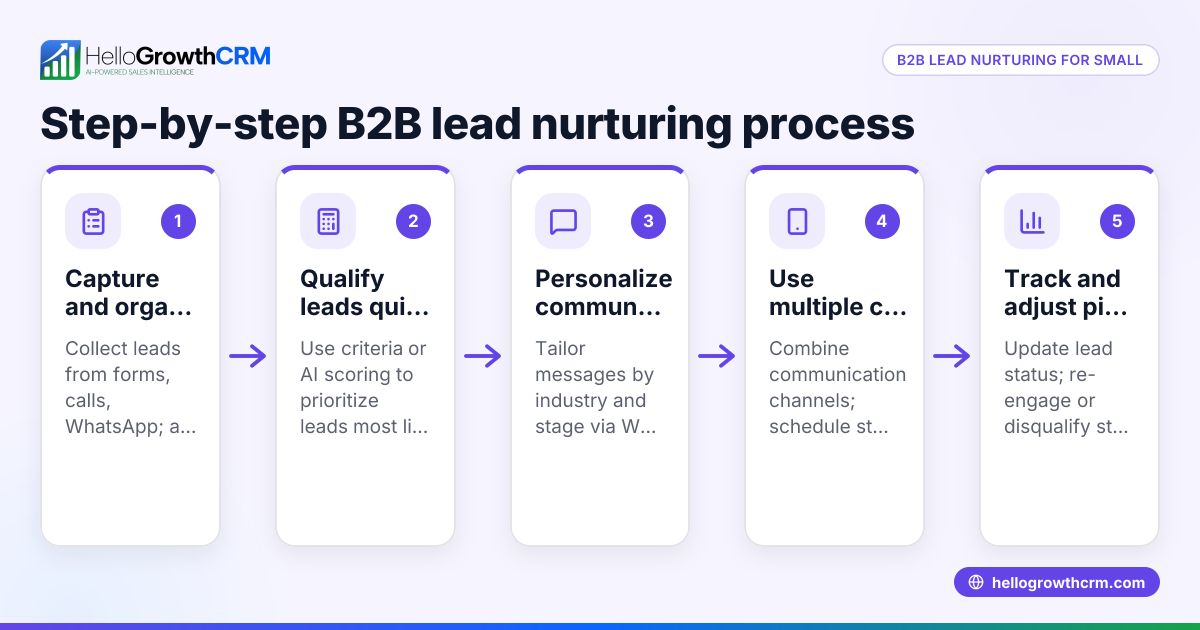
- Qualify and score leads
- Prioritize leads based on fit and interest.
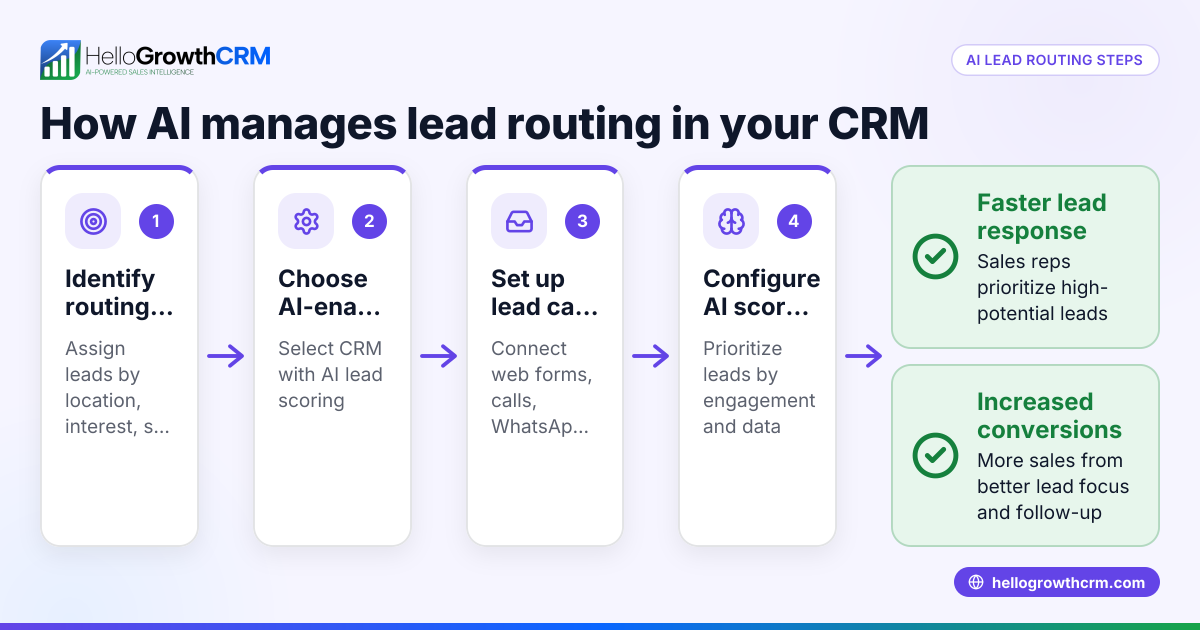
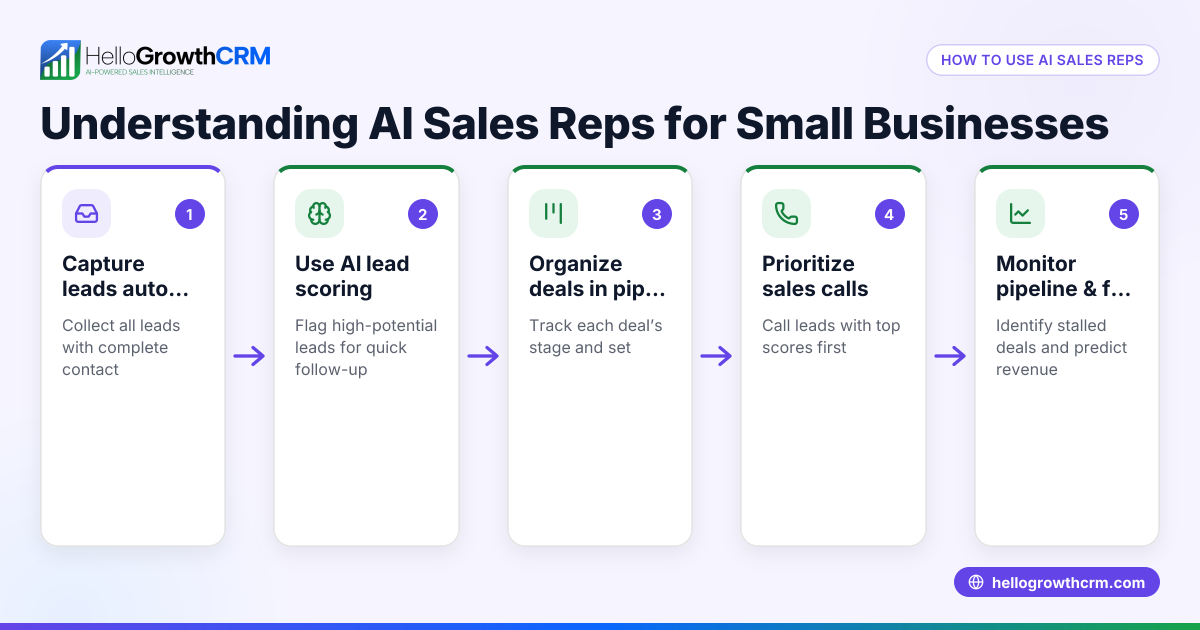
- Use lead scoring to focus on the most promising prospects.
- Plan outreach sequences
- Create email, WhatsApp, and SMS sequences to engage leads.
- Schedule follow-ups and reminders to avoid missed contacts.
- Manage deals through pipeline stages
- Track each opportunity from initial contact to closing.
- Set follow-up dates and update deal status regularly.
- Use a built-in dialer for calls
- Make calls directly from your CRM to save time.
- Log call notes and outcomes immediately.
- Analyze sales performance and forecast
- Review pipeline reports to identify bottlenecks.
- Adjust strategies based on data insights.
- Assign territories and monitor field activities if applicable
- For businesses with field reps, log visits and route plans.
- Managers should review daily activity beats.
- Maintain pipeline hygiene
- Regularly clean up stale deals.
- Ensure follow-ups are done promptly.
- Consider managed revenue operations support
- If no sales manager is available, get someone to work the follow-up queue weekly and keep the pipeline clean.
These steps help small businesses organize inside sales efficiently and avoid losing leads. Tools like HelloGrowthCRM support many of these steps with integrated features.
Example (fictional figures)
A B2B software reseller in Denver, Colorado, wants to improve inside sales for their cloud solutions.
- They capture 100 new leads monthly from their website.
- They score leads and focus on the top 40 leads.
- They send quotes to 25 prospects monthly.
- Their average deal size is $12,000.
- Their close rate from quote sent to won is 40%.
Calculations:
Leads focused on: 100 × 40% = 40
Quotes sent: 25 (subset of focused leads)
Deals won: 25 × 40% = 10
Monthly revenue from deals won: 10 × $12,000 = $120,000
By tracking quotes as deals in the 'quote sent' stage with follow-up dates, they ensure no quote is forgotten. This improves their close rate and revenue predictability.
Common mistakes
- Ignoring lead follow-up
- Prevent by setting reminders and follow-up dates in your CRM pipeline.
- Using multiple disconnected tools for communication and lead tracking
- Prevent by consolidating sales activities in one platform with pipeline management, sequences, and calling features.
- Failing to define sales territories
- Prevent by clearly assigning territories and monitoring field activities if relevant.
- Not prioritizing leads
- Prevent by implementing lead scoring to focus on high-potential prospects.
- Lack of sales pipeline visibility
- Prevent by regularly reviewing and updating deal stages and forecasts.
- No dedicated sales operations support
- Prevent by assigning someone to manage follow-ups and pipeline hygiene if you lack a sales manager.
Doing this in HelloGrowthCRM
HelloGrowthCRM helps small and mid-sized businesses manage B2B inside sales with these features:
- Deals (pipeline): Track all open opportunities from first contact through close. For example, a quotation sent last week appears as a deal at the 'quote sent' stage with a follow-up date, so you never forget to follow up. Learn more about the Deals pipeline.
- Territories, field operations and commissions: Define sales territories, log field visits from mobile devices, and let managers see daily activity beats. This is useful for distributors and businesses with field reps. Details at Territories and field operations.
- Managed RevOps: If you don't have a sales manager, get someone working the follow-up queue every week to keep your pipeline clean and provide weekly KPI reports. More information is available at HelloGrowthCRM for the United States.
These tools help organize your inside sales process, speed up follow-up, and improve sales results.
Frequently asked questions
What is the difference between inside sales and outside sales? Inside sales are remote, done via phone, email, or messaging, while outside sales involve face-to-face meetings. Inside sales is often faster and more scalable for small businesses.
How can I measure success in B2B inside sales? Track metrics like lead response time, conversion rates at each pipeline stage, average deal size, and sales cycle length. Use CRM reports to monitor these regularly.
What tools do I need for effective inside sales? A CRM with lead capture, pipeline management, communication sequences (email, WhatsApp, SMS), and a built-in dialer is ideal. HelloGrowthCRM offers these features. See more on WhatsApp and SMS CRM and the built-in CRM dialer.
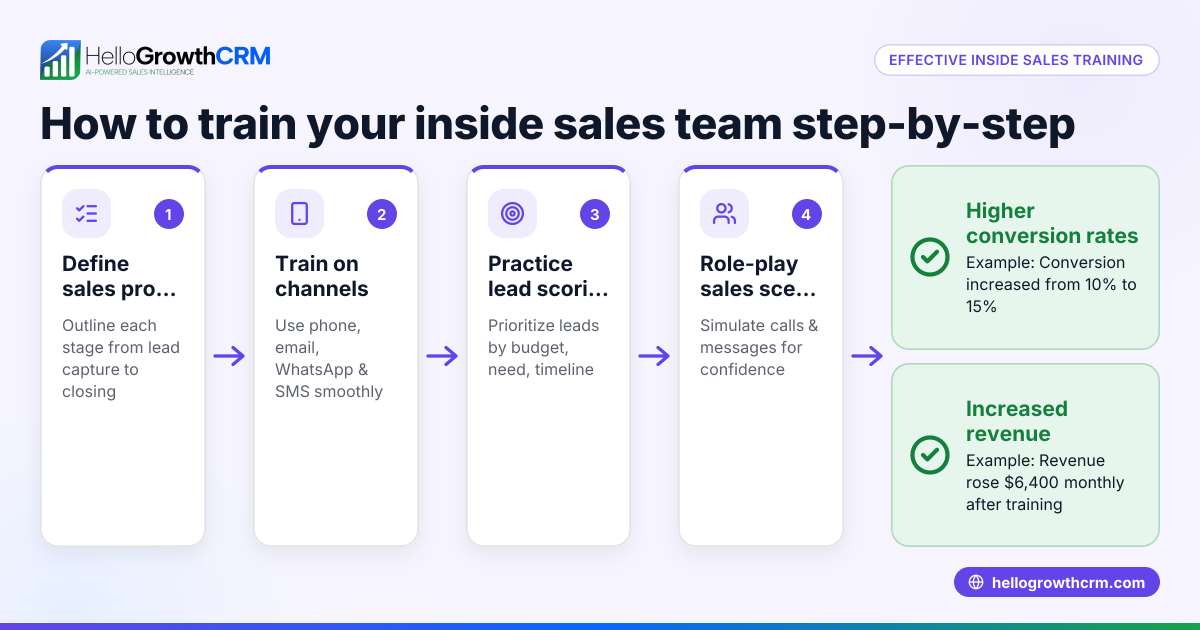
How do I train my team for inside sales? Provide clear scripts, teach CRM usage, emphasize timely follow-up, and review performance data weekly. Use role-playing and feedback sessions.
Can inside sales work for all types of B2B businesses? Most B2B businesses can use inside sales for initial contact and qualification. Complex deals may still require some outside sales, but inside sales is a cost-effective core approach.
Key takeaways
- B2B inside sales means selling remotely to other businesses using digital channels.
- Organize leads, follow-ups, and deals in a CRM pipeline to avoid lost opportunities.
- Define sales territories and use field activity logging if applicable.
- Prioritize leads with scoring and maintain pipeline hygiene.
- Use tools like HelloGrowthCRM to track deals, manage territories, and get managed RevOps support if needed.
- Avoid common mistakes by consolidating tools and ensuring timely follow-up.
Start organizing your B2B inside sales today with HelloGrowthCRM. Start on the Free Forever plan (200 leads, no credit card).
Ready to put this into practice?
Set up your pipeline, WhatsApp follow-ups, and AI lead scoring in minutes — free, no credit card.
Try HelloGrowthCRM freeGet CRM tips in your inbox
Join thousands of sales professionals who get weekly insights on CRM strategy, AI automation, and pipeline optimization.

The HelloGrowthCRM team publishes guides on CRM strategy, AI sales tools, and revenue operations for small business sales teams.