HelloGrowthCRM software
Built for real small-business sales teams
HelloGrowthCRM helps reps qualify faster, follow up on time, and close more deals—with practical automation in one place.
- AI lead scoring and pipeline visibility
- Built-in dialer, WhatsApp, and email automation
- Sales forecasting and RevOps-ready reporting
The challenger sales model is a method where salespeople challenge customers’ thinking by offering fresh insights, customizing their pitch to the customer’s specific situation, and guiding the sales conversation assertively. It contrasts with traditional relationship-based selling by focusing on education and control to differentiate your business.
Why this comes up / what goes wrong
Small-business owners often struggle with slow or ineffective sales follow-up and losing leads because their teams rely on informal tools like text messages, email, or spreadsheets. They may find their sales reps default to passive or reactive selling, missing chances to educate prospects or push deals forward. The challenger sales model comes up as a solution because it helps sales teams engage prospects more proactively and strategically, which is critical for small and mid-sized businesses competing in crowded markets.
Step-by-step
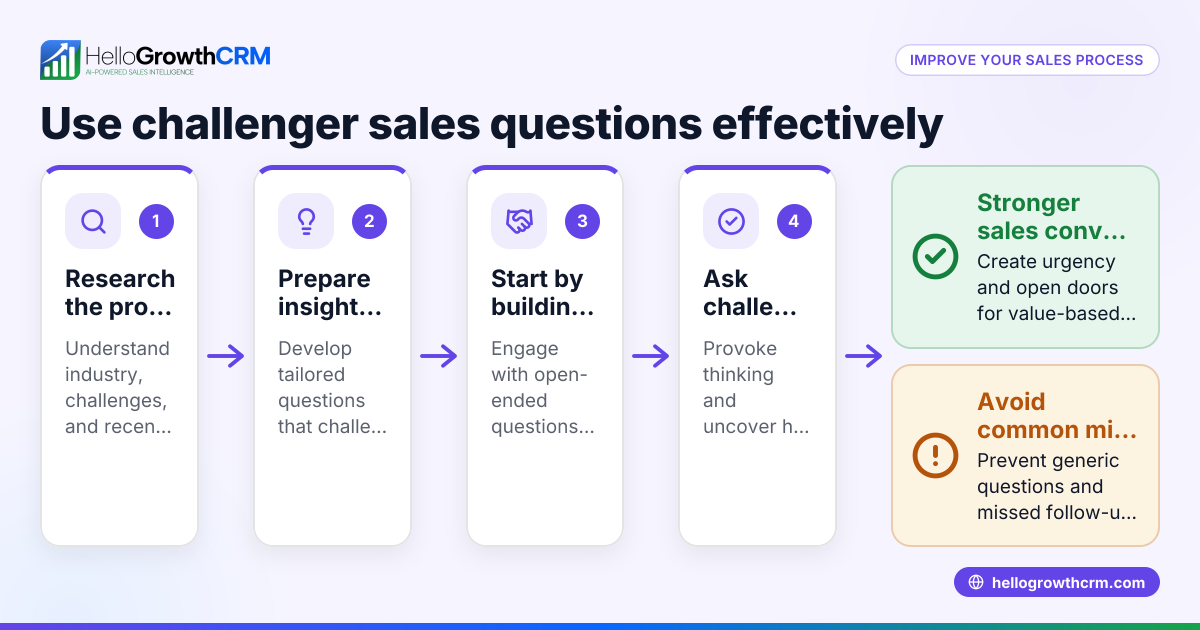
- Research your customer’s industry and challenges. Understand their business, pain points, and goals. Check that your insights are relevant and up-to-date.
- Develop a unique sales insight or perspective. Identify something your customer likely hasn’t considered that can improve their outcomes.
- Tailor your messaging. Customize your pitch to the specific customer’s context, showing how your product or service addresses their unique needs.
- Teach the customer something new. Use your insight to challenge their current thinking or status quo.
- Take control of the sales conversation. Guide the discussion assertively toward your solution, managing objections and next steps.
- Use a structured pipeline to track deals. Monitor stages from initial contact through close to avoid letting opportunities slip.
- Follow up consistently. Set reminders and follow-up dates to keep deals moving forward.
Check regularly that your sales approach aligns with these steps and adjust based on customer feedback and results.
Example (fictional figures)
A two-location dental practice in Columbus, Ohio, wants to increase sales of its new teeth-whitening service.
- Research: The practice learns many local competitors offer whitening but few educate patients on long-term benefits.
- Insight: Whitening combined with ongoing dental care improves patient satisfaction and retention.
- Tailor message: "Our whitening service not only brightens smiles but also supports your dental health over time."
- Teach: During consultations, the sales rep explains how this approach differs and adds value.
- Control: The rep schedules follow-up appointments and discusses pricing options proactively.
Financials: Service price per patient = $450 Expected new patients per month = 20 Monthly revenue from whitening = $450 × 20 = $9,000 Annual revenue = $9,000 × 12 = $108,000
This approach helps the practice differentiate and grow revenue.
Common mistakes
- Failing to research the customer’s industry. Prevent by dedicating time to gather relevant data before calls.
- Using generic sales pitches. Prevent by tailoring messages specifically to each prospect’s needs.
- Being too passive in conversations. Prevent by preparing to guide discussions and address objections confidently.
- Neglecting follow-up. Prevent by using tools with deal tracking and reminders, like HelloGrowthCRM’s Deals (pipeline).
- Ignoring sales territory management. Prevent by organizing field visits and reps’ routes with HelloGrowthCRM’s Territories, field operations and commissions.
- Lacking sales process oversight. Prevent by using Managed RevOps services for pipeline hygiene and follow-up support (/services/managed-revops).
Doing this in HelloGrowthCRM
HelloGrowthCRM supports the challenger sales model through its Deals (pipeline) feature, which helps you track every opportunity from first contact to close, with stage movement and follow-up dates so no deal is forgotten. For businesses with field sales teams, Territories, field operations and commissions tools let reps log visits from their phones and managers monitor daily activities. If you don’t have a sales manager, Managed RevOps offers done-for-you support to keep your follow-up queue active every week. Learn more about how HelloGrowthCRM can help you apply challenger sales steps effectively.
Frequently asked questions
What makes the challenger sales model different from traditional selling? The challenger sales model focuses on teaching and tailoring the sales message to challenge the customer’s current thinking, rather than relying mainly on relationship-building or responding passively to customer needs.
Can small businesses use the challenger sales model effectively? Yes, especially when sales teams are trained to research customers, prepare insights, and follow a structured sales process. Tools like HelloGrowthCRM help small businesses manage this process efficiently.
How do I train my sales team on the challenger sales model? Start by educating reps on customer industries and pain points, develop unique insights to share, and practice assertive conversation techniques. Use CRM tools to reinforce follow-up and pipeline management.
What are signs the challenger sales model is working? You’ll see more engaged prospects, shorter sales cycles, and improved conversion rates as reps guide conversations and provide value beyond standard pitches.
Can CRM software support the challenger sales model? Yes, CRM software like HelloGrowthCRM supports deal tracking, follow-up scheduling, territory management, and sales operations, all critical to executing the challenger sales approach.
Key takeaways
- The challenger sales model teaches customers new insights and tailors messages to their needs.
- It requires proactive, assertive sales conversations rather than passive relationship selling.
- Research and preparation are essential to develop valuable insights for prospects.
- Use pipeline and territory management tools to avoid lost leads and improve follow-up.
- Avoid common mistakes like generic pitches and neglecting follow-up by using CRM features.
- HelloGrowthCRM offers features that support deal tracking, field sales, and managed RevOps to help your team apply the challenger sales model.
Start using the challenger sales model today to improve your sales results. You can start on the Free Forever plan (200 leads, no credit card) and see how HelloGrowthCRM helps you manage deals and follow-up efficiently.
Ready to put this into practice?
Set up your pipeline, WhatsApp follow-ups, and AI lead scoring in minutes — free, no credit card.
Try HelloGrowthCRM freeGet CRM tips in your inbox
Join thousands of sales professionals who get weekly insights on CRM strategy, AI automation, and pipeline optimization.

The HelloGrowthCRM team publishes guides on CRM strategy, AI sales tools, and revenue operations for small business sales teams.