HelloGrowthCRM software
Built for real small-business sales teams
HelloGrowthCRM helps reps qualify faster, follow up on time, and close more deals—with practical automation in one place.
- AI lead scoring and pipeline visibility
- Built-in dialer, WhatsApp, and email automation
- Sales forecasting and RevOps-ready reporting
B2B marketing solutions are essential for small and mid-sized UK businesses aiming to reach other businesses as customers. These solutions focus on creating targeted marketing campaigns, generating and managing leads, and building strong relationships to convert prospects into buyers. This article explains why B2B marketing solutions are important, provides clear steps to develop and execute them, shares a realistic example, highlights common mistakes to avoid, and answers frequently asked questions.
Why this comes up / what goes wrong
Many small UK businesses struggle with B2B marketing because their sales processes are scattered across WhatsApp, email, and spreadsheets, leading to slow follow-up and lost leads. Without a clear marketing solution, businesses waste time chasing unqualified prospects or miss timely opportunities. Founders and sales leaders often find it hard to organise their outreach, track leads, and measure results, which stalls growth.
Step-by-step
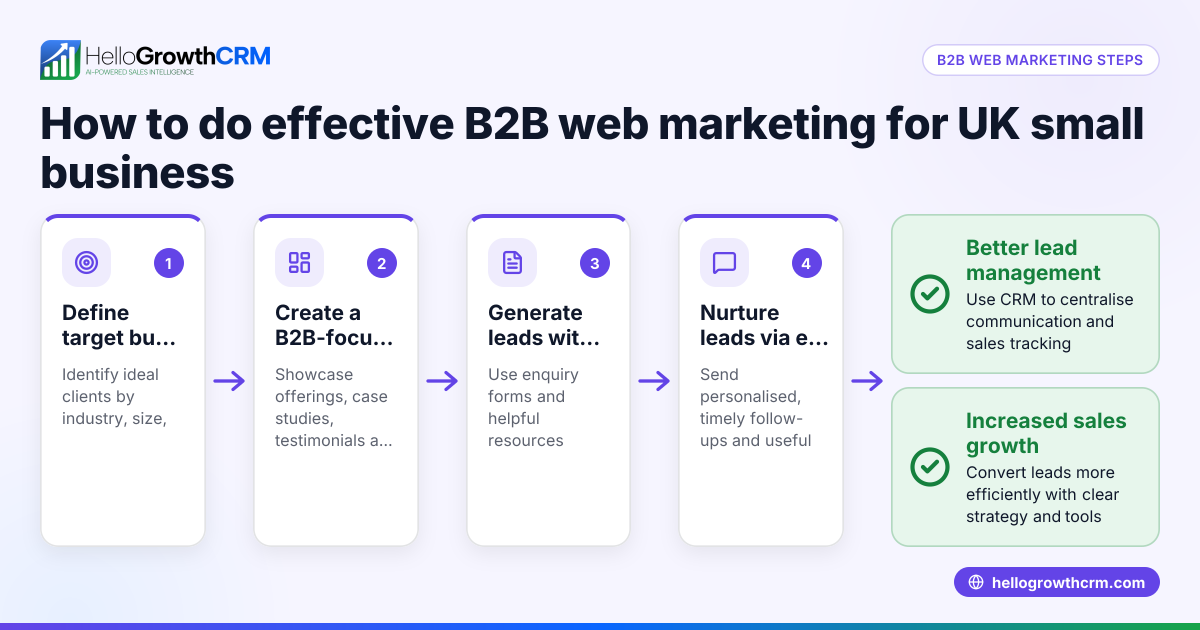
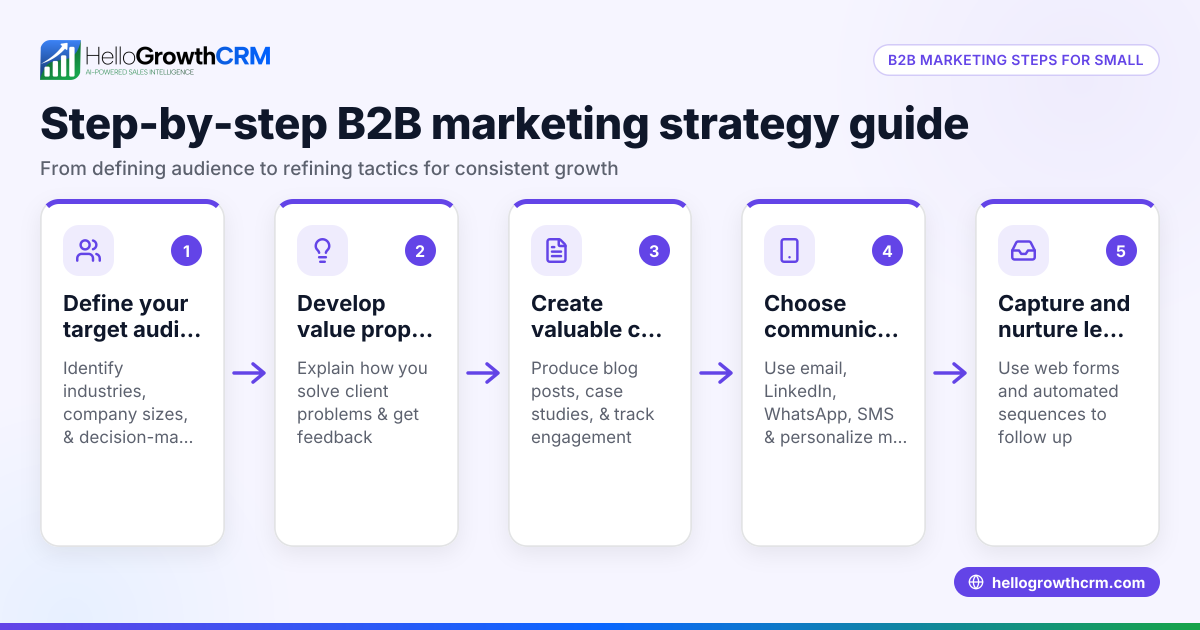
- Define your target business customers clearly
- Identify the industries, company sizes, and decision-makers you want to reach.
- Check that your target matches your product or service capabilities.
- Develop a value proposition tailored for businesses
- Craft messages that highlight how your offering solves specific business problems.
- Test these messages on a small sample of prospects for feedback.
- Choose marketing channels suited for B2B outreach
- Use professional platforms like LinkedIn, email campaigns, and industry events.
- Check channel effectiveness regularly by tracking engagement rates.
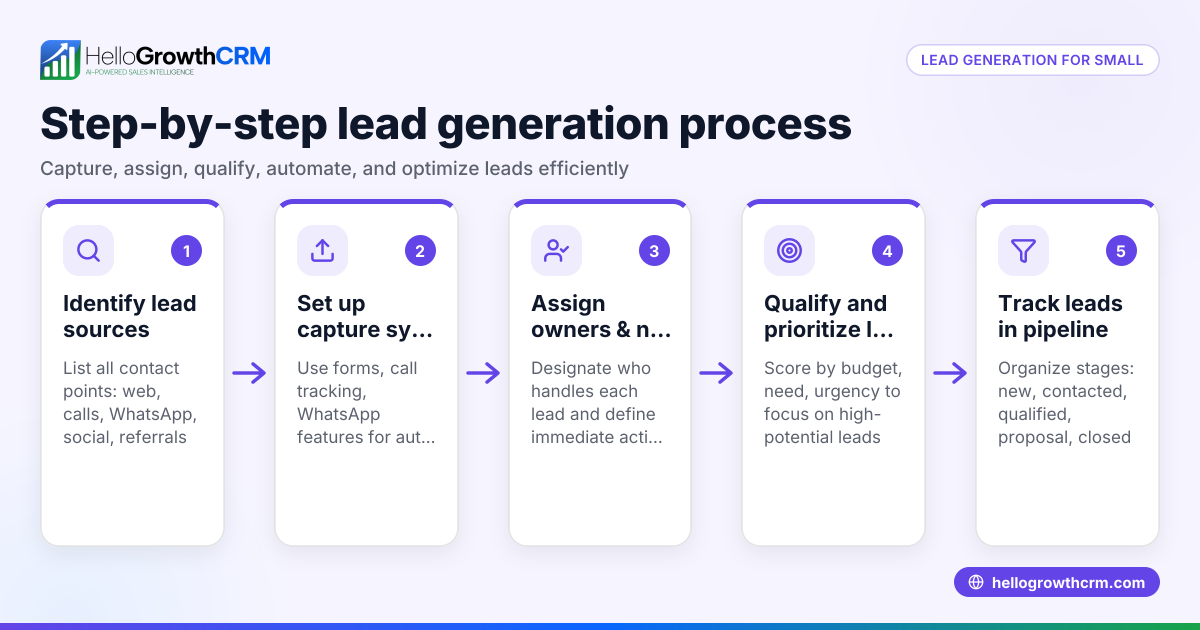
- Generate and capture leads systematically
- Use web forms or integrations to collect contact details.
- Verify data quality and ensure prompt follow-up to prevent lead loss.
- Nurture leads with personalised communication
- Send targeted emails, WhatsApp messages, or SMS sequences based on buyer behaviour.
- Check open and response rates to refine your approach.
- Manage the sales pipeline efficiently
- Track each lead’s stage from interest to closing.
- Regularly update progress and assign follow-up tasks to sales reps.
- Analyse and forecast sales performance
- Use reporting tools to measure conversion rates and sales forecasts.
- Check for bottlenecks and adjust marketing efforts accordingly.
- Review and optimise continuously
- Collect feedback from customers and sales teams.
- Test new marketing tactics and channels to improve results.
Example (fictional figures)
A solar-panel installer in Glasgow targets local businesses for commercial installations. They define their target as companies with over 50 employees in the manufacturing sector.
- They create a value proposition emphasising energy cost savings and sustainability.
- They run LinkedIn ads and collect 300 leads via web forms in one quarter.
- Lead follow-up rate is 80%, so they contact 240 leads promptly.
- Conversion rate from lead to sale is 10%, resulting in 24 new customers.
- Average sale value per customer is £15,000.
Calculations:
300 leads × 80% follow-up rate = 240 leads contacted 240 leads contacted × 10% conversion rate = 24 sales 24 sales × £15,000 average sale = £360,000 revenue
This targeted approach helps the business focus resources on quality leads and forecast sales accurately.
Common mistakes
- Scattered communication channels: Using WhatsApp, email, and spreadsheets separately causes lost leads. Prevent this by centralising lead capture and follow-up.
- Slow lead follow-up: Delays reduce conversion chances. Set reminders and tasks to ensure prompt contact.
- Ignoring lead qualification: Contacting unqualified leads wastes time. Use scoring or filters to prioritise.
- No clear sales pipeline: Without tracking stages, deals slip through cracks. Use a visual pipeline to monitor progress.
- Neglecting data analysis: Failing to review results stops improvement. Schedule regular reviews of marketing metrics.
- Overlooking personalised messaging: Generic messages fail to engage. Tailor communications to each business segment.
Frequently asked questions
What are the best channels for B2B marketing? LinkedIn, email campaigns, industry events, and targeted ads are effective for B2B marketing. Choosing the right channels depends on where your target businesses spend time and how they prefer to be contacted. Regularly check engagement to optimise your channel mix.
How do I generate quality leads for B2B sales? Quality leads come from targeted campaigns that attract businesses matching your ideal customer profile. Use web forms with relevant questions, offer valuable content, and follow up quickly to ensure leads stay warm.
Why is lead nurturing important in B2B marketing? B2B sales cycles are often longer and involve multiple decision-makers. Nurturing leads with personalised messages keeps your business top of mind and builds trust, increasing the chance of conversion.
How can I track and manage my sales pipeline effectively? Use a system to visualise each lead’s stage, assign tasks, and update progress regularly. This helps prevent leads from being forgotten and allows accurate sales forecasting. Tools with built-in CRM dialers and WhatsApp and SMS CRM features can streamline this process; see built-in CRM dialer and WhatsApp and SMS CRM.
What mistakes should I avoid in B2B marketing? Avoid scattered communication, slow follow-up, poor lead qualification, and neglecting data analysis. Centralising your process and reviewing results regularly improves effectiveness.
How do I start organising B2B marketing for my UK small business? Begin by clearly defining your target businesses and value proposition. Then set up lead capture and follow-up processes, track your pipeline, and analyse results. Consider solutions designed for UK businesses for better local fit; see HelloGrowthCRM for the United Kingdom.
Key takeaways
- B2B marketing solutions focus on targeted outreach, lead generation, nurturing, and sales management.
- Defining your target business customers and value proposition is the first step.
- Use systematic lead capture and prompt follow-up to avoid lost opportunities.
- Track your sales pipeline visually and update it regularly for better control.
- Analyse performance data to optimise marketing efforts continuously.
- Avoid scattered communication channels and slow lead response times.
Start organising your B2B marketing with practical steps today. You can begin on the Free Forever plan (200 leads, no credit card) at Start on the Free Forever plan (200 leads, no credit card).
Ready to put this into practice?
Set up your pipeline, WhatsApp follow-ups, and AI lead scoring in minutes — free, no credit card.
Try HelloGrowthCRM freeGet CRM tips in your inbox
Join thousands of sales professionals who get weekly insights on CRM strategy, AI automation, and pipeline optimization.

The HelloGrowthCRM team publishes guides on CRM strategy, AI sales tools, and revenue operations for small business sales teams.