HelloGrowthCRM software
Built for real small-business sales teams
HelloGrowthCRM helps reps qualify faster, follow up on time, and close more deals—with practical automation in one place.
- AI lead scoring and pipeline visibility
- Built-in dialer, WhatsApp, and email automation
- Sales forecasting and RevOps-ready reporting
A B2B marketing use case shows how a business markets to other businesses with clear goals and tactics. This helps small and mid-sized businesses understand what works and how to organize their marketing efforts for lead generation and sales growth.
Why this comes up / what goes wrong
Small business owners often struggle with marketing to other businesses because B2B sales cycles are longer and more complex than consumer sales. They may rely on inconsistent outreach methods like emails, text messages, or spreadsheets without a clear plan. This leads to lost leads, slow follow-up, and missed revenue. Understanding a B2B marketing use case helps clarify what to do, which channels to use, and how to measure success.
Step-by-step
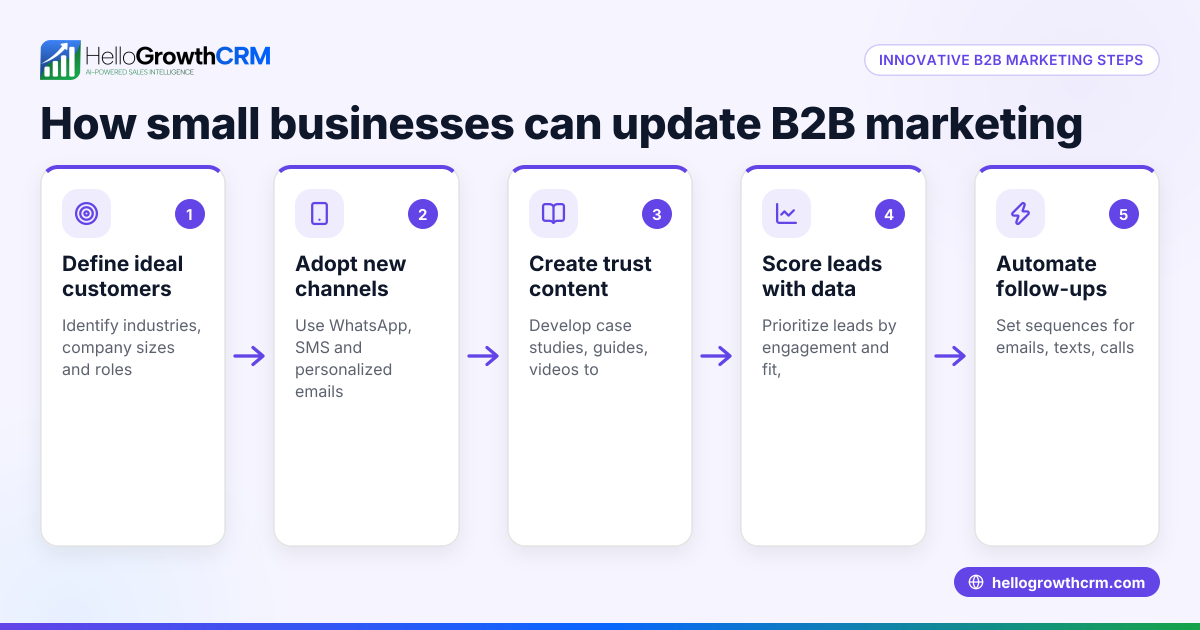
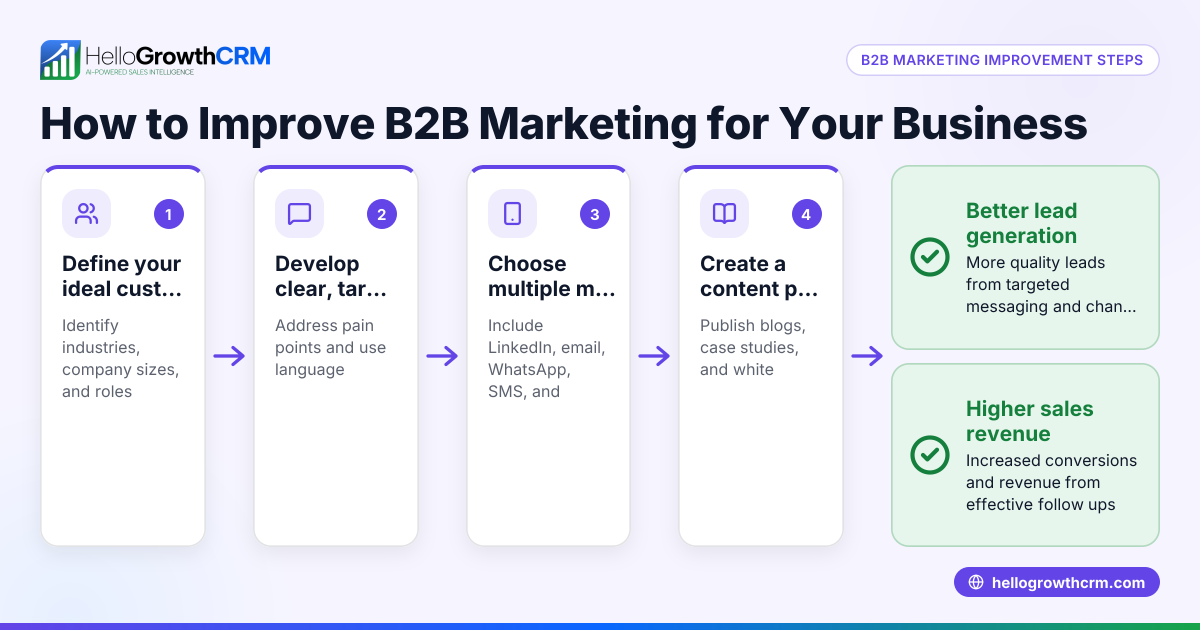
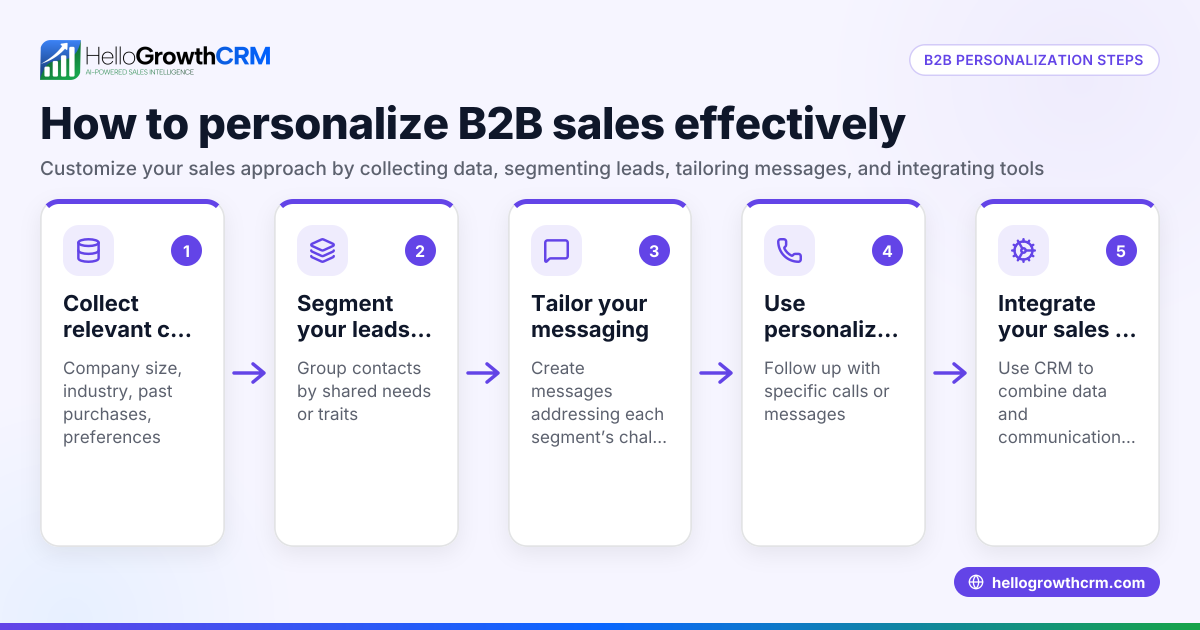
- Define your target business customer: Identify the industry, company size, role, and pain points of the businesses you want to reach. Check that your product or service solves a clear problem for them.
- Choose marketing channels that reach your target: Common B2B channels include LinkedIn, email campaigns, industry events, and content marketing. Check which channels your prospects use most.
- Create targeted messaging and offers: Develop content like case studies, whitepapers, or demos that address your target’s challenges. Check that your messaging speaks directly to their business needs.
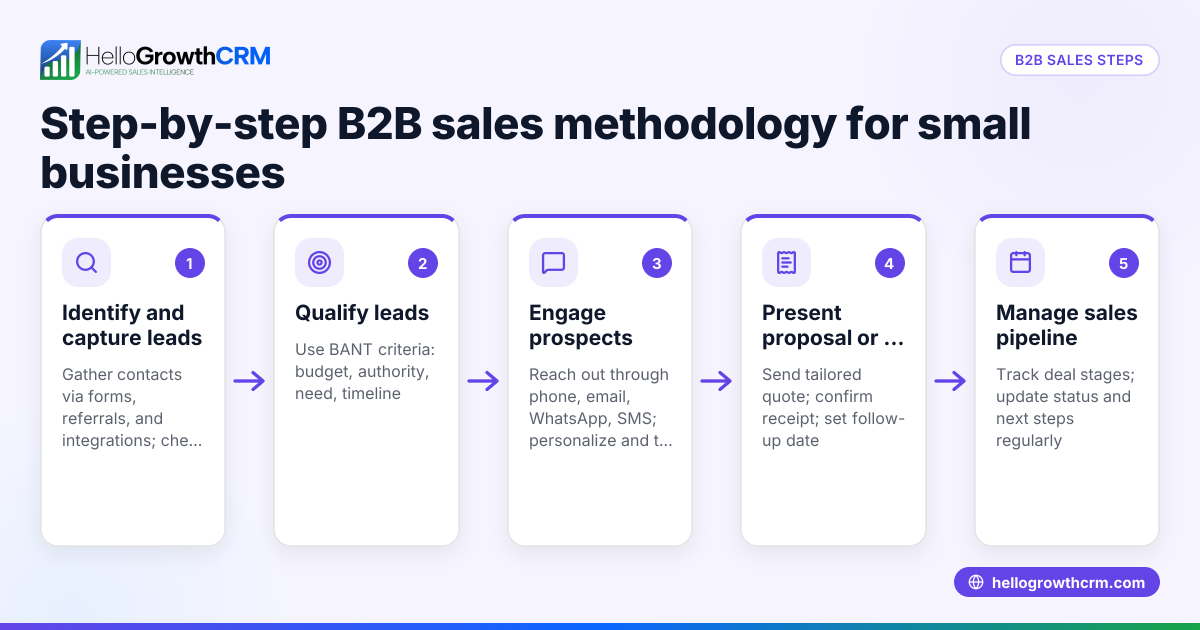
- Set up lead capture and tracking: Use web forms, landing pages, or integrations to capture leads and track their interactions. Check that your system records contact details and interest level accurately.
- Nurture leads with sequences and follow-up: Plan email, WhatsApp, or SMS sequences to educate and engage leads over time. Check that follow-ups are timely and relevant.
- Qualify leads and score them by readiness: Use criteria like company size, budget, and engagement to prioritize leads. Check that your scoring reflects actual buying signals.
- Move qualified leads to sales outreach: Contact leads by phone or personalized messages to close deals. Check that sales activities are logged and progress is tracked.
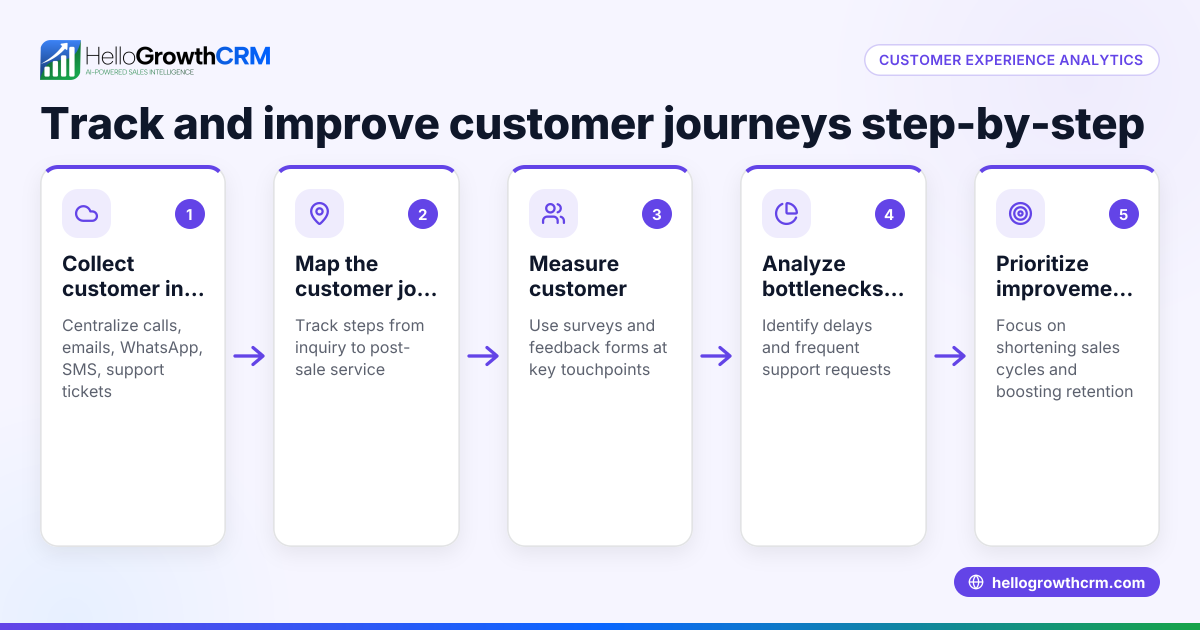
- Measure marketing effectiveness and adjust: Track metrics like lead volume, conversion rates, and sales revenue. Check which tactics perform best and refine your approach.
For small businesses in the US, tools that combine lead capture, messaging sequences, and sales tracking in one place can improve follow-up speed and organization. For example, a CRM with a built-in dialer and WhatsApp/SMS sequences can streamline many of these steps. See more about WhatsApp and SMS CRM and the built-in CRM dialer.
Example (fictional figures)
A B2B software reseller in Denver, Colorado wants to increase leads from local businesses for its cloud backup service.
- They define their target as small businesses with 10-50 employees in tech and finance sectors.
- They create LinkedIn ads and email campaigns offering a free 30-day trial.
- Their landing page captures lead names, emails, and company size.
- In January 2026, they generate 500 leads.
- They score leads: 200 high-quality, 300 low-quality.
- They send follow-up WhatsApp and SMS sequences to the 200 high-quality leads.
- 50 leads request demos and 20 convert to customers paying $1,000 each monthly.
Calculations:
50 customers × $1,000 = $50,000 monthly revenue
Annualized revenue from these customers is:
$50,000 × 12 = $600,000
This example shows how defining a clear use case, capturing leads, nurturing them, and scoring effectively turns marketing efforts into sales.
Common mistakes
- Not defining a clear target business: Leads become unfocused and low-quality. Prevent by researching and specifying your ideal customer profile.
- Using too many or irrelevant channels: Spreads resources thin and confuses prospects. Prevent by testing channels and focusing on the most effective ones.
- Failing to follow up promptly: Leads lose interest or buy elsewhere. Prevent by automating follow-up sequences and setting reminders.
- Ignoring lead qualification: Sales waste time on poor-fit leads. Prevent by scoring leads and prioritizing outreach.
- Not measuring results or adjusting: Marketing stays ineffective. Prevent by tracking metrics and refining tactics regularly. Learn about HelloGrowthCRM for the United States to organize your sales and marketing data.
Frequently asked questions
What is a B2B marketing use case? A B2B marketing use case is a specific example showing how a business markets to other businesses, including the strategies, channels, and processes used to generate and convert leads.
How is B2B marketing different from B2C marketing? B2B marketing targets businesses rather than individual consumers. It usually involves longer sales cycles, multiple decision-makers, and more detailed product information.
Which marketing channels work best for B2B? Common effective channels include LinkedIn, email campaigns, content marketing, industry events, and increasingly WhatsApp and SMS sequences for direct engagement. Using tools that support these channels can help.
How do I track and measure B2B marketing success? Track lead volume, lead quality, conversion rates, and revenue generated. Use CRM systems to log interactions and automate reporting.
Can small businesses manage B2B marketing without complex software? Yes, but it requires organized processes and consistent follow-up. Using a CRM with integrated messaging and lead capture can reduce manual work and improve outcomes.
Key takeaways
- A B2B marketing use case is a practical example of marketing to other businesses with clear steps.
- Define your target business customer and focus on channels they use.
- Capture and score leads, then nurture and follow up promptly.
- Measure results and adjust tactics to improve.
- Avoid common mistakes like unclear targeting and poor follow-up.
Start your B2B marketing efforts with a system that helps you capture, nurture, and convert leads efficiently. You can start on the Free Forever plan (200 leads, no credit card) to organize your sales and marketing in one place.
Ready to put this into practice?
Set up your pipeline, WhatsApp follow-ups, and AI lead scoring in minutes — free, no credit card.
Try HelloGrowthCRM freeGet CRM tips in your inbox
Join thousands of sales professionals who get weekly insights on CRM strategy, AI automation, and pipeline optimization.

The HelloGrowthCRM team publishes guides on CRM strategy, AI sales tools, and revenue operations for small business sales teams.