HelloGrowthCRM software
Built for real small-business sales teams
HelloGrowthCRM helps reps qualify faster, follow up on time, and close more deals—with practical automation in one place.
- AI lead scoring and pipeline visibility
- Built-in dialer, WhatsApp, and email automation
- Sales forecasting and RevOps-ready reporting
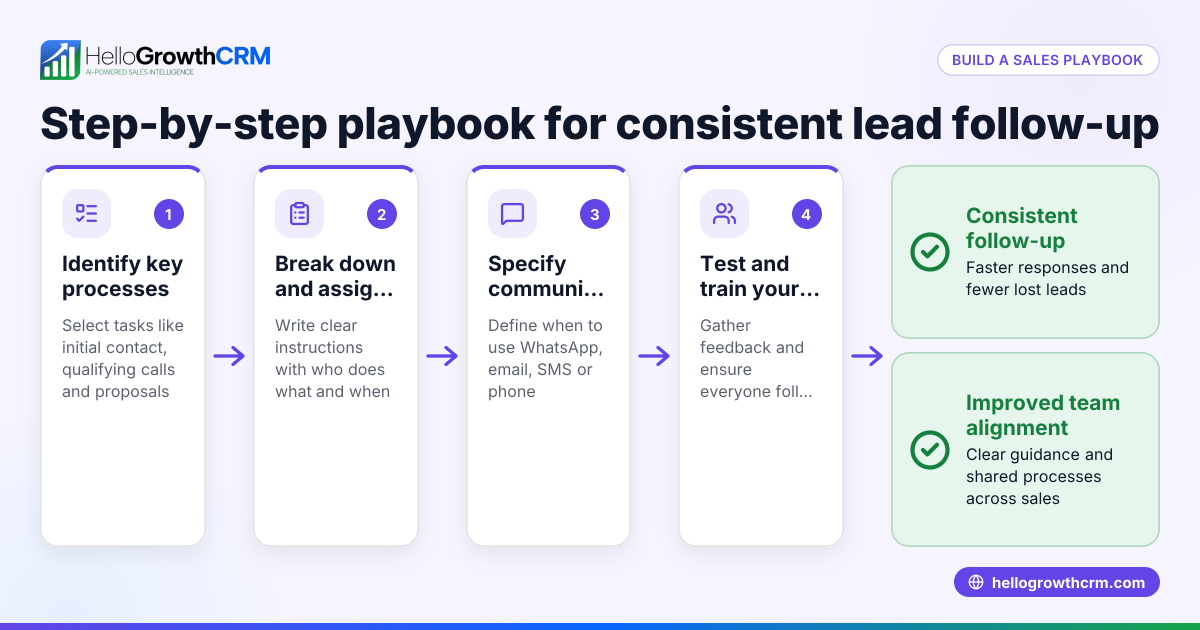
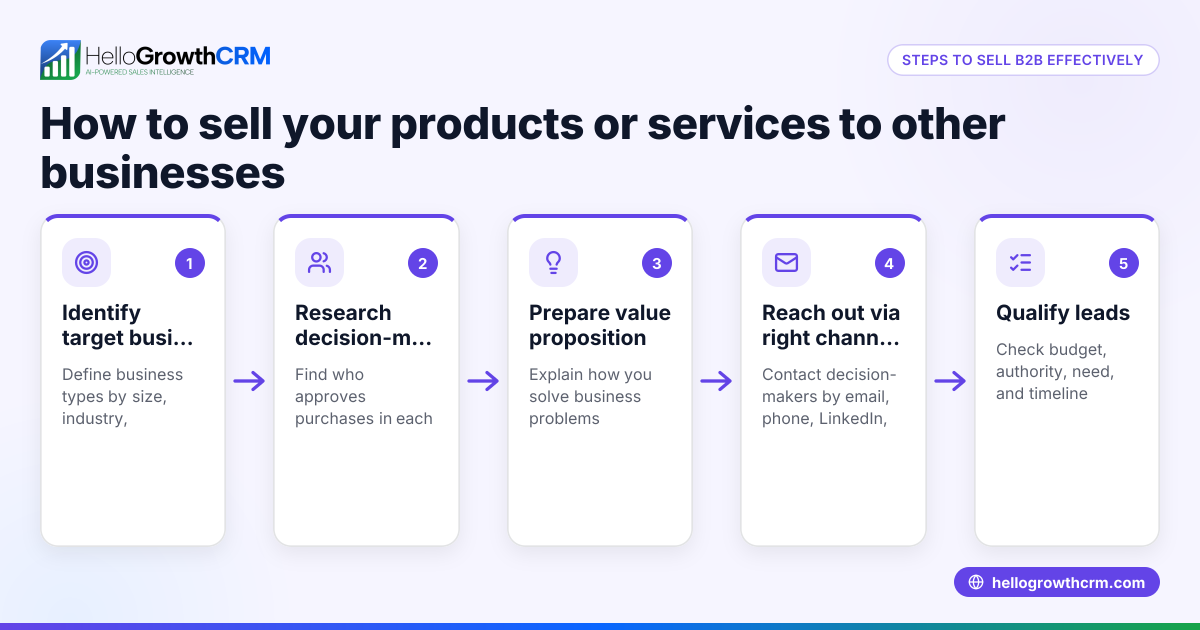
A B2B sales playbook is a documented guide that outlines your business’s sales process, strategies, and best practices to convert leads into customers consistently. It helps your sales team follow a proven approach, track progress, and improve results. This article covers why a playbook is important, how to build one step-by-step, common mistakes to avoid, and how HelloGrowthCRM supports your sales efforts.
Why this comes up / what goes wrong
Small and mid-sized business owners often face inconsistent sales results because their teams lack a clear, repeatable sales process. Without a documented sales playbook, sales reps may use different methods, miss follow-ups, or fail to prioritize leads effectively. This causes lost opportunities, slow responses, and unreliable revenue forecasting. A sales playbook creates alignment by defining each stage of the sales cycle, communication templates, and follow-up schedules.
Step-by-step
- Define your ideal customer profile (ICP)
- Identify the characteristics of businesses most likely to buy your product or service.
- Check that your sales team understands and targets leads based on this profile.
- Map out your sales stages
- Break down your sales process into clear stages from lead capture to closing.
- Common stages include prospecting, qualification, needs analysis, proposal, negotiation, and closing.
- Create standardized sales activities for each stage
- Specify key actions such as outreach methods, qualifying questions, demo scripts, and follow-up timing.
- Ensure sales reps know what to do and when.
- Develop communication templates
- Prepare email, WhatsApp, and SMS message templates for different stages.
- Include follow-up sequences to keep leads engaged.
- Set up lead scoring and prioritization
- Define criteria to rank leads by likelihood to buy.
- Use this to focus efforts on high-potential prospects.
- Assign territories and responsibilities
- Organize your sales team by customer segments, regions, or industries.
- Confirm ownership to avoid duplicated effort.
- Track deals and pipeline regularly
- Use a CRM to monitor deals by stage, expected close date, and value.
- Check for stalled deals and schedule follow-ups.
- Review and update the playbook periodically
- Analyze sales results and adjust steps or messaging.
- Incorporate feedback from sales reps to improve effectiveness.
Example (fictional figures)
A residential real-estate team in Phoenix, Arizona, uses a B2B sales playbook to sell property management services to small landlords.
- Their ICP is landlords owning 5+ rental units in Phoenix.
- Sales stages: Lead capture → Qualification → Needs analysis → Proposal → Contract signed.
- They score leads based on property count and urgency.
In March 2026, they identified 100 leads and moved 30 to qualification.
They sent proposals worth $1,200,000 total.
Expected close rate at proposal stage: 40%.
Calculation:
$1,200,000 × 40% = $480,000 expected revenue from proposals.
They track follow-ups weekly to avoid losing deals, ensuring no proposal is forgotten.
Common mistakes
- No clear sales stages
- Prevent by documenting each stage and training the team.
- Ignoring follow-up schedules
- Use reminders or CRM alerts to keep follow-ups timely.
- Lack of lead prioritization
- Implement lead scoring to focus on high-value prospects.
- Uncoordinated communication channels
- Standardize messaging across email, WhatsApp, and SMS.
- No accountability for territories or leads
- Assign ownership to avoid duplicated or missed outreach.
- Failing to update the playbook
- Schedule regular reviews to refine the process.
Doing this in HelloGrowthCRM
HelloGrowthCRM supports your B2B sales playbook with these features:
- Deals (pipeline): Track open opportunities from first contact through close. For example, a quotation sent last week appears as a deal at the 'quote sent' stage with a follow-up date, ensuring it is not forgotten. Learn more at AI CRM.
- Territories, field operations and commissions: Define territories and log field visits from mobile. Managers can monitor daily sales activities, helping coordinate teams efficiently. See details at Territory Management.
- Managed RevOps: If you do not have a sales manager, get support with weekly follow-up execution, pipeline cleanup, and KPI reporting. This keeps your sales process on track without extra hires. More info at HelloGrowthCRM for the United States.
Frequently asked questions
What is a B2B sales playbook? A B2B sales playbook is a documented framework outlining your sales process, strategies, communication templates, and best practices to help your team convert leads consistently.
Why does my small business need a sales playbook? Without a playbook, sales efforts can be inconsistent, follow-ups get missed, and forecasting becomes unreliable. A playbook aligns your team and improves efficiency.
How often should I update my sales playbook? Review and update your playbook at least quarterly or whenever you notice changes in customer behavior, product offerings, or sales outcomes.
Can I use HelloGrowthCRM to implement my sales playbook? Yes, HelloGrowthCRM offers pipeline tracking, territory management, and managed revenue operations support to help you execute and monitor your sales playbook effectively.
How do I assign territories in HelloGrowthCRM? You can define territories and assign reps accordingly. Field reps log visits via mobile, and managers can view daily activities to ensure coverage and accountability.
Key takeaways
- A B2B sales playbook documents your sales process and best practices to improve consistency.
- Define clear sales stages, communication templates, and lead scoring to prioritize prospects.
- Assign territories and responsibilities to avoid duplicated outreach.
- Regularly track deals and schedule follow-ups to prevent lost opportunities.
- Use HelloGrowthCRM features like Deals (pipeline), Territories, and Managed RevOps to support your playbook.
Start building your B2B sales playbook today to improve your sales team's focus and results. To get started with tools that help you organize and track your sales process, start on the Free Forever plan (200 leads, no credit card).
Ready to put this into practice?
Set up your pipeline, WhatsApp follow-ups, and AI lead scoring in minutes — free, no credit card.
Try HelloGrowthCRM freeGet CRM tips in your inbox
Join thousands of sales professionals who get weekly insights on CRM strategy, AI automation, and pipeline optimization.

The HelloGrowthCRM team publishes guides on CRM strategy, AI sales tools, and revenue operations for small business sales teams.