HelloGrowthCRM software
Built for real small-business sales teams
HelloGrowthCRM helps reps qualify faster, follow up on time, and close more deals—with practical automation in one place.
- AI lead scoring and pipeline visibility
- Built-in dialer, WhatsApp, and email automation
- Sales forecasting and RevOps-ready reporting
Playbook examples are detailed, step-by-step guides that help UK small businesses perform recurring tasks consistently and effectively. They ensure that sales teams and customer service staff follow the same process for activities such as lead follow-up, sales calls, or client communication. This consistency helps prevent leads from being lost due to slow responses or disorganised communication channels like WhatsApp, email, and spreadsheets.
Why this comes up / what goes wrong
Small business owners and sales leaders often face challenges with inconsistent sales and service processes. Leads can be lost or delayed because the team does not share a clear, standardised approach to follow-up. Communication scattered across WhatsApp, email, and Excel sheets makes it hard to track progress or assign responsibility. New team members may lack guidance, and without a playbook, businesses struggle to scale sales or service reliably.
Step-by-step
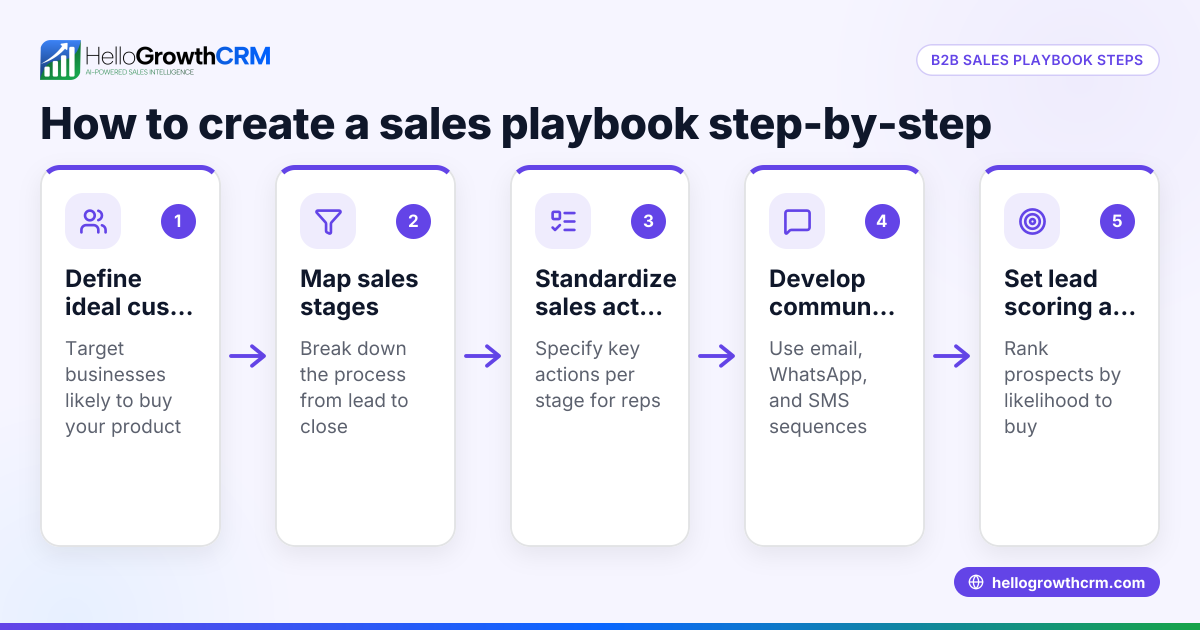
- Identify the key processes to standardise. Choose important tasks such as initial lead contact, qualifying calls, follow-up messages, or sending proposals.
- Break down each process into clear, actionable steps. Write exactly what to do, when to do it, and how. Include scripts or message templates if helpful.
- Assign responsibilities and deadlines. Specify who on the team completes each step and the expected timing.
- Document which communication channels to use. Clarify when to use WhatsApp, email, SMS, or phone calls to keep contact organised.
- Test the playbook with your team. Gather feedback to fix any unclear or impractical instructions.
- Train all team members on the playbook. Ensure everyone understands and follows the process consistently.
- Review and update the playbook regularly. Adapt it as your sales process or tools change.
For example, if your team uses WhatsApp and SMS to communicate with leads, your playbook should specify when to switch between these channels or escalate to a phone call. Using a WhatsApp and SMS CRM can help keep all messages in one place.
Example (fictional figures)
A recruitment consultancy in Bristol wants to create a playbook for lead follow-up to improve response times and conversion.
- Lead arrives through a web form on 01/04/2026 at 09:00.
- Step 1: Call the lead within 2 hours.
- Step 2: If no answer, send a WhatsApp message within 4 hours.
- Step 3: If still no response, email a proposal within 1 working day.
Calculations for timing:
Lead arrival: 01/04/2026 09:00
Step 1 deadline: 09:00 + 2 hours = 01/04/2026 11:00 (call deadline)
If no answer, Step 2 deadline: 09:00 + 4 hours = 01/04/2026 13:00 (WhatsApp message deadline)
If still no response, Step 3 deadline: 01/04/2026 09:00 + 1 working day = 02/04/2026 09:00 (email proposal deadline)
This timeline ensures prompt and consistent follow-up.
Common mistakes
- Not documenting the playbook clearly: Use simple, step-by-step instructions to avoid confusion. Clear language helps the whole team follow the process.
- Ignoring team input: Involve your sales or service team when creating the playbook to ensure it fits real workflows.
- Overcomplicating the process: Keep the steps practical and focused on actions that directly impact sales or service outcomes.
- Failing to update the playbook: Regularly review and revise the playbook to reflect changes in tools or market conditions.
- Not training the team: A playbook is ineffective if team members don’t understand or use it consistently.
- Mixing communication channels without rules: Define when to use WhatsApp, email, or phone calls to avoid missed messages. A built-in CRM dialer can help streamline calls and improve follow-up.
Frequently asked questions
What is a sales playbook? A sales playbook is a documented set of best practices, processes, and scripts that guide sales teams on how to handle leads, calls, follow-ups, and closing deals. It helps ensure consistency and efficiency in sales activities.
How do I create a playbook for my small business? Start by listing your key sales or customer service tasks, then break each into detailed steps with assigned responsibilities and timelines. Test the playbook with your team and update it regularly based on feedback and results.
Can a playbook improve lead follow-up? Yes, by standardising when and how to contact leads, a playbook reduces delays and missed opportunities, which improves conversion rates and customer satisfaction.
Should I include communication channels like WhatsApp in my playbook? Definitely. Specify which channels to use and when, so your team stays organised and consistent. Using a WhatsApp and SMS CRM can centralise messages and make follow-up easier.
How often should I update my playbook? Review it at least quarterly or whenever you change tools, sales processes, or notice inefficiencies. Keeping the playbook current ensures it remains useful.
Is training necessary for playbook success? Yes, training is essential. Make sure every team member understands and uses the playbook consistently to get the full benefit.
Key takeaways
- Playbook examples provide clear, repeatable steps for sales and service tasks.
- They prevent lost leads by standardising follow-up timing and communication.
- Involve your team to create practical and usable playbooks.
- Keep the playbook simple, clear, and regularly updated.
- Define communication channel use, such as WhatsApp and email, within the playbook.
- Training your team on the playbook is essential for consistent use.
Start using a structured sales or service playbook to improve your business processes and lead management. To organise your sales communication and leads efficiently, consider starting with a Free Forever plan (200 leads, no credit card).
Ready to put this into practice?
Set up your pipeline, WhatsApp follow-ups, and AI lead scoring in minutes — free, no credit card.
Try HelloGrowthCRM freeGet CRM tips in your inbox
Join thousands of sales professionals who get weekly insights on CRM strategy, AI automation, and pipeline optimization.

The HelloGrowthCRM team publishes guides on CRM strategy, AI sales tools, and revenue operations for small business sales teams.