HelloGrowthCRM software
Built for real small-business sales teams
HelloGrowthCRM helps reps qualify faster, follow up on time, and close more deals—with practical automation in one place.
- AI lead scoring and pipeline visibility
- Built-in dialer, WhatsApp, and email automation
- Sales forecasting and RevOps-ready reporting
B2B sales techniques are methods used to sell products or services from one business to another. They focus on building relationships, understanding client needs, and managing sales pipelines effectively. This article covers key steps to implement these techniques, common mistakes to avoid, a practical example, and how HelloGrowthCRM can help streamline your B2B sales process.
Why this comes up / what goes wrong
Small business owners often struggle with B2B sales because they rely on informal methods like text messages, emails, or spreadsheets to track leads and follow-ups. This leads to lost opportunities due to slow or missed follow-ups and lack of visibility into the pipeline. Without a clear, repeatable sales process, it is difficult to scale sales efforts or measure what works. Understanding effective B2B sales techniques helps owners and sales teams build consistent workflows, prioritize leads, and close deals more reliably.
Step-by-step
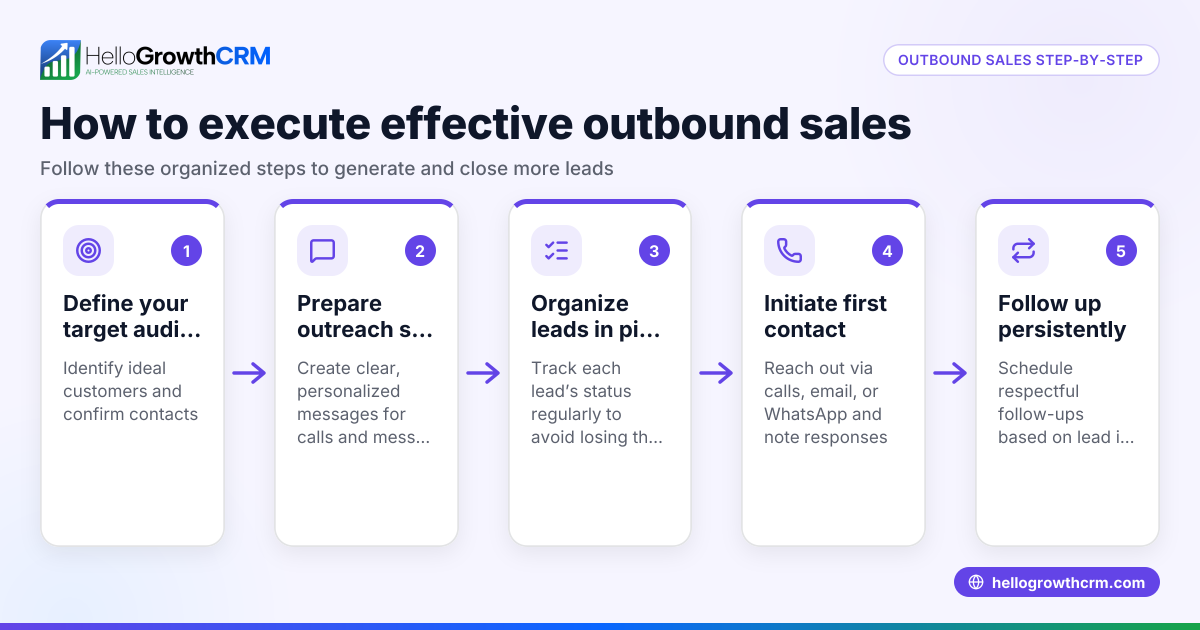
- Identify and qualify leads: Start by gathering information about potential clients. Use criteria like company size, industry, and buying potential to qualify leads. Check that each lead fits your ideal customer profile.
- Research client needs: Before outreach, learn about the prospect’s business challenges and goals. This helps tailor your sales approach to their specific needs.
- Initial contact and relationship building: Reach out via email, phone, or WhatsApp with a personalized message. Focus on starting a conversation rather than just selling.
- Present your solution: Demonstrate how your product or service solves the client’s problems. Use case studies or examples relevant to their industry.
- Handle objections and questions: Listen carefully to concerns and provide clear, honest answers. This builds trust.
- Send a quotation and set follow-up: After discussing terms, send a formal quote. Schedule a follow-up date to check in and keep the deal moving.
- Negotiate and close: Be ready to negotiate terms within reason. Once agreed, finalize the contract promptly.
- Post-sale follow-up: Maintain contact to ensure satisfaction and identify upsell or referral opportunities.
Check at each step that leads are moving forward and update your sales pipeline accordingly. Avoid letting deals stagnate without follow-up.
Example (fictional figures)
A plumbing company in Austin, Texas wants to increase B2B sales to property management firms.
- On 03/01/2026, they identify 10 qualified leads.
- They research each firm’s maintenance challenges.
- By 03/05/2026, they contact all leads with personalized messages.
- Three firms express interest; the company presents tailored service packages.
- On 03/10/2026, they send quotes to two firms at $15,000 and $20,000 respectively.
- Follow-up calls are scheduled for 03/15/2026.
- One firm agrees to a $15,000 contract on 03/18/2026.
Calculations:
$15,000 (contract value) × 1 (deal closed) = $15,000 total sales
They track this deal through the pipeline stages to ensure timely follow-up and successful closure.
Common mistakes
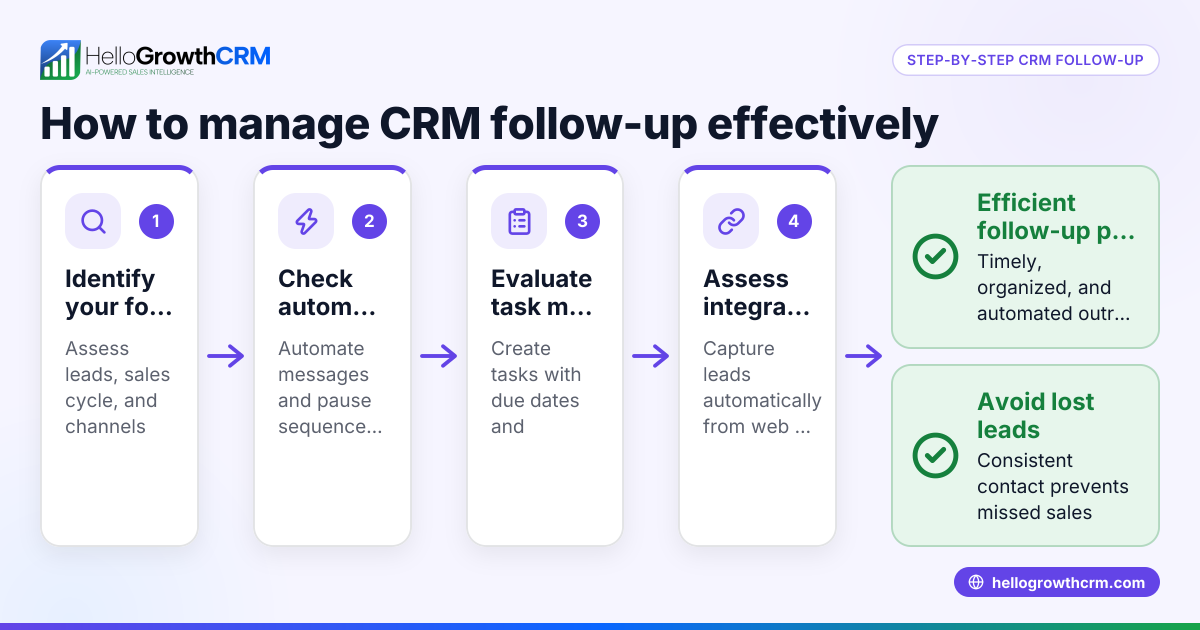
- Ignoring follow-up schedules: Leads go cold if you don’t follow up on time. Prevent this by setting reminders in a CRM.
- Not qualifying leads properly: Wasting time on poor-fit prospects lowers efficiency. Use clear criteria to qualify leads.
- Overloading prospects with information: Too much detail can overwhelm. Tailor your message to key benefits.
- Failing to listen to objections: Dismissing concerns damages trust. Listen carefully and address objections.
- Using multiple disconnected tools: Managing sales across texts, emails, and spreadsheets causes errors and lost data. Use an integrated system.
Learn more about managing territories, field operations, and commissions in sales teams with HelloGrowthCRM's territories, field operations and commissions.
Doing this in HelloGrowthCRM
HelloGrowthCRM helps small and mid-sized businesses manage B2B sales by tracking deals through a pipeline. For example, a quotation sent last week appears as a deal at the 'quote sent' stage with a follow-up date, so it is not forgotten. Field sales teams can log visits from their phones, and managers see the daily activity. Founders without sales managers can use Managed RevOps to have a specialist work the follow-up queue weekly. This CRM integrates WhatsApp, SMS, and email sequences, supporting efficient communication and pipeline management. Learn more about the WhatsApp and SMS CRM and the built-in CRM dialer features.
Frequently asked questions
What are the best B2B sales techniques for small businesses? Focus on qualifying leads carefully, building relationships through personalized communication, managing your sales pipeline actively, and following up consistently. Use tools that automate reminders and track deal progress.
How can I improve follow-up in B2B sales? Set clear follow-up dates after each contact and use a CRM to remind you. Avoid relying on memory or separate notes. Consistent follow-up increases closing rates.
Why is pipeline management important in B2B sales? A sales pipeline shows where each deal stands and what actions are needed next. Without it, deals can be forgotten or delayed, causing lost revenue.
How does HelloGrowthCRM support B2B sales? It tracks deals through pipeline stages, sets follow-up dates, logs field visits, and offers Managed RevOps support. Integration with WhatsApp, SMS, and email helps keep communication organized.
Can B2B sales be done entirely over WhatsApp and SMS? Yes, many small businesses use WhatsApp and SMS for B2B sales communication. Integrating these channels into a CRM like HelloGrowthCRM ensures messages are tracked and followed up properly.
Key takeaways
- Qualify leads before investing sales effort.
- Build relationships with personalized communication.
- Manage your sales pipeline actively and set follow-up dates.
- Avoid common mistakes like poor follow-up and scattered tools.
- Use a CRM to keep deals visible and on track.
- HelloGrowthCRM offers pipeline tracking, field sales logging, and Managed RevOps support.
Start improving your B2B sales process today. Start on the Free Forever plan (200 leads, no credit card) to organize your leads and never miss a follow-up.
Ready to put this into practice?
Set up your pipeline, WhatsApp follow-ups, and AI lead scoring in minutes — free, no credit card.
Try HelloGrowthCRM freeGet CRM tips in your inbox
Join thousands of sales professionals who get weekly insights on CRM strategy, AI automation, and pipeline optimization.

The HelloGrowthCRM team publishes guides on CRM strategy, AI sales tools, and revenue operations for small business sales teams.