HelloGrowthCRM software
Built for real small-business sales teams
HelloGrowthCRM helps reps qualify faster, follow up on time, and close more deals—with practical automation in one place.
- AI lead scoring and pipeline visibility
- Built-in dialer, WhatsApp, and email automation
- Sales forecasting and RevOps-ready reporting
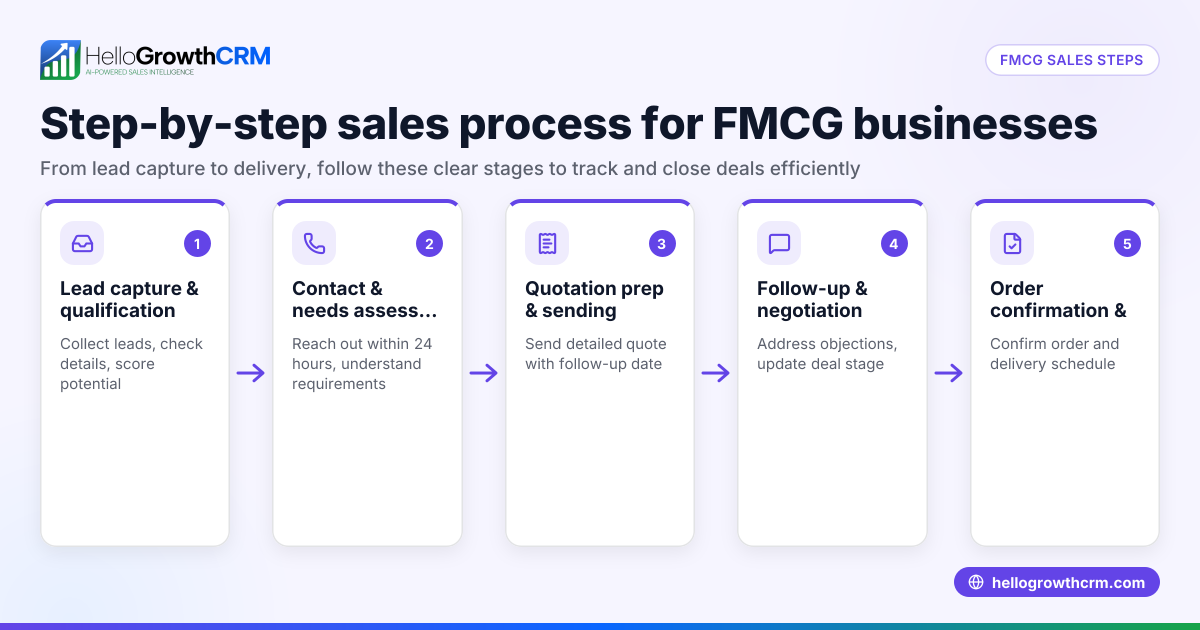
A basic sales process template is a structured guide that maps out the key stages your sales team should follow to convert leads into customers effectively. It typically includes lead capture, qualification, initial contact, needs analysis, proposal, follow-up, closing, and post-sale follow-up. This template helps small businesses stay organized, consistent, and efficient in managing their sales pipeline.
Why this comes up / what goes wrong
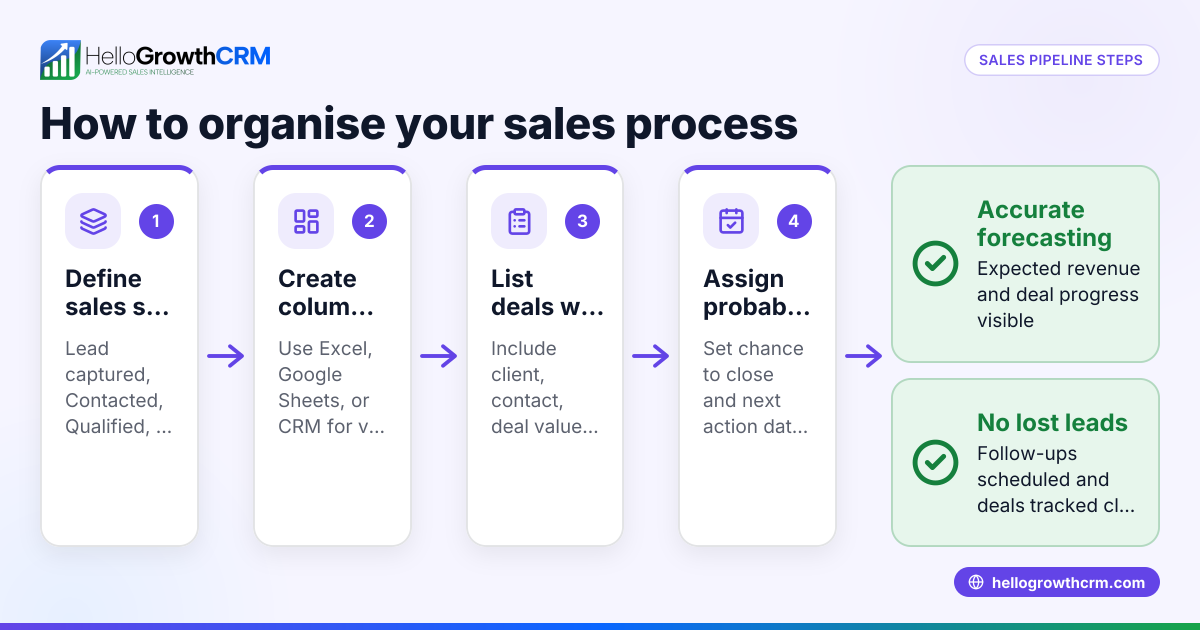
Small business owners often face challenges because their sales activities are scattered across text messages, emails, and spreadsheets without a unified system. Without a clear sales process template, leads can be lost, follow-ups delayed, and sales opportunities missed. This disorganization leads to unreliable sales forecasts and wasted effort, especially for teams juggling multiple responsibilities. A basic sales process template provides a repeatable, trackable framework to prevent these issues.
Step-by-step
Follow these steps to implement a basic sales process template:
- Lead Capture
- Collect leads from sources like web forms, phone inquiries, referrals, or events.
- Check that all essential contact details and inquiry notes are recorded accurately.
- Lead Qualification
- Evaluate leads based on criteria such as budget, need, authority, and timeline.
- Confirm the lead matches your target customer profile to prioritize sales efforts.
- Initial Contact
- Reach out via phone, email, or WhatsApp to introduce your product or service.
- Confirm the lead’s interest and schedule a detailed conversation.
- Needs Analysis
- Ask questions to understand the lead’s specific challenges and requirements.
- Document key points to tailor your proposal effectively.
- Proposal or Quotation
- Prepare and send a formal proposal or quote outlining pricing, terms, and deliverables.
- Set a follow-up date to check in on the lead’s decision.
- Follow-up
- Contact the lead on the agreed date to answer questions, address objections, or negotiate.
- Update the lead status and next steps in your tracking system.
- Closing the Deal
- Finalize contracts, confirm payment terms, and schedule delivery or implementation.
- Post-Sale Follow-up
- Check customer satisfaction, provide support, and explore upsell or referral opportunities.
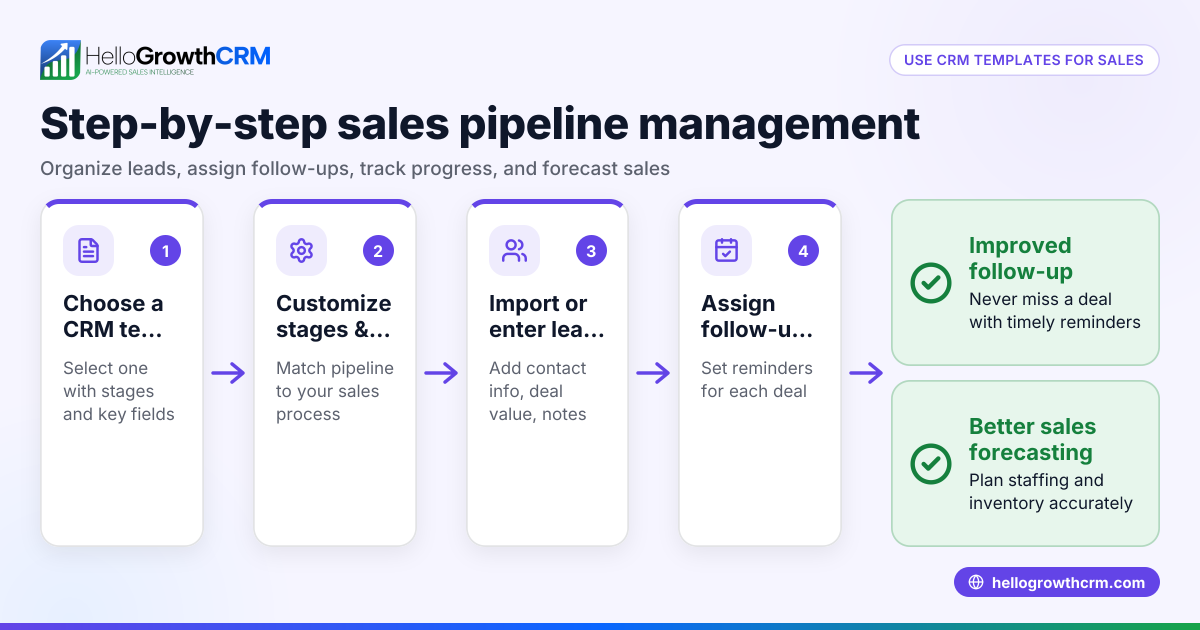
Each step should have a clear owner and deadline to maintain momentum and accountability. Using ready-made sales templates can help you set up this process quickly and consistently.
Example (fictional figures)
Consider a landscaping contractor in Charlotte, North Carolina, using this sales process:
- 04/10/2026 Lead capture: Website form submission from a homeowner.
- Qualification: Budget estimated at $12,000 for landscaping services.
- 04/11/2026 Initial contact: Phone call to introduce services and schedule a site visit.
- 04/12/2026 Needs analysis: Customer wants garden redesign and outdoor lighting.
- 04/13/2026 Proposal sent: Quotation for $11,500 sent via email.
- Follow-up date set: 04/20/2026 to discuss proposal.
- 04/20/2026 Follow-up call: Customer requests minor changes.
- 04/21/2026 Revised proposal sent: $12,000 reflecting requested changes.
- 04/25/2026 Deal closed: Contract signed and deposit received.
Calculations:
$11,500 + $500 = $12,000
This timeline ensures no stage is missed and the lead stays engaged throughout the sales cycle.
Common mistakes
- Skipping lead qualification
- Prevent this by always assessing if the lead fits your ideal customer profile before investing time.
- No scheduled follow-ups
- Use reminders or templates to set follow-up dates and never let leads go cold.
- Inconsistent documentation
- Keep all lead information centralized in one place rather than scattered across emails or notes.
- Ignoring post-sale contact
- Follow up after closing to build long-term relationships and generate referrals.
- Relying only on email or text without tracking
- Use a system to log all interactions and next steps to avoid losing context.
Avoid these mistakes by using organized free sales tools and calculators to track and manage your sales process effectively.
Doing this in HelloGrowthCRM
HelloGrowthCRM offers several features to support your sales process. With Deals (pipeline), quotations you send appear as deals at the 'quote sent' stage with follow-up dates, so you never forget to check in. You can download free sales templates and follow-up cadences without needing an account, helping you start quickly. For businesses with field sales reps, HelloGrowthCRM provides territory management and mobile visit logging, allowing managers to monitor daily sales activities easily.
Learn more about HelloGrowthCRM for the United States.
Frequently asked questions
What should a basic sales process include? A basic sales process should cover lead capture, qualification, initial contact, needs analysis, proposal, follow-up, closing, and post-sale follow-up. Each stage requires clear actions, owners, and deadlines to keep sales moving.
How do I customize a sales process template for my business? Start with a basic template and tailor it by adding or removing steps based on your product or service, such as demos, contract reviews, or technical evaluations.
Can I track sales progress without a CRM? Yes, but it is harder to stay organized. Spreadsheets or manual logs can work but risk losing leads or missing follow-ups. Using free sales templates and tools can improve tracking even without a CRM.
How often should follow-ups be scheduled? Follow-ups usually occur every 3 to 7 days after sending a proposal, depending on your sales cycle. Setting reminders helps prevent delays.
What is the benefit of using sales templates? Sales templates standardize your process, save time, reduce errors, and ensure consistent communication with leads.
Key takeaways
- Use a clear, step-by-step sales process template to manage leads efficiently.
- Always qualify leads before committing time and resources.
- Schedule and document follow-ups to maintain momentum.
- Avoid common mistakes like inconsistent tracking and skipping post-sale contact.
- Utilize free sales templates and tools to organize your sales process.
Start organizing your sales process today. Start on the Free Forever plan (200 leads, no credit card) with HelloGrowthCRM to keep your sales pipeline active and manageable.
Ready to put this into practice?
Set up your pipeline, WhatsApp follow-ups, and AI lead scoring in minutes — free, no credit card.
Try HelloGrowthCRM freeGet CRM tips in your inbox
Join thousands of sales professionals who get weekly insights on CRM strategy, AI automation, and pipeline optimization.

The HelloGrowthCRM team publishes guides on CRM strategy, AI sales tools, and revenue operations for small business sales teams.