HelloGrowthCRM software
Built for real small-business sales teams
HelloGrowthCRM helps reps qualify faster, follow up on time, and close more deals—with practical automation in one place.
- AI lead scoring and pipeline visibility
- Built-in dialer, WhatsApp, and email automation
- Sales forecasting and RevOps-ready reporting
The best manufacturing sales CRM in Singapore is one that fits your sales workflow, supports your communication channels such as WhatsApp and SMS, and helps your team track leads and deals clearly from first contact to closing. Choosing a CRM designed for manufacturing sales processes can reduce lost leads and improve follow-up timing.
Why this comes up / what goes wrong
Manufacturing business owners and sales leaders in Singapore often struggle with sales management because their teams rely on scattered tools like WhatsApp chats, emails, and spreadsheets. This causes slow follow-up, missed opportunities, and poor visibility on deal status. Unlike retail or services, manufacturing sales often involve complex quotations, multiple follow-ups, and coordination with production schedules. Without a CRM tailored for these needs, small and mid-sized manufacturers lose leads and revenue.
Step-by-step
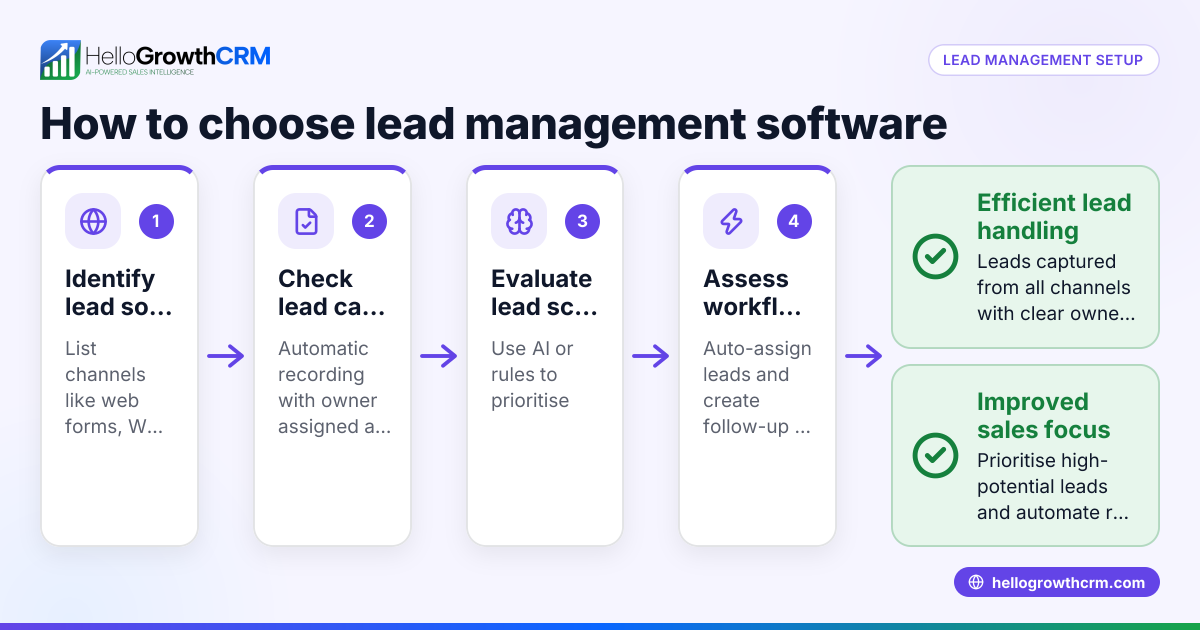
- Identify your sales process stages: List your typical sales stages, such as enquiry, quotation, negotiation, and order confirmation. Check that the CRM can track deals through these stages clearly.
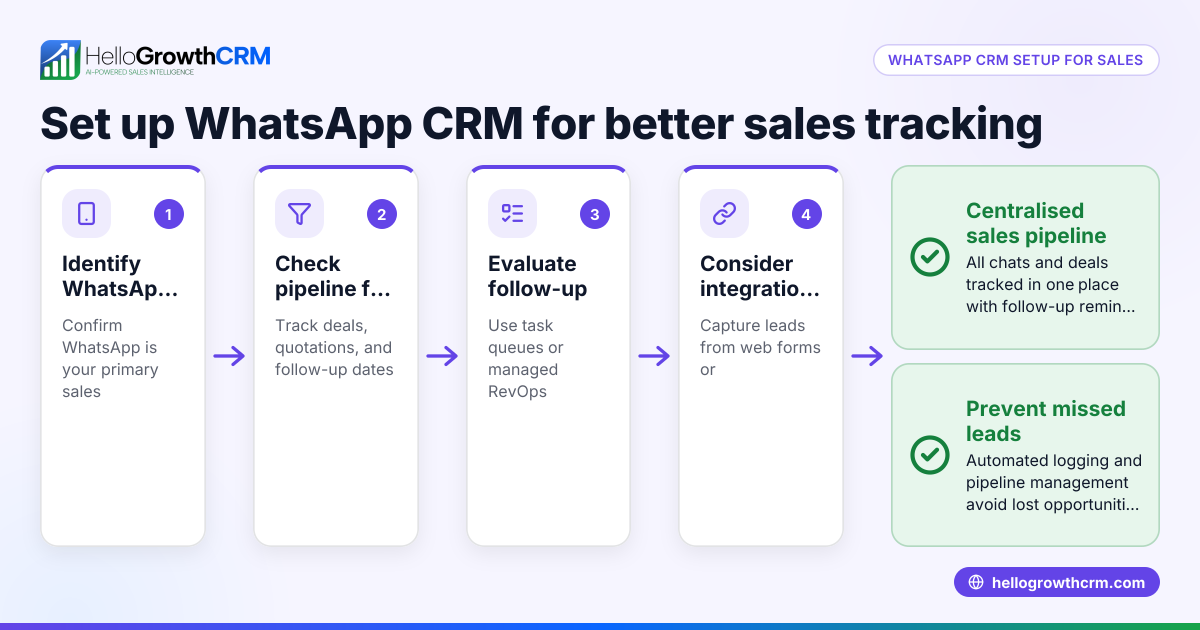
- Check communication integration: Ensure the CRM supports WhatsApp and SMS since many Singapore manufacturers communicate with customers and suppliers this way. The CRM should log these conversations automatically.
- Look for pipeline and task management: Confirm the CRM offers a visual pipeline and task boards to manage follow-ups and deadlines, so no quotation or lead is forgotten.
- Evaluate AI or automation features: Consider if the CRM can help draft follow-up messages or update records automatically to save your sales team time.
- Assess local support and pricing: Review pricing plans suited for Singapore businesses and check if there is local support or customised features for manufacturing.
- Test user experience: Get your sales team to try the CRM to ensure it’s easy to use and fits your daily workflow.
- Compare alternatives: Use comparison tools to weigh features, pricing, and support for manufacturing-specific needs. See our compare CRMs page for guidance.
Example (fictional figures)
A Singapore-based manufacturer of industrial parts in Jurong receives a new enquiry on 10/03/2024. They send a quotation on 15/03/2024 and want to track follow-up.
- Enquiry date: 10/03/2024
- Quotation sent: 15/03/2024
- Quotation value: S$48,000
- Follow-up scheduled: 22/03/2024
Using a CRM pipeline, the deal is logged at the 'quotation sent' stage with a follow-up reminder.
If the customer agrees on 25/03/2024, the deal moves to 'order confirmed' with an estimated close value of S$48,000.
This tracking prevents forgetting the follow-up and speeds closing.
Calculations:
Quotation value: S$48,000
Assuming a 10% discount offered during negotiation:
S$48,000 × 10% = S$4,800 (discount amount)
Final deal value = S$48,000 - S$4,800 = S$43,200
Tracking this adjusted value in the CRM helps forecast revenue accurately.
Common mistakes
- Relying on multiple disconnected tools: Prevent by choosing a CRM that integrates messaging (WhatsApp, SMS) and pipeline tracking.
- Ignoring follow-up scheduling: Use task boards or deal stages with reminders to avoid missed calls or emails.
- Overcomplicating the CRM setup: Start simple with essential features, then add automation like AI agents gradually.
- Not involving the sales team in selection: Include reps in testing to ensure the CRM fits their workflow.
- Choosing a CRM without local pricing transparency: Check pricing suited for Singapore SMEs on the CRM pricing in Singapore page.
- Neglecting industry-specific needs: Verify the CRM supports manufacturing sales stages and quotation complexities by checking industry pages like Manufacturing.
Doing this in HelloGrowthCRM
HelloGrowthCRM supports manufacturing sales teams with Deals (pipeline) that track quotations as deals at the 'quote sent' stage with follow-up dates, ensuring no lead is forgotten. WhatsApp and SMS conversations with leads are logged on the lead record, allowing follow-ups directly through these channels. Additionally, AI agents (in beta) draft follow-up messages after calls for reps to review and send, saving time. Learn more about these features at HelloGrowthCRM for Singapore.
Frequently asked questions
What is the typical pricing for a manufacturing sales CRM in Singapore? Pricing varies by features and user count. Many CRMs offer tiered plans; check local pricing on our CRM pricing in Singapore page to find options suited for small and mid-sized manufacturers.
What are some good alternatives to manufacturing sales CRMs in Singapore? Alternatives include generic CRMs with strong pipeline and messaging features. Evaluate them based on how well they support WhatsApp/SMS and deal tracking. Our compare CRMs page helps you weigh options.
How does a CRM help manufacturers specifically? Manufacturers benefit from tracking complex sales stages, managing quotations, and coordinating follow-ups efficiently. Integration with WhatsApp and SMS is critical since many Singapore manufacturers communicate this way.
Can I use WhatsApp in my manufacturing sales CRM? Yes, CRMs like HelloGrowthCRM log WhatsApp conversations on lead records and enable follow-ups via WhatsApp messages, centralising communication.
How important is AI in a manufacturing sales CRM? AI can save time by drafting follow-up messages and updating records automatically. While not essential, it improves efficiency for busy sales teams.
Key takeaways
- Choose a CRM that matches your manufacturing sales stages and tracks deals clearly.
- Integration with WhatsApp and SMS is vital for Singapore manufacturers.
- Use pipeline and task boards to avoid missed follow-ups and lost leads.
- Test the CRM with your sales team before committing.
- Consider AI features to save time on routine tasks.
- Review local pricing and support options on the CRM pricing in Singapore page.
Choosing the right manufacturing sales CRM in Singapore can improve your sales follow-up, reduce lost leads, and give your team clear visibility on deals. For pricing details and plans suited to Singapore businesses, see Singapore pricing.
Ready to put this into practice?
Set up your pipeline, WhatsApp follow-ups, and AI lead scoring in minutes — free, no credit card.
Try HelloGrowthCRM freeGet CRM tips in your inbox
Join thousands of sales professionals who get weekly insights on CRM strategy, AI automation, and pipeline optimization.

The HelloGrowthCRM team publishes guides on CRM strategy, AI sales tools, and revenue operations for small business sales teams.