HelloGrowthCRM software
Built for real small-business sales teams
HelloGrowthCRM helps reps qualify faster, follow up on time, and close more deals—with practical automation in one place.
- AI lead scoring and pipeline visibility
- Built-in dialer, WhatsApp, and email automation
- Sales forecasting and RevOps-ready reporting
The best sales automation software in New Zealand is one that suits your business size, sales cycle, and communication channels. It should automate repetitive tasks like follow-ups, lead assignment, and reporting without overwhelming your team. This article covers why sales automation matters, step-by-step how to evaluate software, a practical example with NZ figures, common pitfalls to avoid, and how HelloGrowthCRM can help.
Why this comes up / what goes wrong
Small business owners in New Zealand often juggle sales on multiple channels like email, text, and WhatsApp, using spreadsheets and manual notes. This slows down lead follow-up and causes lost opportunities. Choosing sales automation software is key to speeding responses, keeping leads warm, and managing pipelines efficiently. But the market has many options with different features, pricing, and complexity. Without clear criteria, owners risk buying software that is too complex, too basic, or doesn’t integrate well with their existing tools.
Step-by-step
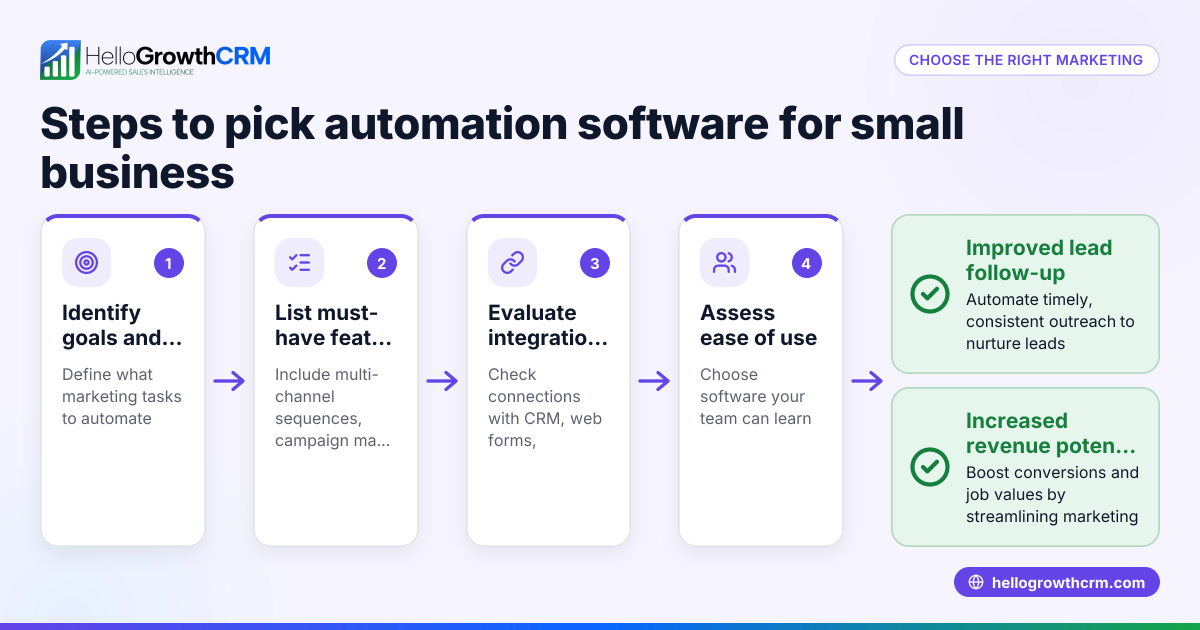
- Identify your sales process and pain points: List your current sales steps and where delays or errors happen. Check if you need automated follow-ups, lead scoring, or pipeline visualisation.
- Decide on essential features: Common must-haves include multi-channel sequences (email, SMS, WhatsApp), lead routing, task automation, and reporting. Consider AI tools if you want message drafting assistance.
- Check integration options: Ensure the software connects with your website forms, email, and messaging platforms to capture leads automatically.
- Evaluate user experience: The software should be easy for your team to adopt without heavy training. Look for mobile access if your reps work remotely.
- Compare pricing and plans: Assess monthly or annual costs, limits on contacts or sequences, and whether features like AI agents or workflows are included.
- Request demos and trials: Test the software with your own data and sales scenarios. Check how sequences run, how leads are assigned, and how easy it is to update records.
- Review support and local presence: Prefer vendors with New Zealand-based support or clear documentation tailored for NZ businesses.
For a detailed comparison of CRM options, see compare CRMs.
Example (fictional figures)
A dairy-equipment supplier in Hamilton wants to automate its sales follow-up to reduce lost leads. They currently spend 10 hours weekly manually sending emails and texts.
- Weekly sales hours saved = 10 hours
- Average hourly wage of sales rep = NZ$30
- Weekly saving = 10 × NZ$30 = NZ$300
- Annual saving (50 working weeks) = NZ$300 × 50 = NZ$15,000
The software costs NZ$200/month = NZ$2,400/year
Net annual benefit = NZ$15,000 − NZ$2,400 = NZ$12,600
This shows how automating follow-ups can save time and money even after software costs.
Common mistakes
- Choosing software with too many features: Avoid tools with complex features you won’t use. Focus on what solves your current problems. Prevent this by listing must-have features first.
- Ignoring user adoption: If your team finds the software hard to use, it won’t be effective. Prevent by involving your sales reps in demos and trials.
- Overlooking integration needs: Buying software that doesn’t connect with your lead sources creates extra work. Check integrations carefully.
- Failing to test automation workflows: Automated sequences or lead routing can misfire if not tested. Always run pilot tests before full rollout.
- Neglecting local support: International vendors may not understand NZ business nuances. Choose providers with local support or resources.
Learn more about choosing the right CRM for your team at HelloGrowthCRM for New Zealand.
Doing this in HelloGrowthCRM
HelloGrowthCRM offers sequences and campaigns that automate a five-step follow-up over two weeks and stop as soon as the prospect replies. Its AI agents can draft follow-up messages after calls for quick rep review. Workflows and lead routing assign new enquiries automatically and create first-call tasks, helping your team respond fast and stay organised. Explore these features at AI CRM.
Frequently asked questions
What is the typical pricing for sales automation software in New Zealand? Pricing varies widely based on features and user counts. Basic plans start from around NZ$20–50 per user per month, while advanced plans with AI and workflows cost more. Always check what features are included in each tier and if there are limits on contacts or sequences. See CRM pricing in New Zealand for more.
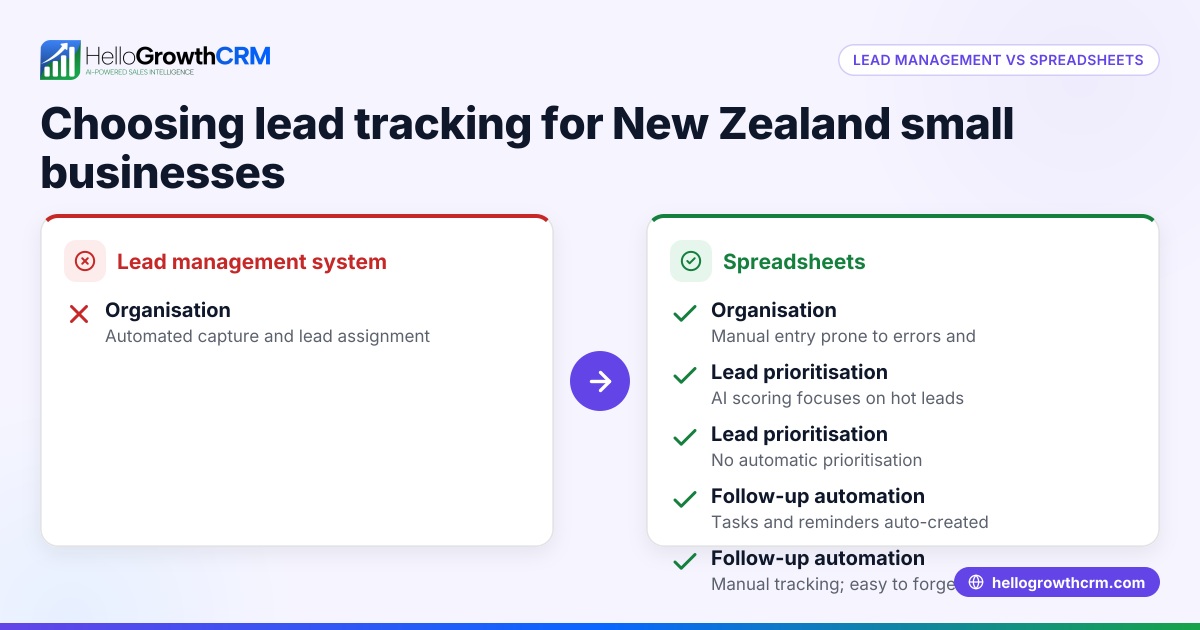
What alternatives exist to sales automation software? Alternatives include manual processes with spreadsheets, email templates, and separate messaging apps. Some businesses use generic project management tools or email marketing platforms, but these lack integrated lead management and task automation. Dedicated sales automation software streamlines the entire process.
How do I know if sales automation software will suit my small business? Assess your sales volume, complexity, and team size. If you lose leads due to slow follow-up or manual errors, automation can help. Start with a trial to see if the software fits your workflow and if your team adopts it easily.
Can sales automation software integrate with WhatsApp? Yes, some tools support WhatsApp messaging sequences and lead capture. HelloGrowthCRM is WhatsApp-native, supporting multi-channel sequences including WhatsApp, email, and SMS.
What questions should I ask vendors before buying? Ask about feature limits, integration options, user onboarding, local support availability, and how their automation handles lead routing and follow-up. Also, clarify pricing details and contract terms.
Key takeaways
- Choose sales automation software that matches your sales process and team skills.
- Prioritise features like multi-channel follow-up, lead routing, and task automation.
- Test software with your own data and workflows before committing.
- Avoid overly complex tools that your team won’t use.
- Check integration capabilities and local support.
- HelloGrowthCRM provides automated sequences, AI drafting, and workflows tailored for small and mid-sized NZ businesses.
See detailed CRM pricing in New Zealand to find a plan that fits your budget and needs.
Start your sales automation journey with a clear shortlist and the right questions to ensure your investment pays off.
Ready to put this into practice?
Set up your pipeline, WhatsApp follow-ups, and AI lead scoring in minutes — free, no credit card.
Try HelloGrowthCRM freeGet CRM tips in your inbox
Join thousands of sales professionals who get weekly insights on CRM strategy, AI automation, and pipeline optimization.

The HelloGrowthCRM team publishes guides on CRM strategy, AI sales tools, and revenue operations for small business sales teams.