HelloGrowthCRM software
Built for real small-business sales teams
HelloGrowthCRM helps reps qualify faster, follow up on time, and close more deals—with practical automation in one place.
- AI lead scoring and pipeline visibility
- Built-in dialer, WhatsApp, and email automation
- Sales forecasting and RevOps-ready reporting
Creating a business invoice in New Zealand requires accuracy and clarity to ensure prompt payment and good record keeping. This guide explains why small business owners need clear invoicing, walks through each step of making an invoice, shows a worked example with realistic NZD amounts, highlights common mistakes, and describes how CRM tools can help manage invoicing efficiently.
Why this comes up / what goes wrong
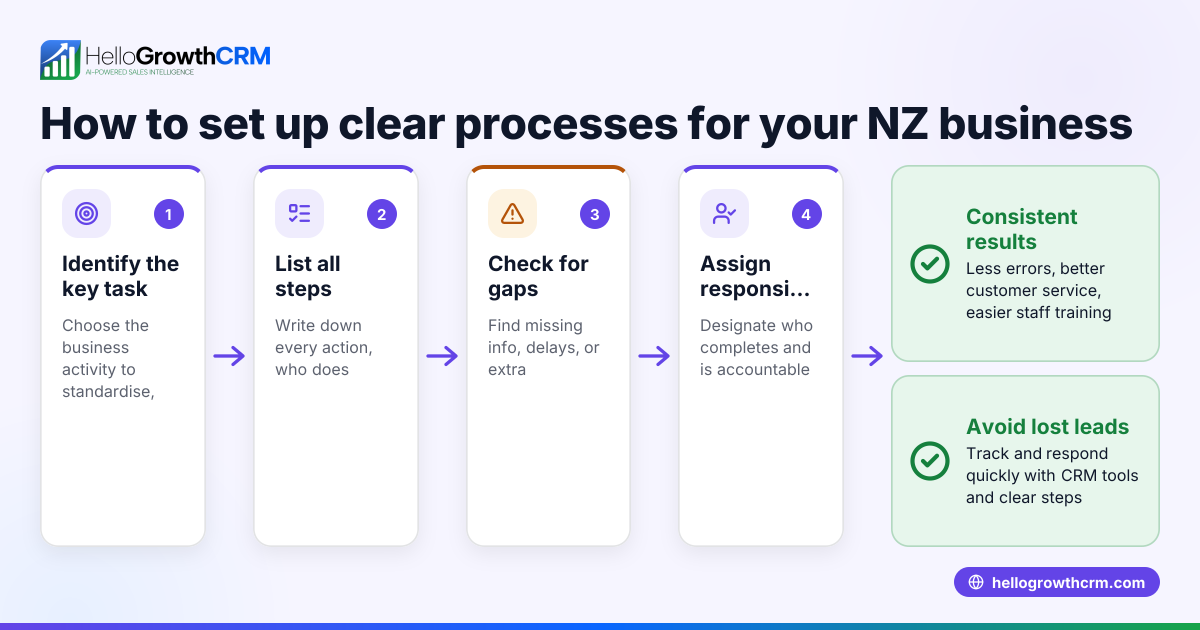
Small business owners often need to create invoices to bill customers for goods or services. Many struggle with what details to include, how to number invoices, or how to calculate totals and taxes correctly. Without a clear process, invoices can be incomplete or confusing, leading to payment delays or disputes. This is especially true for businesses using multiple communication channels like email, text, or WhatsApp without a central system. Having a step-by-step method helps avoid errors and keeps cash flow steady.
Step-by-step
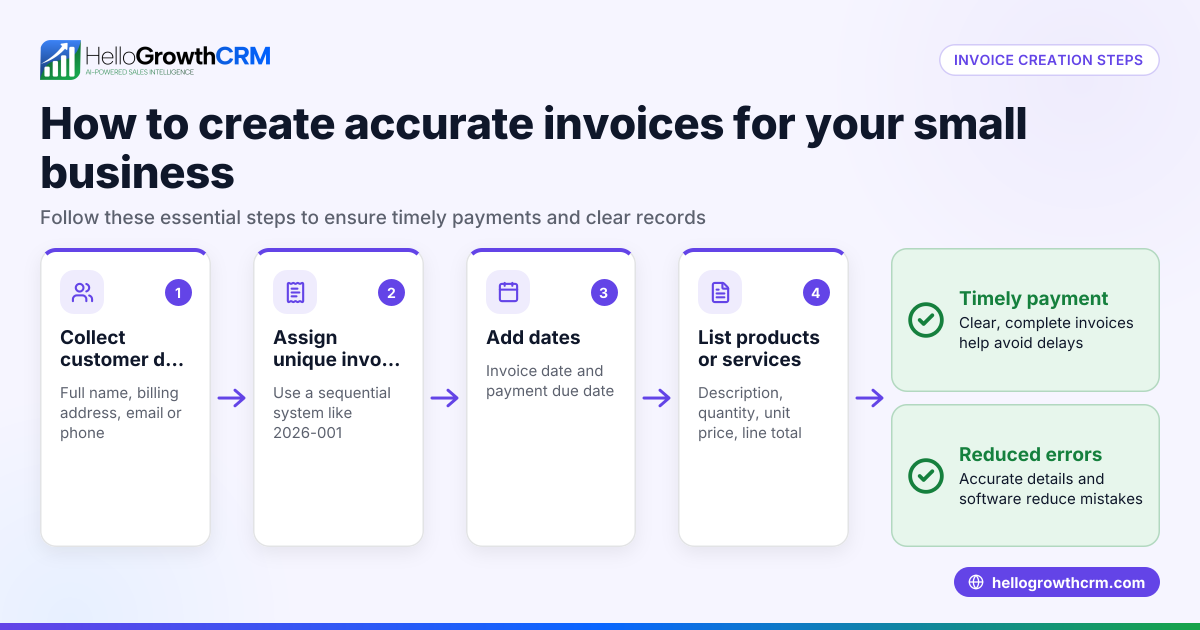
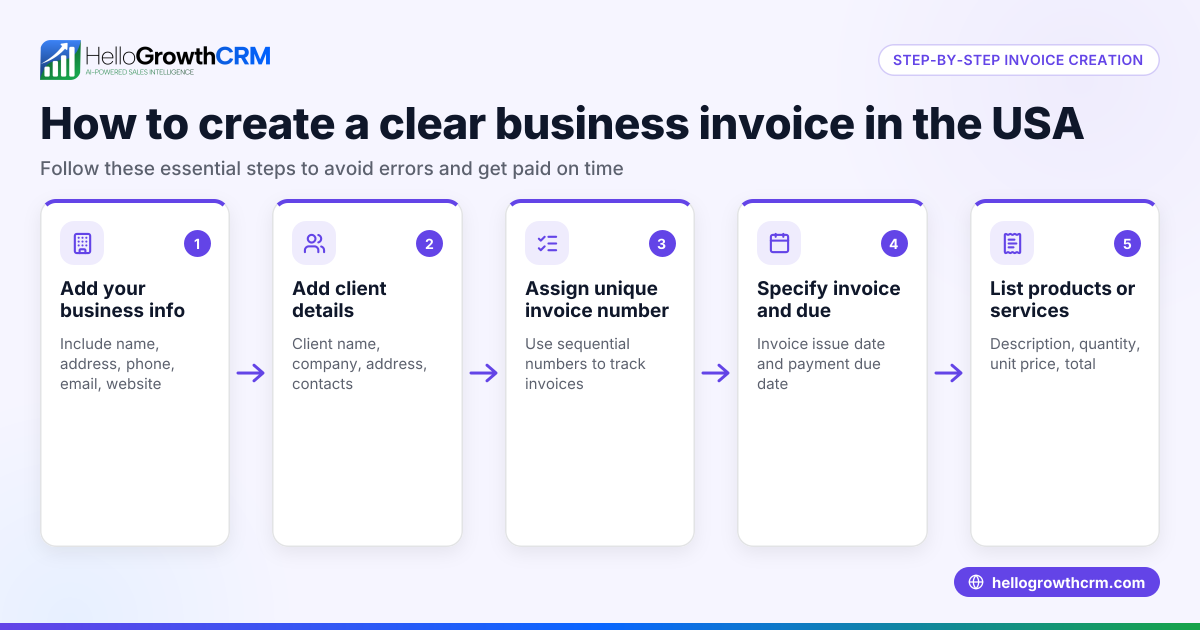
- Add your business details: Include your registered business name, physical address, phone number, and email at the top.
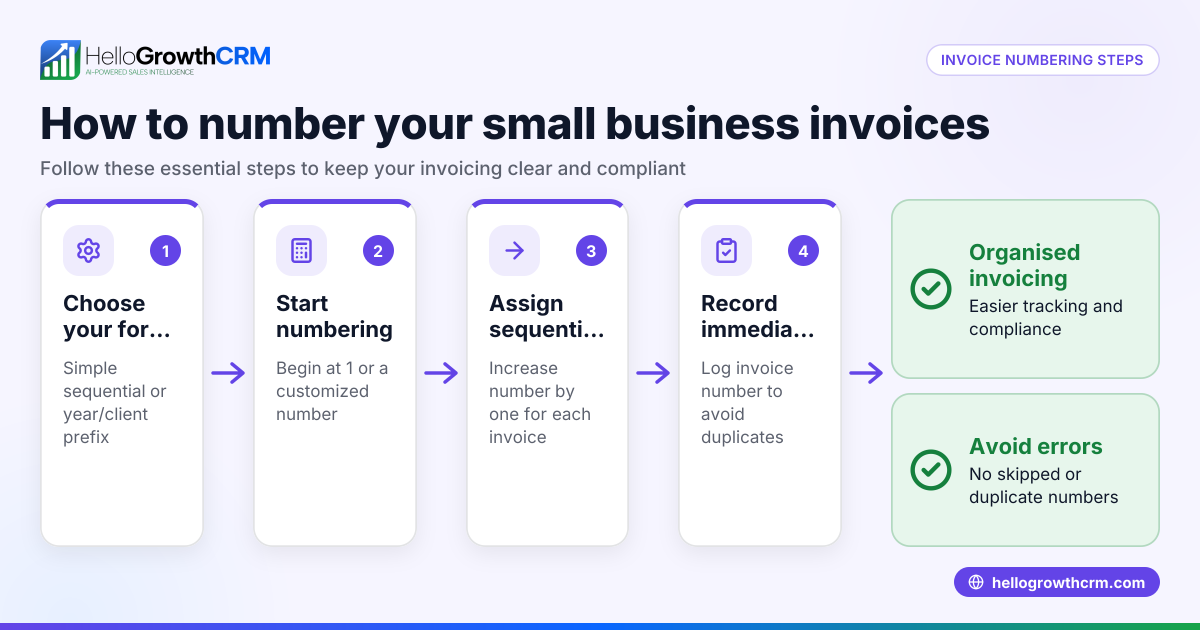
- Assign a unique invoice number: Use a sequential system (e.g., 001, 002) to keep track.
- Include the invoice date: The date you issue the invoice, formatted DD/MM/YYYY.
- Add customer details: Name, address, and contact info of the person or company being invoiced.
- List goods or services provided: Describe each item or service clearly, including quantity and unit price.
- Calculate amounts: Multiply quantity by unit price for each line, then add all lines for a subtotal.
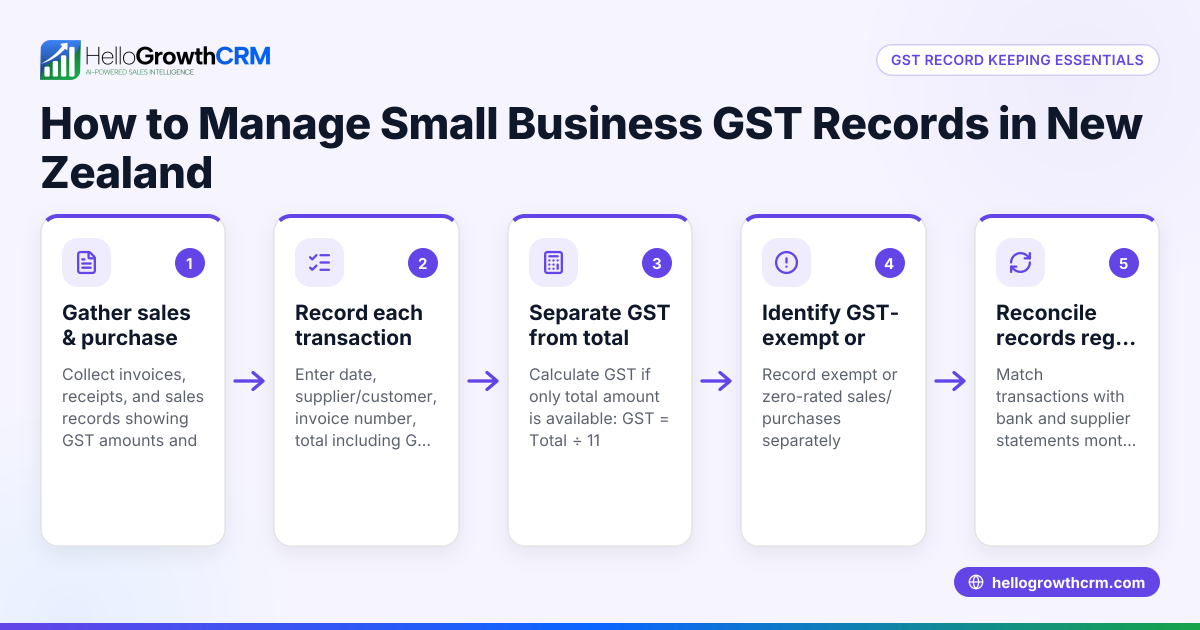
- Add GST if applicable: Calculate GST on the subtotal (GST is typically 15% in NZ but confirm your rate; NEEDS EXPERT REVIEW).
- Show total amount due: Sum subtotal plus GST for the final amount.
- State payment terms: Include due date (e.g., 14 days from invoice date), payment methods accepted, and any late fees.
- Add your bank account details or payment instructions: So the customer knows how to pay.
- Review and save your invoice: Check all details for accuracy before sending.
Using a clear layout helps customers understand and pay promptly. For better organisation, explore tools like the built-in CRM dialer and WhatsApp and SMS CRM that integrate communication and sales management.
Example (fictional figures)
An electrical contractor in Wellington invoices a client for wiring work done on 15/05/2024.
- Business details: Bright Sparks Ltd, 123 Queen St, Wellington, 04 123 4567
- Invoice number: 005
- Invoice date: 15/05/2024
- Customer: Green Homes Ltd, 45 K Rd, Wellington
| Description | Quantity | Unit Price (NZ$) | Line Total (NZ$) |
|---|---|---|---|
| Electrical wiring labour | 10 hours | 75.00 | 750.00 |
| Materials (cables, etc.) | 1 lot | 250.00 | 250.00 |
Subtotal = NZ$750.00 + NZ$250.00 = NZ$1,000.00 GST (assumed 15%) = NZ$1,000.00 × 15% = NZ$150.00 Total amount due = NZ$1,000.00 + NZ$150.00 = NZ$1,150.00
Payment terms: Due within 14 days of invoice date. Bank account: 12-3456-7890123-00.
Common mistakes
- Missing invoice number: Prevent by always assigning a unique sequential number.
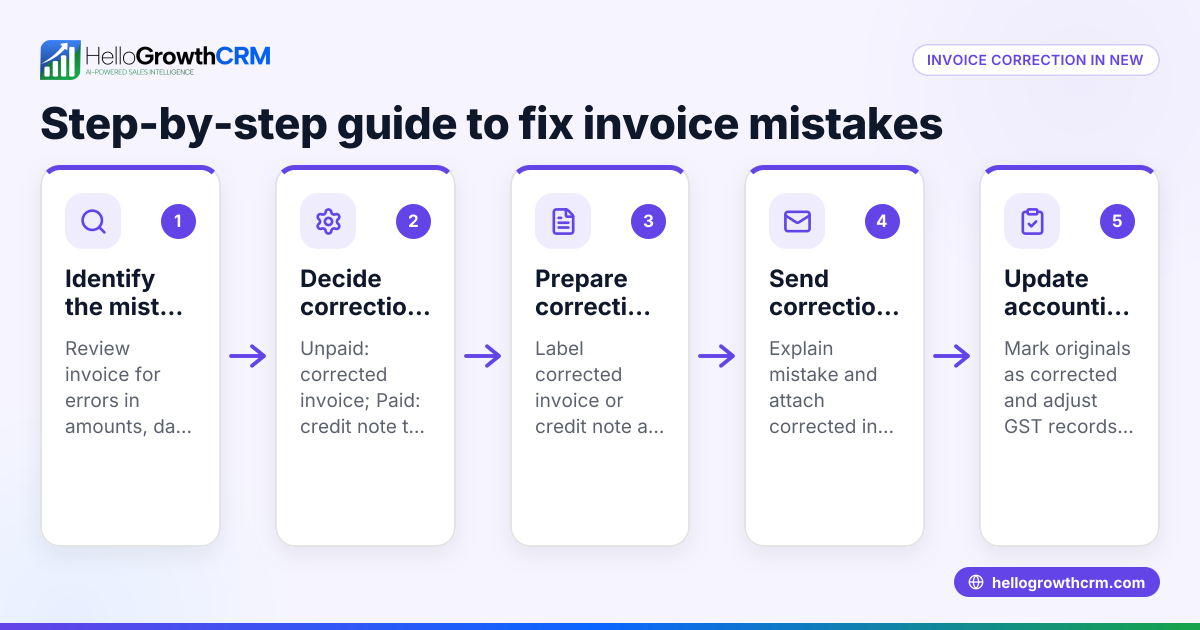
- Incorrect GST calculation: Double-check your GST rate and math; note GST rules may vary. NEEDS EXPERT REVIEW
- Unclear descriptions: Use specific, detailed descriptions so customers know what they are paying for.
- Omitting payment terms: Always state due date and accepted payment methods to avoid confusion.
- Forgetting contact details: Include your business and customer contact info for queries.
- Not saving a copy: Keep a record for your accounts and tax purposes.
To reduce errors, consider using tools designed for invoicing and customer management like a CRM.
Doing this with CRM tools
Many CRM tools offer built-in quoting and proposal features that allow you to create, send, and track invoices linked to your sales deals. For example, you can send quotations from the deal record and see their status (sent, viewed, accepted) alongside follow-up tasks. This integration helps keep your sales pipeline and invoicing organised in one place. Learn about CRM features like the built-in CRM dialer and WhatsApp and SMS CRM that support communication and lead management. See how these tools fit for New Zealand businesses.
Frequently asked questions
How do I make a proforma invoice in New Zealand? A proforma invoice is a preliminary bill sent before goods or services are delivered. It contains similar details to a business invoice but is not a demand for payment. Include your business and customer details, description of goods or services, estimated costs, and a note that it is a proforma invoice.
Can I create recurring invoices in New Zealand? Yes, recurring invoices are used for ongoing services or subscriptions. Set the frequency (weekly, monthly) and amount, then automate sending to save time. Many invoicing tools and CRMs support recurring invoice creation.
What payment terms should I include on my invoice? Common payment terms in NZ are 7, 14, or 30 days from invoice date. Specify the due date clearly and accepted payment methods like bank transfer or credit card. Including late payment fees can encourage timely payment.
Is GST always required on invoices? If your business is registered for GST, you must include GST on your invoices. If not registered, do not charge GST. Confirm your GST registration status and rules. NEEDS EXPERT REVIEW
How do I keep track of invoices sent and payments received? Using CRM tools helps by linking invoices to deals and tracking payment status. This centralises your sales and payment records, reducing manual errors.
Key takeaways
- Include all essential details: business info, invoice number, date, customer info, itemised goods/services, amounts, GST, total, and payment terms.
- Use a clear, consistent invoice numbering system.
- Double-check calculations, especially GST and totals.
- Keep a copy of every invoice for your records.
- Use CRM tools to manage quotes, invoices, and payments from one place.
- Clearly state payment terms to avoid delays.
Start creating your business invoices today with confidence. To manage sales, quotes, and invoices together, start on the Free Forever plan (200 leads, no credit card).
Ready to put this into practice?
Set up your pipeline, WhatsApp follow-ups, and AI lead scoring in minutes — free, no credit card.
Try HelloGrowthCRM freeGet CRM tips in your inbox
Join thousands of sales professionals who get weekly insights on CRM strategy, AI automation, and pipeline optimization.

The HelloGrowthCRM team publishes guides on CRM strategy, AI sales tools, and revenue operations for small business sales teams.