HelloGrowthCRM software
Built for real small-business sales teams
HelloGrowthCRM helps reps qualify faster, follow up on time, and close more deals—with practical automation in one place.
- AI lead scoring and pipeline visibility
- Built-in dialer, WhatsApp, and email automation
- Sales forecasting and RevOps-ready reporting
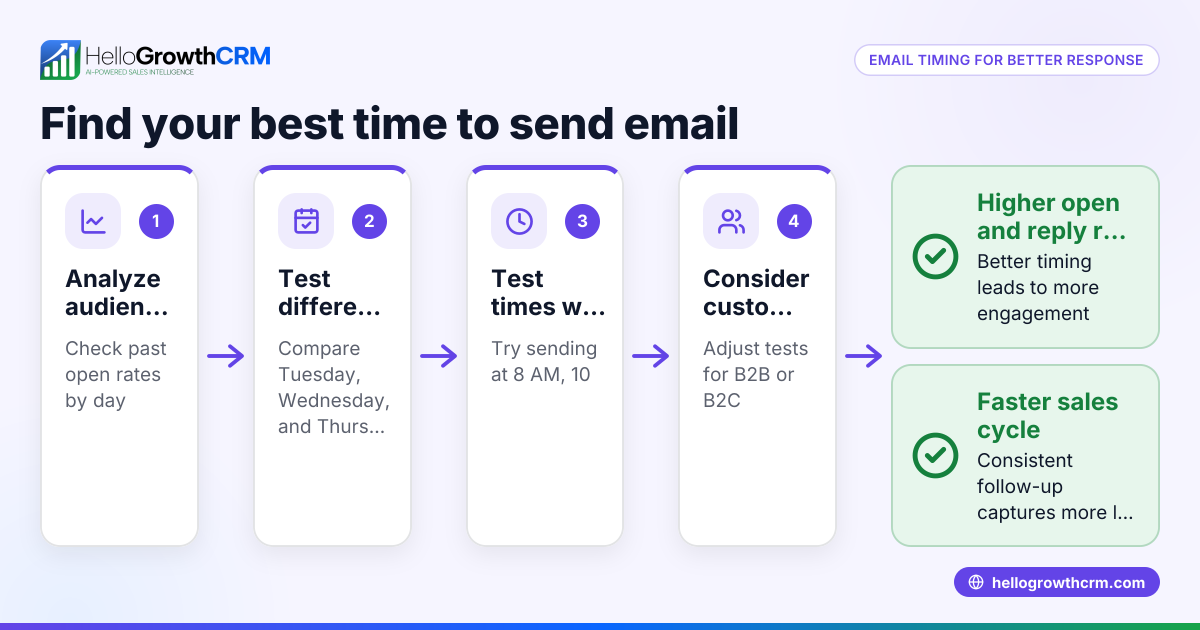
The best time to make a sales call is usually between 10:00 and 11:00 AM or between 2:00 and 4:00 PM on Tuesdays, Wednesdays, and Thursdays. These periods tend to have fewer distractions and higher availability, increasing your chances of connecting with prospects. Avoid Mondays, Fridays, early mornings, lunch hours, and late afternoons when decision-makers are often busy or unavailable.
Why this comes up / what goes wrong
Small-business owners and sales teams often struggle with poor response rates from cold or warm calls. Calling at the wrong time can mean leads are missed because prospects are in meetings, commuting, or focused on other tasks. Without a clear plan for timing, sales reps waste time and lose momentum. This is especially a problem for businesses relying on phone calls alongside texts, emails, and spreadsheets, where follow-up timing is critical.
Step-by-step
- Identify your target prospect’s work hours. Check their industry norms and time zone. For US businesses, standard office hours are 9 AM to 5 PM local time.
- Avoid Mondays and Fridays. Mondays often involve catch-up work; Fridays, people wrap up for the weekend.
- Choose mid-morning or mid-afternoon slots. Aim for 10-11 AM or 2-4 PM to catch prospects when they are settled into their day but not yet distracted.
- Check for holidays or local events. Avoid calling on public holidays or days with known industry events.
- Prepare a call list with scheduled call times. Assign specific time slots for each lead to maintain discipline.
- Log call outcomes immediately. Note if the lead answered, requested a callback, or was unavailable.
- Set reminders for follow-ups based on call results. Use a CRM or calendar to avoid losing leads.
- Test and adjust your call times. Track which time slots yield the best results and refine your schedule accordingly.
- Respect Do Not Call requests and compliance rules. Ensure your call times align with legal restrictions.
Example (fictional figures)
A two-location dental practice in Columbus, Ohio, wants to increase new patient bookings through sales calls. The practice manager plans calls for the week starting 06/10/2026.
- Office hours: 9 AM to 5 PM Eastern Time
- Target call days: Tuesday (06/11), Wednesday (06/12), Thursday (06/13)
- Time slots: 10-11 AM and 2-4 PM
The manager schedules:
- 10 calls on Tuesday at 10:00 AM
- 10 calls on Wednesday at 2:00 PM
- 10 calls on Thursday at 10:30 AM
After Tuesday’s calls, 4 leads answered and booked appointments; 3 requested callbacks Thursday morning; 3 were unavailable.
On Wednesday, the 3 callbacks are made at 10:00 AM:
- 2 more bookings
- 1 no answer
Thursday’s 10 calls at 10:30 AM result in 5 bookings.
Total bookings for the week:
- Tuesday: 4
- Wednesday: 2
- Thursday: 5
Total = 4 + 2 + 5 = 11 new patient bookings
By focusing calls on mid-morning and mid-afternoon on midweek days, the dental practice maximizes reach and bookings.
Common mistakes
- Calling too early or too late. Avoid before 9 AM and after 5 PM to respect work hours.
- Ignoring prospect’s time zone. Always adjust call times to the prospect’s local time.
- Calling on Mondays or Fridays. These days have lower availability and responsiveness.
- Not logging call outcomes immediately. This leads to lost follow-ups and confusion.
- Not setting follow-up reminders. Leads go cold if callbacks are forgotten.
- Using spreadsheets or scattered notes. This causes disorganization and missed opportunities; use a CRM instead.
Doing this in HelloGrowthCRM
HelloGrowthCRM offers a built-in dialer that lets your telecaller work through a call list from inside the CRM. Each call’s outcome is logged directly on the lead record, ensuring no information is lost. Deals appear in a pipeline with stages like 'quote sent' and include follow-up dates so you never forget to call back. For teams with field reps, territories and visit logs help managers track daily beats and commissions. Learn more about the built-in CRM dialer, WhatsApp and SMS CRM, and HelloGrowthCRM for the United States.
Frequently asked questions
What days of the week are best for sales calls? Tuesdays, Wednesdays, and Thursdays generally have the highest answer rates because people are settled into their week but not yet winding down. Mondays and Fridays tend to be less effective.
How many calls should I make per day? This depends on your team size and available hours. Start with manageable batches, like 10-20 calls per session, to maintain quality and avoid burnout.
Should I call during lunch hours? Avoid 12 PM to 1 PM as many prospects take breaks. Calls during lunch may be ignored or rushed.
How can I track call outcomes efficiently? Using a CRM with a built-in dialer helps you log outcomes immediately and set follow-up tasks, preventing leads from slipping through.
Is it better to call or text first? It depends on your audience. Some prospects prefer texts for initial contact, while others respond better to calls. HelloGrowthCRM supports WhatsApp and SMS messaging workflows alongside calls.
Key takeaways
- Call mid-morning (10-11 AM) or mid-afternoon (2-4 PM) on Tuesdays, Wednesdays, or Thursdays.
- Avoid Mondays, Fridays, early mornings, lunch breaks, and late afternoons.
- Schedule calls with specific time slots and log outcomes immediately.
- Use follow-up reminders to maintain momentum.
- Track calls and leads in a CRM to stay organized and efficient.
- Adjust your call times based on results and prospect feedback.
Start improving your sales calls today with HelloGrowthCRM. Start on the Free Forever plan (200 leads, no credit card).
Ready to put this into practice?
Set up your pipeline, WhatsApp follow-ups, and AI lead scoring in minutes — free, no credit card.
Try HelloGrowthCRM freeGet CRM tips in your inbox
Join thousands of sales professionals who get weekly insights on CRM strategy, AI automation, and pipeline optimization.

The HelloGrowthCRM team publishes guides on CRM strategy, AI sales tools, and revenue operations for small business sales teams.