HelloGrowthCRM software
Built for real small-business sales teams
HelloGrowthCRM helps reps qualify faster, follow up on time, and close more deals—with practical automation in one place.
- AI lead scoring and pipeline visibility
- Built-in dialer, WhatsApp, and email automation
- Sales forecasting and RevOps-ready reporting
A brand awareness campaign is a marketing effort designed to make your target audience recognize and remember your business name, products, or services. It focuses on increasing visibility and familiarity rather than immediate sales. This article explains why brand awareness matters for small businesses, steps to create an effective campaign, a practical example with Canadian figures, common pitfalls to avoid, and how HelloGrowthCRM’s sequences and campaigns can support your outreach.
Why this comes up / what goes wrong
Small business owners in Canada often struggle to grow because potential customers don’t know their brand exists. Without brand awareness, even the best products or services can be overlooked. Many small businesses rely on word-of-mouth or scattered efforts like social media posts, text messages, or email blasts without a clear plan. This leads to slow follow-up, lost leads, and wasted marketing dollars. A focused brand awareness campaign helps your business stand out and builds trust over time, creating a foundation for future sales.
Step-by-step
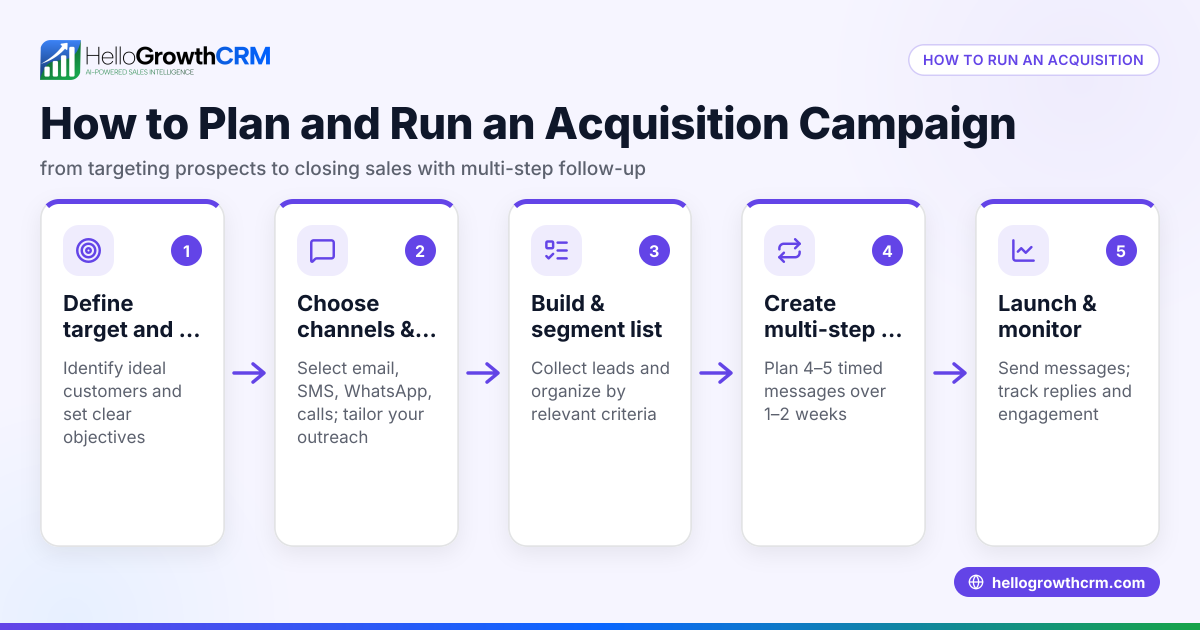
- Define your target audience: Identify who your ideal customers are by demographics, interests, location, and behaviour. Check that your audience aligns with your business goals.
- Set clear objectives: Decide what you want your campaign to achieve, such as increased website visits, social media followers, or local recognition. Objectives should be measurable.
- Choose your channels: Select platforms where your audience spends time—this could be social media, email, SMS, WhatsApp, local events, or online ads. Check channel costs and reach.
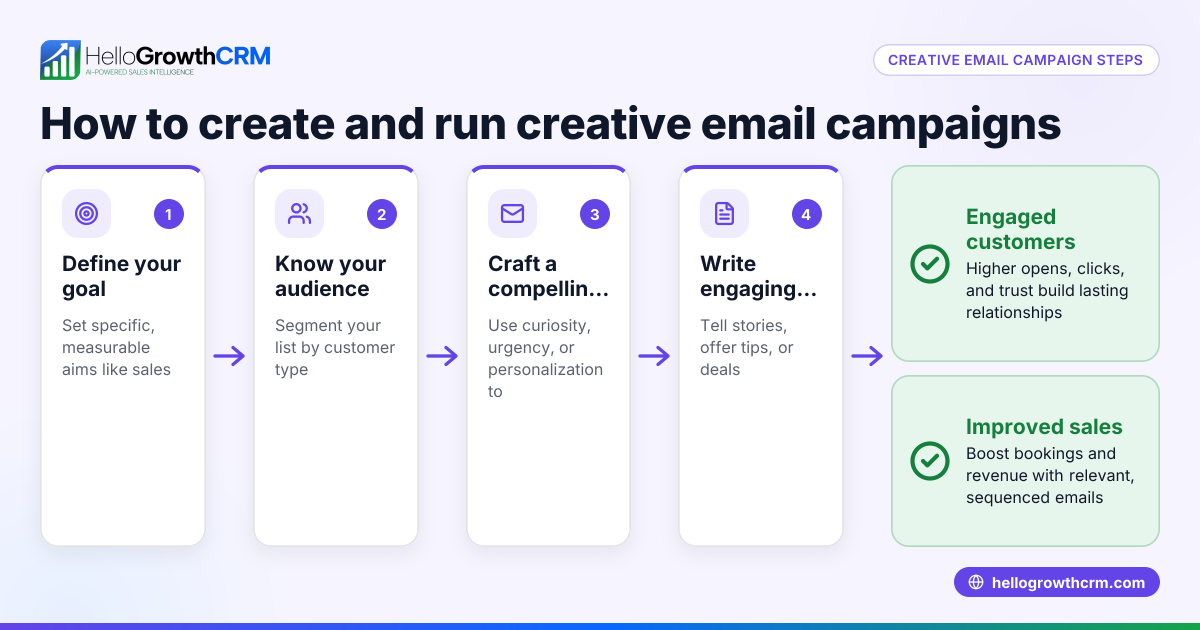
- Develop your key message and visuals: Create a consistent message and look that reflects your brand values and appeals to your audience. Check for clarity and memorability.
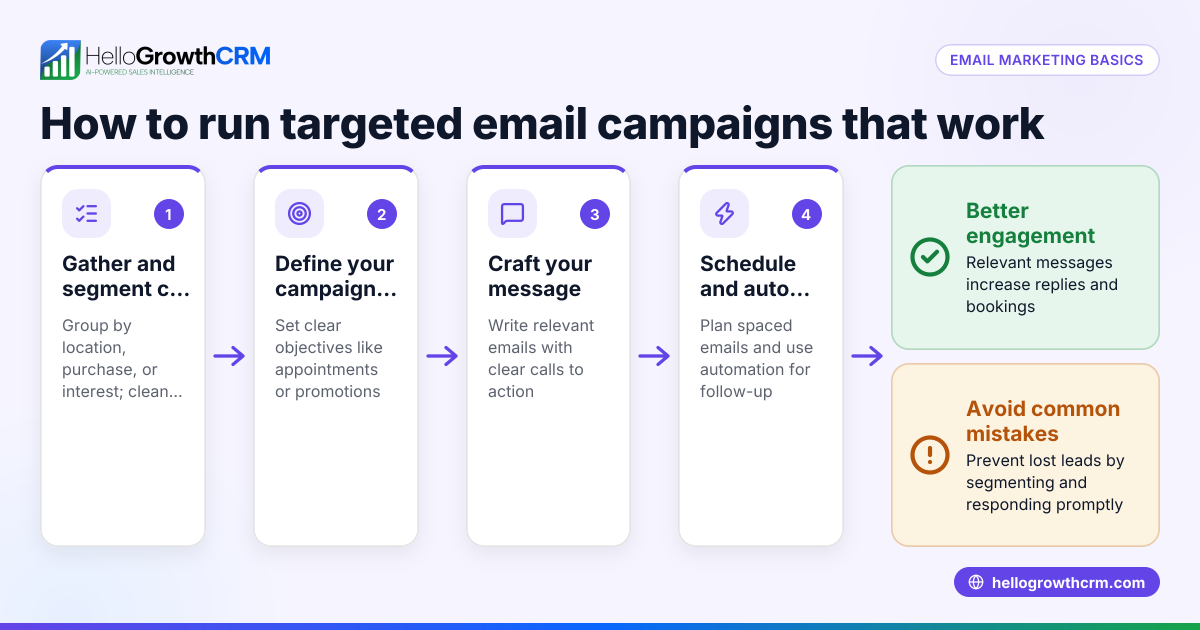
- Plan your content and schedule: Outline the types of content (videos, posts, messages) and when you will publish or send them. Check that the frequency keeps your brand top of mind without overwhelming prospects.
- Launch your campaign: Start delivering your content and messages according to your plan. Monitor engagement and responses.
- Follow up efficiently: Respond quickly to any inquiries or interactions to convert interest into leads. Check response times and adjust follow-up methods as needed.
- Measure and adjust: Track metrics like reach, engagement, and website traffic. Check if objectives are being met and tweak your campaign accordingly.
Example (fictional figures)
A mortgage brokerage in Mississauga, Ontario, wants to increase local brand awareness over two months starting 2026-05-01. They budget C$5,000 for a campaign.
- Target audience: Homebuyers aged 25-45 in Mississauga.
- Objective: Increase website visits by 30%.
- Channels: Facebook ads, WhatsApp messages, email newsletters.
- Key message: "Trusted local mortgage advice for your dream home."
- Content plan: 3 Facebook ads, weekly WhatsApp follow-up sequences, biweekly emails.
Budget allocation:
C$5,000 × 40% = C$2,000 (Facebook ads) C$5,000 × 20% = C$1,000 (WhatsApp messaging tools and sequences) C$5,000 × 10% = C$500 (Email marketing service)
Total = C$3,500 spent on channels, leaving C$1,500 for creative development and contingencies.
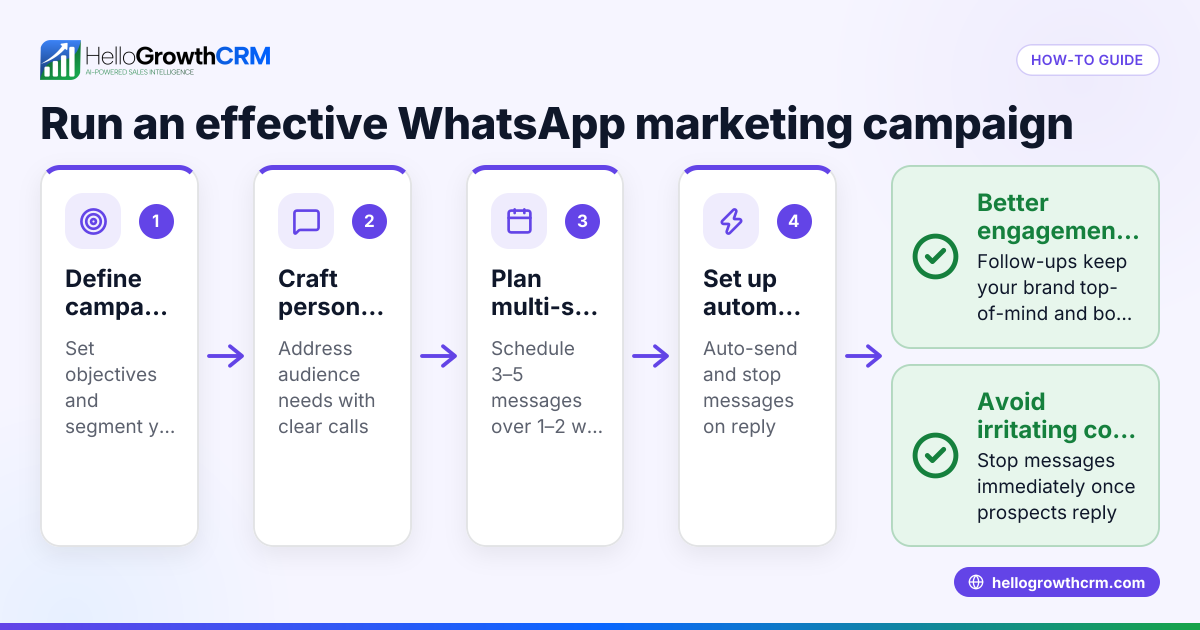
They run a five-step WhatsApp follow-up sequence over two weeks for interested leads, stopping when the prospect replies, ensuring timely engagement.
Common mistakes
- Ignoring target audience specifics: Leads to wasted effort. Prevent by researching and defining your audience clearly.
- Unclear or inconsistent messaging: Confuses prospects. Prevent by crafting simple, consistent messages and visuals.
- Overloading prospects with too many messages: Causes annoyance and opt-outs. Prevent by pacing your outreach and respecting response signals.
- Neglecting follow-up: Losing leads due to slow or no response. Prevent by setting up automated sequences that stop when prospects reply.
- Not measuring results: Missing opportunities to improve. Prevent by tracking key metrics and adjusting your campaign.
- Using too many disconnected tools: Leads to inefficiency and lost data. Prevent by using integrated tools like HelloGrowthCRM for messaging and follow-up.
Doing this in HelloGrowthCRM
HelloGrowthCRM offers sequences and campaigns that automate multi-step outreach workflows across email, SMS, and WhatsApp. You can set up a five-step follow-up over two weeks that runs automatically and stops the moment the prospect replies. This ensures timely engagement without manual tracking. Learn more about WhatsApp and SMS CRM and the built-in CRM dialer to enhance your campaign’s effectiveness. For Canadian businesses, see HelloGrowthCRM for Canada.
Frequently asked questions
What is the main goal of a brand awareness campaign? The main goal is to make your target audience recognize and remember your brand, increasing visibility and trust. It’s about building familiarity rather than immediate sales.
How long should a brand awareness campaign last? Campaign length varies but typically runs from a few weeks to several months. Consistency over time helps embed your brand in customers’ minds.
Which channels work best for small business brand awareness? Channels depend on your audience. Common effective channels include social media, email, SMS, WhatsApp, and local events. Choose where your audience is most active.
How do I measure if my brand awareness campaign is successful? Track metrics like website visits, social media engagement, message open rates, and inquiries. Compare these to your objectives and adjust your campaign accordingly.
Can I automate follow-up messages in a brand awareness campaign? Yes, automation tools like HelloGrowthCRM’s sequences can send timed multi-step messages and stop when a prospect replies, ensuring efficient follow-up.
Key takeaways
- A brand awareness campaign increases your business’s visibility and recognition.
- Define your target audience and clear objectives before starting.
- Use consistent messaging and choose channels your audience uses.
- Automate follow-up with sequences that stop when prospects respond.
- Measure results and adjust your campaign for better impact.
- Integrated tools like HelloGrowthCRM simplify campaign management and follow-up.
Start your brand awareness campaign today and see how consistent, timely outreach can grow your business. Start on the Free Forever plan (200 leads, no credit card).
Ready to put this into practice?
Set up your pipeline, WhatsApp follow-ups, and AI lead scoring in minutes — free, no credit card.
Try HelloGrowthCRM freeGet CRM tips in your inbox
Join thousands of sales professionals who get weekly insights on CRM strategy, AI automation, and pipeline optimization.

The HelloGrowthCRM team publishes guides on CRM strategy, AI sales tools, and revenue operations for small business sales teams.