HelloGrowthCRM software
Built for real small-business sales teams
HelloGrowthCRM helps reps qualify faster, follow up on time, and close more deals—with practical automation in one place.
- AI lead scoring and pipeline visibility
- Built-in dialer, WhatsApp, and email automation
- Sales forecasting and RevOps-ready reporting
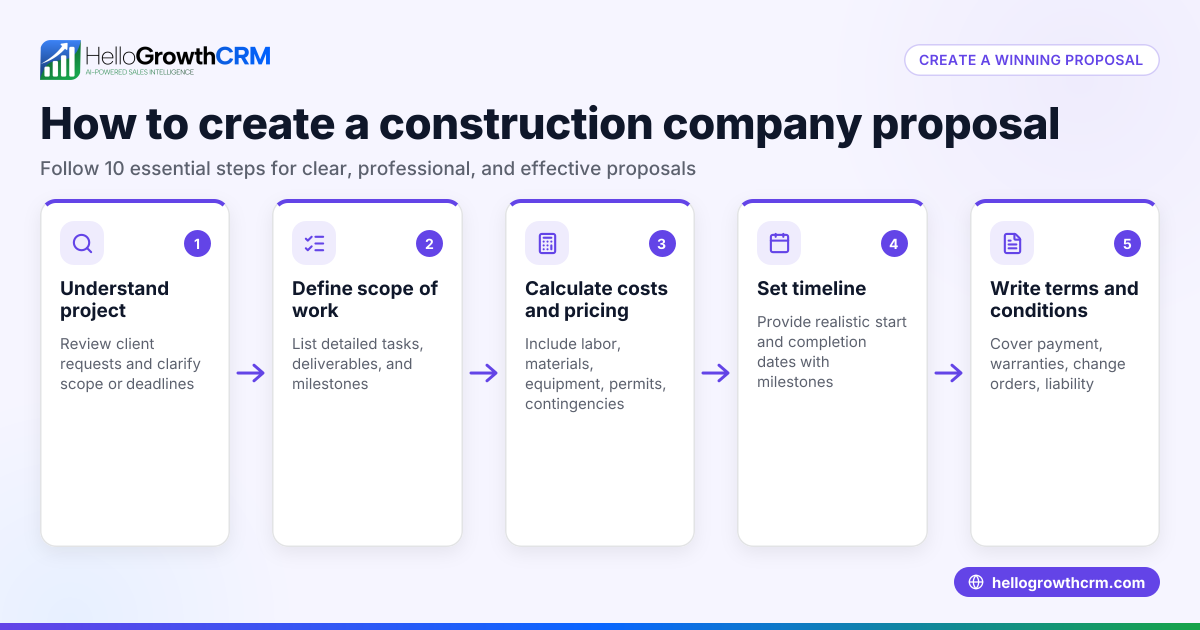
Business proposal examples demonstrate how to clearly present your products or services to a potential client or partner. They include key sections like an introduction, a description of your solution, pricing details, timelines, terms and conditions, and a call to action. Using these examples helps you communicate your value effectively, increasing your chances of winning new business. This article covers why business proposals come up, how to write one step-by-step, a worked example with realistic figures, common mistakes to avoid, and how HelloGrowthCRM supports proposal management.
Why this comes up / what goes wrong
Many small-business owners lose leads or sales because their proposals are unclear, incomplete, or delayed. Without a clear business proposal, clients may misunderstand your offer or compare you unfavorably to competitors. Proposals written inconsistently or tracked poorly cause follow-up delays and missed opportunities. Business owners relying on text messages, email threads, or spreadsheets often find it hard to organize proposals and track their status, leading to lost deals. This is especially common for businesses that communicate sales over WhatsApp, SMS, or email without a centralized system.
Step-by-step
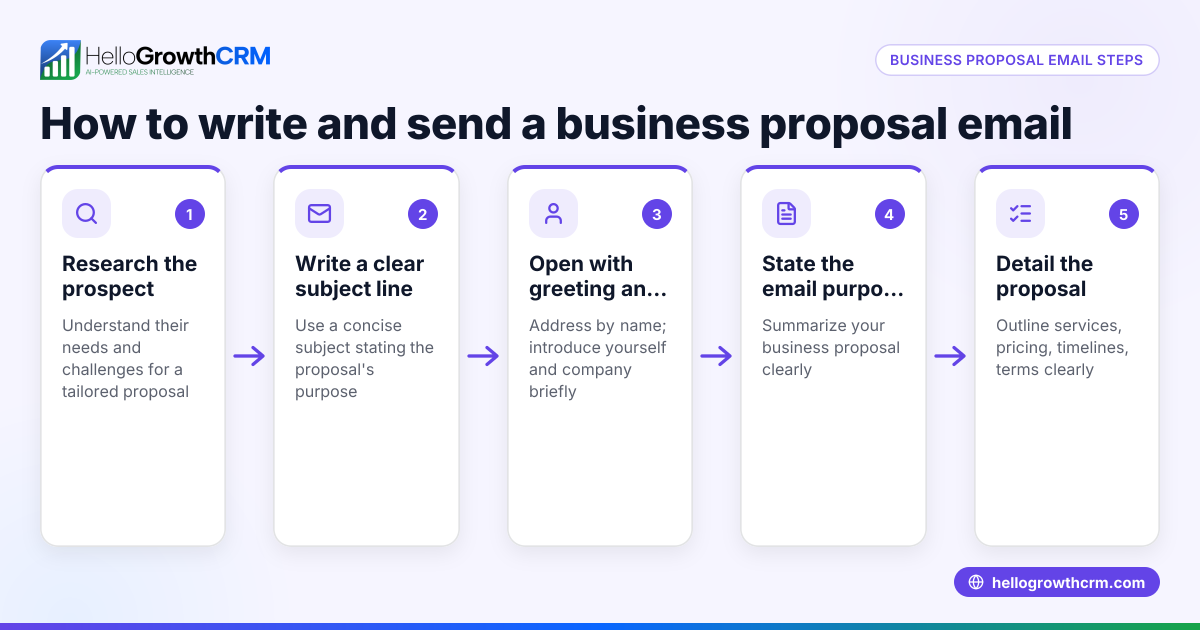
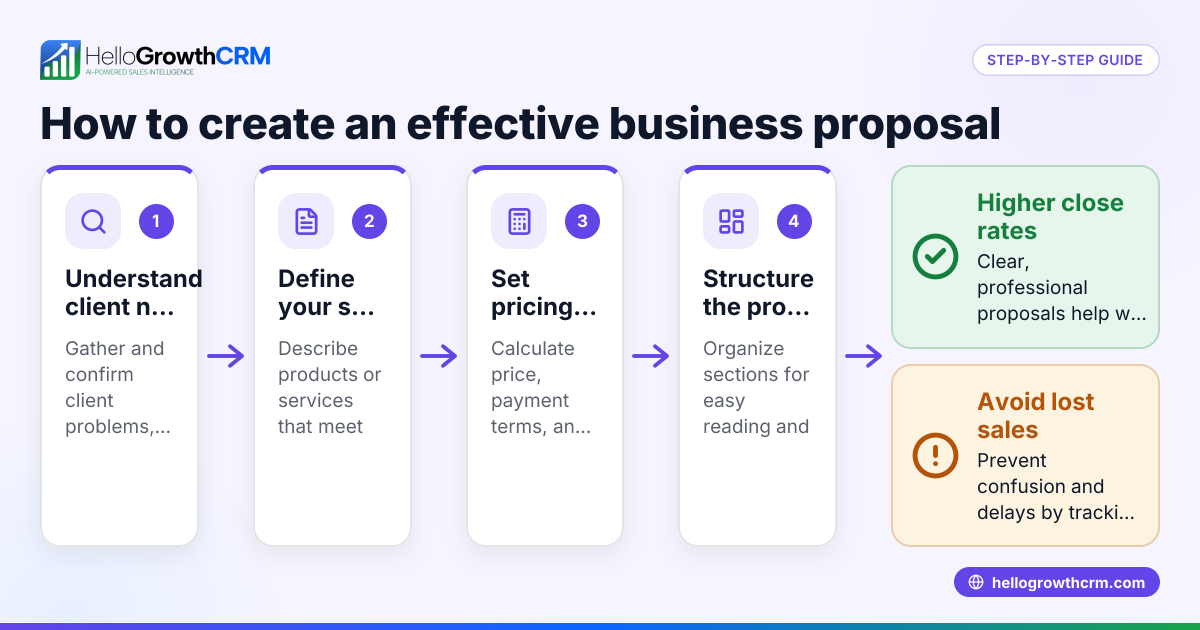
- Understand the client’s needs. Gather detailed information about what the client wants and their pain points. Check that your proposal addresses these needs specifically.
- Write a clear introduction. State who you are, the purpose of the proposal, and summarize the client’s needs as you understand them.
- Describe your solution. Explain what product or service you offer and how it solves the client’s problem. Include key features and benefits.
- Provide pricing and payment terms. List all costs clearly, including any optional services or discounts. Specify payment schedules or methods.
- Set a timeline. Outline key milestones, deadlines, and delivery dates.
- Include terms and conditions. Mention warranties, support, confidentiality, or cancellation policies.
- Add a call to action. Tell the client how to accept the proposal and who to contact with questions.
- Review and proofread. Check for clarity, accuracy, and professionalism.
At each step, verify that your proposal is tailored to the client and easy to understand. Using a CRM with proposal features can help you manage these steps and track proposal status. For example, HelloGrowthCRM’s built-in quoting and proposal tool lets you send and track proposals alongside follow-up tasks (/product/crm-dialer). Sending proposals via WhatsApp or SMS is also possible, helping you reach clients where they communicate most (/product/whatsapp-sms-crm). HelloGrowthCRM is designed for small and mid-sized US businesses, supporting sales teams who want to avoid lost leads and slow follow-up (/usa).
Example (fictional figures)
A B2B software reseller in Denver, Colorado, prepares a business proposal for a potential client on 07/15/2026.
- Introduction: "We are ABC Software Resellers, offering tailored software solutions to improve your sales team efficiency."
- Solution: "We propose a CRM integration package including setup, training, and support."
- Pricing:
- CRM license fee: $12,000
- Setup and customization: $5,000
- Training sessions: $3,000
- Total: $12,000 + $5,000 + $3,000 = $20,000
- Timeline:
- Project start: 08/01/2026
- Completion: 09/15/2026
- Terms: 50% upfront, 50% upon completion.
This clear breakdown helps the client understand the offer and decide quickly.
Common mistakes
- Being too vague. Prevent by tailoring every proposal to the client’s specific needs and avoiding generic statements.
- Ignoring pricing details. Prevent by listing all costs and payment terms clearly.
- Skipping proofreading. Prevent by reviewing the document or having a colleague check for errors.
- Not including a call to action. Prevent by explicitly telling the client how to accept or contact you.
- Losing track of proposal status. Prevent by using a CRM that shows proposal status and follow-up tasks on the same screen (/product/whatsapp-sms-crm).
- Delaying follow-up. Prevent by scheduling follow-up tasks immediately after sending the proposal to keep momentum (/product/crm-dialer).
Doing this in HelloGrowthCRM
HelloGrowthCRM offers a built-in quoting and proposal tool for building, sending, and tracking commercial documents from the deal record. You can see the status of each proposal—sent, viewed, or accepted—on the same screen as your follow-up task. This integration helps you manage quotes, invoices, and payments efficiently without juggling multiple apps. Learn more about HelloGrowthCRM for the United States (/usa).
Frequently asked questions
What is the difference between a business proposal and a business plan? A business proposal is a document to win a specific client or project, focusing on the offer details. A business plan outlines your overall business strategy and goals.
How long should a business proposal be? Keep it concise but complete. The length should suit the complexity of the business proposal. Focus on clarity and relevance.
Can I send business proposals via WhatsApp or SMS? Yes, you can send proposals and quotes via WhatsApp and SMS using CRM tools that support these channels, helping you reach clients where they communicate most (/product/whatsapp-sms-crm).
How do I follow up after sending a proposal? Schedule follow-up tasks in your CRM to remind you to check in. Seeing proposal status and follow-up tasks together helps manage this efficiently (/product/crm-dialer).
Should I include legal terms in my proposal? Yes, including basic terms like payment, confidentiality, and cancellation helps protect both parties. For complex deals, consult a lawyer.
Key takeaways
- Tailor your business proposal to the client’s specific needs.
- Include clear pricing, timeline, and terms.
- Use a call to action to guide client response.
- Proofread carefully to maintain professionalism.
- Track proposal status and follow-up tasks to avoid lost leads.
- Use CRM tools to send, track, and manage proposals and follow-ups efficiently.
Start managing your proposals more effectively with HelloGrowthCRM. Start on the Free Forever plan (200 leads, no credit card).
Ready to put this into practice?
Set up your pipeline, WhatsApp follow-ups, and AI lead scoring in minutes — free, no credit card.
Try HelloGrowthCRM freeGet CRM tips in your inbox
Join thousands of sales professionals who get weekly insights on CRM strategy, AI automation, and pipeline optimization.

The HelloGrowthCRM team publishes guides on CRM strategy, AI sales tools, and revenue operations for small business sales teams.