HelloGrowthCRM software
Built for real small-business sales teams
HelloGrowthCRM helps reps qualify faster, follow up on time, and close more deals—with practical automation in one place.
- AI lead scoring and pipeline visibility
- Built-in dialer, WhatsApp, and email automation
- Sales forecasting and RevOps-ready reporting
A construction company proposal is a formal document that outlines the scope of work, pricing, timelines, and terms your construction business offers to a potential client. It is essential to create a proposal that is clear, detailed, and professional to increase your chances of winning contracts and managing client expectations effectively. This article covers why construction proposals are critical, step-by-step instructions for creating one, a realistic example from a US-based plumbing contractor, common mistakes to avoid, and how HelloGrowthCRM helps you manage proposals and follow-ups efficiently.
Why this comes up / what goes wrong
Construction business owners and accountants often face challenges when preparing proposals because construction projects vary widely in scope and complexity. Without a structured proposal, clients may misunderstand the work included, leading to disputes or lost bids. Slow or disorganized follow-up can cause leads to go cold, especially when proposals are sent via email or text without tracking. Many small to mid-sized construction firms still rely on spreadsheets, email, or messaging apps, which complicates managing multiple proposals and client communications. This makes having a clear, repeatable proposal process vital for growth and cash flow.
Step-by-step
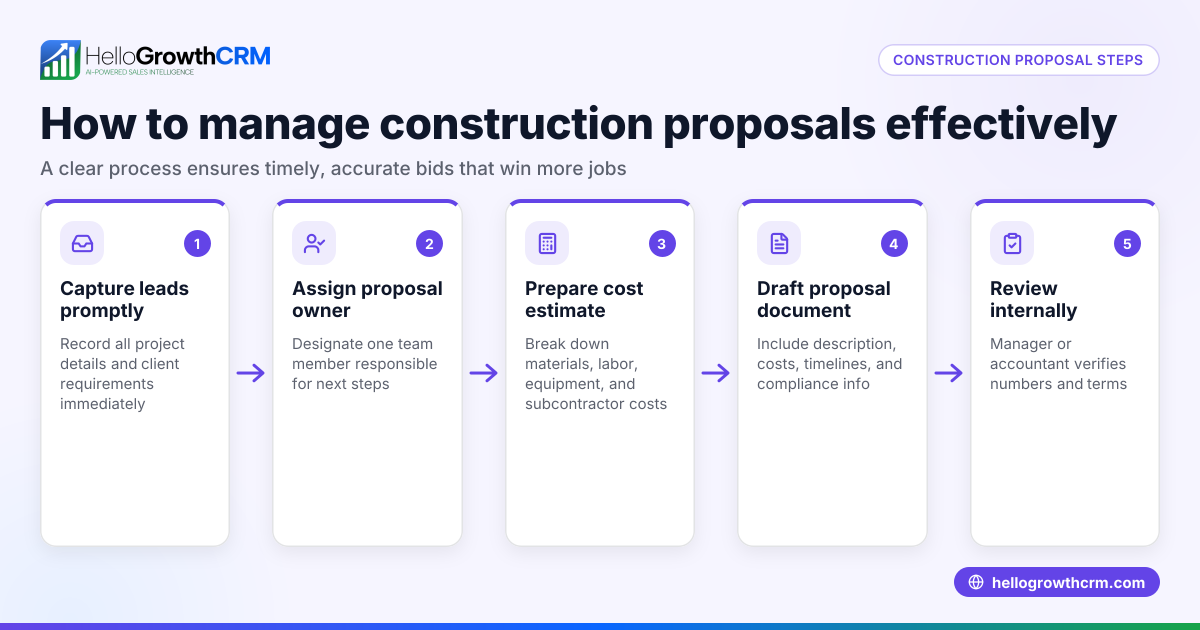
- Understand the Project Requirements: Review the client's request or bid documents carefully. Clarify any uncertainties about scope, materials, or deadlines.
- Define the Scope of Work: List all tasks, deliverables, and milestones. Be specific to avoid scope creep later.
- Calculate Costs and Pricing: Include labor, materials, equipment, permits, and contingencies. Double-check calculations.
- Set the Timeline: Provide realistic start and completion dates, including key milestones.
- Write Terms and Conditions: Cover payment terms, warranties, change orders, and liability.
- Format the Proposal Professionally: Use clear headings, bullet points, and your company branding.
- Review and Approve Internally: Have an accountant or manager verify figures and terms.
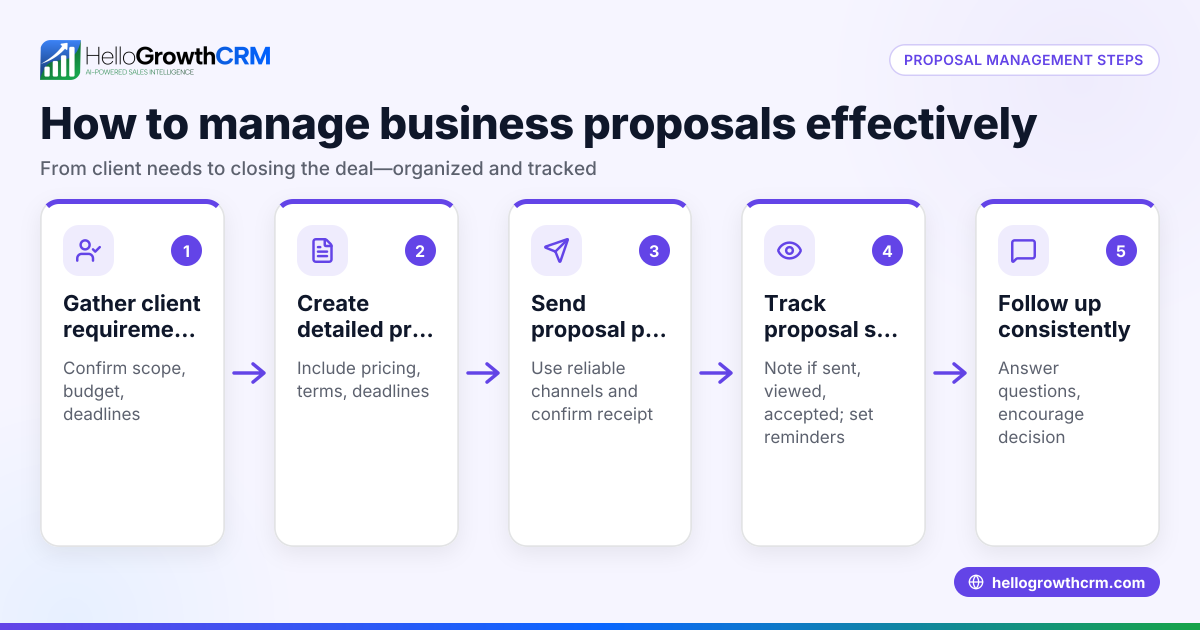
- Send and Track the Proposal: Use a tool or CRM to send the proposal and monitor if the client views and accepts it.
- Follow Up Promptly: Schedule follow-up tasks to answer questions or negotiate.
- Record Client Acceptance and Next Steps: Once accepted, prepare contracts and schedule the project kickoff.
Using these steps helps ensure your proposal is thorough and improves your chances of winning the job. For more on managing construction sales and proposals, see Contractors and construction.
Example (fictional figures)
ABC Plumbing, a construction subcontractor based in Austin, Texas, prepares a proposal for a commercial kitchen installation. The proposal date is 07/15/2026.
- Labor cost: $25,000
- Materials cost: $15,000
- Equipment rental: $5,000
- Permits and fees: $1,500
- Contingency: $4,650 (calculated below)
Calculate subtotal:
$25,000 + $15,000 + $5,000 + $1,500 = $46,500
Calculate contingency (assumed illustrative rate of 10%):
$46,500 × 10% = $4,650
Calculate total proposal price:
$46,500 + $4,650 = $51,150
ABC Plumbing sets the project timeline to start 08/01/2026 and complete by 09/15/2026. Payment terms require 30% upfront, 40% at halfway, and 30% on completion.
This clear, detailed proposal helps the client understand costs, schedule, and payment expectations, reducing misunderstandings.
Common mistakes
- Vague Scope of Work: Leads to disputes and extra costs. Prevent by detailing every task and deliverable.
- Underestimating Costs: Causes losses and delays. Prevent by including contingencies and double-checking calculations.
- Ignoring Payment Terms: Results in cash flow problems. Prevent by clearly stating payment schedules and conditions.
- Not Tracking Proposal Status: Leads to missed follow-ups and lost leads. Prevent by using CRM tools to monitor proposal views and acceptance.
- Sending Proposals Informally: Via text or email without branding or structure looks unprofessional. Prevent by using formatted documents or CRM-generated proposals.
For more on avoiding sales process pitfalls, see HelloGrowthCRM for the United States.
Doing this in HelloGrowthCRM
HelloGrowthCRM offers a built-in quoting and proposal tool that lets you build, send, and track commercial documents directly from a deal record. You can see the proposal status—sent, viewed, or accepted—on the same screen as your follow-up tasks, making it easier to manage your pipeline and client communication. Invoices and payment reconciliation are also integrated, helping you keep track of project billing efficiently. Learn more about managing sales communication with WhatsApp and SMS CRM.
Frequently asked questions
What should a construction company proposal include? A construction proposal should include the project scope, detailed pricing, timeline, payment terms, and terms and conditions like warranties and change orders. Clear, specific information helps clients understand what to expect.
How detailed should the cost breakdown be? Costs should be broken down by labor, materials, equipment, permits, and any contingencies. This transparency builds trust and helps clients see the value in your proposal.
Can I send proposals and follow up within one tool? Using a CRM like HelloGrowthCRM lets you send proposals and track their status on the same screen as your follow-up tasks, improving your organization and response times.
How soon should I follow up after sending a proposal? Follow up promptly to confirm receipt, answer questions, and keep the lead engaged.
Do I need legal help to write a proposal? While basic proposals can be prepared in-house, complex projects may require legal review of terms and conditions to protect your business. Consult a lawyer if unsure.
For more on managing construction sales, visit Contractors and construction.
Key takeaways
- A construction company proposal clearly defines scope, costs, timeline, and terms to win and manage projects.
- Use numbered steps to prepare, review, send, and follow up on proposals professionally.
- Avoid common mistakes like vague scopes, underestimated costs, and poor follow-up.
- HelloGrowthCRM helps you create, send, and track proposals and payments from one screen.
- Prompt follow-up and transparent pricing improve client trust and contract success.
Start preparing your construction proposals with confidence. To manage your leads, quotes, and follow-ups efficiently, Start on the Free Forever plan (200 leads, no credit card).
Ready to put this into practice?
Set up your pipeline, WhatsApp follow-ups, and AI lead scoring in minutes — free, no credit card.
Try HelloGrowthCRM freeGet CRM tips in your inbox
Join thousands of sales professionals who get weekly insights on CRM strategy, AI automation, and pipeline optimization.

The HelloGrowthCRM team publishes guides on CRM strategy, AI sales tools, and revenue operations for small business sales teams.