HelloGrowthCRM software
Built for real small-business sales teams
HelloGrowthCRM helps reps qualify faster, follow up on time, and close more deals—with practical automation in one place.
- AI lead scoring and pipeline visibility
- Built-in dialer, WhatsApp, and email automation
- Sales forecasting and RevOps-ready reporting
A cleaning business proposal is a formal document presenting your cleaning services, pricing, and conditions to potential clients. It aims to convince clients to hire your business by clearly explaining what you offer and how you deliver value. This article explains why proposals are essential for cleaning businesses, guides you through creating one step-by-step, provides a US-based example, highlights common pitfalls, and shows how HelloGrowthCRM can streamline your proposal process.
Why this comes up / what goes wrong
Many cleaning business owners or their accountants struggle to create proposals that clearly communicate their services and pricing. Without a structured proposal, potential clients may misunderstand the scope or cost, leading to lost sales or disputes. Cleaning businesses often rely on informal quotes via text or email, which can be inconsistent and hard to track. This leads to slow follow-up, missed opportunities, and confusion about which proposals are accepted or pending. A well-crafted cleaning business proposal helps present your offer professionally and ensures both parties agree on terms.
Step-by-step
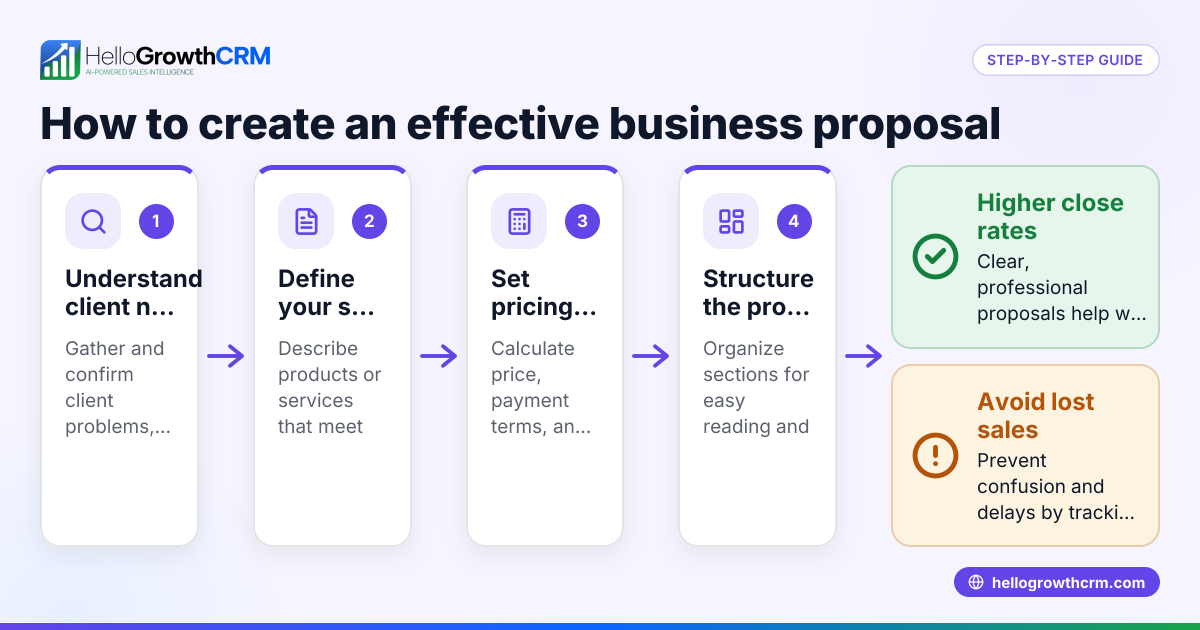
- Identify the client’s needs: Gather details about the cleaning requirements, frequency, locations, and any special requests. Check for any site access or safety rules.
- Define the scope of services: List specific cleaning tasks you will perform, such as vacuuming, window washing, or floor care. Confirm what is excluded to avoid misunderstandings.
- Calculate pricing: Choose a pricing model (hourly, flat rate, or per square foot). Calculate labor, supplies, overhead, and profit margin. Make sure your price covers costs and is competitive.
- Set terms and conditions: Specify payment terms, cancellation policies, contract length, and liability clauses. Confirm how and when services will be delivered.
- Draft the proposal document: Include your company information, client details, service description, pricing, terms, and signature lines.
- Review and customize: Tailor the proposal to the client’s needs and double-check for clarity and accuracy.
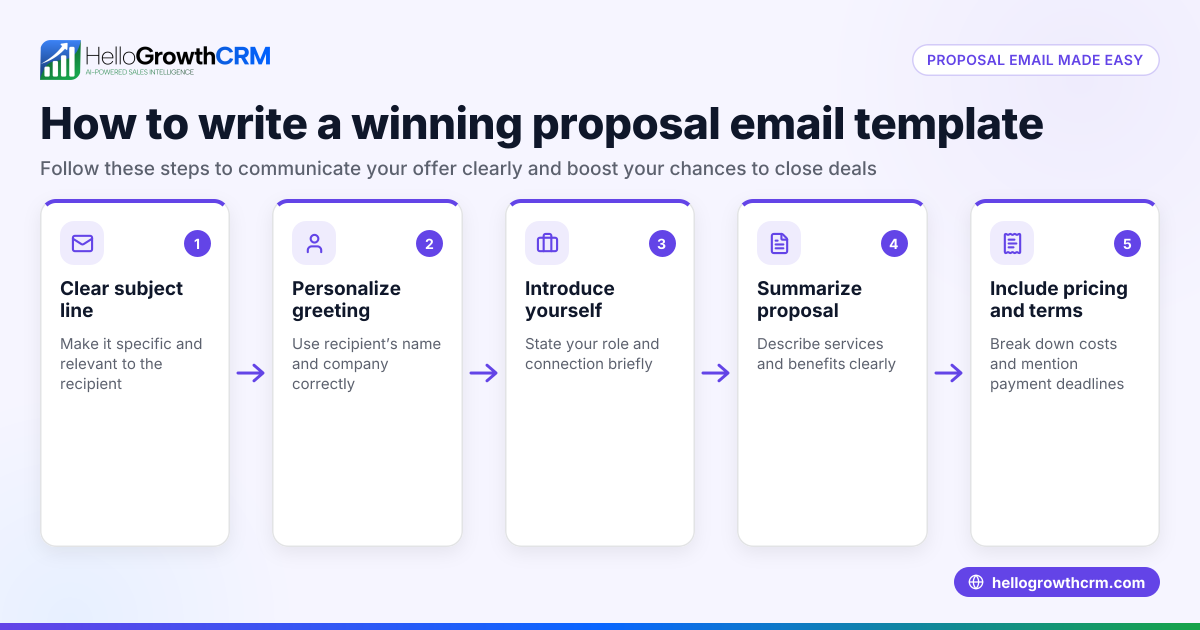
- Send and track the proposal: Deliver the proposal via email or CRM, and follow up promptly. Track if the proposal is viewed or accepted.
- Negotiate if needed: Be prepared to adjust terms or pricing based on client feedback.
- Finalize and sign: Once accepted, have both parties sign the proposal to formalize the agreement.
- Start service delivery: Schedule and perform the cleaning as agreed.
For more on managing local service businesses effectively, see Local service businesses.
Example (fictional figures)
A two-location cleaning business in Columbus, Ohio, prepares a proposal for a small office needing weekly cleaning.
- Labor cost per hour: $25
- Estimated hours per visit: 4
- Supplies and overhead per visit: $30
- Profit margin: 20%
Calculate base cost per visit:
$25 × 4 = $100 (labor)
$100 + $30 = $130 (labor + supplies)
Add profit margin:
$130 × 20% = $26 (profit)
Total price per visit:
$130 + $26 = $156
The proposal states a weekly cleaning at $156 per visit, with payment due within 15 days of invoice. It also includes terms on cancellation and liability.
Proposal date: 06/15/2026
Common mistakes
- Unclear scope of work: Leads to client dissatisfaction. Prevent by detailing exactly what services are included and excluded.
- Underpricing services: Causes losses. Prevent by accurately calculating all costs and adding a reasonable profit margin.
- Ignoring terms and conditions: Risks legal issues or payment delays. Prevent by including clear payment, cancellation, and liability terms.
- Not tracking proposal status: Results in missed follow-ups. Prevent by using a CRM or system to monitor sent, viewed, and accepted proposals.
- Overcomplicating the proposal: Confuses clients. Prevent by keeping language simple and the document concise.
For tips on managing proposals and follow-ups, see HelloGrowthCRM for the United States.
Doing this in HelloGrowthCRM
HelloGrowthCRM offers a built-in quoting and proposal tool that lets you build, send, and track proposals directly from a deal record. You can see the status of your quotation—whether it’s sent, viewed, or accepted—on the same screen as your follow-up tasks. This helps ensure timely follow-up and keeps your sales process organized. It also supports generating invoices and recording payments tied to deals. For more details, visit WhatsApp and SMS CRM.
Frequently asked questions
What should be included in a cleaning business proposal? A proposal should include your company details, client information, a clear description of the cleaning services offered, pricing, payment terms, contract length, cancellation policies, and signature lines.
How do I price cleaning services in a proposal? Calculate your labor costs, supplies, overhead, and add a profit margin. Choose a pricing model such as hourly, flat rate, or per square foot. Ensure your price covers costs and is competitive.
Can I send proposals via email or should I use a CRM? Email is common but can be hard to track. Using a CRM like HelloGrowthCRM helps you send, track, and follow up on proposals efficiently.
How detailed should the scope of work be? Be as detailed as necessary to avoid misunderstandings. Clearly list included tasks and any exclusions.
Should I include terms and conditions in my proposal? Yes. Payment terms, cancellation policies, and liability clauses protect both you and the client.
Key takeaways
- A cleaning business proposal clearly defines services, pricing, and terms.
- Follow a step-by-step process: identify needs, scope, price, draft, send, and track.
- Avoid common mistakes like unclear scope, underpricing, and poor tracking.
- HelloGrowthCRM helps manage proposals, track status, and follow up efficiently.
- Tailor each proposal to the client’s specific requirements for best results.
Start streamlining your cleaning business proposals today. Start on the Free Forever plan (200 leads, no credit card).
Ready to put this into practice?
Set up your pipeline, WhatsApp follow-ups, and AI lead scoring in minutes — free, no credit card.
Try HelloGrowthCRM freeGet CRM tips in your inbox
Join thousands of sales professionals who get weekly insights on CRM strategy, AI automation, and pipeline optimization.

The HelloGrowthCRM team publishes guides on CRM strategy, AI sales tools, and revenue operations for small business sales teams.