HelloGrowthCRM software
Built for real small-business sales teams
HelloGrowthCRM helps reps qualify faster, follow up on time, and close more deals—with practical automation in one place.
- AI lead scoring and pipeline visibility
- Built-in dialer, WhatsApp, and email automation
- Sales forecasting and RevOps-ready reporting
Call center cost reduction means lowering the expenses involved in running your call center while maintaining or improving customer service quality. For small and mid-sized US businesses, this typically involves reviewing your staffing levels, technology choices, call handling processes, and vendor contracts to find savings without hurting sales or support.
Why this comes up / what goes wrong
Small-business owners often face rising costs in call center operations due to inefficient call handling, manual tracking, and disconnected tools like spreadsheets and text messages. Without a unified system, reps spend extra time switching between apps, logging calls manually, or following up late, which wastes salary costs and loses leads. High telecom bills, overstaffing during slow hours, and poor call routing also inflate costs. These challenges prompt business owners to seek software or services that reduce call center expenses while keeping customer engagement strong.
Step-by-step
- Analyze current call center costs: Add salaries, telecom bills, software fees, and overhead. Check if costs align with call volume and revenue.
- Evaluate call volume patterns: Identify peak and slow hours to optimize staffing. Avoid overstaffing during low call times.
- Review technology and tools: Check if your current phone system and CRM integration reduce manual work. Look for built-in dialers that log calls automatically.
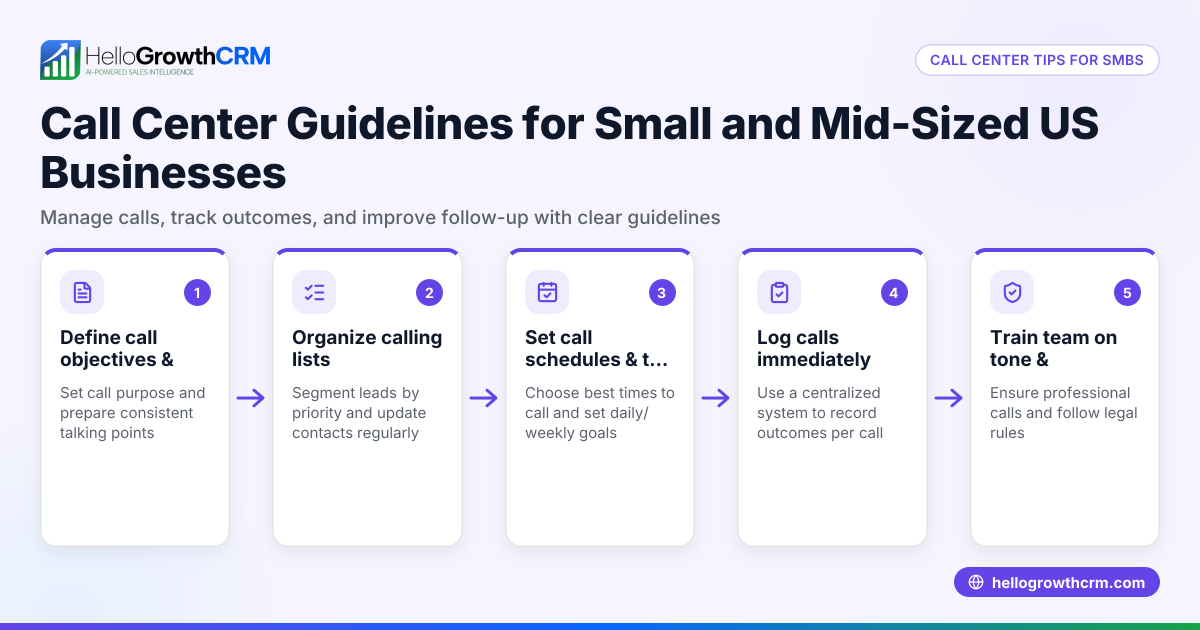
- Streamline call handling processes: Standardize call scripts, automate follow-ups, and reduce call transfers to save time.
- Negotiate telecom contracts: Compare rates and plans to reduce monthly phone bills.
- Train and monitor reps: Improve efficiency with coaching and use call outcome data to identify bottlenecks.
- Consider outsourcing selectively: For overflow or after-hours calls, outsourcing can cut costs but weigh quality trade-offs.
- Implement a CRM with a built-in dialer: This reduces toggling between apps, logs calls automatically, and tracks outcomes efficiently.
- Measure results monthly: Track cost savings, call quality, and lead conversion to adjust strategies.
Example (fictional figures)
A landscaping contractor in Charlotte, North Carolina, runs a small call center with 4 reps. Their monthly costs are:
- Salaries: $12,000
- Telecom bills: $1,200
- Software fees (phone system + CRM): $800
- Overhead (space, utilities): $1,000
Total monthly call center cost = $12,000 + $1,200 + $800 + $1,000 = $15,000
They notice many calls go unanswered during slow hours, and reps spend 30 minutes daily logging calls manually.
Steps to reduce costs:
- Reduce telecom bills by switching to a CRM with a built-in dialer, saving $400/month.
- Automate call logging to save 30 minutes per rep daily; this improves rep availability by 10 hours weekly, reducing need for a 5th rep.
- Adjust staffing to 3.5 reps on average, saving $1,500 monthly.
New monthly costs:
- Salaries: $12,000 - $1,500 = $10,500
- Telecom bills: $1,200 - $400 = $800
- Software fees (new CRM dialer): $900 (slightly higher but includes dialer)
- Overhead: $1,000
Total new monthly cost = $10,500 + $800 + $900 + $1,000 = $13,200
Monthly savings = $15,000 - $13,200 = $1,800
Common mistakes
- Ignoring call volume trends: Prevent by monitoring call data weekly to match staffing.
- Using disconnected tools: Prevent by adopting a CRM with integrated calling to reduce manual work.
- Overlooking telecom contracts: Prevent by regularly reviewing and negotiating plans.
- Cutting staff without process improvements: Prevent by improving call handling efficiency first.
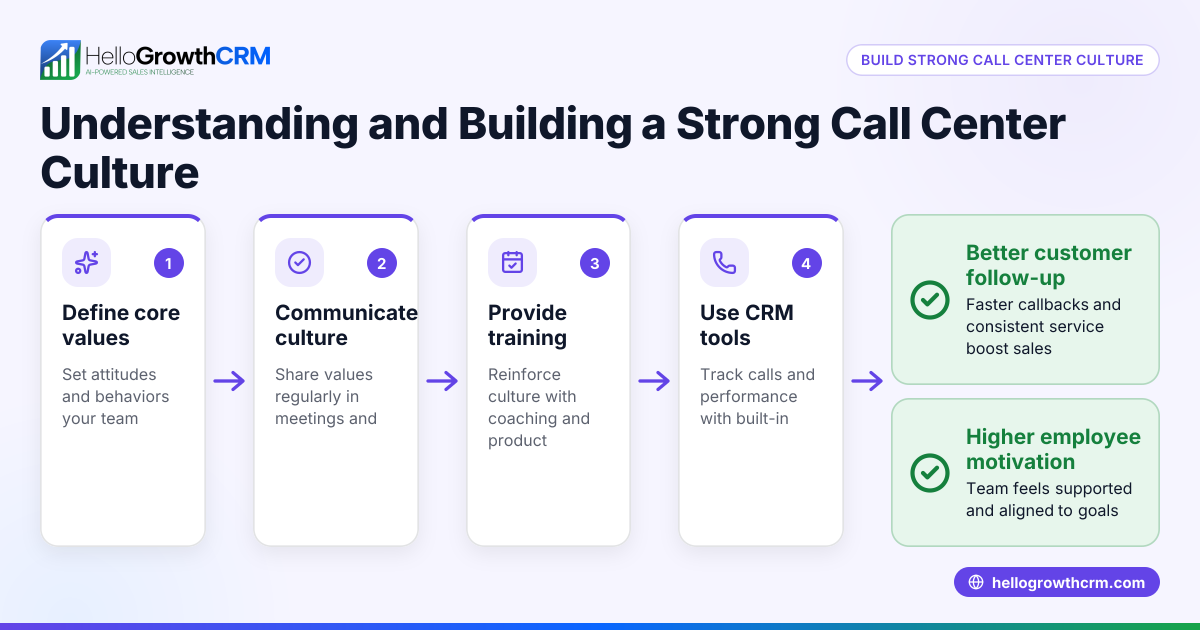
- Neglecting rep training: Prevent by scheduling regular coaching based on call outcomes.
Doing this in HelloGrowthCRM
HelloGrowthCRM offers a built-in dialer that lets reps work a list directly inside the CRM. Each call’s outcome is logged automatically on the lead’s record, eliminating manual entry and improving follow-up speed. The call history stays tied to contact and deal records, helping sales teams track progress clearly. Using the built-in CRM dialer reduces switching between apps and lowers telecom costs by streamlining calling within the CRM.
Frequently asked questions
What is the biggest driver of call center costs? Staff salaries and telecom expenses usually make up the largest portion. Optimizing staffing levels and negotiating phone plans can significantly reduce costs.
How does technology help reduce call center costs? Technology like a CRM with a built-in dialer automates call logging, reduces manual errors, speeds up follow-ups, and consolidates tools, saving time and money.
Can outsourcing calls save money? Outsourcing overflow or after-hours calls can reduce staffing costs but may affect service quality and control, so weigh pros and cons carefully.
What should I ask when choosing call center software? Ask about call logging automation, integration with your CRM, ease of use, reporting capabilities, and whether it supports your communication channels.
How often should I review call center costs? Monthly reviews help identify trends early and adjust staffing, technology, or processes to maintain cost efficiency.
Does HelloGrowthCRM support US businesses? Yes, HelloGrowthCRM is designed for US small and mid-sized businesses, supporting their sales and calling needs efficiently. See HelloGrowthCRM for the United States for details.
Key takeaways
- Analyze your full call center costs including salaries, telecom, and overhead.
- Match staffing to call volume to avoid overpaying for idle time.
- Use a CRM with a built-in dialer to automate call logging and reduce telecom bills.
- Regularly review telecom contracts and call data to find savings.
- Train reps based on call outcomes to improve efficiency.
- Consider selective outsourcing with caution.
Reducing call center costs is achievable by combining technology, process improvements, and smart staffing. To explore software that integrates calling and lead management, see US CRM pricing.
Ready to put this into practice?
Set up your pipeline, WhatsApp follow-ups, and AI lead scoring in minutes — free, no credit card.
Try HelloGrowthCRM freeGet CRM tips in your inbox
Join thousands of sales professionals who get weekly insights on CRM strategy, AI automation, and pipeline optimization.

The HelloGrowthCRM team publishes guides on CRM strategy, AI sales tools, and revenue operations for small business sales teams.