HelloGrowthCRM software
Built for real small-business sales teams
HelloGrowthCRM helps reps qualify faster, follow up on time, and close more deals—with practical automation in one place.
- AI lead scoring and pipeline visibility
- Built-in dialer, WhatsApp, and email automation
- Sales forecasting and RevOps-ready reporting
Call center KPI benchmarks vary significantly by industry, but common metrics include Average Handle Time (AHT), First Call Resolution (FCR), and Customer Satisfaction (CSAT). For example, retail call centers often aim for faster call handling, while financial services prioritize FCR and compliance. This article explains why these benchmarks matter, how to measure them step-by-step, and provides a practical example for a US small business.
Why this comes up / what goes wrong
Small and mid-sized US businesses running call centers often struggle to know if their sales or support teams are performing well compared to others in their industry. Without benchmarks, it’s hard to spot inefficiencies like slow follow-up or low resolution rates. Businesses that rely on text, email, and spreadsheets for sales and support risk losing leads and customers because they cannot track or compare key performance indicators (KPIs) effectively. Understanding call center KPI benchmarks by industry helps identify where your team stands and what to improve.
Step-by-step
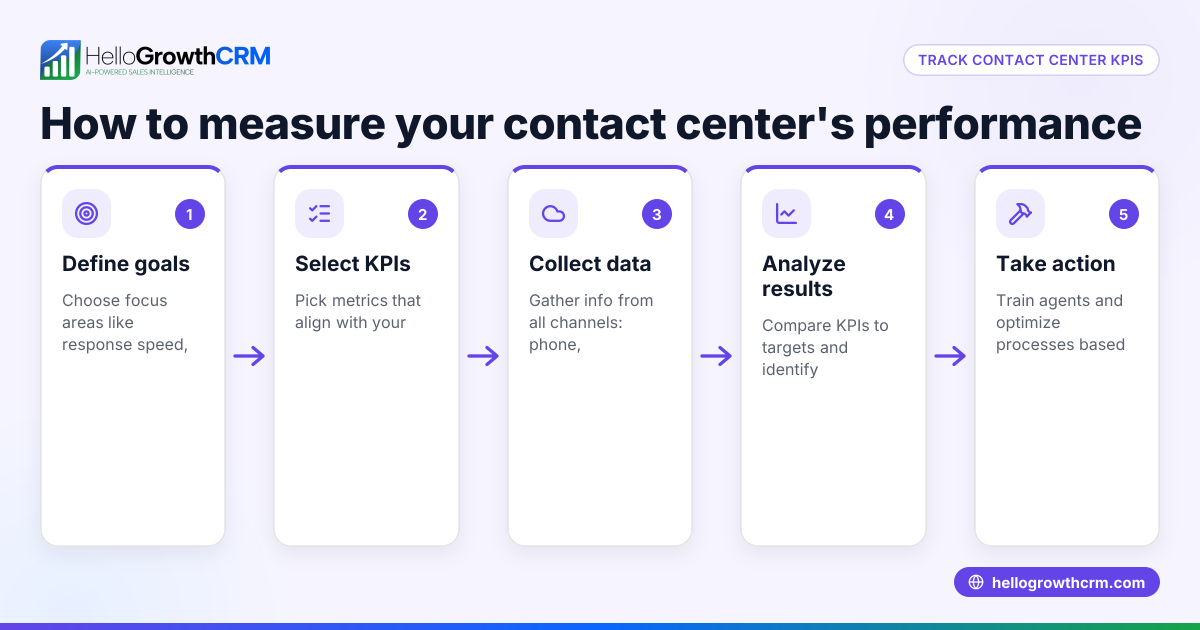
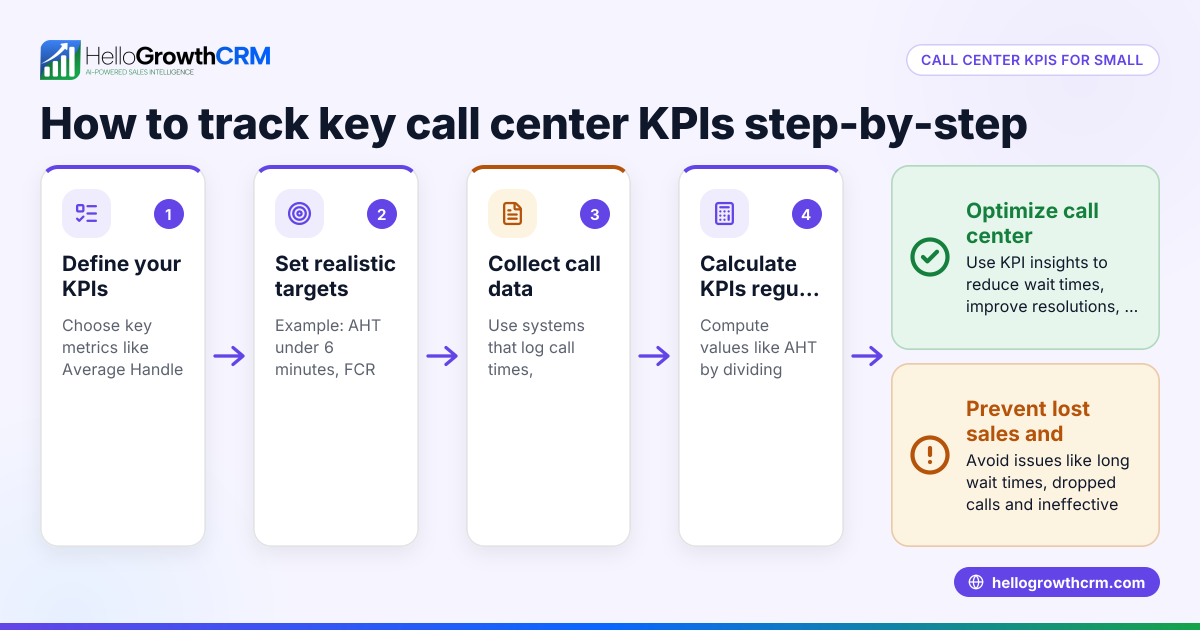
- Identify the relevant KPIs for your industry: Common call center KPIs include Average Handle Time (AHT), First Call Resolution (FCR), Customer Satisfaction (CSAT), Abandonment Rate, and Service Level. Different industries prioritize these differently. For example, retail focuses on quick handling, while healthcare emphasizes accuracy and compliance.
- Collect your call center data accurately: Use tools or software that log call times, outcomes, and customer feedback. Manual tracking risks errors and missed insights.
- Find industry-specific benchmark data: Search for recent US-based industry reports or surveys that publish typical KPI ranges for your sector. If unavailable, use general call center KPI ranges as a starting point.
- Compare your KPIs to benchmarks: Analyze where your team is above or below average. For example, if your AHT is 10 minutes but the benchmark is 6 minutes, investigate causes like call complexity or agent training.
- Set realistic improvement goals: Based on the comparison, set specific, measurable targets for each KPI.
- Implement changes and monitor progress: Use CRM tools with features like a built-in CRM dialer to streamline calling and logging outcomes, improving data accuracy and follow-up speed.
- Review and adjust regularly: Benchmarking is ongoing. Regularly update your data and compare it to new benchmarks to keep improving.
Example (fictional figures)
A residential real-estate team in Phoenix, Arizona, runs a small call center for lead follow-up. They want to benchmark their KPIs against the real estate industry.
- Current Average Handle Time (AHT): 8 minutes
- Industry benchmark AHT: 6 minutes
- Current First Call Resolution (FCR): 65%
- Industry benchmark FCR: 75%
- Current Customer Satisfaction (CSAT): 80%
- Industry benchmark CSAT: 85%
They aim to improve AHT and FCR over the next quarter.
Calculations for improvement goals:
Reduce AHT from 8 to 6 minutes:
8 minutes - 6 minutes = 2 minutes saved per call
Increase FCR from 65% to 75%:
75% - 65% = 10% improvement needed
Increase CSAT from 80% to 85%:
85% - 80% = 5% improvement needed
They plan to use a CRM with a built-in dialer to speed up call handling and ensure every call outcome is logged, helping agents follow scripts and resolve issues faster.
Common mistakes
- Ignoring industry differences: Not all KPIs are equally important in every sector. Prevent this by researching industry-specific benchmarks.
- Using outdated or non-US data: Benchmarks vary by region and time. Always seek recent US-based data.
- Tracking KPIs manually or inconsistently: This leads to errors. Use tools like HelloGrowthCRM to automate call logging and outcome tracking.
- Focusing on quantity over quality: For example, reducing AHT at the cost of lower FCR hurts customer satisfaction. Balance KPIs carefully.
- Not reviewing benchmarks regularly: Market conditions and customer expectations change. Schedule periodic reviews to keep goals relevant.
- Failing to train agents on new tools or processes: New CRM features like a built-in CRM dialer need proper onboarding to deliver benefits.
Doing this in HelloGrowthCRM
HelloGrowthCRM offers a built-in dialer that lets reps work a list directly inside the CRM. Each call outcome is logged on the lead, keeping a full call history tied to contact and deal records. This makes tracking KPIs like call volume, handle time, and resolution rates easier and more accurate. Using HelloGrowthCRM helps small and mid-sized businesses improve follow-up speed and data quality, essential for benchmarking and improving call center performance. Learn more about the built-in CRM dialer and WhatsApp and SMS CRM features.
Frequently asked questions
What are the most important call center KPIs by industry? The key KPIs vary but usually include Average Handle Time (AHT), First Call Resolution (FCR), Customer Satisfaction (CSAT), Abandonment Rate, and Service Level. Retail industries often focus on AHT and abandonment, while financial services emphasize FCR and compliance.
How can small businesses find reliable industry benchmarks? Look for recent US-based industry reports, surveys, or trade association publications. If unavailable, use general call center KPI ranges as a starting point and adjust based on your business size and customer base.
Why is benchmarking call center KPIs important? Benchmarking helps you understand how your team performs compared to peers, identify areas needing improvement, and set realistic goals to enhance customer experience and sales outcomes.
How does a CRM help improve call center KPIs? A CRM with a built-in dialer allows agents to call leads directly, log call outcomes automatically, and track performance metrics accurately. This reduces manual errors and speeds up follow-up.
Can I track call center KPIs without special software? Yes, but it’s time-consuming and prone to errors. Spreadsheets and manual logs can work initially, but for consistent benchmarking and improvement, CRM tools that automate data capture and reporting are recommended.
Key takeaways
- Call center KPI benchmarks differ by industry; identify the most relevant KPIs for your sector.
- Accurate data collection and comparison to recent US-based benchmarks are essential.
- Use a step-by-step approach: identify KPIs, collect data, compare, set goals, implement changes, and review regularly.
- Avoid common mistakes like ignoring industry differences and manual tracking errors.
- HelloGrowthCRM’s built-in dialer helps log calls and outcomes efficiently, aiding KPI tracking and improvement.
Start improving your call center performance today. Start on the Free Forever plan (200 leads, no credit card) to try HelloGrowthCRM and its built-in dialer.
Ready to put this into practice?
Set up your pipeline, WhatsApp follow-ups, and AI lead scoring in minutes — free, no credit card.
Try HelloGrowthCRM freeGet CRM tips in your inbox
Join thousands of sales professionals who get weekly insights on CRM strategy, AI automation, and pipeline optimization.

The HelloGrowthCRM team publishes guides on CRM strategy, AI sales tools, and revenue operations for small business sales teams.