HelloGrowthCRM software
Built for real small-business sales teams
HelloGrowthCRM helps reps qualify faster, follow up on time, and close more deals—with practical automation in one place.
- AI lead scoring and pipeline visibility
- Built-in dialer, WhatsApp, and email automation
- Sales forecasting and RevOps-ready reporting
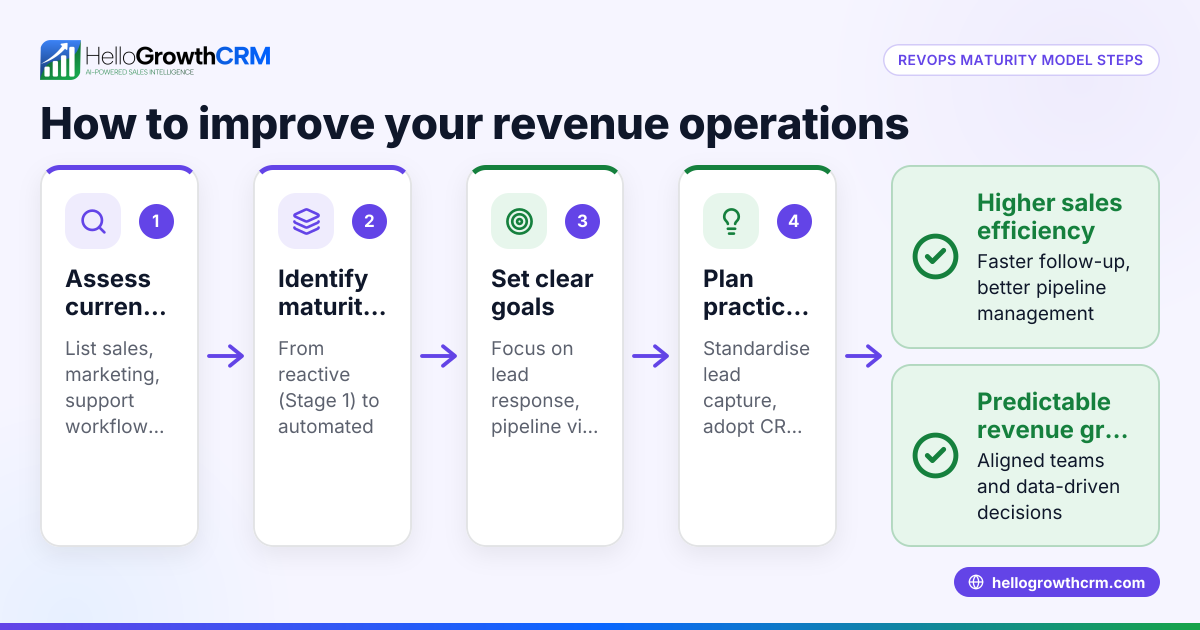
A sales maturity model is a tool that measures how developed and effective your sales process is. It divides sales operations into stages, helping you understand where your business stands and what to improve next. This article covers why small businesses use this model, how to assess your sales maturity step-by-step, a realistic example, common mistakes to avoid, and how HelloGrowthCRM supports managing your sales pipeline.
Why this comes up / what goes wrong
Small business owners often face inconsistent sales results, lost leads, or slow follow-up because their sales process is informal or fragmented. Without a clear sales system, teams may rely on spreadsheets, text messages, or scattered notes, causing missed opportunities. The sales maturity model helps these owners understand their current process maturity and plan improvements systematically.
Step-by-step
- Identify your current sales process stage. Check if your sales efforts are mostly reactive and unstructured (initial stage), or if you have defined sales steps and track leads systematically (developing or mature stages).
- Evaluate your lead management. Are leads captured reliably from web forms or other sources? Are follow-ups tracked and timely? Look for gaps where leads might be forgotten or delayed.
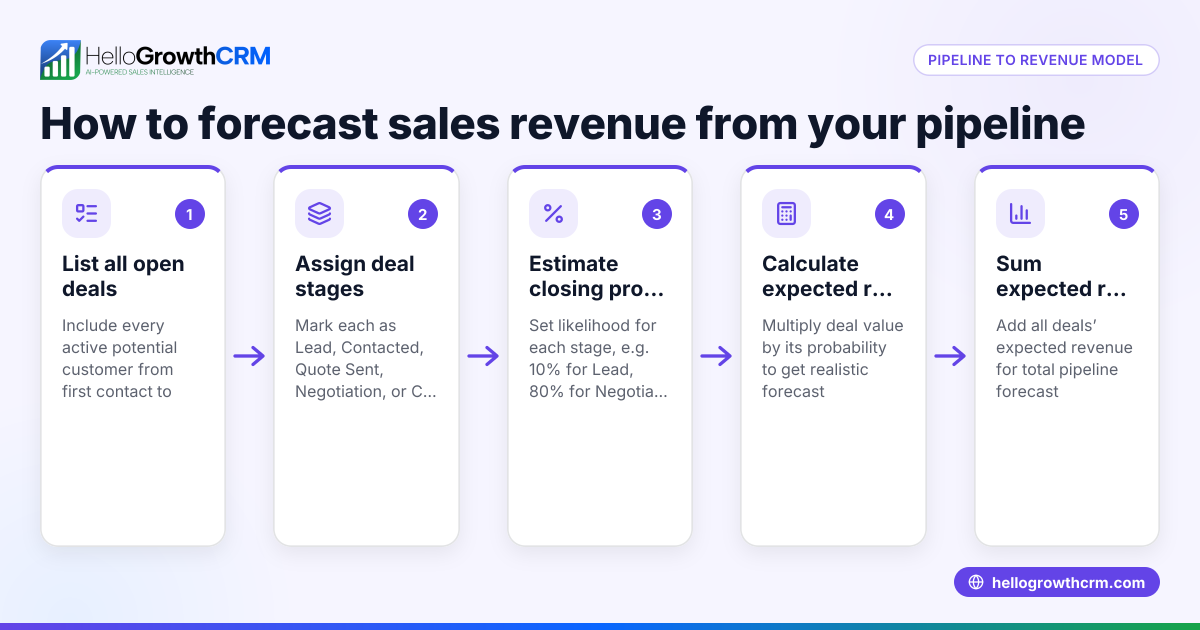
- Assess your sales pipeline visibility. Do you have a clear view of deals at each stage with expected values? Can you forecast revenue based on pipeline data?
- Check team roles and responsibilities. Is there a sales manager or someone dedicated to pipeline hygiene and follow-up? In smaller teams, is this responsibility assigned to a founder or shared?
- Review communication channels and tools. Are sales conversations tracked in a CRM rather than scattered across email, SMS, or WhatsApp? Are sequences or reminders automated?
- Plan improvements based on gaps. Prioritize fixing lead capture, follow-up consistency, pipeline tracking, or team roles depending on your assessment.
Example (fictional figures)
Imagine a B2B software reseller in Denver, Colorado, assessing their sales maturity on 04/15/2026.
- Current monthly leads captured: 150
- Follow-up rate within 24 hours: 50%
- Deals in pipeline: 20
- Average deal value: $12,000
- Close rate: 25%
Step 1: Calculate expected monthly revenue from pipeline:
20 deals × $12,000 = $240,000
Step 2: Calculate expected closed deals:
20 deals × 25% = 5 deals
Step 3: Calculate expected revenue from closed deals:
5 deals × $12,000 = $60,000
Step 4: Identify gaps:
- Only half of leads are followed up promptly.
- Pipeline is tracked but lacks consistent follow-up dates.
Step 5: Improvement plan:
- Implement automated follow-up reminders.
- Assign responsibility for pipeline hygiene weekly.
This example shows how to quantify your sales maturity and decide practical next steps.
Common mistakes
- Ignoring lead follow-up consistency. Leads get lost without reminders; prevent this by setting follow-up dates and alerts.
- Using multiple disconnected tools. Scattered data causes inefficiency; use a single CRM to centralize communication and tracking.
- Lacking pipeline visibility. Without a clear pipeline, forecasting is guesswork; maintain deals in stages with expected values.
- No assigned sales ownership. Without clear roles, follow-up falls through cracks; assign a team member or founder to manage the pipeline regularly.
- Skipping regular reviews. Sales processes stagnate without review; schedule weekly or monthly pipeline and performance checks.
For managing territories and field operations or to improve follow-up, see how HelloGrowthCRM supports these tasks with built-in tools and automation at HelloGrowthCRM for the United States.
Doing this in HelloGrowthCRM
HelloGrowthCRM helps small businesses manage their sales maturity by tracking deals through a pipeline. For example, a quotation sent last week automatically appears as a deal at the 'quote sent' stage with a follow-up date, ensuring no opportunity is forgotten. Field sales teams can log visits from their phones, and managers can monitor daily activity beats. Founders without dedicated sales managers benefit from Managed RevOps support, where a specialist handles follow-up queues weekly, keeping the pipeline active and clean. Learn more about these features at WhatsApp and SMS CRM and built-in CRM dialer.
Frequently asked questions
What are the stages in a typical sales maturity model? Most models start with an ad hoc or initial stage where sales are inconsistent, followed by developing stages with defined processes, then mature stages with optimized and predictable sales, and finally an advanced stage with continuous improvement and automation.
How can I tell if my sales process is mature? If you have clear sales stages, reliable lead capture, consistent follow-up, pipeline visibility with forecasting, and assigned sales roles, your process is likely mature. If you rely on informal methods or have missed leads, you are still developing.
Can a small business benefit from a sales maturity model? Yes, it helps identify weaknesses and prioritize improvements, making sales more efficient and predictable even with small teams.
How often should I review my sales maturity? Regular reviews, such as monthly or quarterly, help track progress and adapt to changes in the market or team.
What tools support improving sales maturity? Using a CRM with pipeline management, automated reminders, and integrated communication channels like HelloGrowthCRM can significantly improve sales maturity.
Key takeaways
- A sales maturity model measures how developed your sales process is.
- Assess your current stage by checking lead capture, follow-up, pipeline visibility, and team roles.
- Use a step-by-step approach to identify gaps and plan improvements.
- Avoid common mistakes like inconsistent follow-up and scattered tools.
- HelloGrowthCRM supports sales maturity with pipeline tracking, field sales logging, and Managed RevOps.
Start improving your sales process today by trying HelloGrowthCRM’s Free Forever plan with 200 leads and no credit card required at Start on the Free Forever plan (200 leads, no credit card).
Ready to put this into practice?
Set up your pipeline, WhatsApp follow-ups, and AI lead scoring in minutes — free, no credit card.
Try HelloGrowthCRM freeGet CRM tips in your inbox
Join thousands of sales professionals who get weekly insights on CRM strategy, AI automation, and pipeline optimization.

The HelloGrowthCRM team publishes guides on CRM strategy, AI sales tools, and revenue operations for small business sales teams.