HelloGrowthCRM software
Built for real small-business sales teams
HelloGrowthCRM helps reps qualify faster, follow up on time, and close more deals—with practical automation in one place.
- AI lead scoring and pipeline visibility
- Built-in dialer, WhatsApp, and email automation
- Sales forecasting and RevOps-ready reporting
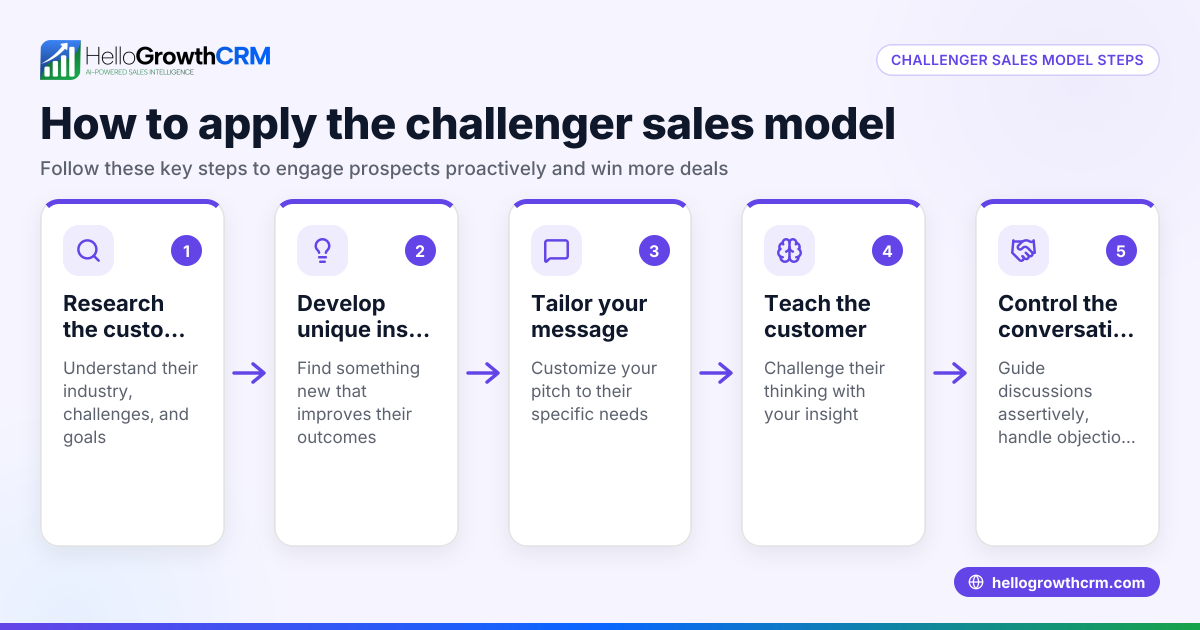
Challenger sales questions are a set of purposeful questions that push prospects to think differently about their business challenges and solutions. Instead of just responding to customer requests, these questions help salespeople take control of the conversation, educate the buyer, and highlight unique value propositions. This approach is especially useful for small business owners who want to stand out in competitive markets and avoid losing leads due to slow or ineffective follow-up.
Why this comes up / what goes wrong
Small business owners and sales teams often struggle with sales conversations that feel reactive or transactional. They may rely on generic questions or wait for prospects to reveal their needs, which can lead to missed opportunities or price-focused discussions. Without a structured questioning approach, sales reps might fail to uncover deeper business problems or demonstrate how their solution uniquely solves those problems. This is where challenger sales questions come in: they help guide the conversation toward insights that create urgency and open the door for value-based selling.
Step-by-step
- Research the Prospect’s Business
- Understand their industry, challenges, and competitors.
- Check recent news, trends, or changes that might affect their business.
- Prepare Insightful Questions
- Develop questions that challenge the status quo or common assumptions.
- Examples include: "How are you currently addressing [problem]?" or "What impact does [challenge] have on your growth?"
- Start the Conversation by Building Rapport
- Use open-ended questions to engage the prospect.
- Confirm their current situation before introducing challenging questions.
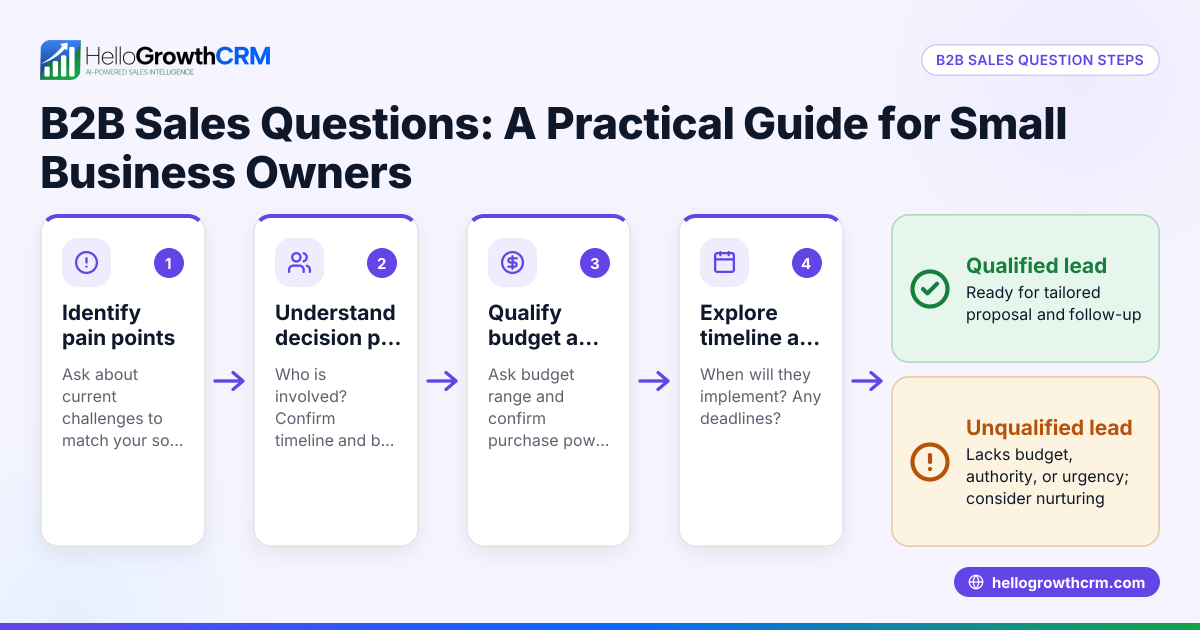
- Ask Challenger Questions to Uncover Hidden Needs
- Use questions that provoke thinking, such as "Have you considered the cost of not solving this issue?"
- Highlight potential risks or missed opportunities.
- Listen Actively and Validate Their Responses
- Take notes and acknowledge their concerns.
- Use their answers to tailor your solution discussion.
- Guide the Prospect Toward Your Solution
- Connect your product or service to the insights uncovered.
- Show how your offering addresses the challenges they may not have fully realized.
- Set Clear Next Steps and Follow-Up Dates
- Confirm the timeline and decision-making process.
- Schedule follow-ups to maintain momentum.
- Track and Manage These Conversations in Your CRM
- Record deals and follow-up tasks to avoid losing leads.
- Use pipeline stages to monitor progress.
Example (fictional figures)
A plumbing company in Austin, Texas, called "FlowFix," wants to increase sales by using challenger sales questions.
- They identify that many customers delay fixing leaks, increasing water bills.
- FlowFix develops a question: "Have you calculated how much water and money you lose monthly due to small leaks?"
During a call on 04/15/2026, the rep asks this question, and the prospect admits to ignoring small leaks.
- FlowFix explains the cost impact: an average leak wastes 10 gallons per day.
- They calculate the water cost: $50 (monthly water bill) × 10% (estimated leak increase) = $5
- Over a year: $5 × 12 = $60 lost due to leaks
By showing this, FlowFix convinces the prospect to schedule a repair.
Common mistakes
- Asking too many questions without listening
- Prevent by pausing and actively noting responses.
- Using generic questions that don’t challenge the prospect
- Prevent by tailoring questions based on research.
- Failing to connect insights to your solution
- Prevent by preparing how your product addresses uncovered needs.
- Not following up on conversations
- Prevent by setting follow-up dates and tracking them in a CRM like HelloGrowthCRM.
- Overwhelming prospects with too much information
- Prevent by focusing on key insights relevant to their business.
Doing this in HelloGrowthCRM
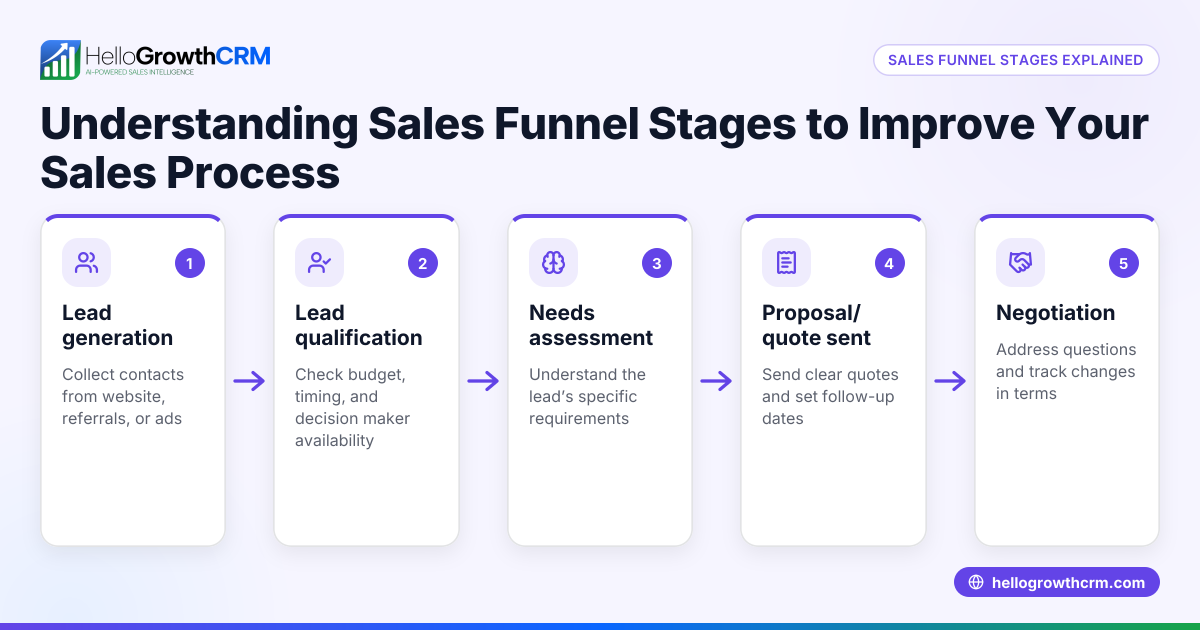
HelloGrowthCRM helps you manage challenger sales questions and follow-ups effectively. When you send a quotation, it appears as a deal in the 'quote sent' stage with a follow-up date, ensuring you never forget to check in. For sales teams working in territories or field operations, reps can log visits directly from their phones, and managers can track daily activities. If you don’t have a dedicated sales manager, the Managed RevOps service can keep your follow-up queue active and your pipeline clean. Learn more about WhatsApp and SMS CRM, the built-in CRM dialer, and how to manage deals in a pipeline here.
Frequently asked questions
What are challenger sales questions? Challenger sales questions are strategic questions that challenge a prospect’s current thinking to reveal hidden problems or opportunities. They help salespeople lead conversations toward value rather than just responding to requests.
How do I prepare challenger questions? Start by researching your prospect’s business and industry. Then, develop questions that highlight risks, costs, or missed opportunities related to their current approach. Tailor these questions to each prospect’s context.
Can challenger sales questions work in small businesses? Yes. Small businesses can benefit by differentiating their sales approach and uncovering needs that prospects may not realize. This leads to stronger relationships and higher close rates.
How do I avoid sounding confrontational with these questions? Frame questions in a curious, helpful way rather than accusatory. Use language like "Have you considered..." or "What impact does..." to invite discussion instead of confrontation.
How can HelloGrowthCRM help with following up on challenger sales conversations? HelloGrowthCRM tracks deals through pipeline stages and sets follow-up dates so you never miss a chance to continue the conversation. Field reps can log visits, and Managed RevOps can support follow-up if you lack a sales manager.
Key takeaways
- Challenger sales questions push prospects to reconsider their current challenges.
- Preparing tailored, insightful questions requires research and understanding.
- Active listening and connecting insights to your solution are crucial.
- Avoid common mistakes like poor follow-up or generic questions.
- HelloGrowthCRM supports managing deals, follow-ups, and field operations.
Start using challenger sales questions today to improve your sales conversations and close more deals. To manage your leads and follow-ups efficiently, start on the Free Forever plan (200 leads, no credit card).
Ready to put this into practice?
Set up your pipeline, WhatsApp follow-ups, and AI lead scoring in minutes — free, no credit card.
Try HelloGrowthCRM freeGet CRM tips in your inbox
Join thousands of sales professionals who get weekly insights on CRM strategy, AI automation, and pipeline optimization.

The HelloGrowthCRM team publishes guides on CRM strategy, AI sales tools, and revenue operations for small business sales teams.