HelloGrowthCRM software
Built for real small-business sales teams
HelloGrowthCRM helps reps qualify faster, follow up on time, and close more deals—with practical automation in one place.
- AI lead scoring and pipeline visibility
- Built-in dialer, WhatsApp, and email automation
- Sales forecasting and RevOps-ready reporting
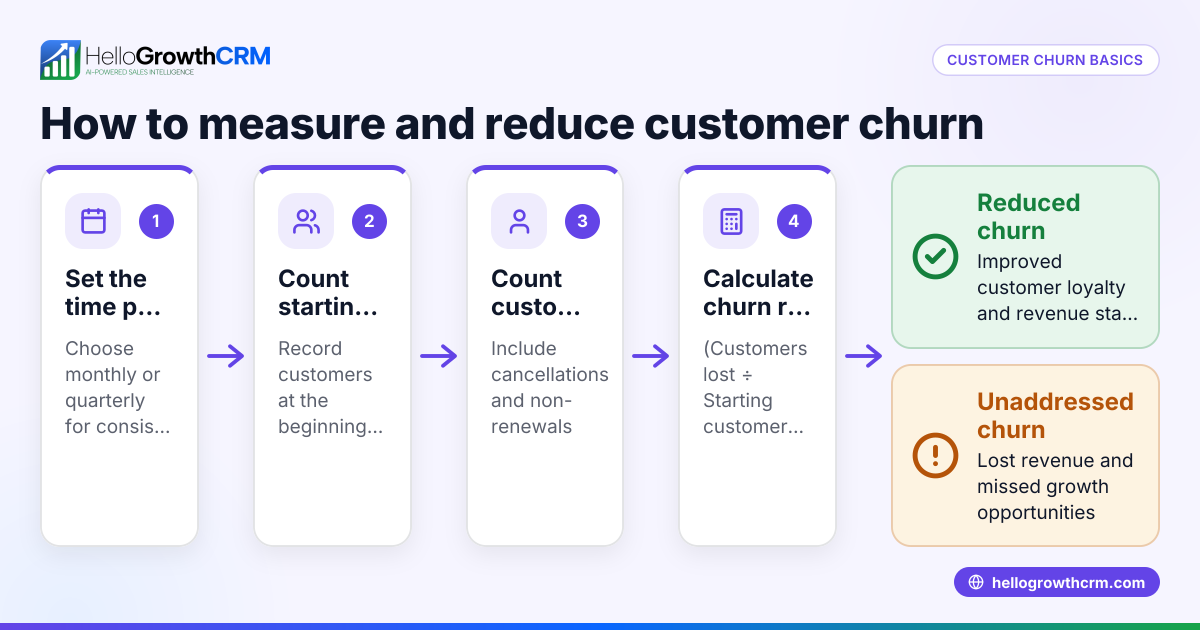
Churn prediction in subscription services means identifying customers who are likely to cancel their subscriptions before the cancellation occurs. This allows businesses to take proactive steps to retain those customers and reduce revenue loss. For US-based subscription services, predicting churn involves analyzing customer behavior, engagement, and payment patterns specific to their service model.
Why this comes up / what goes wrong
Subscription services depend on recurring revenue, so losing customers (churn) directly impacts cash flow and growth. Local service businesses offering subscriptions—such as lawn care, home cleaning, or specialty coaching—often struggle to keep track of which customers might leave. Without churn prediction, they react only after cancellations, missing chances to improve service or offer incentives.
Common challenges include slow follow-up on warning signs, lack of centralized customer data, and reliance on spreadsheets or disconnected tools. Accountants and business owners want a clear, actionable way to spot high-risk customers and prioritize retention efforts.
Step-by-step
- Collect customer data: Gather subscription start dates, payment history, service usage, and customer interactions. Check for missing or inconsistent records.
- Identify churn indicators: Look for late payments, reduced service usage, fewer support requests, or negative feedback. Validate that these correlate with past cancellations.
- Score customers by churn risk: Assign a risk score based on indicators. For example, customers with two late payments and low engagement get a higher risk.
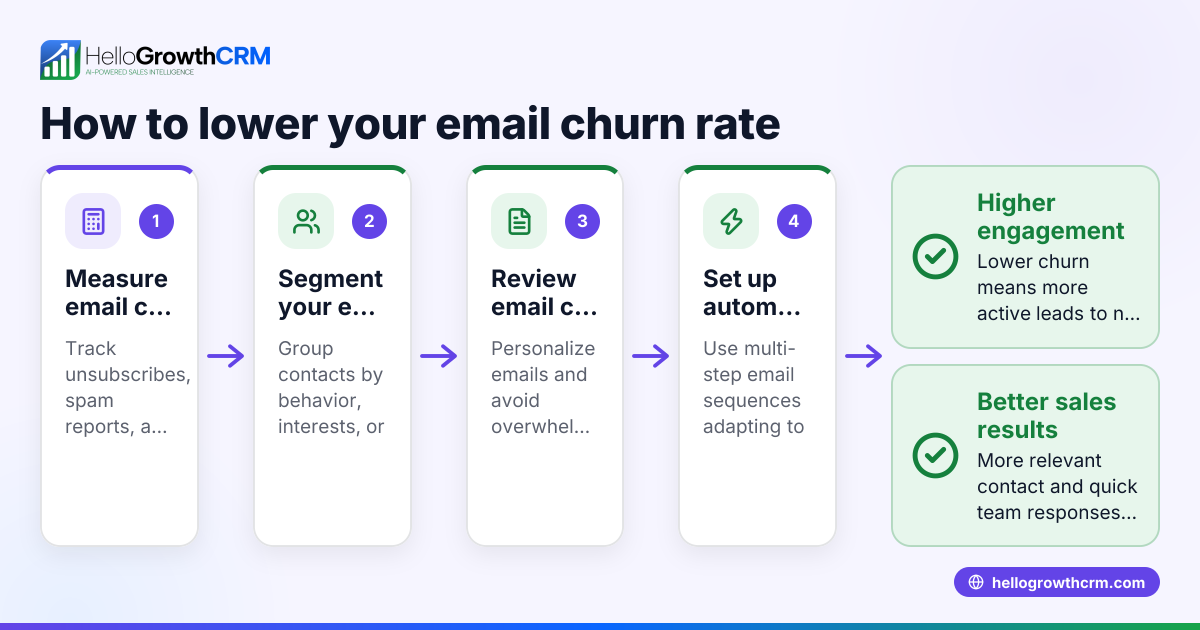
- Segment customers: Group customers by risk score to prioritize outreach.
- Plan retention actions: Decide on offers, personalized messages, or service adjustments to retain high-risk customers.
- Monitor results and update scores: Track which customers respond and adjust your scoring model regularly.
- Use CRM tools to automate: Automate data collection and outreach reminders to avoid manual errors and delays.
For more on managing ongoing customer health, see customer health score.
Example (fictional figures)
A lawn care subscription business in Austin, Texas, called GreenYard, has 1,000 subscribers as of 01/01/2026. They want to predict churn for Q1 2026.
- Total subscribers: 1,000
- Average monthly subscription fee: $50
- Average churn rate last year: 5% per month
They collect data and find 100 customers with at least one late payment and reduced service requests.
Step 1: Assign risk scores based on criteria:
- 1 late payment = risk score 3
- 2 or more late payments = risk score 5
- Reduced service use = add 2 points
Step 2: Calculate risk scores for 100 flagged customers:
- 40 customers with 2 late payments + reduced use: risk score = 5 + 2 = 7
- 60 customers with 1 late payment only: risk score = 3
Step 3: Segment:
- High risk (score 7): 40 customers
- Medium risk (score 3): 60 customers
Step 4: Potential revenue at risk:
- High risk: 40 × $50 = $2,000 per month
- Medium risk: 60 × $50 = $3,000 per month
Step 5: Retention plan:
- Call high-risk customers with personalized offers
- Send email reminders to medium-risk customers
Step 6: Monitor churn at end of Q1 and adjust scoring.
This structured approach helps GreenYard focus retention efforts where they matter most.
Common mistakes
- Ignoring early warning signs: Prevent by regularly reviewing payment and usage data.
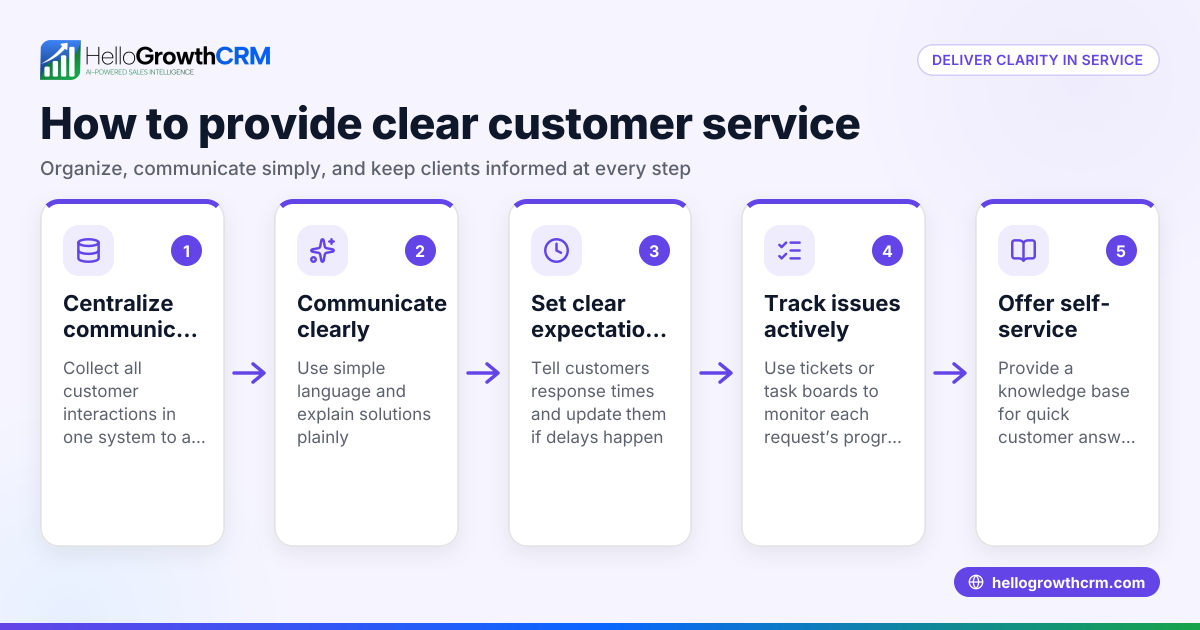
- Using incomplete data: Prevent by centralizing customer info in one system.
- Overcomplicating scoring models: Prevent by starting simple and refining over time.
- Failing to act on scores: Prevent by setting clear follow-up steps for each risk level.
- Not updating models: Prevent by reviewing churn outcomes quarterly.
- Separating sales and service data: Prevent by integrating all customer interactions, as explained in Local service businesses.
Doing this in HelloGrowthCRM
HelloGrowthCRM helps manage churn prediction by keeping all customer data in one place. After a sale, service requests stay on the same customer record as the deal, so you see the full history. Its built-in dialer lets reps work through a list of high-risk customers and log call outcomes directly on the lead record. This keeps your team coordinated and follow-ups timely. Learn more about these features at HelloGrowthCRM for the United States and customer health score.
Frequently asked questions
What data is best for predicting churn in subscription services? Payment history, service usage, customer support tickets, and interaction frequency are key data points. Combining these helps create a reliable churn risk score.
How often should I update my churn prediction model? Review and update your churn scoring model at least quarterly to reflect changing customer behavior and improve accuracy.
Can small businesses do churn prediction without complex software? Yes, start with spreadsheets tracking payments and usage, then prioritize customers showing warning signs. As you grow, consider CRM tools for automation.
How does customer communication affect churn? Timely, personalized outreach to high-risk customers can significantly reduce churn by addressing concerns and offering incentives.
What is the difference between churn rate and churn prediction? Churn rate measures how many customers leave over a period. Churn prediction forecasts which customers are likely to leave soon, enabling proactive retention.
Key takeaways
- Churn prediction identifies subscription customers likely to cancel before they do.
- Collect and analyze payment, usage, and interaction data for scoring.
- Segment customers by risk to focus retention efforts efficiently.
- Avoid common mistakes like ignoring data or failing to act on scores.
- HelloGrowthCRM centralizes customer information and supports task, call, and meeting logging for effective follow-up.
- Regularly update your churn model to keep it accurate.
Start reducing subscription churn today by focusing on early warning signs and prioritizing customer retention. To get started with managing leads and customer health in one place, Start on the Free Forever plan (200 leads, no credit card).
Ready to put this into practice?
Set up your pipeline, WhatsApp follow-ups, and AI lead scoring in minutes — free, no credit card.
Try HelloGrowthCRM freeGet CRM tips in your inbox
Join thousands of sales professionals who get weekly insights on CRM strategy, AI automation, and pipeline optimization.

The HelloGrowthCRM team publishes guides on CRM strategy, AI sales tools, and revenue operations for small business sales teams.