HelloGrowthCRM software
Built for real small-business sales teams
HelloGrowthCRM helps reps qualify faster, follow up on time, and close more deals—with practical automation in one place.
- AI lead scoring and pipeline visibility
- Built-in dialer, WhatsApp, and email automation
- Sales forecasting and RevOps-ready reporting
Client satisfaction surveys help small businesses understand how customers feel about their products or services. Examples include rating satisfaction from 1 to 5, yes/no questions about repeat business, and open-ended questions asking for improvement suggestions. This article explains why these surveys are essential, how to design them effectively, provides a practical example with calculations, highlights common mistakes, and answers typical questions.
Why this comes up / what goes wrong
Many small-business owners struggle with losing customers or missing growth opportunities because they don’t know what their clients think about their service. Without structured feedback, it’s hard to identify issues or improve. Owners often guess what clients want or rely on informal feedback that is inconsistent and incomplete. Client satisfaction surveys provide structured, actionable data, but owners may not know what questions to ask or how to design the survey for useful results. This leads to ineffective surveys or low response rates, wasting time and missing valuable insights.
Step-by-step
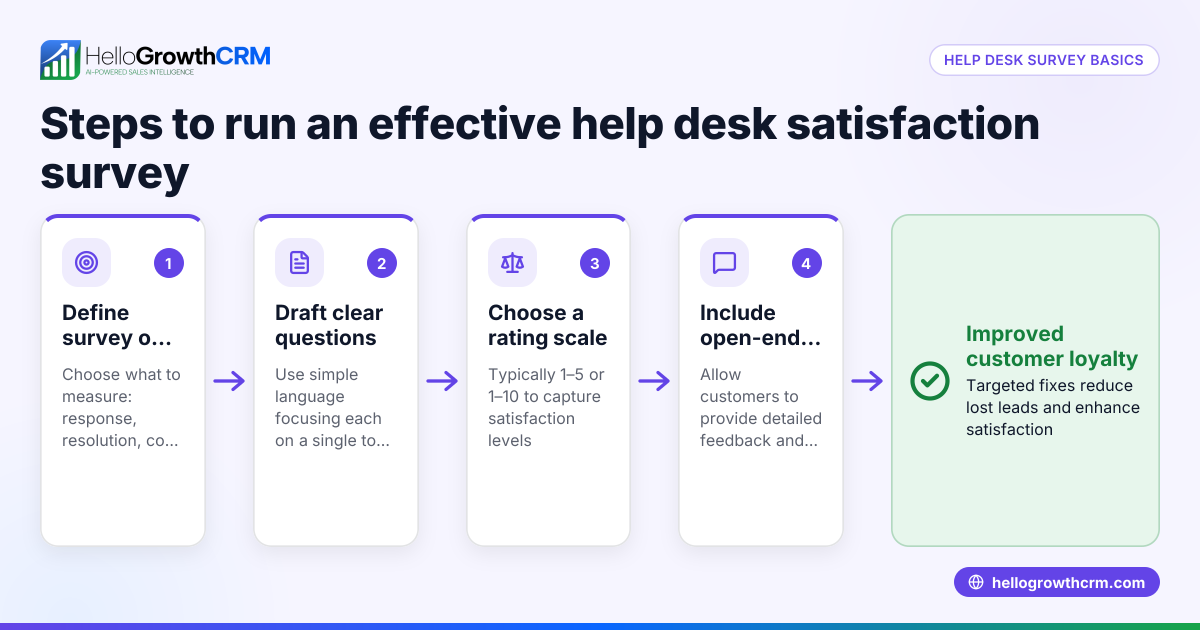
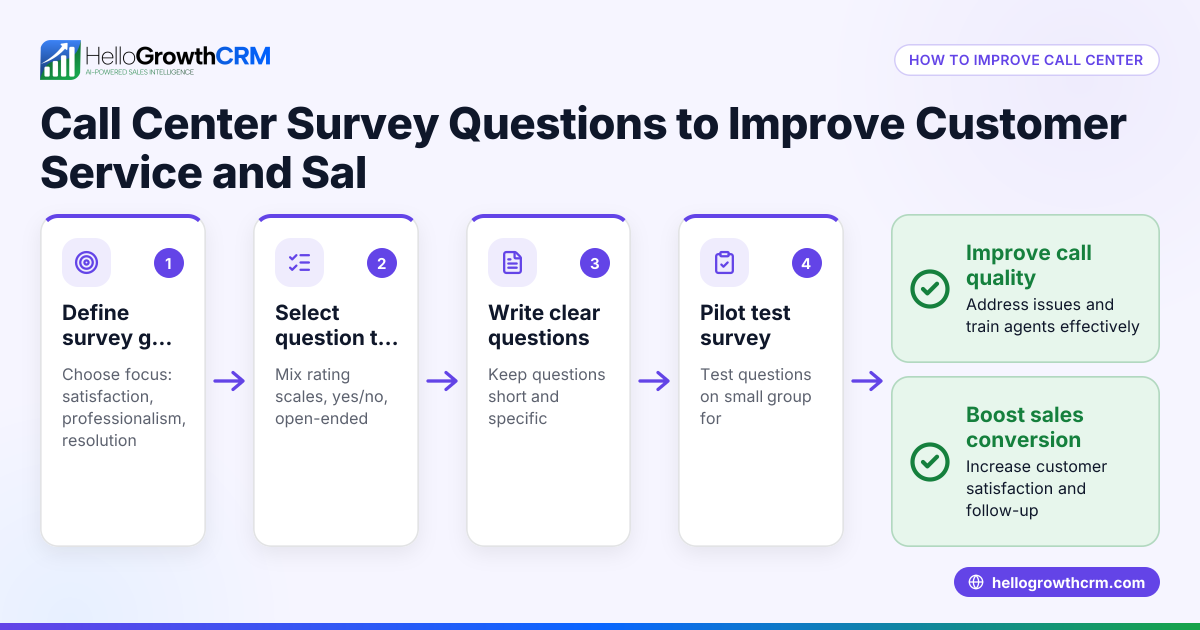
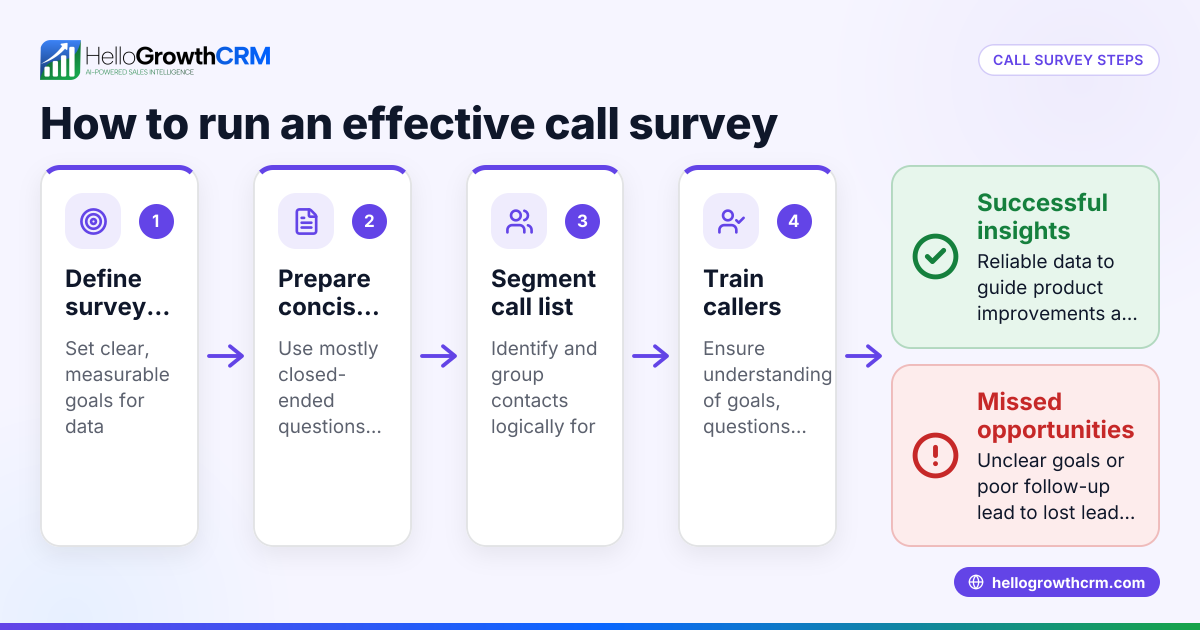
- Define your survey goal: Decide what you want to learn—overall satisfaction, product quality, customer service, or likelihood to recommend your business.
- Choose question types: Use a mix of rating scales (e.g., 1–5 stars), yes/no questions, and open-ended questions for detailed feedback.
- Write clear questions: Make questions straightforward and avoid jargon. For example, ask "How satisfied are you with our service?" instead of vague prompts.
- Keep it short: Limit the survey to 5-10 questions to respect your clients’ time and increase completion rates.
- Select the survey method: Email, phone, or text message surveys work well. For sales teams using WhatsApp and SMS, consider a CRM that supports these channels for easy follow-up and tracking. See WhatsApp and SMS CRM.
- Test your survey: Send it to a few trusted clients or colleagues to check clarity and timing.
- Distribute and collect responses: Use your chosen method, track who has responded, and send reminders if needed.
- Analyze results: Look for trends in ratings and common themes in open-ended answers.
- Act on feedback: Share results with your team, make improvements, and follow up with clients if appropriate.
Example (fictional figures)
A B2B software reseller in Denver, Colorado, wants to measure client satisfaction after a product installation. They send a 5-question survey on 04/15/2024 to 100 clients.
Survey questions:
- Rate your satisfaction with the installation process (1-5).
- Was the installation completed on time? (Yes/No)
- How likely are you to recommend us to others? (1-5)
- What did you like most about our service? (Open-ended)
- What can we improve? (Open-ended)
Survey results:
- Sum of all satisfaction ratings: 420
- Number of clients who said installation was on time: 90
- Sum of all recommendation ratings: 450
Calculations: Average satisfaction rating = Sum of all satisfaction ratings ÷ Number of respondents = 420 ÷ 100 = 4.2
On-time completion rate = (Number who said Yes ÷ Number of respondents) × 100 = (90 ÷ 100) × 100 = 90%
Average recommendation rating = Sum of all recommendation ratings ÷ Number of respondents = 450 ÷ 100 = 4.5
Based on feedback, the reseller plans to improve communication during installation. This process helps track client happiness and guides service improvements.
Common mistakes
- Too many questions: Overwhelms clients and lowers completion rates. Prevent by limiting questions to essentials.
- Vague questions: Leads to unclear answers. Prevent by keeping questions specific and simple.
- Ignoring feedback: Wastes effort and frustrates clients. Prevent by reviewing results and acting on them.
- Using only yes/no questions: Misses detailed insights. Prevent by including rating scales and open-ended questions.
- Not testing the survey: Causes confusion or technical issues. Prevent by piloting the survey before full launch.
For sales teams managing leads and client communications, using tools with a built-in CRM dialer and HelloGrowthCRM for the United States can streamline survey follow-up and improve client engagement.
Frequently asked questions
What are good satisfaction survey questions examples? Good questions include rating scales (1-5), yes/no questions about repeat business, and open-ended questions asking for specific feedback. For example, "How satisfied are you with our product?" or "What can we do better?" These provide measurable and actionable data.
How long should a client satisfaction survey be? Keep surveys short, ideally 5-10 questions, to respect clients’ time and increase response rates. Longer surveys often see lower completion rates.
What is the best way to send satisfaction surveys? Email, SMS, and WhatsApp are common methods. Choose the channel your clients use most. Using a CRM that supports WhatsApp and SMS can help automate and track responses. See WhatsApp and SMS CRM.
How often should I send client satisfaction surveys? Send surveys after key interactions like a purchase, service completion, or quarterly for ongoing clients. Avoid sending too frequently to prevent survey fatigue.
Can I use client satisfaction surveys to improve sales? Yes, surveys identify strengths and weaknesses in your sales and service process. Acting on feedback can increase client retention and referrals.
Key takeaways
- Client satisfaction surveys should be clear, concise, and goal-focused.
- Use a mix of rating scales, yes/no, and open-ended questions.
- Keep surveys short to increase completion rates.
- Test surveys before full deployment.
- Analyze feedback and act on it to improve client relationships.
- Use CRM tools with WhatsApp and SMS capabilities to streamline survey follow-up.
Start gathering valuable client feedback today. Start on the Free Forever plan (200 leads, no credit card) to organize your client contacts and improve follow-up efficiency.
Ready to put this into practice?
Set up your pipeline, WhatsApp follow-ups, and AI lead scoring in minutes — free, no credit card.
Try HelloGrowthCRM freeGet CRM tips in your inbox
Join thousands of sales professionals who get weekly insights on CRM strategy, AI automation, and pipeline optimization.

The HelloGrowthCRM team publishes guides on CRM strategy, AI sales tools, and revenue operations for small business sales teams.