HelloGrowthCRM software
Built for real small-business sales teams
HelloGrowthCRM helps reps qualify faster, follow up on time, and close more deals—with practical automation in one place.
- AI lead scoring and pipeline visibility
- Built-in dialer, WhatsApp, and email automation
- Sales forecasting and RevOps-ready reporting
A call survey is a method of gathering information by calling customers or prospects and asking a set of prepared questions. Businesses use call surveys to understand customer satisfaction, assess needs, qualify leads, or collect market data. This article covers why call surveys are important for small businesses, how to run one effectively, common pitfalls, and how HelloGrowthCRM can help with its built-in dialer feature.
Why this comes up / what goes wrong
Small-business owners often rely on phone calls to connect personally with customers and leads. They may want to conduct call surveys to gather feedback on products, measure customer satisfaction, or identify qualified prospects. However, without a clear process, call surveys can become inefficient or produce unreliable data. Challenges include inconsistent questioning, poor call tracking, and slow follow-up on survey results. These issues lead to lost leads, wasted time, and missed opportunities.
Step-by-step
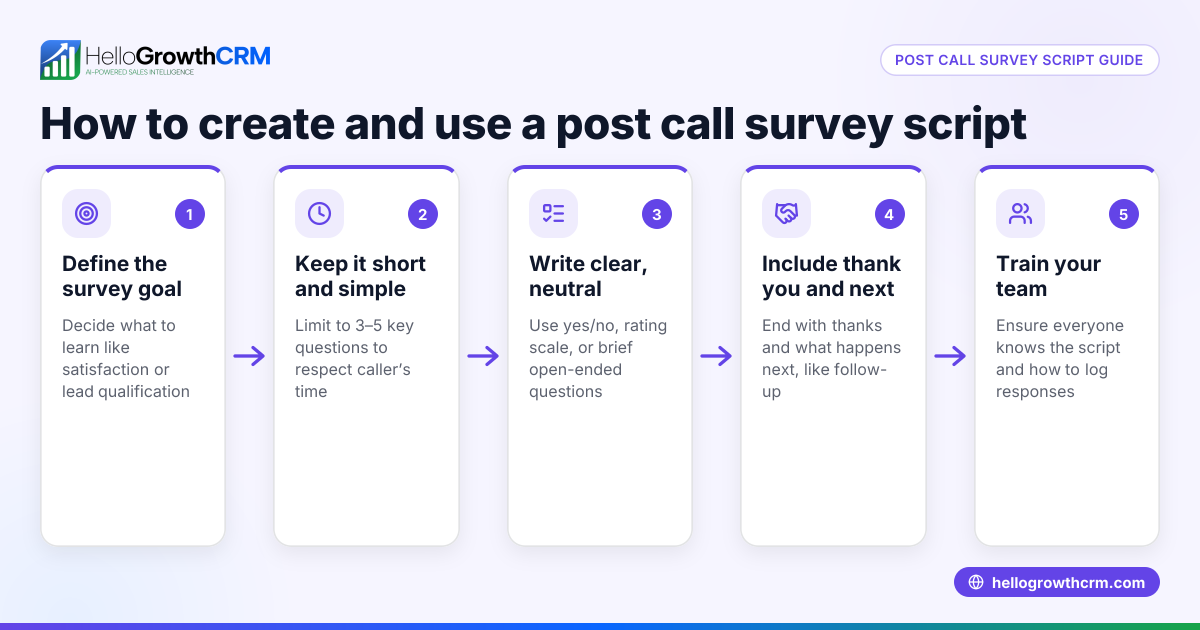
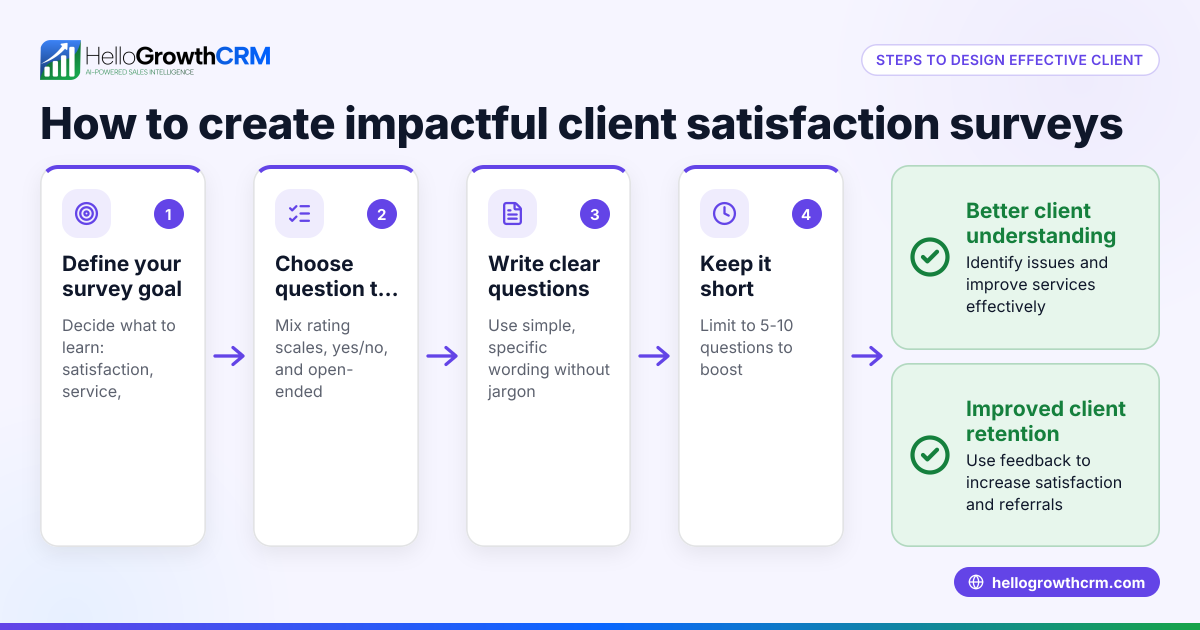
- Define the survey objective: Decide what information you want to collect (e.g., customer satisfaction, product feedback, lead qualification). Ensure the goal is clear and measurable.
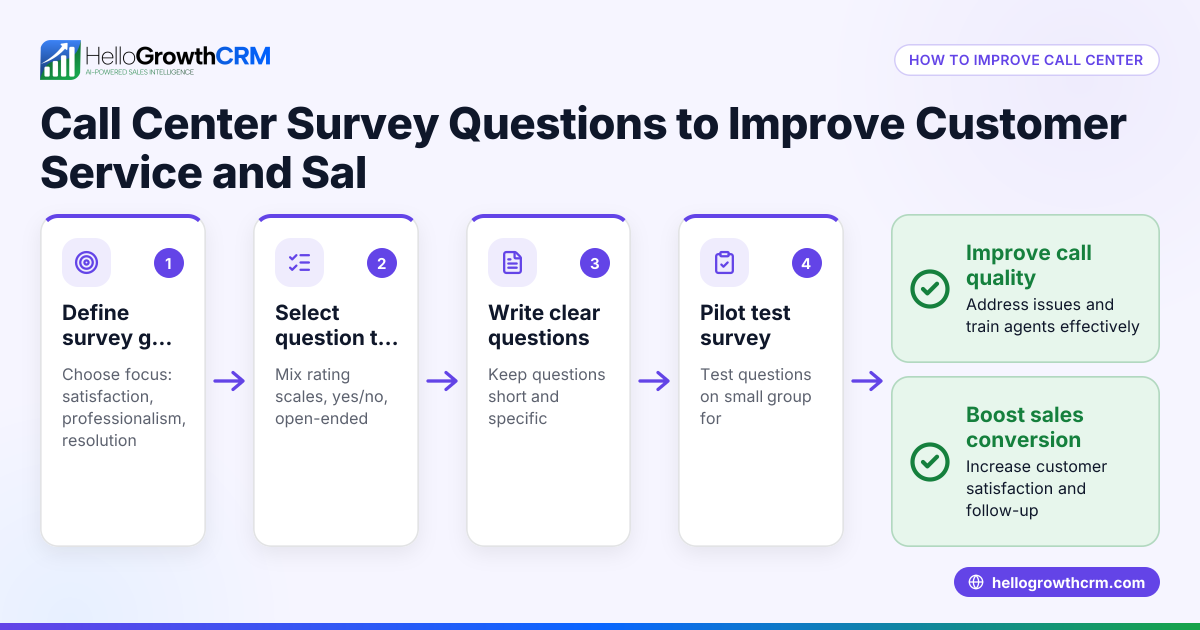
- Prepare your questions: Write concise, relevant questions that align with your objective. Use mostly closed-ended questions for easier analysis, with a few open-ended ones for detailed feedback.
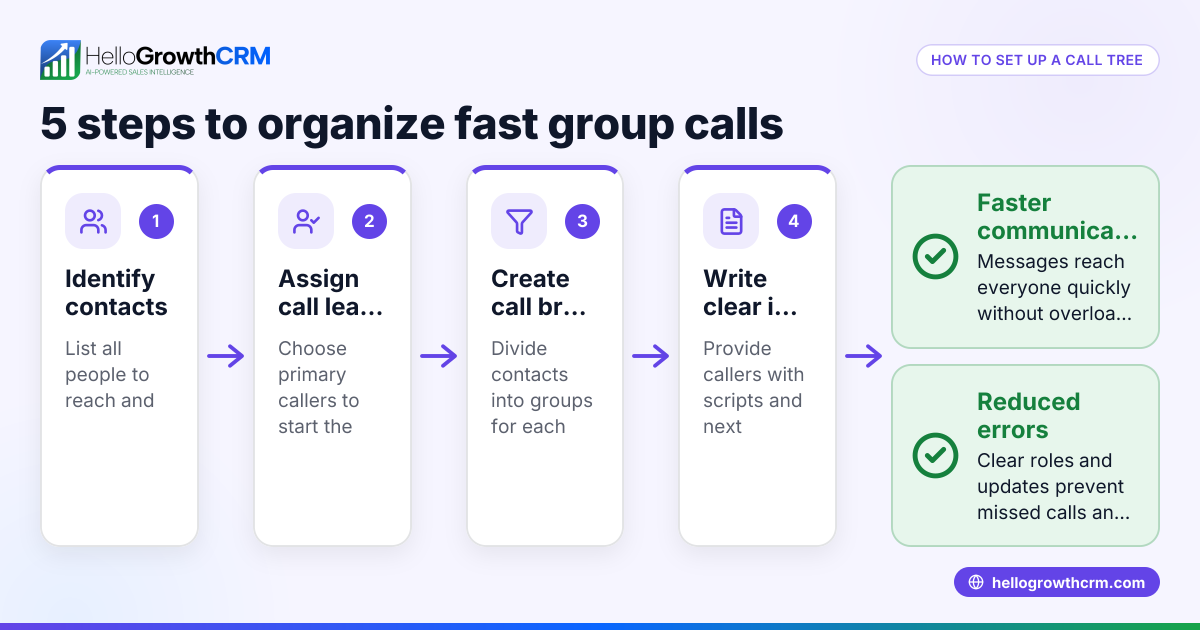
- Segment your call list: Identify who to call based on your objective. Segment customers or leads logically (e.g., recent buyers, inactive customers, prospects).
- Train callers: If you have a team, ensure they understand the survey goals, questions, and how to log answers consistently.
- Schedule calls: Plan calling times when recipients are most likely available, typically mid-morning or early afternoon on weekdays.
- Make calls and record responses: Use a system to dial and log results efficiently. Check that each call outcome and answer is recorded accurately.
- Analyze the data: After completing calls, review responses to identify trends, issues, or qualified leads.
- Follow up: Use survey insights to improve products, address concerns, or pursue sales opportunities promptly.
- Review and improve: Assess the survey process and results to refine questions or calling strategies for next time.
For a smoother calling process, consider using tools like a built-in CRM dialer to manage calls and outcomes directly.
Example (fictional figures)
A B2B software reseller in Denver, Colorado, wants to run a call survey to qualify leads interested in their new cloud service by 10/15/2024.
- They prepare 5 qualification questions.
- They segment 200 leads who downloaded a whitepaper last month.
- They plan to call 40 leads per day over 5 days.
Day 1: 40 calls made, 25 answered, 15 qualified.
Day 2: 40 calls made, 30 answered, 18 qualified.
Day 3: 40 calls made, 28 answered, 20 qualified.
Day 4: 40 calls made, 27 answered, 17 qualified.
Day 5: 40 calls made, 26 answered, 19 qualified.
Total calls made = 40 × 5 = 200
Total answered = 25 + 30 + 28 + 27 + 26 = 136
Total qualified = 15 + 18 + 20 + 17 + 19 = 89
Qualification rate = 89 ÷ 136 ≈ 65.4%
They follow up with the 89 qualified leads within 2 days to schedule demos.
Common mistakes
- Unclear survey goals: Prevent by defining specific objectives before starting.
- Long or complicated questions: Keep questions short and focused to avoid respondent fatigue.
- Calling at wrong times: Schedule calls during typical business hours to increase answer rates.
- Not logging call outcomes: Use a system to record results immediately to avoid data loss.
- Ignoring follow-up: Act on survey insights quickly to maintain engagement.
- Using multiple unintegrated tools: Prevent by using a CRM with a built-in dialer for seamless call management.
Doing this in HelloGrowthCRM
HelloGrowthCRM offers a built-in dialer that lets reps work through a call list directly inside the CRM. Each call’s outcome is logged on the lead record, keeping a full call history tied to contacts and deals. This helps ensure accurate data capture and easy follow-up without switching apps. Learn more about the built-in CRM dialer and how HelloGrowthCRM supports WhatsApp and SMS CRM for multi-channel outreach.
Frequently asked questions
What is the difference between a call survey and a cold call? A call survey is a structured questionnaire with a clear purpose to collect data or qualify leads, while a cold call is usually an unsolicited sales call without a formal survey structure. Call surveys focus on gathering information, not just selling.
How long should a call survey take? Ideally, a call survey should be as concise as possible, with its length depending on the number and type of questions. Keeping it short helps maintain respondent engagement.
Can call surveys be automated? Some parts can be automated, such as dialing and logging outcomes using a CRM dialer. However, the actual survey calls typically require human interaction to ask questions and respond naturally.
How do I ensure good response rates for call surveys? Call at appropriate times, keep questions concise, train callers well, and explain the survey’s purpose clearly to encourage participation.
What should I do with the data collected from a call survey? Analyze it to identify trends, customer needs, or qualified leads, then follow up with relevant actions like improving products or scheduling sales meetings.
Key takeaways
- A call survey collects targeted information by phone through structured questions.
- Clear objectives and concise questions improve survey effectiveness.
- Proper scheduling and logging of calls are essential for reliable data.
- Avoid common mistakes like unclear goals and poor follow-up.
- HelloGrowthCRM’s built-in dialer helps manage calls and outcomes efficiently.
Start your call survey process today with tools that keep your team organized and responsive. You can Start on the Free Forever plan (200 leads, no credit card) to try HelloGrowthCRM and its dialer features.
Ready to put this into practice?
Set up your pipeline, WhatsApp follow-ups, and AI lead scoring in minutes — free, no credit card.
Try HelloGrowthCRM freeGet CRM tips in your inbox
Join thousands of sales professionals who get weekly insights on CRM strategy, AI automation, and pipeline optimization.

The HelloGrowthCRM team publishes guides on CRM strategy, AI sales tools, and revenue operations for small business sales teams.