HelloGrowthCRM software
Built for real small-business sales teams
HelloGrowthCRM helps reps qualify faster, follow up on time, and close more deals—with practical automation in one place.
- AI lead scoring and pipeline visibility
- Built-in dialer, WhatsApp, and email automation
- Sales forecasting and RevOps-ready reporting
Conversational customer experience means engaging customers through natural, two-way communication across channels like chat, messaging apps, and phone calls. It focuses on making interactions feel personal and immediate to improve satisfaction and loyalty. This article explains why small businesses need it, how to implement it step-by-step, common pitfalls to avoid, and how HelloGrowthCRM supports ongoing customer conversations after the sale.
Why this comes up / what goes wrong
Small-business owners often lose leads or customers because their communication feels slow, impersonal, or one-sided. Many rely on email or phone calls that don’t allow quick back-and-forth or fail to connect on the customer's preferred channel. This results in frustrated customers who may switch to competitors who respond faster and more conversationally. Running sales and support on disconnected tools like spreadsheets, text messages, and email threads makes it hard to keep conversations organized and timely.
Step-by-step
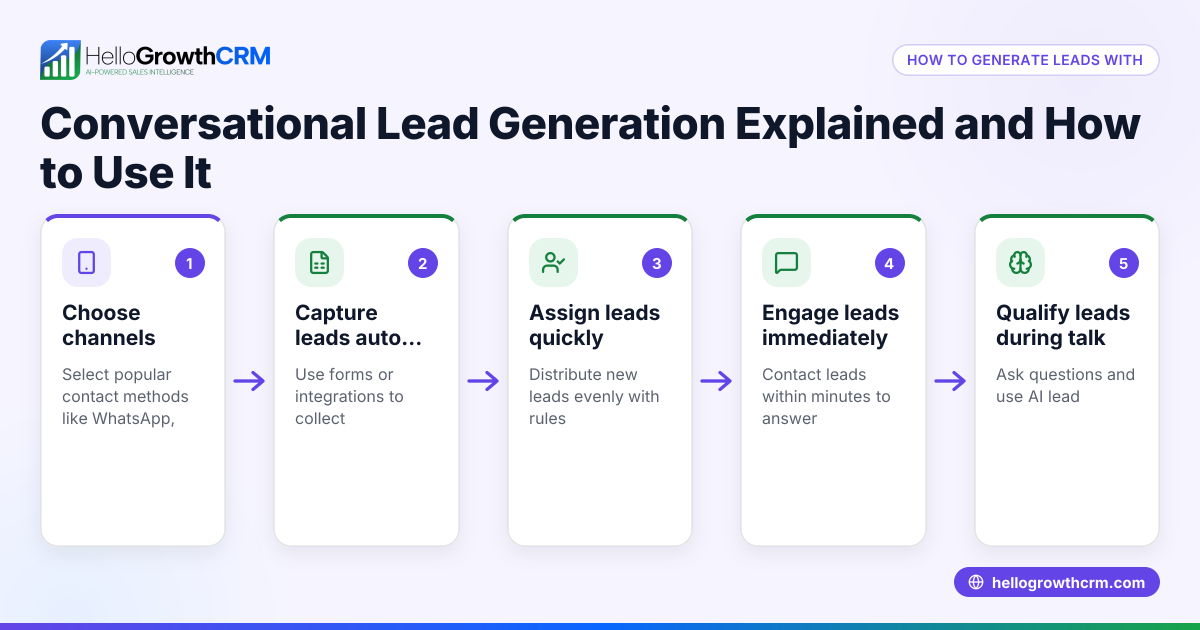
- Identify your customers’ preferred communication channels. Check whether your customers prefer WhatsApp, SMS, email, phone calls, or live chat. Make sure your team can access these channels in one place.
- Set up tools that enable two-way conversations. Use software that supports real-time messaging and calls, so customers can easily ask questions and get quick replies without delays.
- Train your team on conversational tone and responsiveness. Encourage friendly, clear, and helpful communication rather than scripted or robotic replies.
- Integrate your communication channels with your CRM. This keeps all conversations linked to the right customer record, so your team sees history and context at a glance.
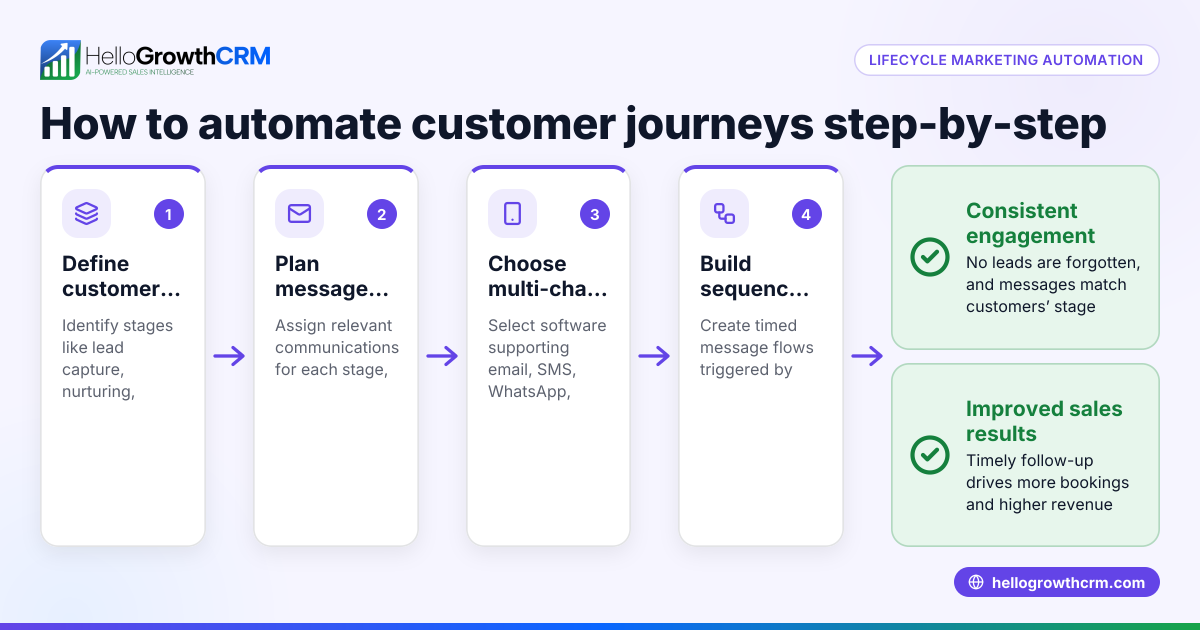
- Use automation wisely to follow up without losing the personal touch. Set reminders and sequences for follow-ups but allow room for human interaction.
- Monitor and measure customer satisfaction and response times. Track how quickly your team replies and how customers rate their experience.
- Continuously improve based on feedback and data. Adjust your approach to ensure conversations remain relevant and helpful.
Example (fictional figures)
A B2B software reseller in Denver, Colorado, wants to improve their conversational customer experience starting 01/15/2026.
- Current monthly leads: 500
- Average conversion rate: 10%
- Average revenue per customer: $2,000
They estimate that by improving conversational follow-up, they can increase conversions by 20%.
Calculations:
Current monthly revenue: 500 leads × 10% conversion = 50 customers 50 customers × $2,000 = $100,000
Improved conversion rate: 10% + (10% × 20%) = 12%
Projected new revenue: 500 leads × 12% = 60 customers 60 customers × $2,000 = $120,000
Revenue increase: $120,000 - $100,000 = $20,000 additional monthly revenue
This example shows how conversational customer experience can directly impact sales and revenue.
Common mistakes
- Ignoring customer channel preferences. Prevent this by surveying your customers or analyzing existing communication data.
- Using tools that don’t integrate conversations into one system. Avoid scattered information by choosing a CRM that consolidates messages and calls.
- Over-automating and losing personal touch. Use automation only for reminders and basic sequences, not for all replies.
- Failing to train the team on conversational skills. Provide training and scripts that emphasize empathy and clarity.
- Not tracking response times and satisfaction. Regularly review metrics to spot bottlenecks or issues.
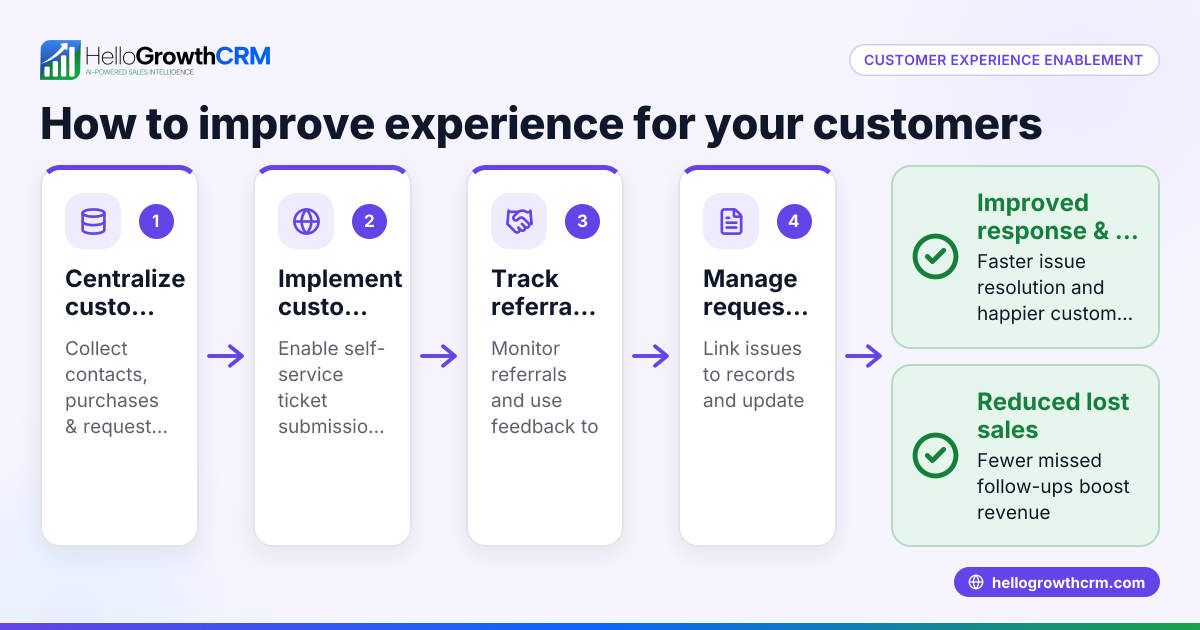
- Neglecting post-sale conversations. Keep service requests and support linked to the original customer record to maintain continuity.
Doing this in HelloGrowthCRM
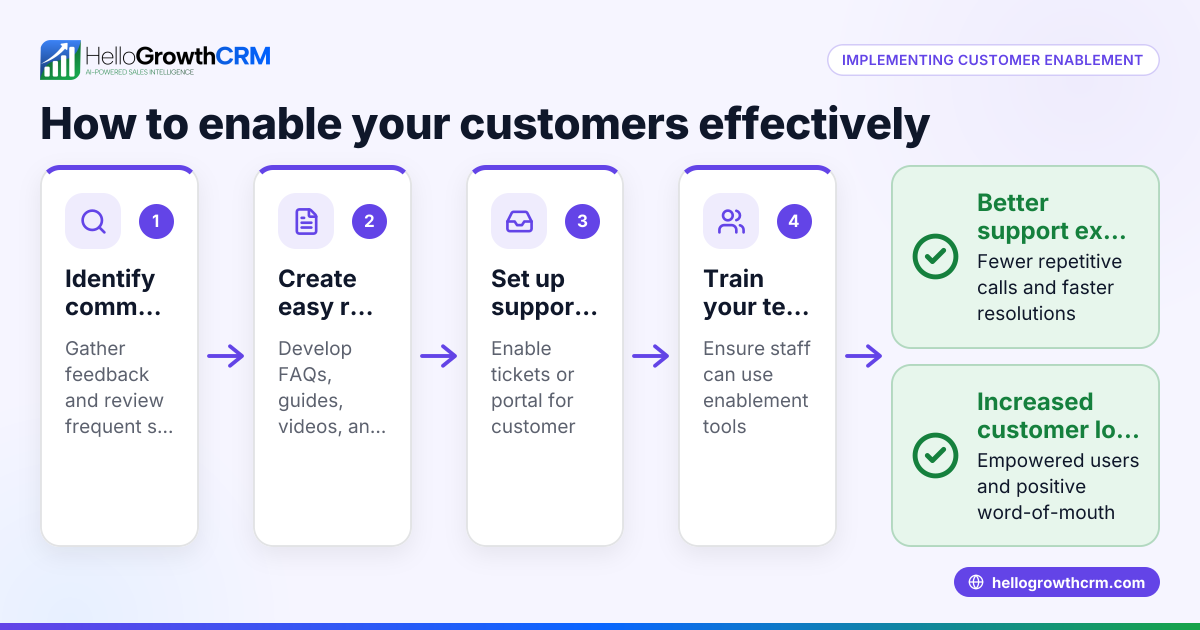
HelloGrowthCRM supports conversational customer experience by keeping service requests, tickets, and referrals linked on the same customer record as the original deal. Its branded self-service customer portal and knowledge base help customers find answers quickly while your team manages support tickets efficiently. This centralized approach ensures conversations continue smoothly after the sale without losing context. Learn more about HelloGrowthCRM's customer portal and support features here.
Frequently asked questions
What is the difference between conversational customer experience and traditional customer service? Conversational customer experience emphasizes natural, two-way communication in real time, often across messaging apps and chat. Traditional customer service may rely more on one-way communication like emails or phone calls without immediate interaction.
How can small businesses start improving their conversational customer experience? Begin by identifying your customers’ preferred communication channels, then use integrated tools that allow quick back-and-forth messaging. Train your team to respond promptly and personally.
Why is integrating communication channels with a CRM important? Integration ensures all conversations are linked to the correct customer record, giving your team full context and history. This avoids repeated questions and improves response quality. See how HelloGrowthCRM manages WhatsApp and SMS integration here.
Can automation help without making conversations feel robotic? Yes, when used for timely reminders and follow-ups while allowing human agents to handle more complex interactions. Balance is key to maintaining a personal touch.
How do I measure success in conversational customer experience? Track metrics like response time, customer satisfaction scores, conversion rates, and retention. Adjust your approach based on these insights.
What role does post-sale support play in conversational customer experience? Post-sale support keeps customers engaged and satisfied, encouraging loyalty and referrals. Keeping service requests on the same customer record helps maintain continuity and faster resolution.
Key takeaways
- Conversational customer experience means two-way, natural communication across preferred customer channels.
- Use integrated tools and train your team for responsiveness and empathy.
- Avoid over-automation and scattered communication platforms.
- Track key metrics to continuously improve customer interactions.
- Post-sale conversations and support should stay linked to the original customer record.
- HelloGrowthCRM helps manage ongoing conversations with tickets, referrals, and a customer portal.
Start improving your conversations and customer satisfaction today. Start on the Free Forever plan (200 leads, no credit card) with HelloGrowthCRM.
Ready to put this into practice?
Set up your pipeline, WhatsApp follow-ups, and AI lead scoring in minutes — free, no credit card.
Try HelloGrowthCRM freeGet CRM tips in your inbox
Join thousands of sales professionals who get weekly insights on CRM strategy, AI automation, and pipeline optimization.

The HelloGrowthCRM team publishes guides on CRM strategy, AI sales tools, and revenue operations for small business sales teams.