HelloGrowthCRM software
Built for real small-business sales teams
HelloGrowthCRM helps reps qualify faster, follow up on time, and close more deals—with practical automation in one place.
- AI lead scoring and pipeline visibility
- Built-in dialer, WhatsApp, and email automation
- Sales forecasting and RevOps-ready reporting
A CRM (Customer Relationship Management) system designed for retail businesses helps manage customer contacts, track sales leads, and organise follow-ups systematically. Retail businesses in India, such as kirana stores, mobile accessories shops, and apparel outlets, often lose leads or delay follow-ups because they rely on WhatsApp chats and spreadsheets without central tracking. Using a CRM tailored for retail can improve lead response times and increase sales conversion.
Why this comes up / what goes wrong
Retail business owners and accountants in India face challenges like managing multiple customer inquiries from different channels (WhatsApp, phone, walk-ins), tracking which leads have been followed up, and coordinating sales teams without complex software. For example, a kirana store owner in Indore might get WhatsApp messages from customers but lose track of who asked for what, leading to missed sales. Similarly, a mobile accessories shop in Surat or an apparel store with two outlets in Lucknow may have multiple sales reps but no shared system to track leads or sales progress.
The core problem is that retail businesses often depend on informal tools, causing slow follow-up and lost opportunities. A CRM for retail business helps centralise customer data, schedule follow-ups, and keep sales organised.
Step-by-step
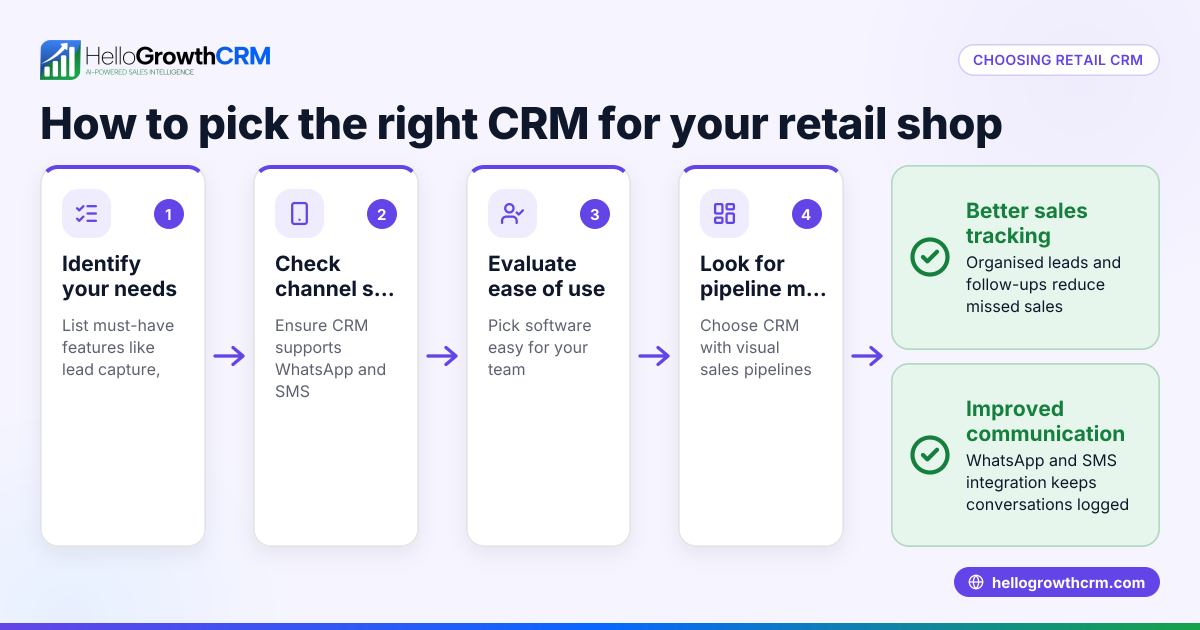
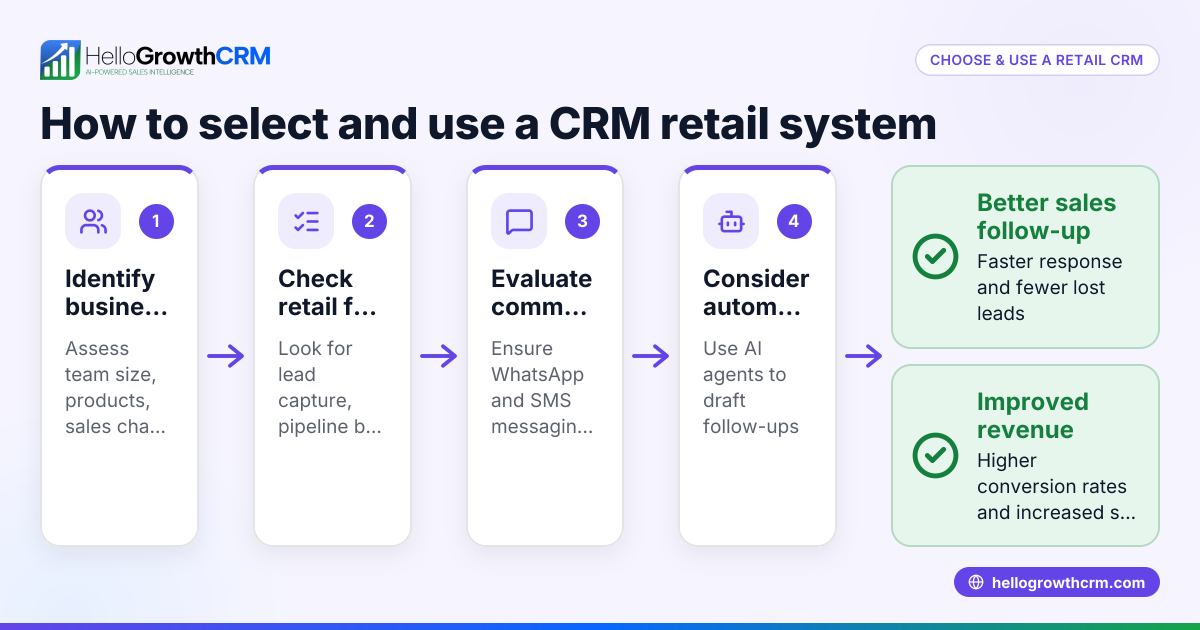
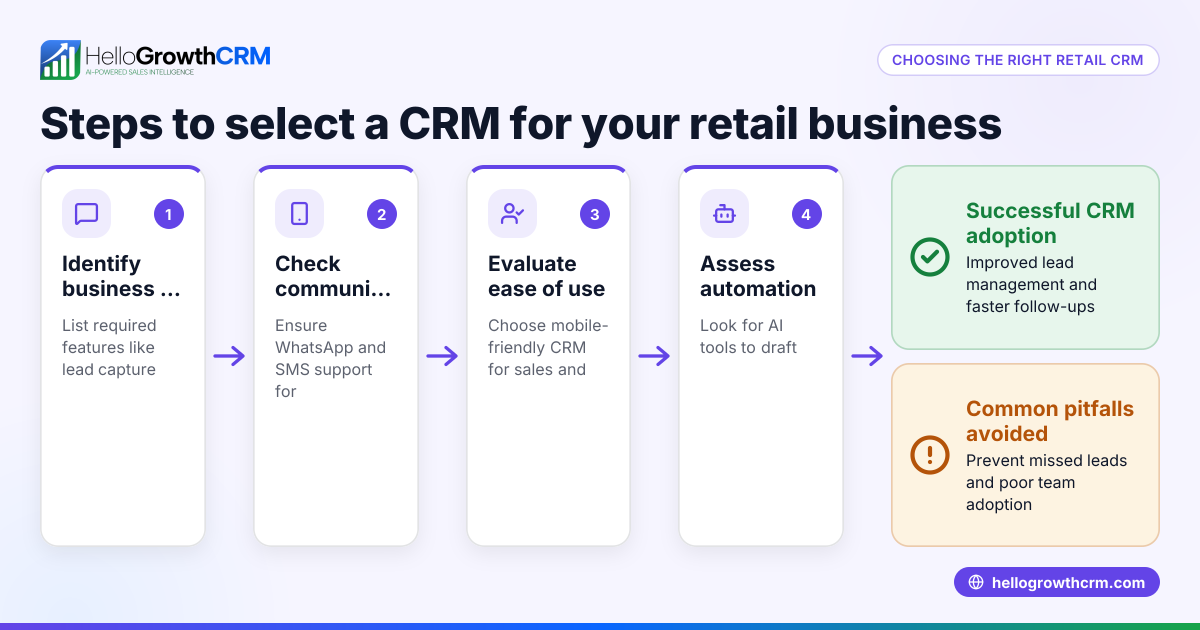
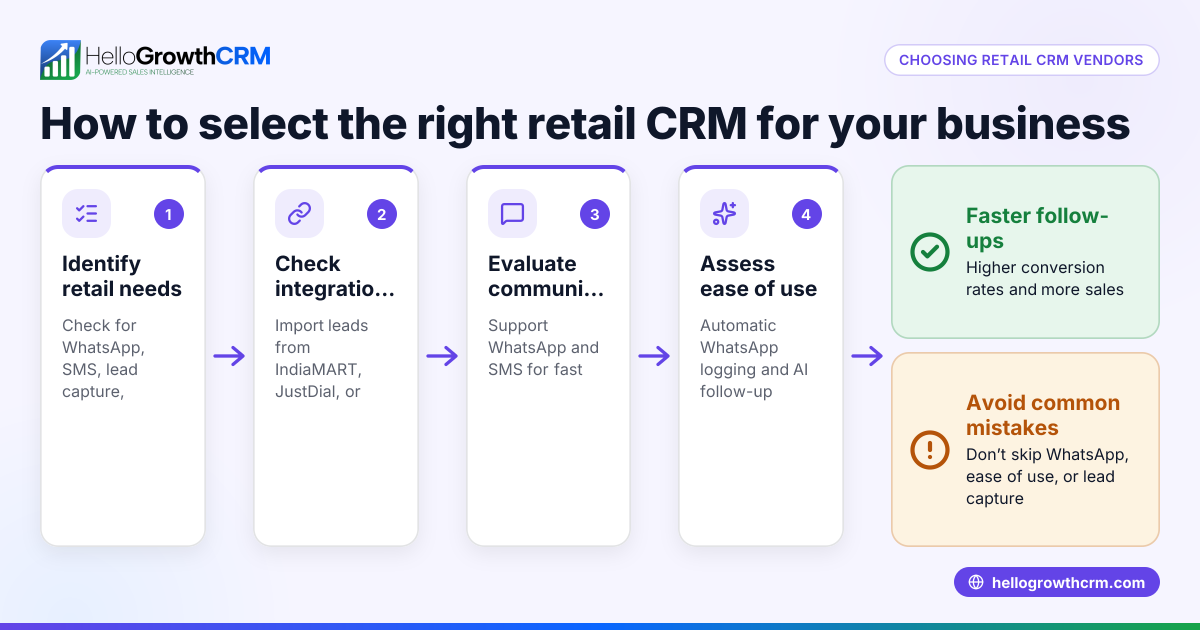
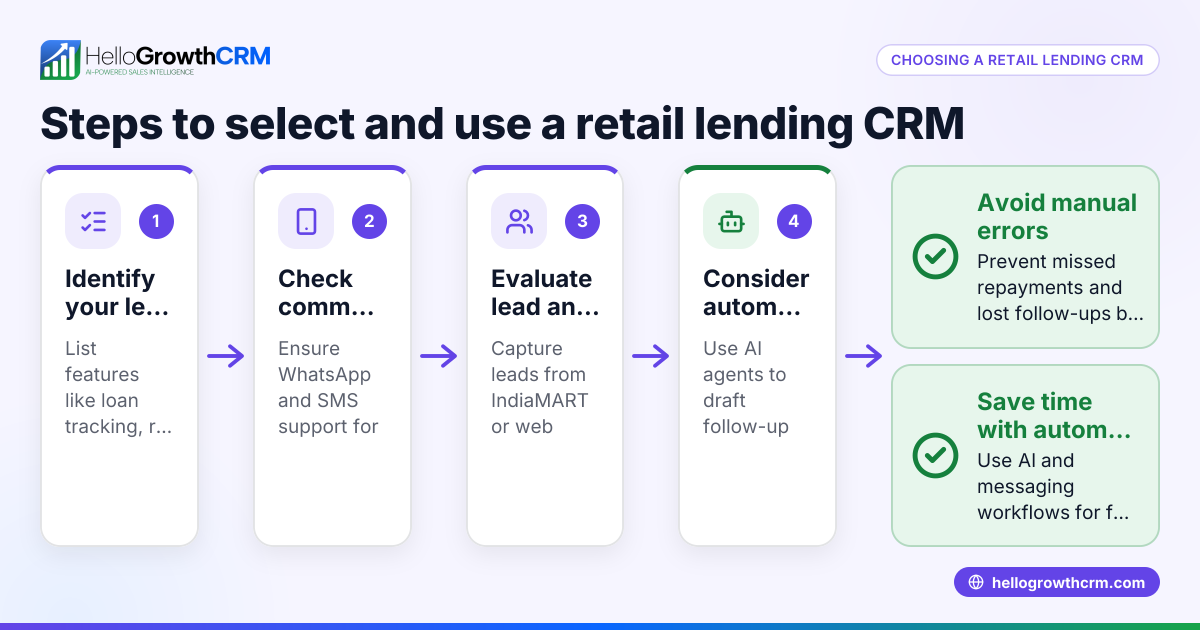
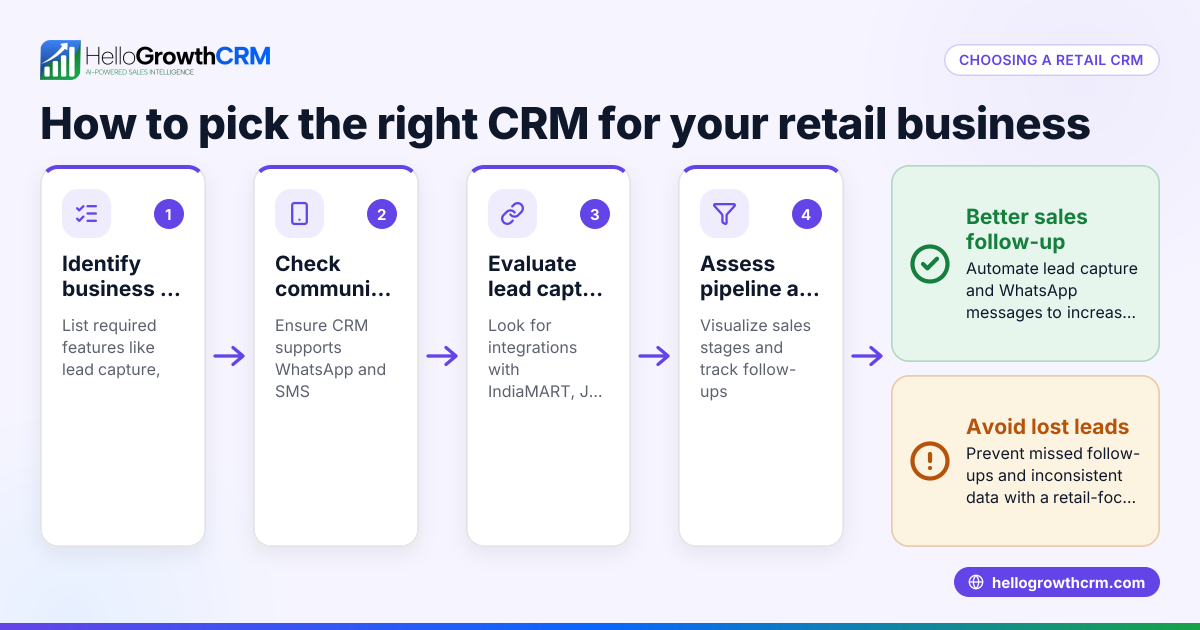
- List your sales and customer communication channels. Check if you get leads from WhatsApp, phone calls, walk-ins, or online platforms. A retail CRM should integrate or at least log these channels.
- Identify your sales process stages. Define steps like lead inquiry, product demo or sample, quotation, order confirmation, and delivery. The CRM should allow you to track leads through these stages.
- Check for mobile-friendly and WhatsApp integration. Since most Indian retail businesses use WhatsApp for communication, the CRM should log WhatsApp conversations and allow sending follow-ups via WhatsApp or SMS.
- Evaluate lead follow-up features. Look for automated reminders, AI assistance for drafting messages, or task boards to ensure no lead is forgotten.
- Consider team size and roles. For small teams or single founders, managed support for follow-ups can help. Larger teams need clear role assignments and pipeline visibility.
- Review reporting and forecasting needs. The CRM should provide sales reports and forecasts to help plan inventory and sales targets. (NEEDS EXPERT REVIEW)
- Test the CRM with your actual data. Use a trial or free plan to enter sample leads and check if the workflow fits your retail business.
For more details on how retail shops use CRM, see Retail shops.
Example (fictional figures)
Consider a two-outlet apparel store in Lucknow. They receive 50 WhatsApp inquiries per week about new arrivals and discounts.
- Week 1 leads: 50
- Conversion rate without CRM: 20% (10 sales)
- Average sale value: ₹1,500
Sales revenue without CRM = 10 × ₹1,500 = ₹15,000
With a CRM tracking conversations and automating follow-ups, conversion improves to 30% (15 sales).
Sales revenue with CRM = 15 × ₹1,500 = ₹22,500
The store spends ₹2,000 on CRM subscription.
Net gain = ₹22,500 - ₹15,000 - ₹2,000 = ₹5,500
This example shows how better lead management with CRM can increase sales and revenue.
Common mistakes
- Ignoring WhatsApp integration: Since WhatsApp is the main communication channel, not using a CRM that logs WhatsApp chats causes lost context. Prevent this by choosing a WhatsApp-native CRM.
- No follow-up reminders: Leads go cold if follow-ups are missed. Use CRM task boards or AI agents to automate reminders.
- Using spreadsheets instead of CRM: Spreadsheets lack real-time updates and collaboration features. Switch to a CRM for shared visibility.
- Overcomplicating the CRM setup: Retail businesses need simple workflows. Avoid CRMs with too many unnecessary features.
- Not training the team: Without training, sales reps won’t use the CRM consistently. Schedule team sessions to onboard everyone.
For tips on managing sales teams using CRM, see HelloGrowthCRM for India.
Doing this in HelloGrowthCRM
HelloGrowthCRM offers WhatsApp and SMS integration where all WhatsApp conversations with leads are logged automatically on the lead record. Follow-ups can be sent as messages directly from the CRM. Its AI agents (currently in Beta on the Growth plan) draft follow-up messages after calls, so sales reps only need to review and send them, saving time. For founders without a sales manager, HelloGrowthCRM can assign a revenue specialist who helps manage the follow-up queue every week, ensuring leads are contacted promptly and the sales pipeline stays clean.
Learn more about messaging features at WhatsApp and SMS CRM.
Frequently asked questions
What features should a CRM for retail business have? A retail CRM should handle WhatsApp and SMS messaging, track leads through sales stages, automate follow-up reminders, and support team collaboration. Mobile access and simple interfaces are important for retail teams.
Can a CRM integrate with WhatsApp for retail sales? Yes, a WhatsApp-native CRM logs all conversations and allows sending follow-ups as WhatsApp messages, which is crucial for Indian retail businesses relying on WhatsApp.
How does AI help in retail CRM? AI agents can draft follow-up messages and update lead records automatically, reducing manual workload and ensuring timely communication.
Is Managed RevOps useful for small retail businesses? Yes, if you don’t have a dedicated sales manager, having a specialist manage your follow-up queue weekly helps keep leads active and the sales process moving.
How to start using a CRM in a retail shop? Begin by listing your leads, entering them into the CRM, training your team on basic features, and using WhatsApp integration for follow-ups. Start with a free plan to test.
For more on retail CRM benefits, visit Retail shops.
Key takeaways
- A CRM for retail business centralises customer leads and sales processes.
- WhatsApp and SMS integration is essential for Indian retail communication.
- Automated follow-ups and AI assistance improve lead conversion.
- Managed follow-up support helps founders without sales managers.
- Testing CRM features with your team before buying helps ensure fit.
Start managing your retail leads better with HelloGrowthCRM. Start on the Free Forever plan (200 leads, no credit card).
Ready to put this into practice?
Set up your pipeline, WhatsApp follow-ups, and AI lead scoring in minutes — free, no credit card.
Try HelloGrowthCRM freeGet CRM tips in your inbox
Join thousands of sales professionals who get weekly insights on CRM strategy, AI automation, and pipeline optimization.

The HelloGrowthCRM team publishes guides on CRM strategy, AI sales tools, and revenue operations for small business sales teams.