HelloGrowthCRM software
Built for real small-business sales teams
HelloGrowthCRM helps reps qualify faster, follow up on time, and close more deals—with practical automation in one place.
- AI lead scoring and pipeline visibility
- Built-in dialer, WhatsApp, and email automation
- Sales forecasting and RevOps-ready reporting
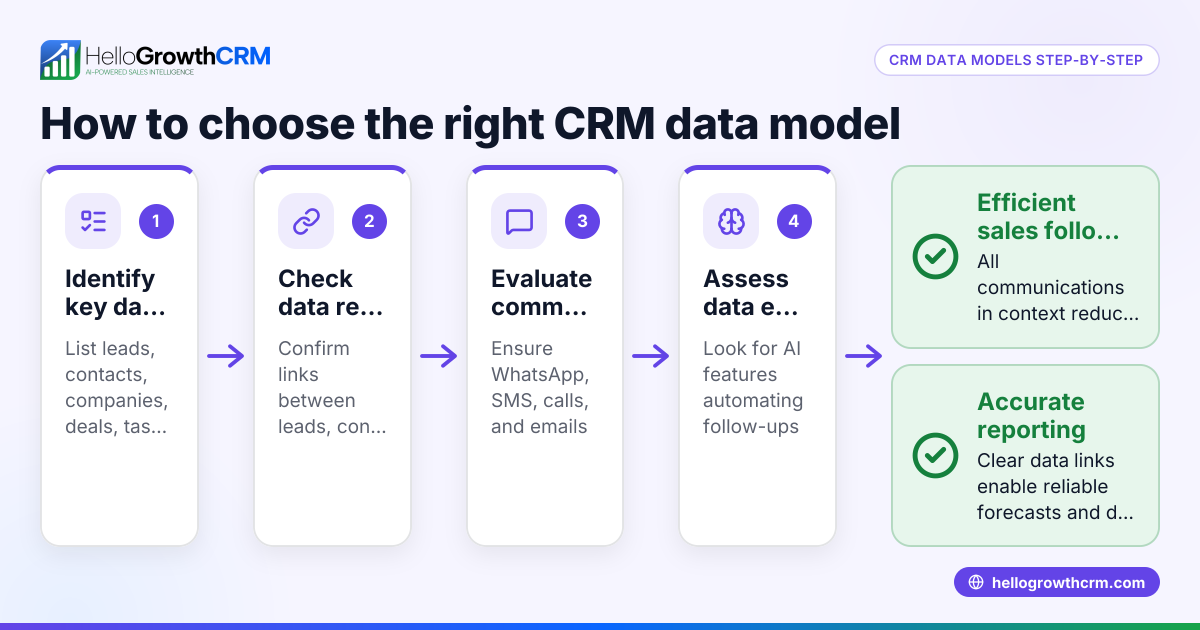
Customer data types refer to the different categories of information you collect and store about your customers. These typically include personal identification data (like name and phone number), demographic data (age, location), behavioral data (purchase history, website activity), and communication preferences (email, SMS, WhatsApp). Understanding these types helps you organize your customer information effectively for sales, marketing, and customer service.
Why this comes up / what goes wrong
Small business owners often struggle to keep customer information organized because data comes from multiple sources: web forms, emails, phone calls, and messaging apps like WhatsApp. Without clear categories and a system to manage these data types, leads get lost, follow-ups slow down, and sales opportunities slip away. For example, mixing contact info with purchase history in spreadsheets can cause confusion and errors. Knowing customer data types helps you structure this info clearly and use it to improve sales and service.
Step-by-step
- Identify the customer data types you need: List the categories relevant to your business. Common types include:
- Contact information: name, phone, email, address
- Demographic data: age, gender, location
- Transaction history: purchases, dates, amounts
- Communication preferences: preferred channels like WhatsApp, SMS, or email
- Interaction history: notes from calls, messages, tickets
- Collect data consistently: Make sure each new lead or customer record includes these data types. Use web forms and integrations to capture info automatically where possible.
- Organize data in one place: Store all customer data in a CRM or a single database rather than spreadsheets or multiple apps. This reduces errors and speeds up access.
- Keep data updated: Regularly review and update customer details, especially contact info and preferences, to maintain accuracy.
- Respect privacy and compliance: Know the legal requirements for storing and handling customer data, such as data residency or consent rules.
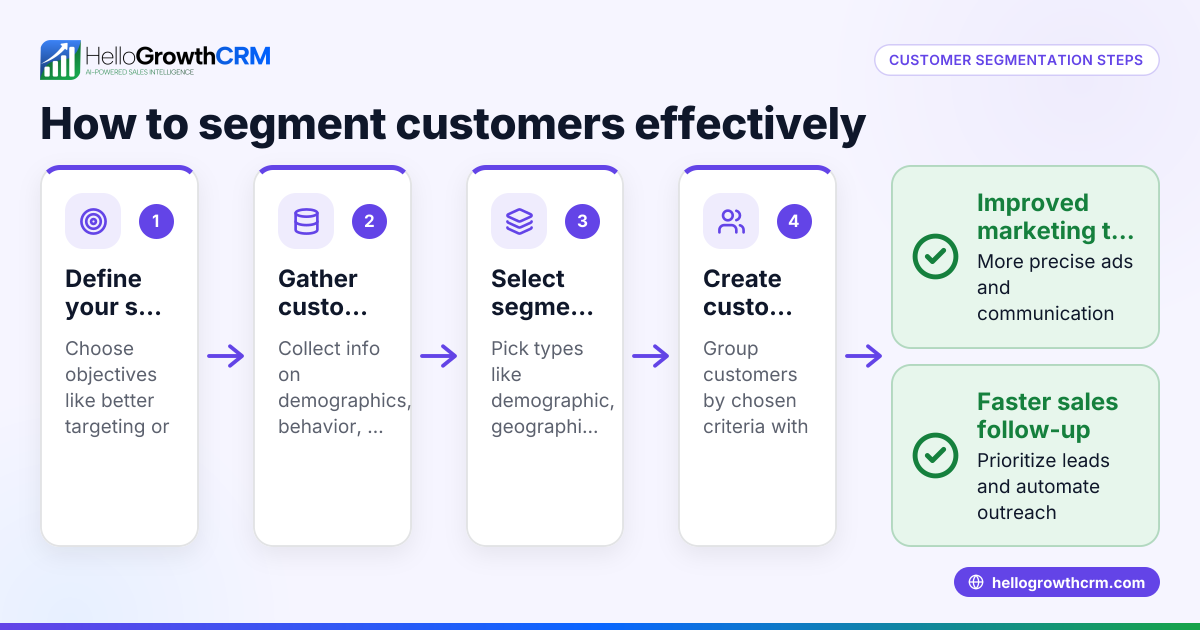
- Use data to improve sales and service: Segment customers by data types (like location or purchase history) to personalize marketing and follow-ups. Track interactions in the same system to keep sales and support aligned.
Example (fictional figures)
A B2B software reseller in Denver, Colorado, tracks customer data types to improve follow-up speed and sales.
- Contact info collected: name, email, phone
- Demographic data: company size, industry
- Transaction history: last purchase date and amount
- Communication preferences: WhatsApp or email
On 05/01/2026, they added a new lead:
- Name: Acme Corp
- Contact: jane.doe@acmecorp.com, (303) 555-1234
- Company size: 50 employees
- Industry: Tech Services
- Last purchase: $0 (new lead)
- Preferred contact: WhatsApp
The sales rep used this data to send a WhatsApp sequence introducing their product. After a $15,000 sale on 05/15/2026, the transaction history updated:
$0 + $15,000 = $15,000
Using organized data helped the rep track the lead from initial contact to sale without losing details or delay.
Common mistakes
- Mixing data types in one field: Avoid storing multiple data points in a single spreadsheet cell or note. Use separate fields for each data type to keep info clear.
- Prevention: Use a CRM with structured fields.
- Not updating customer data regularly: Outdated phone numbers or emails cause missed follow-ups.
- Prevention: Schedule periodic data reviews.
- Ignoring communication preferences: Contacting customers on channels they dislike lowers engagement.
- Prevention: Record and respect channel preferences like WhatsApp or SMS.
- Using multiple disconnected tools: Leads scattered across email, text, and spreadsheets slow down sales.
- Prevention: Centralize data in one system.
- Failing to secure customer data properly: Data breaches or loss can damage trust.
- Prevention: Use platforms with strong security and compliance features.
Doing this in HelloGrowthCRM
HelloGrowthCRM supports managing customer data securely and efficiently. HelloGrowthCRM has completed a SOC 2 Type II examination and supports CCPA data-subject rights. After the sale, service requests, tickets, and referrals remain linked to the same customer record as the deal, simplifying ongoing support and relationship management. Learn more about HelloGrowthCRM for the United States and its WhatsApp and SMS CRM capabilities to streamline your sales and customer communication.
Frequently asked questions
What are the main customer data types small businesses should track? Small businesses should track contact information, demographic details, transaction history, communication preferences, and interaction notes. These categories help organize data for sales and support.
How can I collect customer data efficiently? Use web forms integrated with your CRM to capture data automatically. Also, record communication preferences and interaction history directly in your CRM to avoid losing information.
Why is it important to respect communication preferences? Contacting customers on their preferred channels like WhatsApp or SMS increases engagement and reduces the chance of messages being ignored or marked as spam.
How do I keep customer data secure and compliant? Choose a CRM that offers data residency options and compliance with privacy laws. HelloGrowthCRM has completed a SOC 2 Type II examination and supports CCPA data-subject rights.
Can I manage customer service requests in the same system as sales data? Yes, HelloGrowthCRM links service tickets and customer requests to the same customer record as deals, helping you maintain a full view of customer interactions.
Key takeaways
- Customer data types include contact info, demographics, transactions, preferences, and interactions.
- Organize and update data consistently to avoid lost leads and slow follow-ups.
- Respect communication preferences to improve customer engagement.
- Avoid mixing data types and using disconnected tools by centralizing data.
- Use secure, compliant CRM systems like HelloGrowthCRM to manage data and service requests.
Start organizing your customer data today to improve sales and service. Start on the Free Forever plan (200 leads, no credit card).
Ready to put this into practice?
Set up your pipeline, WhatsApp follow-ups, and AI lead scoring in minutes — free, no credit card.
Try HelloGrowthCRM freeGet CRM tips in your inbox
Join thousands of sales professionals who get weekly insights on CRM strategy, AI automation, and pipeline optimization.

The HelloGrowthCRM team publishes guides on CRM strategy, AI sales tools, and revenue operations for small business sales teams.