HelloGrowthCRM software
Built for real small-business sales teams
HelloGrowthCRM helps reps qualify faster, follow up on time, and close more deals—with practical automation in one place.
- AI lead scoring and pipeline visibility
- Built-in dialer, WhatsApp, and email automation
- Sales forecasting and RevOps-ready reporting
Customer segmentation types are methods businesses use to divide customers into groups with similar characteristics. The main types include demographic, geographic, psychographic, behavioral, and value-based segmentation. Applying these types helps you target marketing and sales efforts more precisely, improving engagement and sales outcomes.
Why this comes up / what goes wrong
Small business owners often face challenges like unfocused marketing and slow follow-up that cause lost leads and wasted effort. Without clear segmentation, sales teams may treat all customers the same, missing chances to customize offers or prioritize leads. Many run sales using scattered tools such as text messages, email, and spreadsheets, which complicates managing customer groups. Understanding customer segmentation types helps organize leads and customers for better targeting and faster follow-up.
Step-by-step
- Define your segmentation goal: Decide what you want to achieve—better marketing targeting, personalized sales, or improved customer retention. Check if your current approach misses specific customer groups.
- Gather customer data: Collect information like age, location, purchase history, preferences, and engagement. Review your existing records and consider surveys or website analytics.
- Select segmentation types: Choose the customer segmentation types that fit your business needs:
- Demographic: Age, gender, income, education.
- Geographic: Location, climate, urban or rural.
- Psychographic: Lifestyle, values, interests.
- Behavioral: Purchase behavior, loyalty, product usage.
- Value-based: Customer lifetime value or profitability.
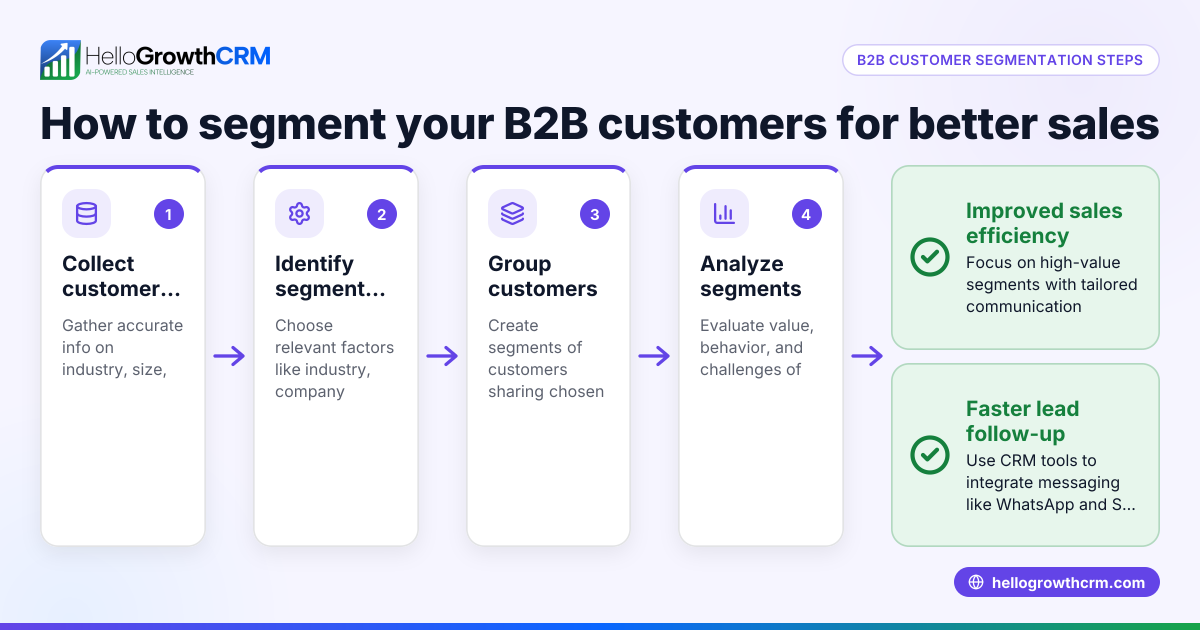
- Create customer segments: Group customers based on chosen criteria. Check for clear distinctions between groups.
- Analyze segments: Evaluate each segment’s size, needs, and potential. Ensure the segments are actionable and reachable.
- Customize marketing and sales efforts: Develop messages, offers, and follow-up sequences tailored to each segment. Confirm your sales team understands the differences.
- Review and refine: Monitor segment responses and adjust groups or strategies as needed. Regularly check results.
Using a CRM with integrated messaging tools helps manage customer communication efficiently. Learn about HelloGrowthCRM's WhatsApp and SMS workflows at WhatsApp and SMS CRM.
Example (fictional figures)
A plumbing company in Austin, Texas wants to improve marketing and sales by segmenting customers.
- Goal: Increase repeat business and referrals.
- Data collected: Customer location, service type used, frequency, and referral source.
- Segmentation types chosen: Geographic (Austin neighborhoods), behavioral (service frequency), and referral status.
Segments identified:
- Segment A: Customers in downtown Austin using emergency services frequently.
- Segment B: Suburban customers using routine maintenance services occasionally.
- Segment C: Customers who came via referrals.
Marketing actions:
- Segment A receives emergency service discounts.
- Segment B gets maintenance reminders.
- Segment C receives referral thank-you offers.
Results after 3 months:
- Segment A repeat business increased by 15% (from $20,000 to $23,000): $20,000 × 15% = $3,000 $20,000 + $3,000 = $23,000
- Segment B maintenance bookings increased by 10% (from $15,000 to $16,500): $15,000 × 10% = $1,500 $15,000 + $1,500 = $16,500
- Segment C referrals increased customer base by 5% (from 200 to 210 customers): 200 × 5% = 10 new customers
This targeted approach improved revenue and customer engagement.
Common mistakes
- Using too many segmentation types simultaneously: Focus on 2-3 relevant types to keep segments manageable. Prevent by starting simple.
- Relying on incomplete or outdated data: Regularly update customer information. Prevent by scheduling data reviews.
- Ignoring segment size and actionability: Avoid segments that are too small or too broad. Prevent by analyzing segment potential before acting.
- Treating segments as fixed: Customer needs evolve. Prevent by monitoring and adjusting segments.
- Not aligning sales and marketing teams: Ensure both teams understand and use segmentation. Prevent by training and using shared tools.
- Failing to follow up promptly: Leads are lost to slow responses. Prevent by integrating communication channels like WhatsApp and SMS sequences, as supported by WhatsApp and SMS CRM.
Doing this in HelloGrowthCRM
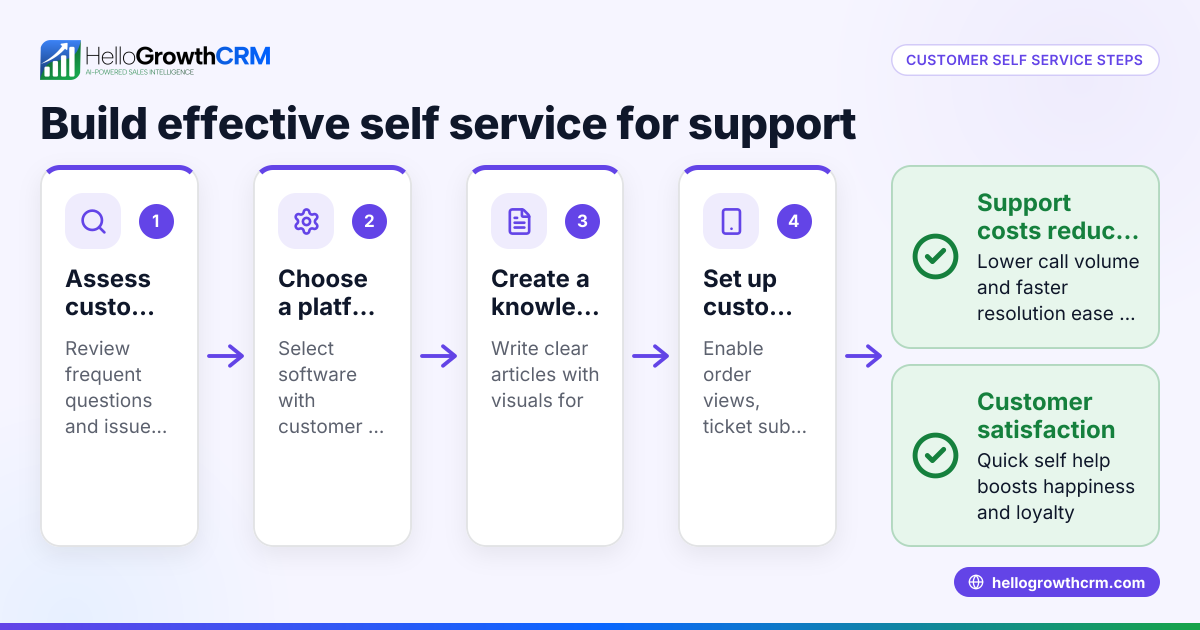
HelloGrowthCRM helps keep service requests, referrals, and customer interactions organized on the same customer record through its customer portal, support tickets, and knowledge base. This centralizes ongoing service needs and referral tracking efficiently. For more on managing customer engagement and health, see customer health score.
Frequently asked questions
What is the best customer segmentation type for small businesses? The best type depends on your business goals and available data. Many small businesses start with demographic and behavioral segmentation because they are easier to collect and act on. Combining types over time improves precision.
How often should I update my customer segments? Update segments regularly, at least quarterly or whenever you have new data or notice changes in customer behavior. This keeps marketing and sales efforts relevant.
Can customer segmentation improve sales follow-up? Yes. Segmentation allows sales teams to prioritize leads and customize communication, leading to faster and more effective follow-up. Using a CRM with integrated communication like HelloGrowthCRM helps automate this.
Is it possible to segment customers without advanced software? Yes. You can segment using spreadsheets or manual lists by sorting customers based on collected data. However, software like HelloGrowthCRM makes managing and acting on segments easier and less error-prone.
How does customer segmentation relate to customer health score? Customer health score tracks how engaged or profitable a customer is, often calculated from behavior and value data. Segmentation can use health scores to identify high-value or at-risk groups for targeted actions.
Key takeaways
- Customer segmentation groups customers by shared traits like demographics, behavior, or value.
- Start with clear goals and relevant data to choose effective segmentation types.
- Keep segments manageable, actionable, and regularly updated.
- Avoid common mistakes like outdated data and poor follow-up.
- Use HelloGrowthCRM features to keep customer service requests, referrals, and knowledge in one place after the sale.
Customer segmentation helps your business target marketing and sales more effectively. Start organizing your customers today and improve your follow-up with the Free Forever plan at Start on the Free Forever plan (200 leads, no credit card).
Ready to put this into practice?
Set up your pipeline, WhatsApp follow-ups, and AI lead scoring in minutes — free, no credit card.
Try HelloGrowthCRM freeGet CRM tips in your inbox
Join thousands of sales professionals who get weekly insights on CRM strategy, AI automation, and pipeline optimization.

The HelloGrowthCRM team publishes guides on CRM strategy, AI sales tools, and revenue operations for small business sales teams.