HelloGrowthCRM software
Built for real small-business sales teams
HelloGrowthCRM helps reps qualify faster, follow up on time, and close more deals—with practical automation in one place.
- AI lead scoring and pipeline visibility
- Built-in dialer, WhatsApp, and email automation
- Sales forecasting and RevOps-ready reporting
Customer education KPIs measure how well your education business enables customers to gain value from your offerings. Tracking these KPIs helps you improve course effectiveness, customer satisfaction, and retention. This article covers why these KPIs matter, how to track them step-by-step, a realistic example for a US coaching institute, common pitfalls, and how HelloGrowthCRM can assist your education business.
Why this comes up / what goes wrong
Education business owners and accountants in the US often struggle to quantify how well their customer education efforts perform. Coaching institutes and education providers need clear KPIs to justify investments in training content, support, and customer engagement. Without these metrics, businesses risk losing customers due to poor course completion or unresolved service requests. They may also miss opportunities to leverage referrals or improve customer satisfaction. This problem is especially acute for small and mid-sized education businesses managing multiple courses and customer touchpoints without centralized tools.
Step-by-step
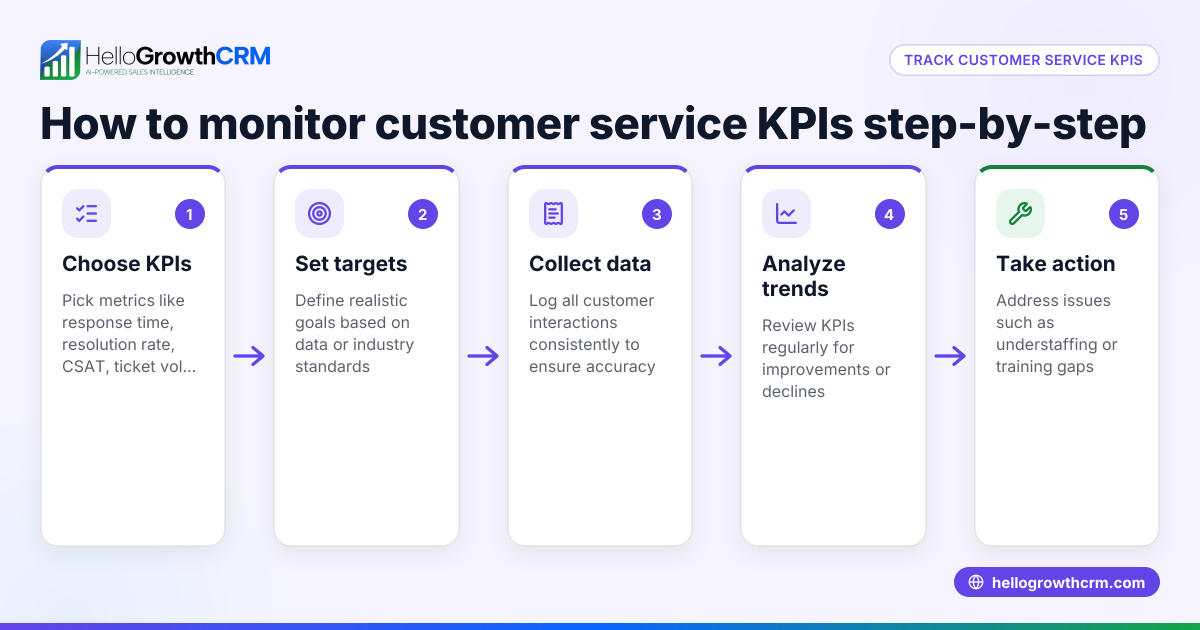
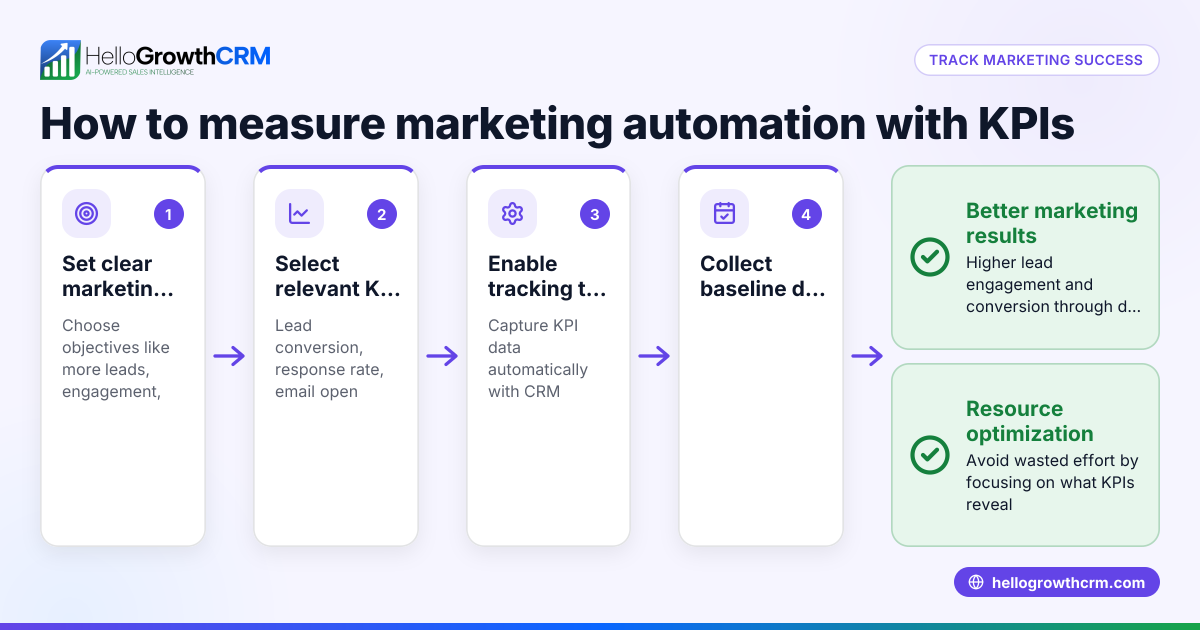
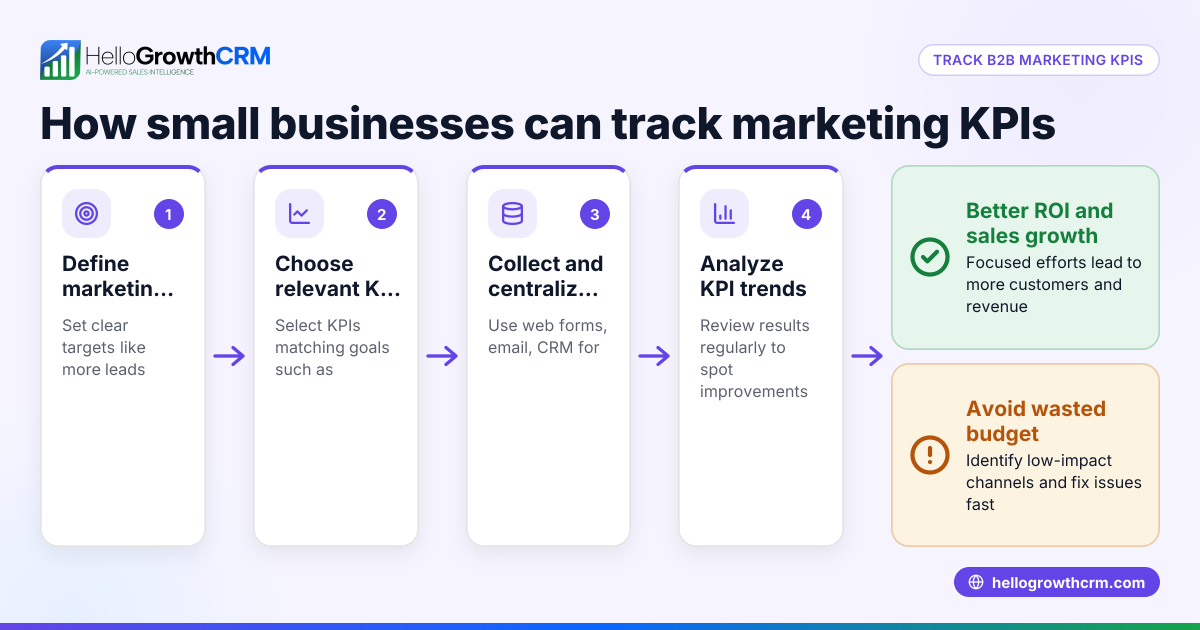
- Define your customer education goals. Decide what success looks like — e.g., higher course completion, faster support resolution, or more referrals.
- Select relevant KPIs. Common KPIs include:
- Course completion rate: % of customers finishing the course.
- Customer satisfaction (CSAT) score: Survey rating after course or support.
- Support ticket resolution time: Average time to close tickets.
- Referral rate: % of customers referring others.
- Set up data collection methods. Use course platforms, surveys, and support systems to gather data. For example, track completion through LMS reports and CSAT via post-course surveys.
- Measure KPIs regularly. Choose a reporting period (weekly, monthly) and collect KPI data consistently.
- Analyze results and identify gaps. Compare KPI trends to goals. Investigate low completion rates or long ticket times.
- Take action to improve. Adjust course content, enhance support resources, or incentivize referrals based on findings.
- Repeat measurement and refinement. Continuous tracking ensures improvements are effective.
Check out how Coaching institutes and education providers can tailor these steps to their specific needs.
Example (fictional figures)
Phoenix Coaching Academy, a US-based coaching institute, tracks these KPIs monthly:
- Total enrolled students: 500
- Students completing courses: 375
- Support tickets opened: 120
- Support tickets resolved within 48 hours: 90
- Referrals received: 40
Calculations:
Course completion rate = (375 / 500) × 100 = 75%
Support ticket resolution rate (within 48 hrs) = (90 / 120) × 100 = 75%
Referral rate = (40 / 500) × 100 = 8%
Phoenix aims to increase course completion to 85% and referral rate to 12% within 6 months by improving course materials and launching a referral program.
Common mistakes
- Tracking too many KPIs at once. Focus on a few critical metrics to avoid data overload. Prevent this by prioritizing KPIs aligned with your business goals.
- Ignoring data quality. Inaccurate or incomplete data leads to wrong conclusions. Ensure data sources are reliable and regularly audited.
- Not linking KPIs to actions. Measuring KPIs without follow-up wastes effort. Assign responsibility for acting on KPI insights.
- Overlooking customer feedback. Quantitative KPIs miss qualitative issues. Combine surveys and direct feedback with metrics.
- Failing to update KPIs as business evolves. KPIs should evolve with your education offerings. Review and adjust KPIs periodically.
- Separating customer education KPIs from overall customer health. Integrate education KPIs with broader customer health metrics to see full impact. See more on customer health score.
Doing this in HelloGrowthCRM
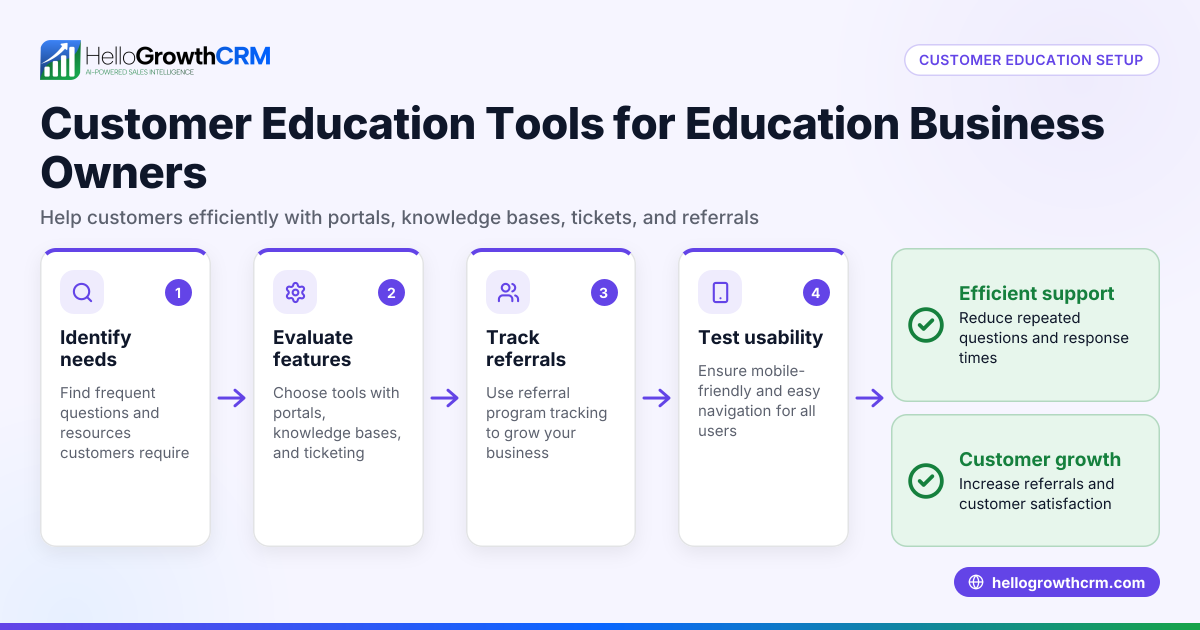
HelloGrowthCRM supports customer education KPIs by keeping all service requests, tickets, and knowledge base interactions on the same customer record as the deal. This unified view helps track support ticket resolution times and customer satisfaction efficiently. The branded self-service customer portal enables customers to access resources and submit tickets, improving engagement and data collection. Referral program tracking is built in to monitor and incentivize word-of-mouth growth. These features help education businesses manage post-sale customer education and support in one place. Learn more about HelloGrowthCRM for the United States.
Frequently asked questions
What are the most important KPIs for customer education? The key KPIs include course completion rate, customer satisfaction scores, support ticket resolution times, and referral rates. These cover how well customers learn, how satisfied they are, how quickly their issues are resolved, and how likely they are to promote your business.
How often should I measure customer education KPIs? Monthly measurement is common, but weekly tracking can be useful for fast feedback. Choose a frequency that balances timely insights with data collection effort.
Can customer education KPIs be linked to sales performance? Yes. Higher education success often leads to better retention and referrals, which drive sales. Integrating education KPIs with sales metrics provides a fuller picture of customer health.
How do I improve low course completion rates? Analyze course content, delivery methods, and customer feedback. Simplify materials, add interactive elements, or offer support to boost completion.
What tools help track these KPIs effectively? Learning management systems, survey tools, and CRM platforms with customer portals and ticketing can centralize KPI tracking and improve data accuracy.
Key takeaways
- Focus on a shortlist of KPIs: course completion, satisfaction, ticket resolution, and referrals.
- Define clear goals and set up reliable data collection methods.
- Regularly analyze KPIs and link findings to specific improvement actions.
- Avoid common mistakes like data overload and ignoring customer feedback.
- Use integrated platforms like HelloGrowthCRM to unify customer education and support data.
- Review and update KPIs as your education business evolves.
Start measuring your customer education KPIs today to improve customer success and business growth. Start on the Free Forever plan (200 leads, no credit card).
Ready to put this into practice?
Set up your pipeline, WhatsApp follow-ups, and AI lead scoring in minutes — free, no credit card.
Try HelloGrowthCRM freeGet CRM tips in your inbox
Join thousands of sales professionals who get weekly insights on CRM strategy, AI automation, and pipeline optimization.

The HelloGrowthCRM team publishes guides on CRM strategy, AI sales tools, and revenue operations for small business sales teams.