HelloGrowthCRM software
Built for real small-business sales teams
HelloGrowthCRM helps reps qualify faster, follow up on time, and close more deals—with practical automation in one place.
- AI lead scoring and pipeline visibility
- Built-in dialer, WhatsApp, and email automation
- Sales forecasting and RevOps-ready reporting
Customer experience as a competitive advantage means intentionally designing every interaction your customers have with your business to be better than what competitors offer. This approach builds stronger loyalty, increases referrals, and raises customer lifetime value. This article explains why this is important for small businesses, details clear steps to improve customer experience, provides a worked example, highlights common mistakes, and shows how HelloGrowthCRM helps manage customer service after the sale.
Why this comes up / what goes wrong
Small business owners often handle sales, customer service, and follow-up using emails, texts, and spreadsheets. This can lead to lost leads, slow responses, and inconsistent customer experiences. When customers wait too long or get unclear answers, they may turn to competitors. Without focusing on customer experience, businesses risk losing repeat sales and referrals that are vital for growth. Understanding customer experience as a competitive advantage means prioritizing smooth, fast, and helpful interactions that customers remember and value.
Step-by-step
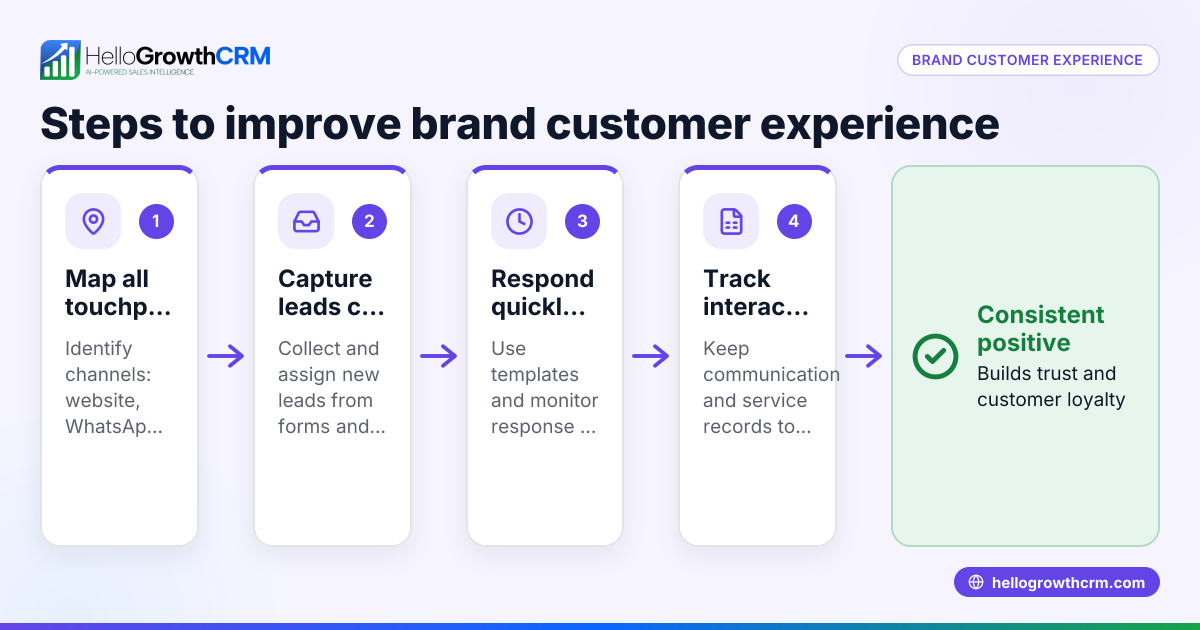
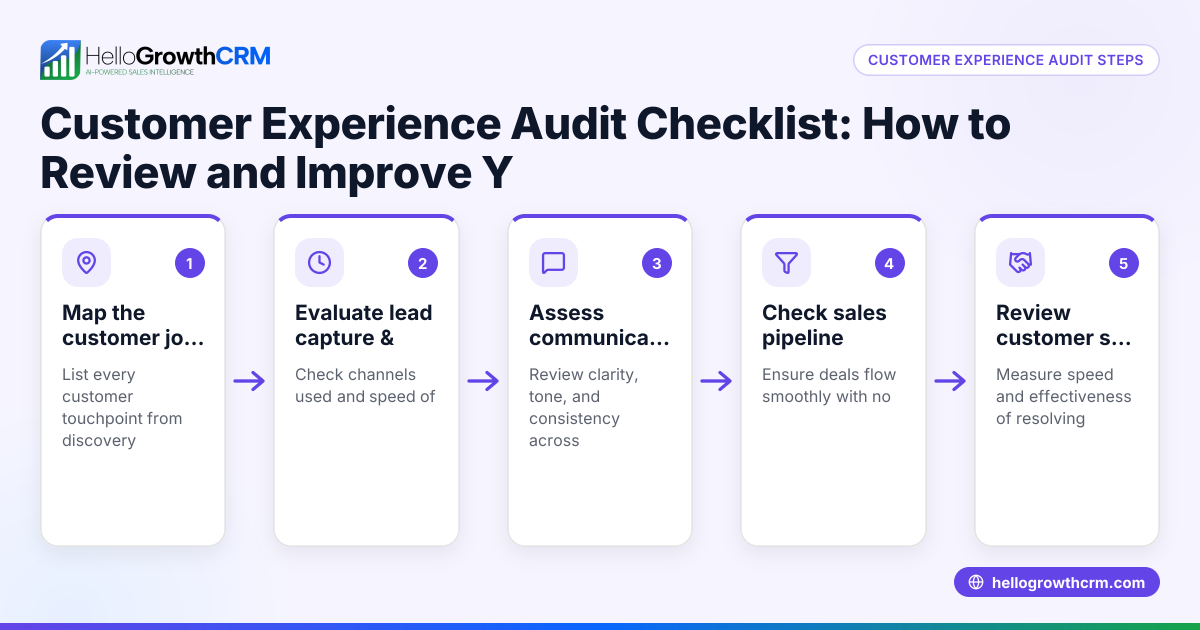
- Map your customer journey: Identify every step a customer takes from first contact through purchase and post-sale support. Check for delays or gaps where customers might get frustrated.
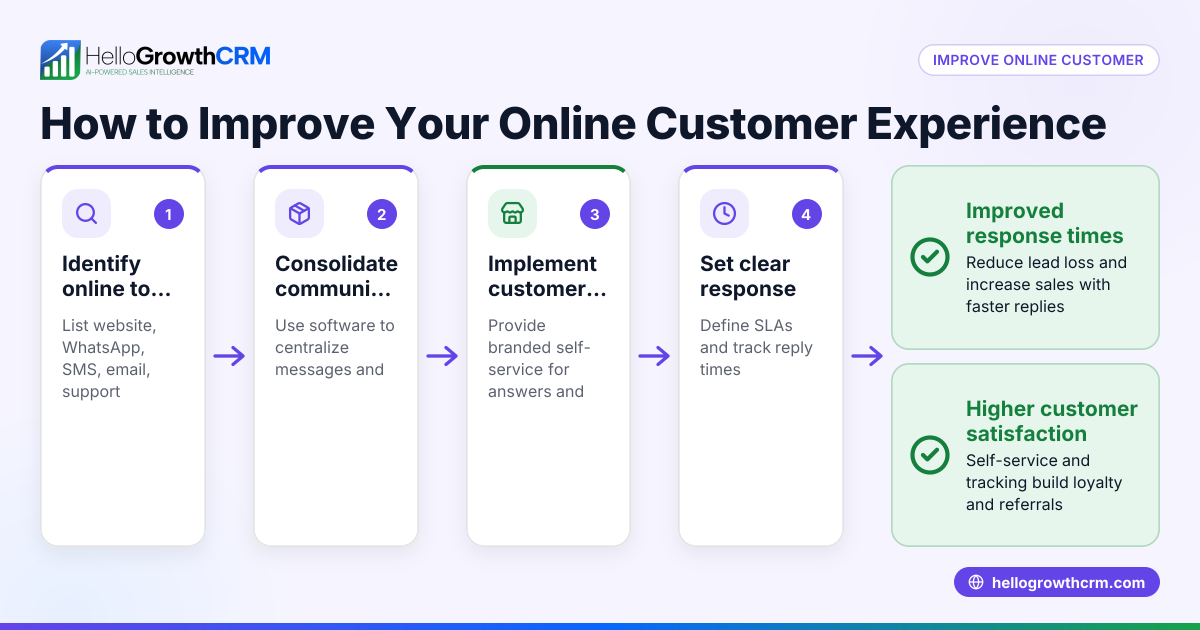
- Set response time standards: Decide how quickly your team should reply to inquiries and support requests. Regularly review if these standards are met to maintain consistency.
- Collect customer feedback: Use surveys, direct questions, or informal check-ins to learn what customers like and where you can improve.
- Train your team: Ensure everyone understands the importance of customer experience and knows how to use your tools effectively.
- Centralize customer data: Keep all customer interactions, support tickets, and referral information in one place for easy access and follow-up.
- Create a referral program: Encourage satisfied customers to refer others by tracking referrals and offering rewards.
- Monitor customer health: Track indicators like repeat purchases, satisfaction scores, and referral activity to spot issues early. See customer health score for details.
- Maintain a knowledge base: Provide customers and staff with easy access to answers and resources to speed up problem-solving and reduce repetitive questions.
Example (fictional figures)
A B2B software reseller in Denver, Colorado, begins improving customer experience on 01/01/2026. They have 500 customers who each spend an average of $3,000 annually.
- Current retention rate: 70%
- Target retention rate after improvements: 80%
Calculate current revenue:
Current retained customers = 500 × 70% = 350 Revenue from retained customers = 350 × $3,000 = $1,050,000
Calculate revenue after improvement:
Retained customers = 500 × 80% = 400 Revenue from retained customers = 400 × $3,000 = $1,200,000
Additional revenue from improved retention:
$1,200,000 - $1,050,000 = $150,000
This $150,000 increase shows the financial benefit of better customer experience.
Common mistakes
- Ignoring customer feedback: Prevent this by regularly collecting feedback and acting on it to improve your service.
- Slow response times: Prevent by setting clear response time goals and monitoring if your team meets them.
- Fragmented customer data: Prevent by centralizing all customer information and interactions in one system, reducing lost or overlooked requests.
- Lack of team training: Prevent by providing ongoing training on customer experience importance and how to use your CRM tools.
- No referral tracking: Prevent by implementing a referral program that tracks who refers new customers and rewards them.
- Overcomplicating processes: Prevent by simplifying steps for both customers and staff to keep interactions smooth.
Doing this in HelloGrowthCRM
HelloGrowthCRM helps you keep service requests, referrals, and customer interactions linked on the same customer record after the sale. Its customer portal allows clients to self-serve, while tickets and knowledge base features speed up support and reduce repetitive questions. The referral program tracks who sends new leads, helping you reward your advocates. Learn more about HelloGrowthCRM for the United States at hellogrowthcrm.com/usa.
Frequently asked questions
What exactly is customer experience as a competitive advantage? It means using the quality and consistency of your customer interactions to differentiate your business and build loyalty. It focuses on making every touchpoint better than competitors.
How can small businesses improve customer experience without big budgets? Start by mapping customer journeys, setting response time standards, and centralizing customer data. Use tools like HelloGrowthCRM to manage tickets and referrals efficiently without complex systems.
Why is referral tracking important for customer experience? Referral tracking rewards customers who promote your business, encouraging loyalty and word-of-mouth growth. It also helps you identify your happiest customers and focus on what works.
How do I measure if my customer experience improvements are working? Track customer retention rates, repeat purchases, and satisfaction scores. Use a customer health score to monitor these indicators and spot issues early.
Can I manage WhatsApp and SMS interactions for customer experience? HelloGrowthCRM supports WhatsApp and SMS communication for sales and marketing, but managing customer service tickets and referrals happens within its customer portal and ticket system. For managing WhatsApp and SMS conversations as part of sales, see WhatsApp and SMS CRM.
Key takeaways
- Customer experience as a competitive advantage means designing better interactions than competitors.
- Map customer journeys, set response time standards, collect feedback, and train your team.
- Centralize customer data and track referrals to build loyalty and growth.
- Use customer health scores to measure success and identify risks.
- Avoid common mistakes like ignoring feedback, slow responses, and fragmented data.
- Use HelloGrowthCRM’s customer portal, tickets, knowledge base, and referral tracking to support these efforts.
Start improving your customer experience today with HelloGrowthCRM. Start on the Free Forever plan (200 leads, no credit card).
Ready to put this into practice?
Set up your pipeline, WhatsApp follow-ups, and AI lead scoring in minutes — free, no credit card.
Try HelloGrowthCRM freeGet CRM tips in your inbox
Join thousands of sales professionals who get weekly insights on CRM strategy, AI automation, and pipeline optimization.

The HelloGrowthCRM team publishes guides on CRM strategy, AI sales tools, and revenue operations for small business sales teams.