HelloGrowthCRM software
Built for real small-business sales teams
HelloGrowthCRM helps reps qualify faster, follow up on time, and close more deals—with practical automation in one place.
- AI lead scoring and pipeline visibility
- Built-in dialer, WhatsApp, and email automation
- Sales forecasting and RevOps-ready reporting
Customer experience ROI measures the financial return your business gains from investments in improving how customers interact with your company. It connects customer satisfaction and loyalty to increased revenue, reduced costs, or both. This article covers why customer experience ROI matters, how to calculate it step-by-step, a practical example, common mistakes, and free tools to help track your progress.
Why this comes up / what goes wrong
Small business owners often invest in improving customer experience but lack clear insight into whether those efforts pay off financially. They might add new communication channels, train their staff on service, or automate follow-ups but still lose leads or see stagnant sales. Without measuring customer experience ROI, it’s difficult to know which changes actually increase revenue or reduce churn. This can lead to wasted resources or missed growth opportunities.
Step-by-step
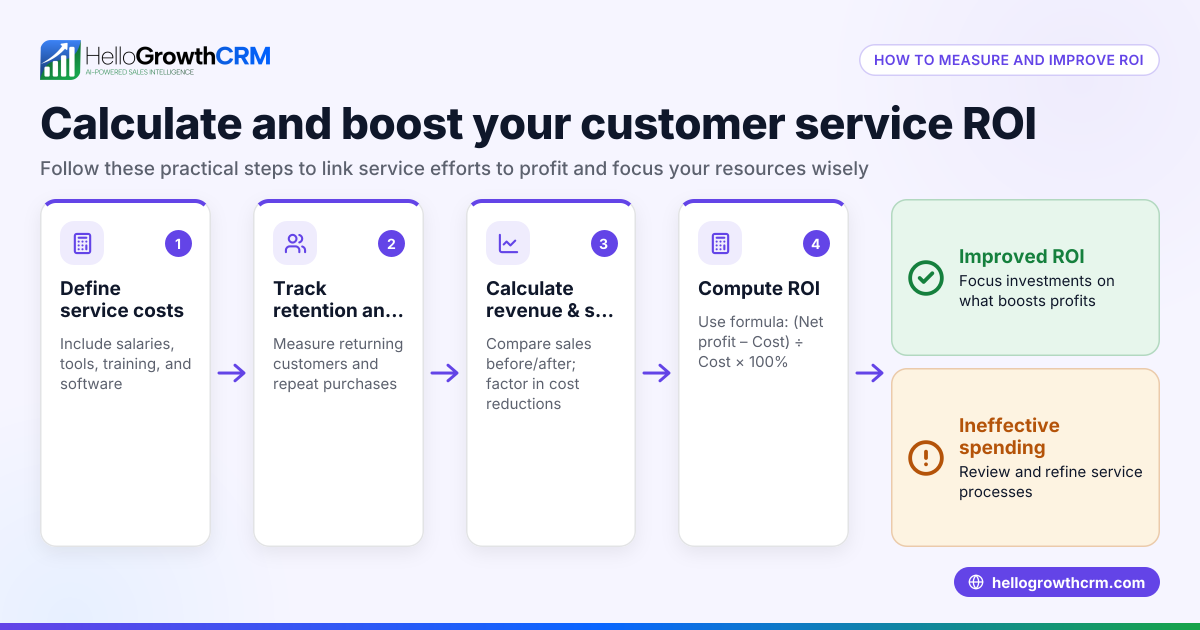
- Define your customer experience investment: List all costs related to improving customer interactions, such as software subscriptions, staff training, customer support tools, and marketing campaigns.
- Identify key metrics to track: Choose measurable outcomes like increased sales revenue, repeat purchase rates, customer retention, reduced service costs, or average order value.
- Collect baseline data: Before making changes, record your current metrics over a representative period (for example, 3 months).
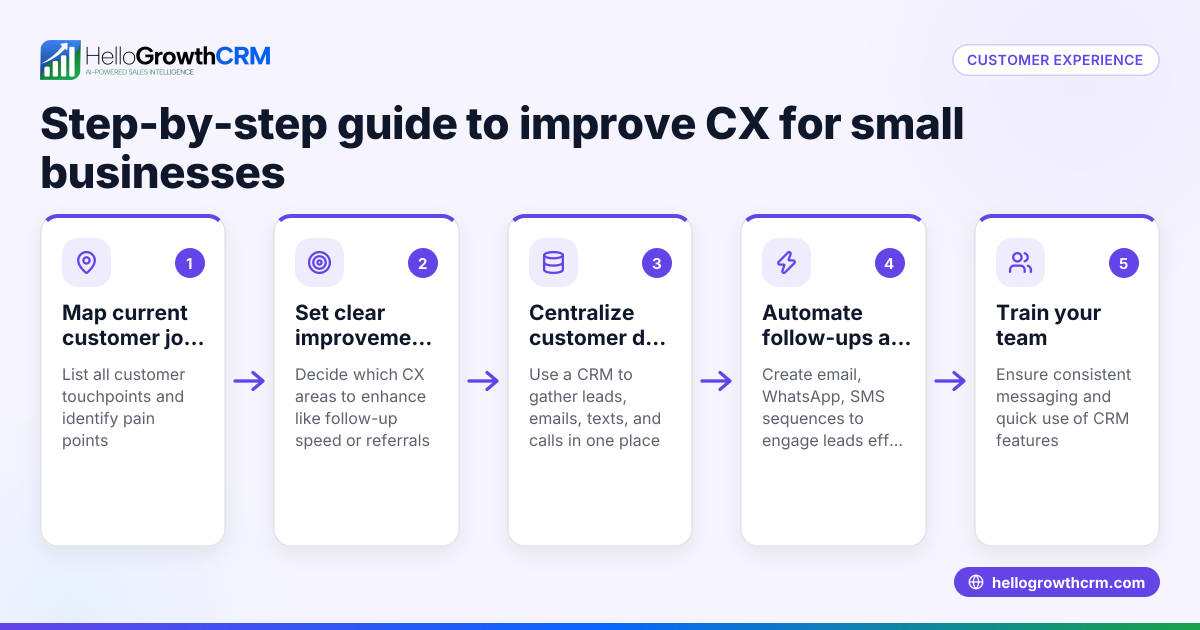
- Implement customer experience improvements: This might include better communication sequences, faster response times, or personalized service.
- Measure post-implementation metrics: After a set period, collect the same data points again.
- Calculate financial impact: Convert metric changes into dollar values. For example, calculate additional revenue from repeat customers or cost savings from fewer support tickets.
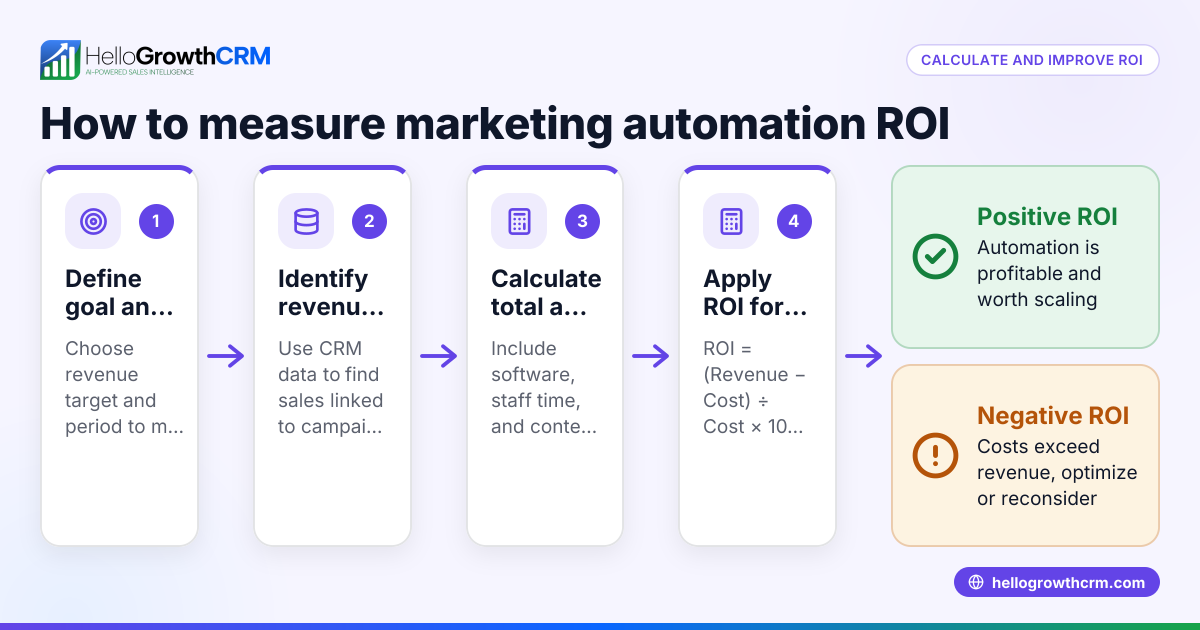
- Compute ROI: Use the formula:
\[ \text{ROI} = \frac{\text{Financial Gain} - \text{Investment Cost}}{\text{Investment Cost}} \times 100\% \]
- Review results and adjust: Use findings to prioritize customer experience actions that deliver the best ROI.
- Use free tools to track ongoing performance: Download templates and calculators like a CRM ROI calculator or pipeline templates from free sales tools at HelloGrowthCRM (/tools) to simplify tracking.
Example (fictional figures)
A plumbing company in Austin, Texas, invested $20,000 over 6 months in customer experience improvements, including new follow-up email sequences and a customer portal.
- Baseline revenue from repeat customers: $150,000 over 6 months
- Post-improvement revenue from repeat customers: $180,000 over 6 months
- Cost savings from reduced support calls: $2,000
Calculate financial gain:
$180,000 - $150,000 = $30,000 (additional revenue)
Add cost savings:
$30,000 + $2,000 = $32,000 (total financial gain)
Calculate ROI:
($32,000 - $20,000) / $20,000 × 100% = 60%
The company’s investment generated a 60% return, showing their customer experience effort was financially beneficial.
Common mistakes
- Ignoring indirect benefits: Only counting direct sales misses cost savings or long-term loyalty. Track all financial impacts.
- Using inconsistent data periods: Compare equal time frames before and after improvements to avoid skewed results.
- Overlooking baseline measurement: Without initial data, it’s impossible to measure improvement accurately.
- Failing to assign dollar values: Translate customer metrics into financial terms for meaningful ROI calculations.
- Neglecting ongoing tracking: Customer experience ROI changes over time; regular review is essential.
- Not leveraging free tools: Use free templates and calculators like those available at HelloGrowthCRM to reduce errors and save time.
Doing this in HelloGrowthCRM
HelloGrowthCRM offers free sales tools, templates, and calculators, including follow-up cadence and pipeline templates, which you can download without an account to help measure and improve customer experience ROI. After the sale, service requests stay on the same customer record as the deal, making it easier to track ongoing customer interactions and support costs. Learn more about these capabilities at HelloGrowthCRM for the United States (/usa).
Frequently asked questions
What is a good customer experience ROI? A good ROI depends on your industry and investment size. Generally, any positive ROI shows your customer experience efforts add value. Compare your ROI to other investments to decide if it’s worthwhile.
How can I improve customer experience without a big budget? Focus on faster responses, personalized communication, and consistent follow-ups. Use free templates and tools like those from HelloGrowthCRM to organize your sales pipeline and automate sequences (/tools).
How often should I measure customer experience ROI? Measure before and after major changes, then track quarterly or semi-annually to adjust strategies and maintain improvements. Regular tracking helps catch shifts in customer health score and sales pipeline performance (/product/customer-health-score).
Can customer experience ROI include cost savings? Yes. Reducing support tickets, returns, or churn lowers expenses and contributes to ROI.
How do I link customer service requests to sales in a CRM? Using a CRM that allows tracking service requests and referrals alongside deals helps keep all customer interactions in one place. Tools described at HelloGrowthCRM for the United States (/usa) support this approach.
Key takeaways
- Customer experience ROI links your spending on service improvements to measurable financial returns.
- Calculate ROI by defining investments, measuring baseline and post-improvement metrics, and converting changes into dollar values.
- Avoid mistakes like ignoring indirect benefits, inconsistent data, or skipping baseline measurements.
- Use free tools and templates from HelloGrowthCRM to simplify tracking and improve customer follow-up.
- Tracking service requests alongside sales in one system helps monitor ongoing customer value.
- Regular measurement and adjustment ensure your customer experience efforts continue to pay off.
Start improving your customer experience ROI today by using free sales templates and calculators. Start on the Free Forever plan (200 leads, no credit card).
Ready to put this into practice?
Set up your pipeline, WhatsApp follow-ups, and AI lead scoring in minutes — free, no credit card.
Try HelloGrowthCRM freeGet CRM tips in your inbox
Join thousands of sales professionals who get weekly insights on CRM strategy, AI automation, and pipeline optimization.

The HelloGrowthCRM team publishes guides on CRM strategy, AI sales tools, and revenue operations for small business sales teams.