HelloGrowthCRM software
Built for real small-business sales teams
HelloGrowthCRM helps reps qualify faster, follow up on time, and close more deals—with practical automation in one place.
- AI lead scoring and pipeline visibility
- Built-in dialer, WhatsApp, and email automation
- Sales forecasting and RevOps-ready reporting
A customer service scorecard is a tool that tracks and measures key performance indicators (KPIs) related to customer service quality. It helps small businesses evaluate how well they meet customer expectations and identify areas for improvement. This article explains why a customer service scorecard matters, how to create one step-by-step, common mistakes to avoid, and how HelloGrowthCRM supports service tracking after the sale.
Why this comes up / what goes wrong
Small-business owners often struggle to keep consistent quality in customer service because they lack clear, measurable data on how their team performs. Without a scorecard, service issues like slow response times, unresolved tickets, or poor communication can go unnoticed until customers complain or leave. This leads to lost sales, damaged reputation, and wasted effort fixing problems reactively instead of proactively. A customer service scorecard gives business owners concrete metrics to track and improve service delivery.
Step-by-step
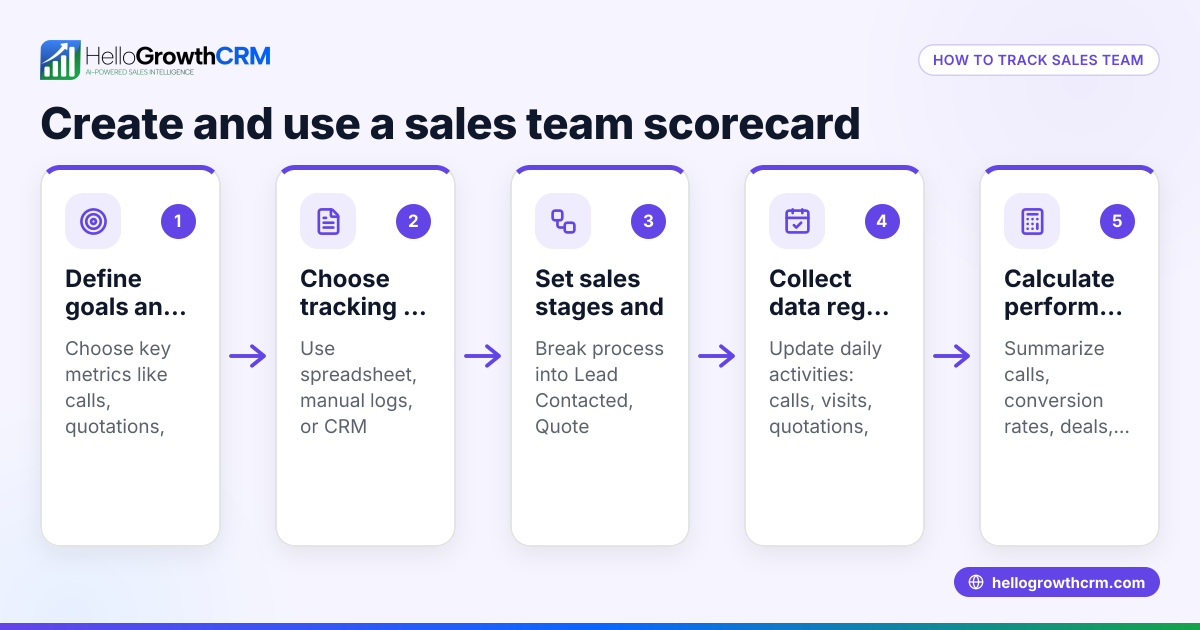
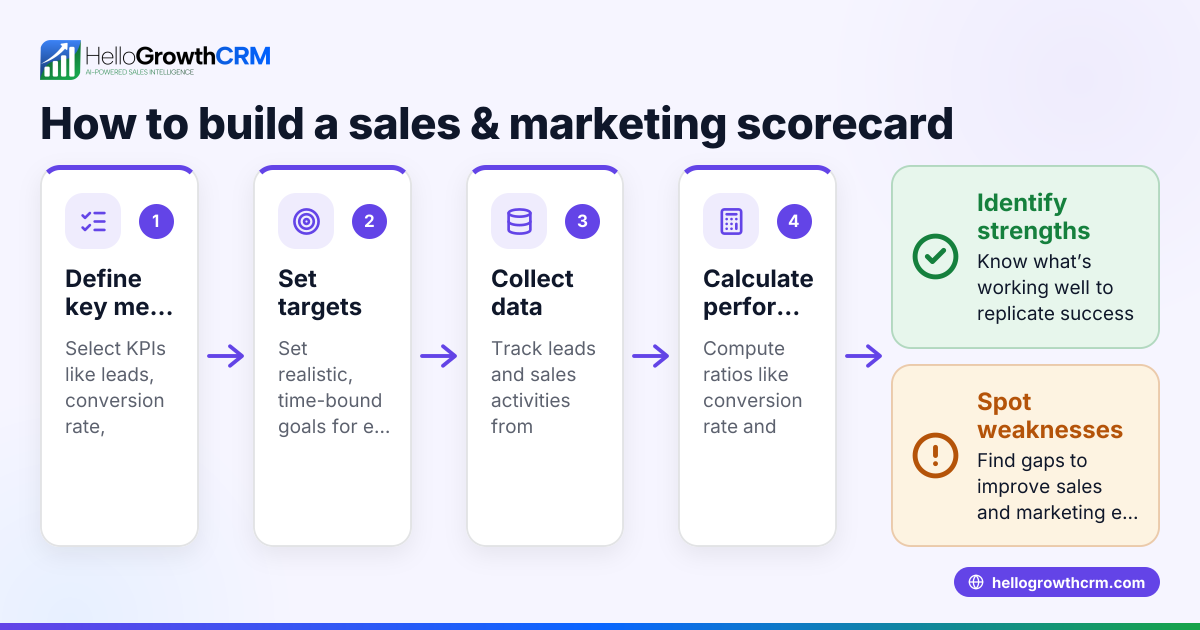
- Identify key customer service metrics to track. Common KPIs include average response time, ticket resolution rate, customer satisfaction score (CSAT), repeat contact rate, and first contact resolution.
- Set measurable goals for each metric. For example, aim to respond to all customer inquiries within 4 hours or achieve a 90% ticket resolution rate within 24 hours.
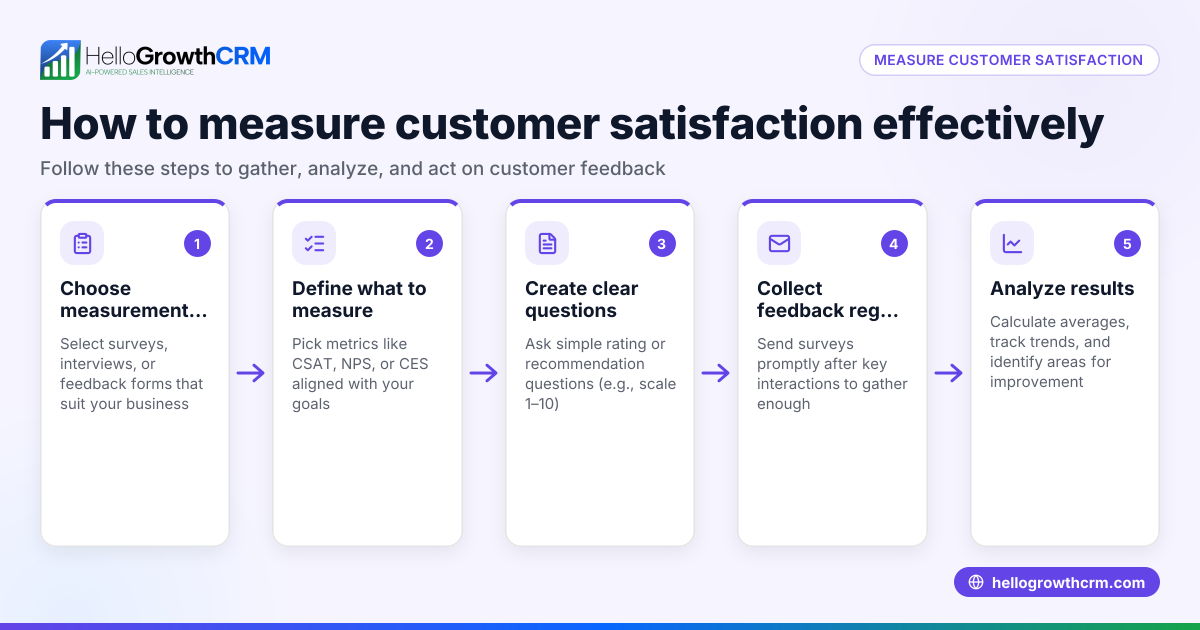
- Collect data regularly. Use your customer support system or CRM to gather data on each KPI weekly or monthly.
- Create a simple scorecard layout. Use a spreadsheet or dashboard listing each KPI, the target goal, actual performance, and notes for follow-up.
- Review the scorecard with your team regularly. Discuss what’s working, what isn’t, and assign actions to improve weak areas.
- Adjust goals and processes as needed. Use the scorecard insights to refine customer service workflows and training.
Example (fictional figures)
A two-location dental practice in Columbus, Ohio, tracks its customer service scorecard monthly. Their KPIs and targets for 03/31/2026 are:
- Average response time: target 4 hours
- Ticket resolution rate: target 90% within 24 hours
- Customer satisfaction score (CSAT): target 85%
Collected data for March 2026:
- Average response time = 5 hours
- Tickets resolved within 24 hours = 180
- Total tickets = 200
- CSAT survey average = 82%
Calculations:
Ticket resolution rate = (180 ÷ 200) × 100 = 90%
They met the ticket resolution rate goal but missed the response time and CSAT targets. This shows they resolve issues but need to respond faster and improve customer satisfaction.
Common mistakes
- Tracking too many metrics at once. Focus on the most important KPIs to avoid overwhelm. Prevent by prioritizing 3-5 key measures.
- Setting unrealistic goals. Goals should be challenging but achievable. Prevent by basing targets on past performance and industry benchmarks.
- Ignoring qualitative feedback. Scores don’t show why customers feel a certain way. Prevent by combining scorecard data with customer comments or surveys.
- Not reviewing the scorecard regularly. Without regular review, issues persist unnoticed. Prevent by scheduling monthly team meetings to discuss results.
- Separating service data from sales data. This makes it harder to see how service impacts revenue. Prevent by using a CRM that links service requests to customer records.
Doing this in HelloGrowthCRM
HelloGrowthCRM helps small businesses keep customer service organized by storing service requests, tickets, and referrals on the same customer record as the deal. Its customer portal and knowledge base improve self-service options, reducing ticket volume. Tracking support tickets and managing a referral program in one place simplifies monitoring and improves customer satisfaction. Learn more about HelloGrowthCRM’s customer health score features here and how it supports WhatsApp and SMS communication here.
Frequently asked questions
What is the difference between a customer service scorecard and a customer health score? A customer service scorecard tracks specific service KPIs like response time and resolution rate. A customer health score combines service, engagement, and purchase data to assess overall customer satisfaction and retention risk. HelloGrowthCRM offers both capabilities to track service and customer health in one system here.
How often should I update my customer service scorecard? Updating your scorecard monthly is typical for small businesses. This frequency balances timely insight with manageable data collection. For fast-paced teams, weekly updates may be useful.
Can I use HelloGrowthCRM to automate tracking for my scorecard? Yes, HelloGrowthCRM organizes tickets, referrals, and service requests automatically linked to customer records. This reduces manual data entry and helps keep your scorecard metrics accurate and up-to-date.
How do I handle customer service across multiple channels? HelloGrowthCRM supports WhatsApp, SMS, and email sequences, allowing you to track and respond to service requests from various channels in one CRM. This helps maintain consistent service quality and faster follow-up WhatsApp and SMS CRM.
Why is it important to link service requests to sales deals? Linking service requests to deals shows the full customer journey, helping you understand how service impacts sales and retention. It also improves team collaboration by keeping all customer information in one place.
Key takeaways
- A customer service scorecard tracks key metrics like response time, resolution rate, and satisfaction.
- Set clear, realistic goals and review results regularly with your team.
- Avoid tracking too many metrics or ignoring qualitative feedback.
- Use a CRM like HelloGrowthCRM to keep service requests linked to customer records.
- Regular scorecard use helps improve service quality and customer retention.
Start improving your customer service today. Start on the Free Forever plan (200 leads, no credit card).
Ready to put this into practice?
Set up your pipeline, WhatsApp follow-ups, and AI lead scoring in minutes — free, no credit card.
Try HelloGrowthCRM freeGet CRM tips in your inbox
Join thousands of sales professionals who get weekly insights on CRM strategy, AI automation, and pipeline optimization.

The HelloGrowthCRM team publishes guides on CRM strategy, AI sales tools, and revenue operations for small business sales teams.