HelloGrowthCRM software
Built for real small-business sales teams
HelloGrowthCRM helps reps qualify faster, follow up on time, and close more deals—with practical automation in one place.
- AI lead scoring and pipeline visibility
- Built-in dialer, WhatsApp, and email automation
- Sales forecasting and RevOps-ready reporting
Customer journey stages are the steps a potential buyer takes from discovering your business to becoming a repeat customer and advocate. Understanding these stages helps you tailor your sales and marketing efforts to guide customers smoothly through their experience, increasing conversions and retention. This article covers why small-business owners need to know these stages, a clear step-by-step process, a practical example, common mistakes, and how HelloGrowthCRM supports this process.
Why this comes up / what goes wrong
Small-business owners often lose leads or fail to convert customers because they treat all prospects the same way. Without recognizing that customers have different needs and questions at each stage of their journey, communication can be mistimed or irrelevant. For example, a lead in the awareness stage needs education, not a hard sell. Later, during retention, the focus shifts to support and satisfaction. Confusing these stages leads to lost sales, poor customer experience, and wasted effort.
Step-by-step
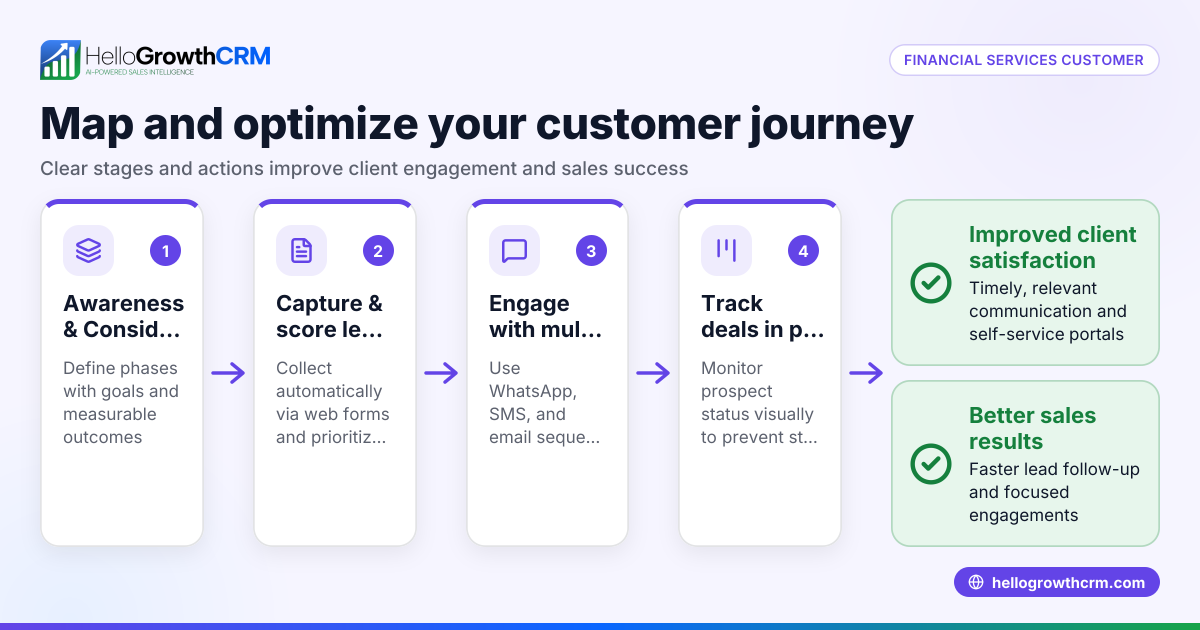
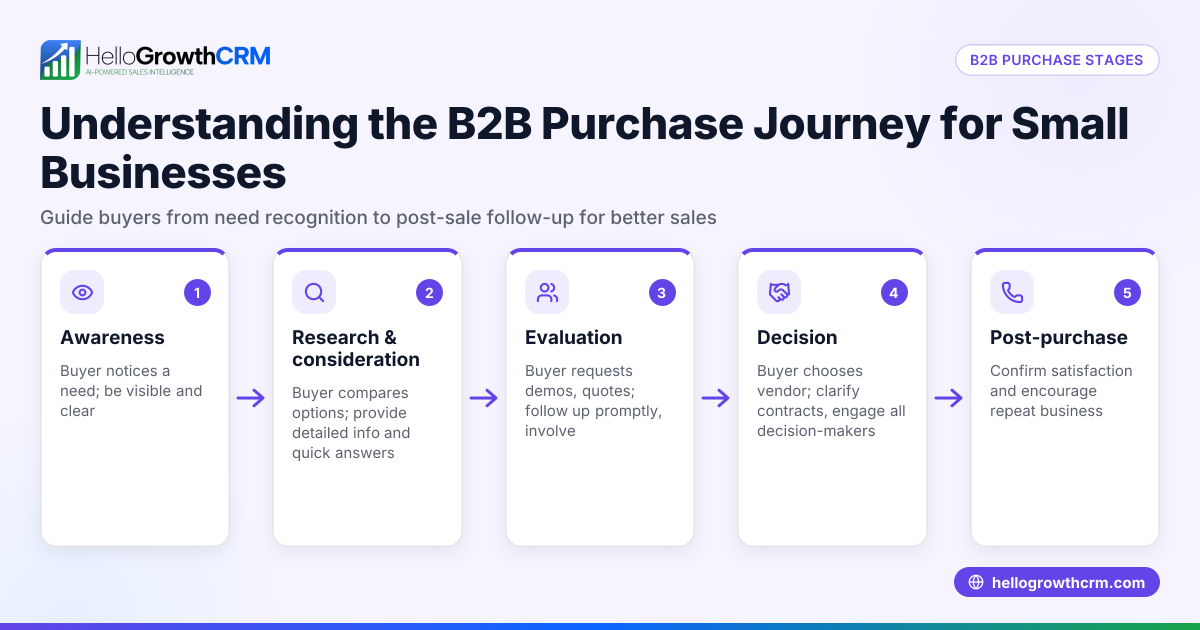
- Awareness: The customer realizes they have a need or problem. What to do: Provide clear, helpful information through marketing channels. Check that your messaging reaches the right audience and educates without pressure.
- Consideration: The customer researches options and compares solutions. What to do: Offer detailed product or service information, case studies, and answer common questions. Check that your sales team follows up promptly and addresses concerns.
- Decision: The customer decides to buy. What to do: Make the purchase process easy and confirm the customer’s choice with clear communication. Check that contracts, payments, or bookings happen smoothly.
- Retention: After purchase, the focus is on customer satisfaction and support. What to do: Provide responsive service, onboarding, and helpful resources. Check customer satisfaction regularly and solve any issues quickly.
- Advocacy: Satisfied customers refer others or provide testimonials. What to do: Encourage referrals, ask for reviews, and maintain engagement. Check that referral programs or loyalty rewards are active and easy to use.
This approach ensures you meet customers’ needs at each stage and build lasting relationships. Learn more about managing customer health score to monitor ongoing engagement and satisfaction customer health score.
Example (fictional figures)
A two-location dental practice in Columbus, Ohio, wants to improve patient acquisition and retention in 2024.
- Awareness: They spend $10,000 on online ads and educational blog posts in Q1.
- Consideration: They track 200 inquiries via website forms and WhatsApp messages.
- Decision: 80 new patients book appointments, averaging $500 per visit.
- Retention: They follow up with 70 patients for check-ups and reminders.
- Advocacy: 20 patients refer friends, generating $10,000 in additional revenue.
Calculations: $500 × 80 = $40,000 (new patient revenue) $10,000 (referral revenue) + $40,000 = $50,000 total new revenue
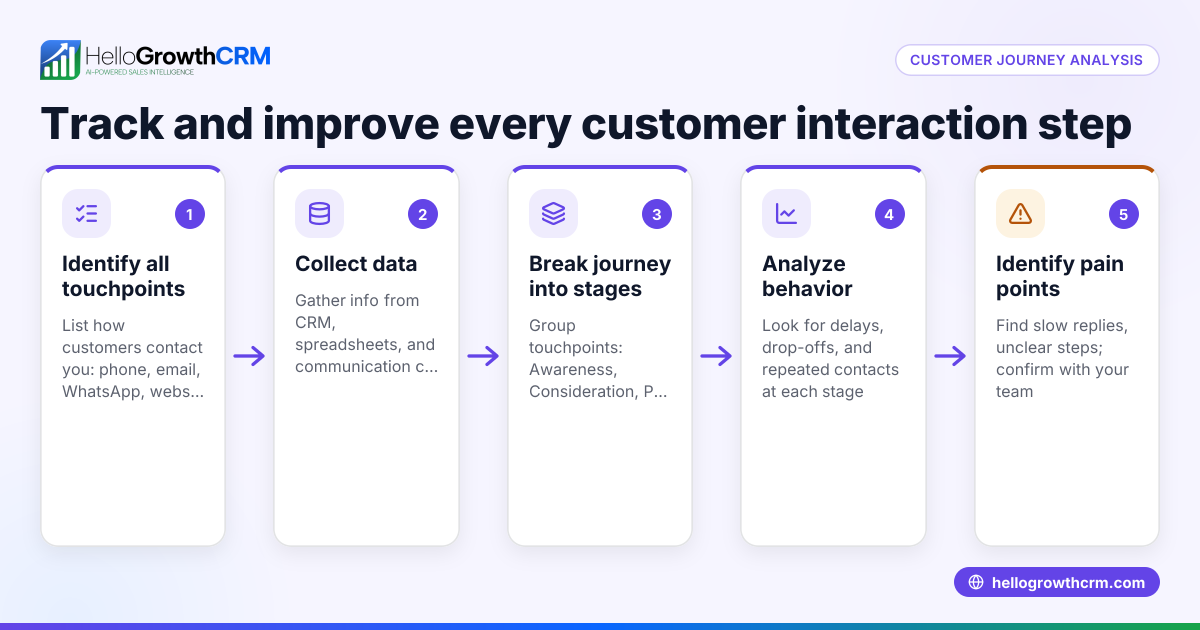
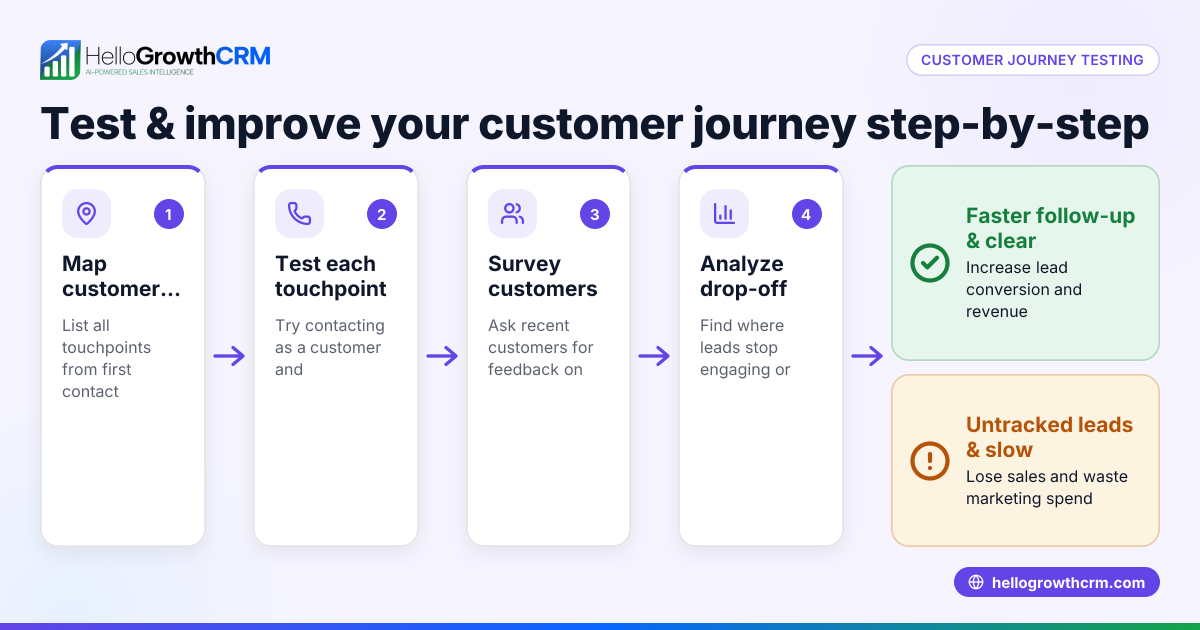
By tracking each stage, the practice identifies where leads drop off and improves follow-up using WhatsApp and SMS CRM WhatsApp and SMS CRM.
Common mistakes
- Ignoring the retention stage: Many businesses focus only on new sales and neglect after-sale service. Prevent this by using tools to track support tickets and customer requests on the same record.
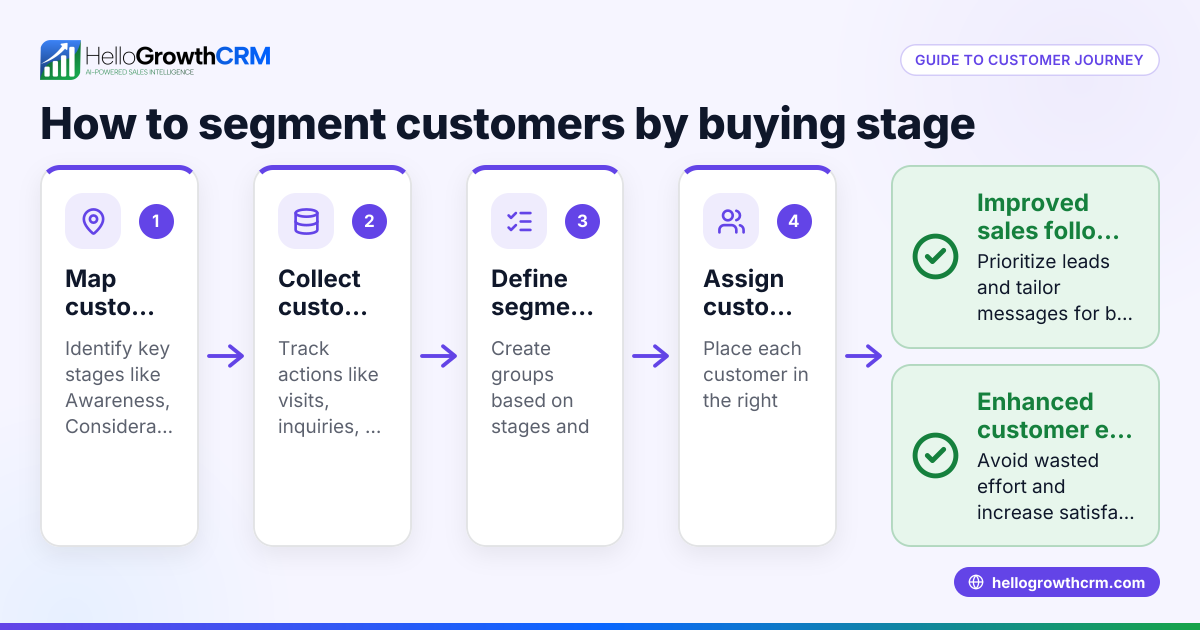
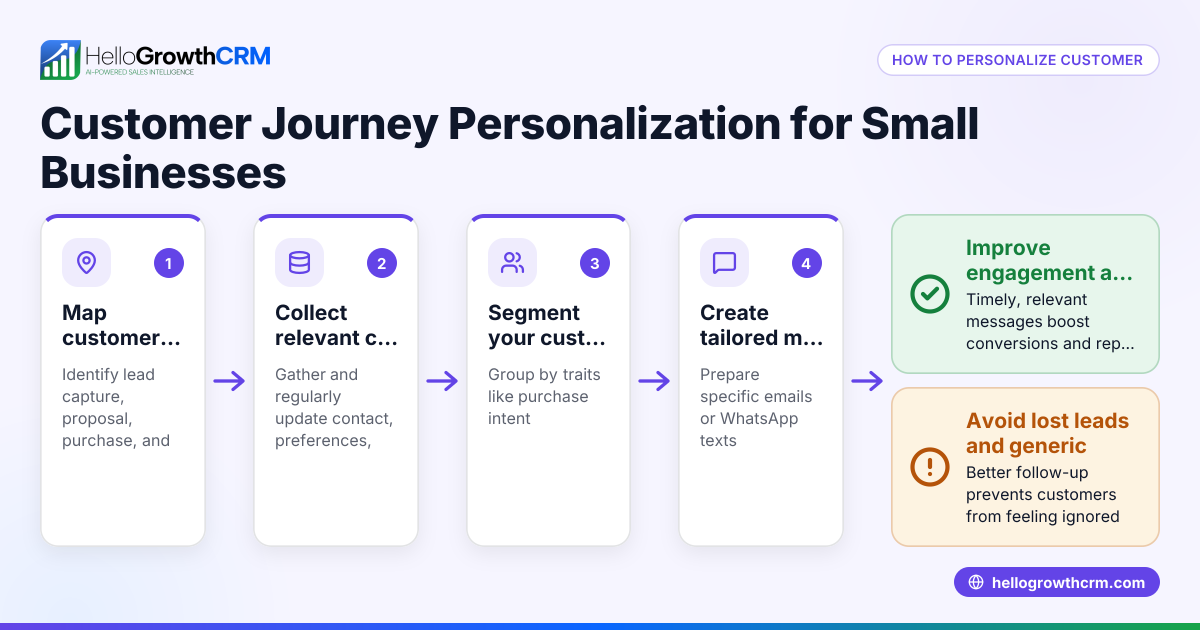
- One-size-fits-all communication: Sending the same message to all leads regardless of their stage wastes effort. Prevent this by segmenting contacts based on their journey stage.
- Slow follow-up: Leads lose interest if not contacted quickly. Prevent this by automating follow-up sequences via email, WhatsApp, or SMS.
- No referral tracking: Missing out on advocacy benefits. Prevent this by implementing a referral program and tracking referrals systematically.
- Using disconnected tools: Managing leads via spreadsheets and separate messaging apps causes errors and delays. Prevent this by consolidating customer data and communications.
Learn how to avoid these mistakes with HelloGrowthCRM features like customer portal, referrals, and tickets HelloGrowthCRM for the United States.
Doing this in HelloGrowthCRM
HelloGrowthCRM helps you manage customer journey stages by keeping all customer information, including service requests and referrals, on the same record as the deal. Its branded self-service customer portal lets customers submit support tickets and access your knowledge base, improving retention and satisfaction. Referral program tracking helps you encourage and measure advocacy effectively.
Frequently asked questions
What are the main customer journey stages? The main stages are awareness, consideration, decision, retention, and advocacy. Each represents a step in the buyer’s experience from first learning about your business to becoming a loyal promoter.
How can I identify which stage a customer is in? Look at their interactions: Are they just browsing information (awareness), comparing options (consideration), ready to buy (decision), needing support (retention), or referring others (advocacy)? Using a CRM that tracks communications and tasks helps identify stages.
Why is the retention stage important? Retention focuses on keeping customers satisfied after purchase, which leads to repeat business and referrals. Neglecting retention can cause churn and lost revenue.
How do referrals fit into the customer journey? Referrals belong to the advocacy stage. Happy customers recommend your business to others, helping you acquire new leads at lower cost.
Can I automate communications for different stages? Yes, using sequences via email, WhatsApp, or SMS tailored to each stage improves follow-up speed and relevance, increasing conversion chances.
How does HelloGrowthCRM support customer journey management? It centralizes customer records with sales deals, support tickets, referrals, and a customer portal, making it easier to manage all stages from lead to loyal customer.
Key takeaways
- Customer journey stages guide how you communicate and serve prospects and customers.
- The five key stages are awareness, consideration, decision, retention, and advocacy.
- Tailor your messaging and follow-up to each stage to improve conversions and loyalty.
- Avoid common mistakes like ignoring retention or slow follow-up by using integrated tools.
- HelloGrowthCRM helps track customers and service requests on one record, plus manage referrals and support.
Start managing your customer journey stages today with HelloGrowthCRM. Start on the Free Forever plan (200 leads, no credit card).
Ready to put this into practice?
Set up your pipeline, WhatsApp follow-ups, and AI lead scoring in minutes — free, no credit card.
Try HelloGrowthCRM freeGet CRM tips in your inbox
Join thousands of sales professionals who get weekly insights on CRM strategy, AI automation, and pipeline optimization.

The HelloGrowthCRM team publishes guides on CRM strategy, AI sales tools, and revenue operations for small business sales teams.