HelloGrowthCRM software
Built for real small-business sales teams
HelloGrowthCRM helps reps qualify faster, follow up on time, and close more deals—with practical automation in one place.
- AI lead scoring and pipeline visibility
- Built-in dialer, WhatsApp, and email automation
- Sales forecasting and RevOps-ready reporting
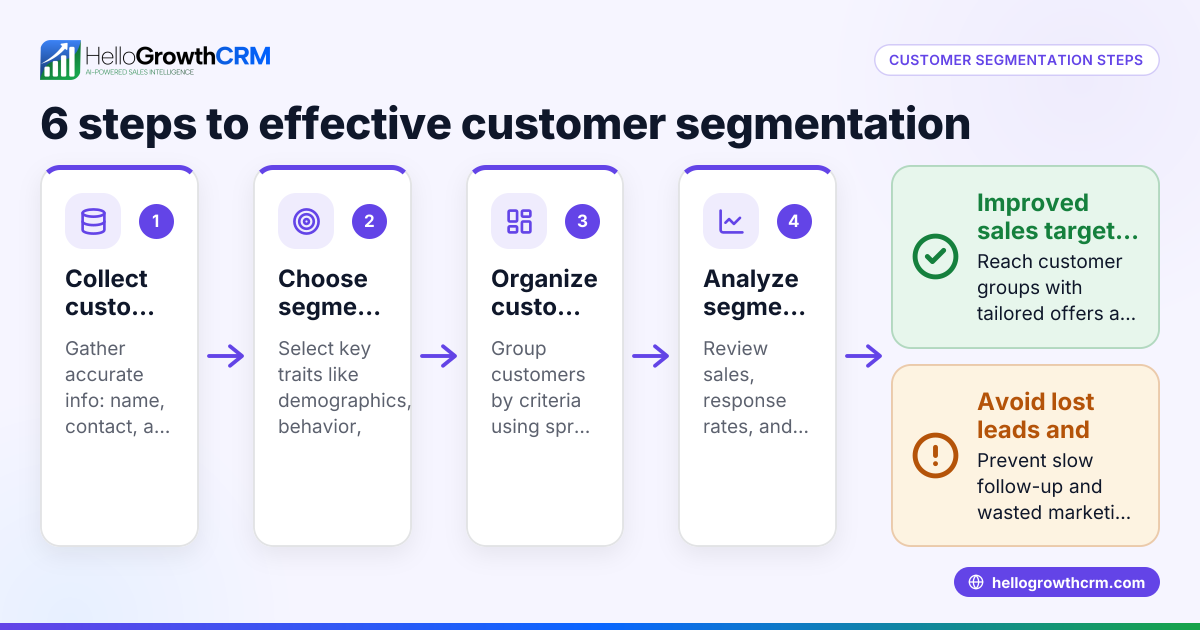
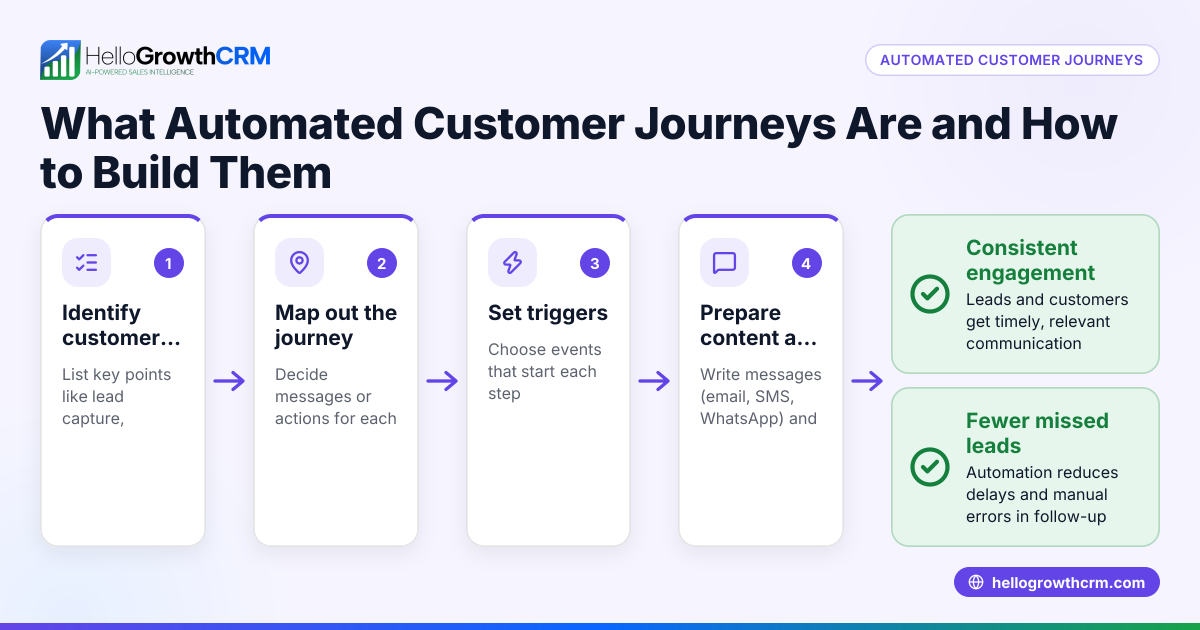
Customer journey segmentation means grouping customers by their stage in the buying process and their behavior at each stage. This approach lets small and mid-sized businesses customize communication and offers, improving sales results and customer satisfaction.
Why this comes up / what goes wrong
Many small-business owners struggle because they treat all customers the same way. Without segmentation, you might send identical messages to new leads and loyal customers, missing chances to build trust or close sales. For example, a plumbing company might waste time following up with customers who already booked service instead of focusing on fresh leads. This often leads to lost sales and poor customer experiences.
Step-by-step
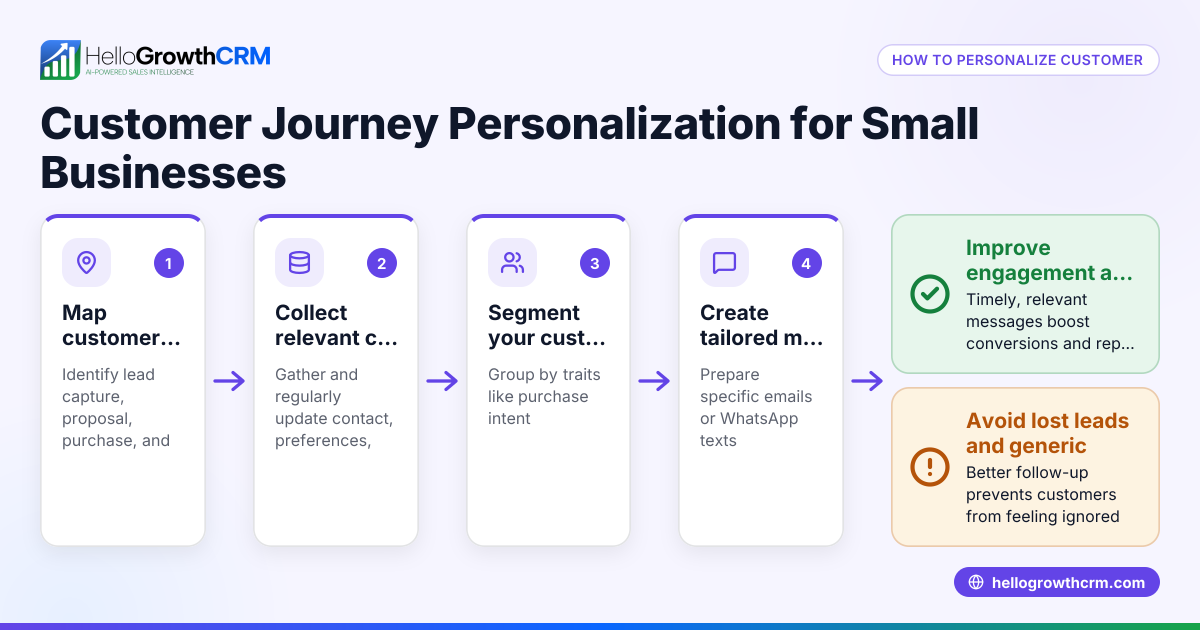
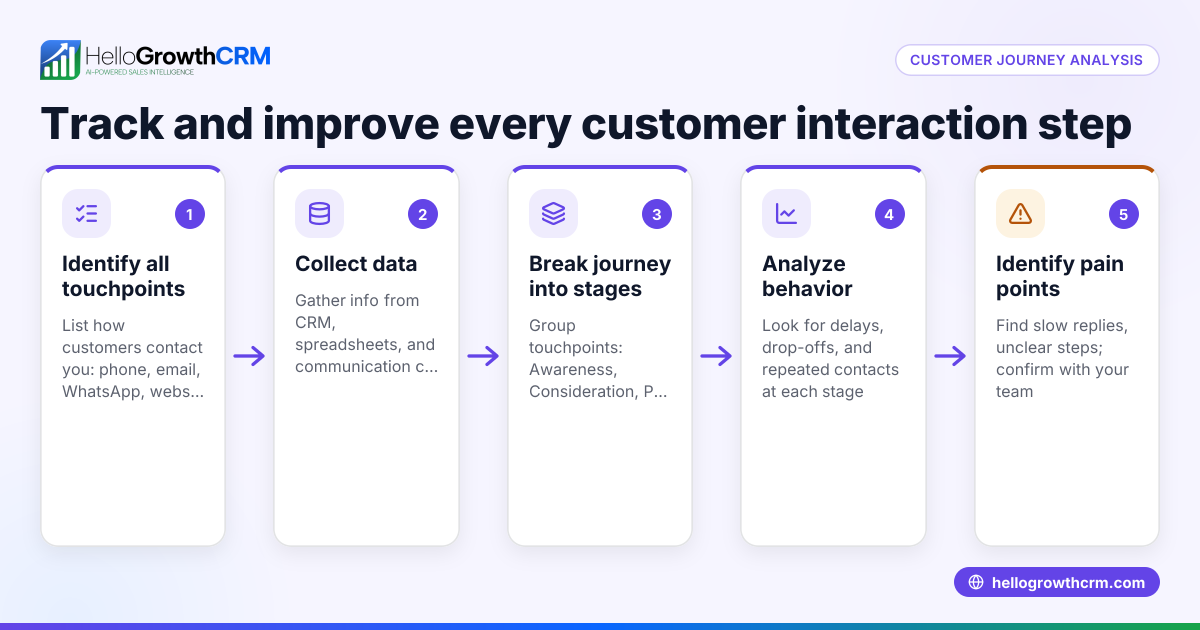
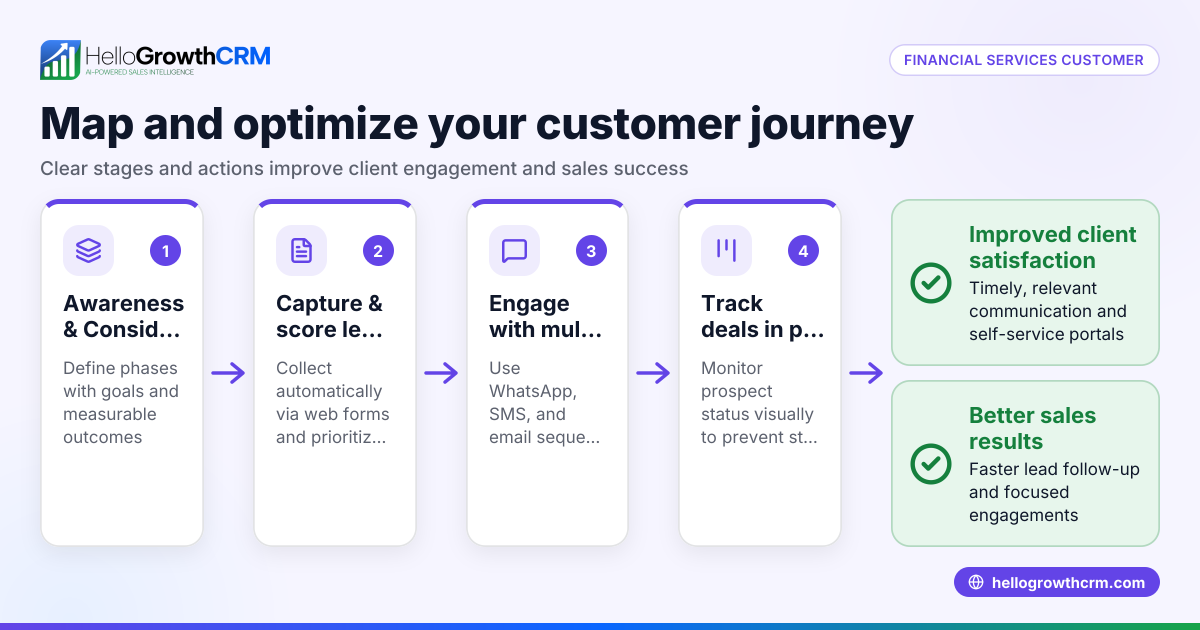
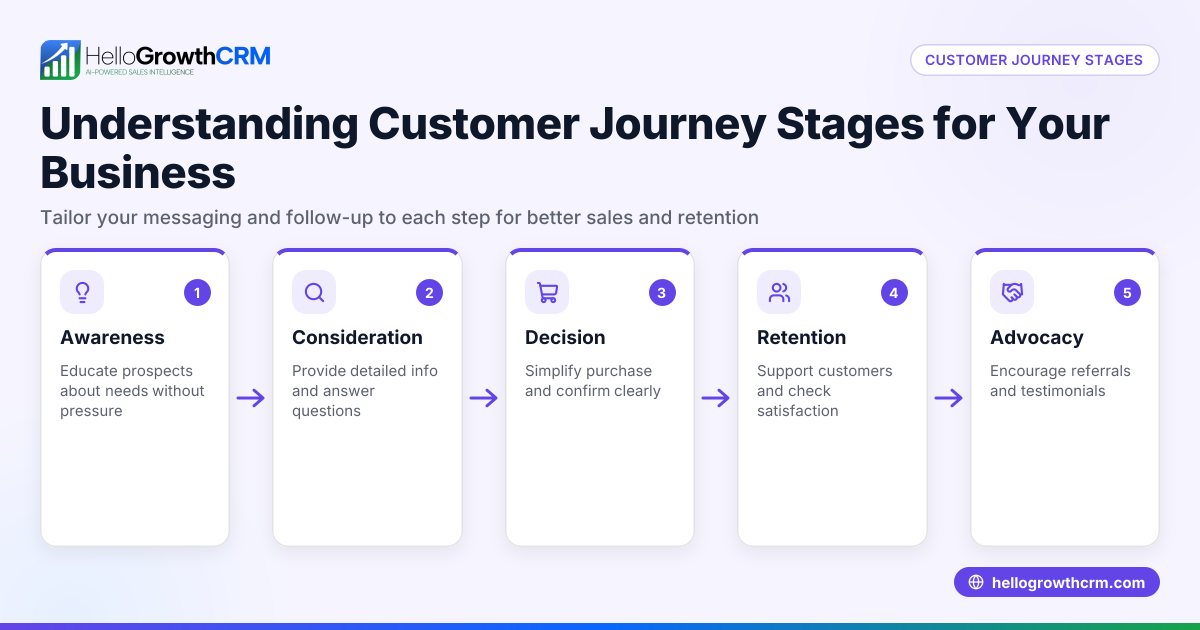
- Map your customer journey stages: Identify key stages your customers pass through, such as Awareness, Consideration, Purchase, and Post-Purchase. Review your sales process and typical customer interactions to define these stages.
- Collect relevant customer data: Gather data on customer actions like website visits, inquiries, purchases, and support requests. Make sure to include dates, communication channels, and purchase history.
- Define segmentation criteria: Choose criteria based on journey stages and customer behaviors. For example, create segments like "New Leads," "Negotiating Deals," "Recent Buyers," and "Repeat Customers."
- Assign customers to segments: Use your data to place each customer in the right group. Verify accuracy and update segments regularly as customers move through the journey.
- Tailor communication and offers: Develop messages and sales tactics specific to each segment’s needs. For example, send introductory offers to new leads and loyalty rewards to repeat customers.
- Monitor and adjust segments: Track how each segment responds and refine your criteria or messaging. Use tools like a customer health score to measure engagement and satisfaction here.
Example (fictional figures)
A plumbing company in Austin, Texas, wants to segment its customers by journey stage on 06/01/2026.
- Total customers: $1,000
- New Leads (first inquiry in last 30 days): $300
- Negotiating Deals (quotes sent, no purchase yet): $100
- Recent Buyers (purchased in last 90 days): $400
- Repeat Customers (more than one purchase): $200
Calculations:
Total customers = $1,000 New Leads = $300 Negotiating Deals = $100 Recent Buyers = $400 Repeat Customers = $200
Check total segmentation: $300 + $100 + $400 + $200 = $1,000 (matches total customers)
The company sends:
- Welcome emails and introductory offers to $300 New Leads.
- Follow-up calls and personalized quotes to $100 Negotiating Deals.
- Maintenance reminders and satisfaction surveys to $400 Recent Buyers.
- Loyalty rewards and referral requests to $200 Repeat Customers.
This focused approach improves lead follow-up speed and customer retention.
Common mistakes
- Not updating segments regularly: Customers move through stages; failing to update means outdated targeting. Prevent this by scheduling regular data reviews.
- Using too broad segments: Large, vague groups reduce message relevance. Prevent this by defining clear, behavior-based criteria.
- Ignoring post-purchase stages: Many businesses focus only on leads. Prevent this by including service and support stages using tools like the customer portal and tickets here.
- Relying on manual tracking: Spreadsheets and emails cause errors and delays. Prevent this by adopting CRM systems with automation.
- Neglecting customer feedback: Without feedback, segments may miss real customer needs. Prevent this by integrating support tickets and knowledge base insights.
Doing this in HelloGrowthCRM
HelloGrowthCRM helps manage customer journey segmentation by keeping all service requests, referrals, and support tickets on the same customer record as the deal. Its branded customer portal lets customers self-serve, while the knowledge base supports quick issue resolution. This keeps post-sale interactions organized and visible, making segmentation and personalized service easier. Learn more about HelloGrowthCRM’s customer health score and support features here.
Frequently asked questions
What is the difference between customer segmentation and customer journey segmentation? Customer segmentation groups customers by demographics or purchase behavior. Customer journey segmentation focuses on where customers are in the buying process, allowing more timely and relevant communication.
How often should I update my customer journey segments? Segments should be updated regularly, ideally weekly or monthly, to reflect customer progress and behavior changes. This keeps marketing and sales efforts aligned with current customer needs.
Can I automate customer journey segmentation? Yes, CRM tools like HelloGrowthCRM let you automate data collection and segment assignment. Automation reduces errors and speeds up follow-up.
How does segmentation improve sales follow-up? Knowing a customer’s journey stage helps your sales team prioritize leads, tailor messages, and avoid wasting time on customers who are already engaged or served.
Is post-sale segmentation important? Yes. Segmenting customers after purchase helps with upselling, support, and referrals. HelloGrowthCRM keeps service tickets and referrals linked to the customer record for better post-sale management.
Can segmentation help with WhatsApp and SMS sales? Yes, segmenting customers lets you send targeted WhatsApp and SMS sequences, improving engagement. HelloGrowthCRM supports these channels for segmented outreach here.
Key takeaways
- Customer journey segmentation groups customers by their buying stage for tailored communication.
- Regularly update segments based on customer behavior and data.
- Use clear, behavior-based criteria to avoid broad, ineffective groups.
- Include post-purchase stages using tools like the customer portal and support tickets.
- Automate segmentation to improve accuracy and speed.
- Tailor sales and service follow-up to each segment for better results.
Start improving your customer journey segmentation today. Start on the Free Forever plan (200 leads, no credit card).
Ready to put this into practice?
Set up your pipeline, WhatsApp follow-ups, and AI lead scoring in minutes — free, no credit card.
Try HelloGrowthCRM freeGet CRM tips in your inbox
Join thousands of sales professionals who get weekly insights on CRM strategy, AI automation, and pipeline optimization.

The HelloGrowthCRM team publishes guides on CRM strategy, AI sales tools, and revenue operations for small business sales teams.