HelloGrowthCRM software
Built for real small-business sales teams
HelloGrowthCRM helps reps qualify faster, follow up on time, and close more deals—with practical automation in one place.
- AI lead scoring and pipeline visibility
- Built-in dialer, WhatsApp, and email automation
- Sales forecasting and RevOps-ready reporting
Customer service advice means practical guidance on how to support and satisfy your customers effectively. For UK small businesses, this involves clear communication, timely responses, and organised follow-up. This article covers why customer service matters, step-by-step actions to improve it, a worked example, common mistakes to avoid, and how HelloGrowthCRM can help you manage service requests seamlessly.
Why this comes up / what goes wrong
Many small-business owners in the UK find customer service challenging because they juggle multiple roles and tools. They often lose leads or existing customers due to slow responses or disorganised communication spread across WhatsApp, email, and spreadsheets. Without a clear process, customer issues can be overlooked or repeated, damaging satisfaction and retention. This problem frequently arises when businesses lack a central system to track service requests and customer history.
Small teams may also struggle with inconsistent messaging or fail to follow up on enquiries promptly. This can lead to frustration for customers and lost sales opportunities. Additionally, without proper tracking, it becomes hard to measure customer satisfaction or identify recurring problems that need addressing.
Step-by-step
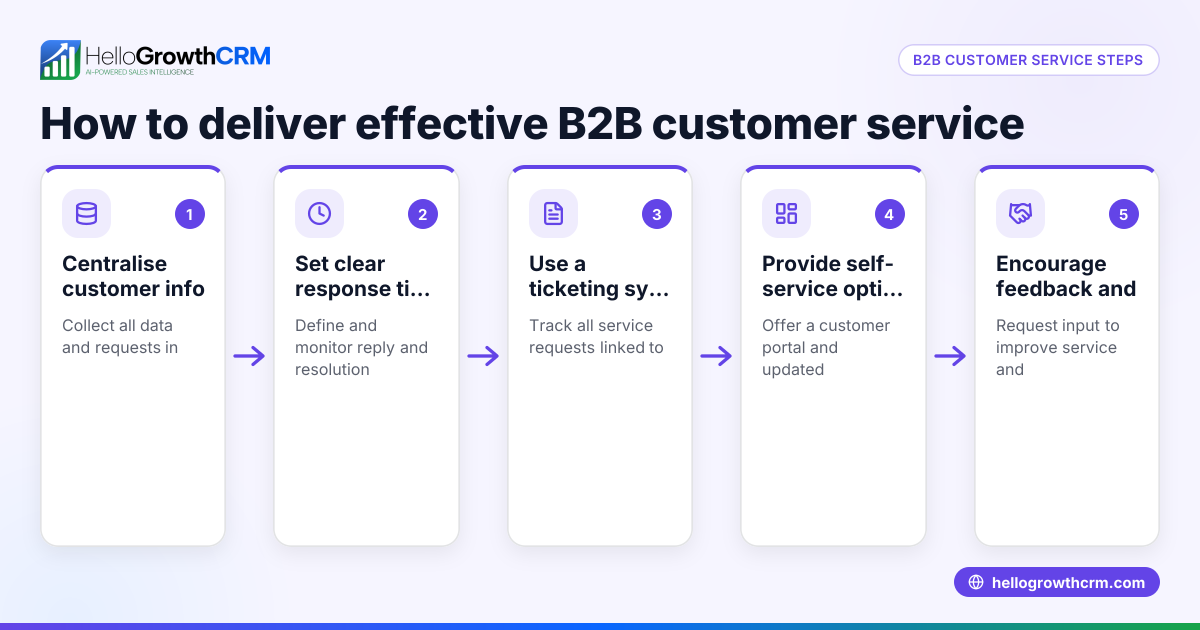
- Set clear communication channels: Decide how customers should contact you (email, phone, WhatsApp) and communicate this clearly on your website, social media, or invoices. Check regularly that these channels are monitored daily to avoid missed messages.
- Respond promptly: Try to reply to customer enquiries as quickly as possible to maintain good communication. Track response times and identify any delays or bottlenecks in your process.
- Record all customer interactions: Keep notes of every conversation and issue in one place to avoid repeated questions and confusion. Using a single platform for WhatsApp, email, and phone helps keep all information organised.
- Follow up systematically: After resolving an issue, follow up to confirm customer satisfaction. Use reminders or task boards to ensure no cases are forgotten or left unresolved.
- Use a knowledge base: Create and share a reference library of common questions and solutions to help customers self-serve and reduce repetitive queries. This saves time for both your team and customers.
- Encourage referrals: Happy customers can bring new leads. Track referrals and reward customers who recommend your business to encourage word-of-mouth growth.
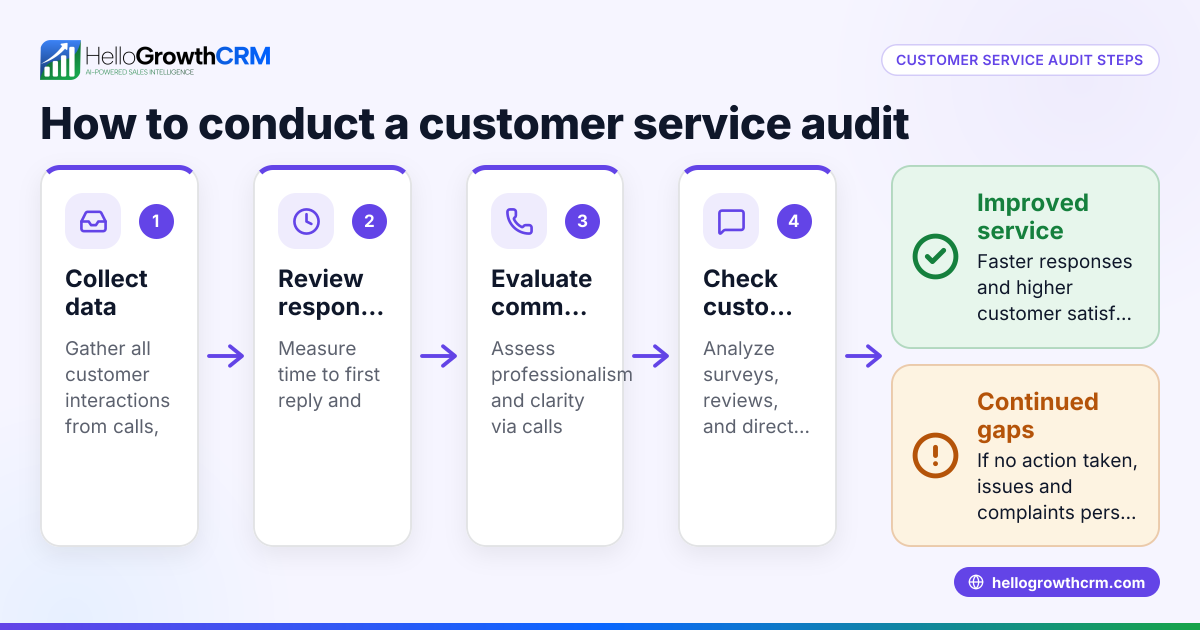
- Analyse customer health: Monitor customer satisfaction and recurring issues to improve your service continually. See customer health score for how this can be done effectively.
Example (fictional figures)
A kitchen-fitting company in Leeds receives a service request on 01/04/2026 about a delayed installation. They follow these steps:
- Customer contacts via WhatsApp on 01/04/2026.
- The team replies within 4 hours to acknowledge the issue.
- The delay is investigated, and a new installation date is set for 10/04/2026.
- The customer is informed on 02/04/2026.
- Installation completes on 10/04/2026.
- Follow-up call on 12/04/2026 confirms customer satisfaction.
Costs:
- Labour cost per installation: £1,200
- Cost of delay (compensation): £150
- Referral bonus offered: £50
Total cost impact = £1,200 + £150 + £50 = £1,400
By managing the service request well, the company avoids losing the customer and gains a referral, which brings potential new revenue beyond the £1,400 cost.
Common mistakes
- Ignoring or delaying responses: Prevent by setting and monitoring response time targets. Customers expect timely replies, so slow responses can cause dissatisfaction.
- Scattered communication: Use a single platform to record all interactions to avoid lost information. See WhatsApp and SMS CRM for integrated messaging that keeps conversations organised.
- No follow-up: Use task boards or reminders to ensure every case is closed satisfactorily. Without follow-up, issues may remain unresolved and damage customer trust.
- Lack of self-service options: Build a knowledge base so customers can solve simple issues themselves, reducing repetitive queries and freeing up your team.
- Not tracking referrals: Implement a referral programme to encourage word-of-mouth growth. Tracking referrals helps reward loyal customers and attract new ones.
- Failing to link service requests to sales: Keep service and sales data connected for better customer insights. HelloGrowthCRM keeps service requests on the same customer record as the deal, improving context and response.
Doing this in HelloGrowthCRM
HelloGrowthCRM offers a customer portal, referrals, tickets, and a knowledge base to manage customer service efficiently. After the sale, all service requests stay on the same customer record as the deal, ensuring your team has full context. This helps small and mid-sized UK businesses organise follow-up and improve customer satisfaction. Learn more about these features at HelloGrowthCRM for the United Kingdom.
Frequently asked questions
What is good customer service? Good customer service means responding quickly, communicating clearly, resolving issues effectively, and following up to ensure satisfaction. It builds trust and encourages repeat business.
How can I improve customer service without increasing costs? Use clear communication channels, standardise your responses with a knowledge base, and track all interactions in one place. Prompt replies and organised follow-up prevent costly mistakes and lost customers.
Why use a CRM for customer service? A CRM centralises customer data, tracks service requests, and keeps your team aligned. It reduces errors and speeds up responses, improving customer satisfaction. See customer health score for how CRM insights help.
How do referrals help customer service? Referrals reward happy customers and bring new leads. Tracking referrals encourages customers to recommend your business, increasing sales without extra marketing spend.
Can I manage WhatsApp messages in a CRM? Yes, WhatsApp and SMS can be integrated into a CRM like HelloGrowthCRM, so all messages are logged and managed alongside emails and calls. This avoids lost conversations and improves response times.
Key takeaways
- Set clear communication channels and respond promptly.
- Record all customer interactions centrally.
- Follow up after resolving issues to confirm satisfaction.
- Use a knowledge base to reduce repetitive queries.
- Track referrals to grow your customer base.
- Link service requests with sales data for better insights.
Start improving your customer service today. You can Start on the Free Forever plan (200 leads, no credit card) to organise your customer interactions and support efficiently.
Ready to put this into practice?
Set up your pipeline, WhatsApp follow-ups, and AI lead scoring in minutes — free, no credit card.
Try HelloGrowthCRM freeGet CRM tips in your inbox
Join thousands of sales professionals who get weekly insights on CRM strategy, AI automation, and pipeline optimization.

The HelloGrowthCRM team publishes guides on CRM strategy, AI sales tools, and revenue operations for small business sales teams.