HelloGrowthCRM software
Built for real small-business sales teams
HelloGrowthCRM helps reps qualify faster, follow up on time, and close more deals—with practical automation in one place.
- AI lead scoring and pipeline visibility
- Built-in dialer, WhatsApp, and email automation
- Sales forecasting and RevOps-ready reporting
A customer service call center is a dedicated operation where a team manages customer interactions mainly by phone but often through other communication channels. Its purpose is to provide support, answer questions, resolve issues, and maintain customer satisfaction. Small businesses often consider call centers to improve responsiveness and customer retention.
Why this comes up / what goes wrong
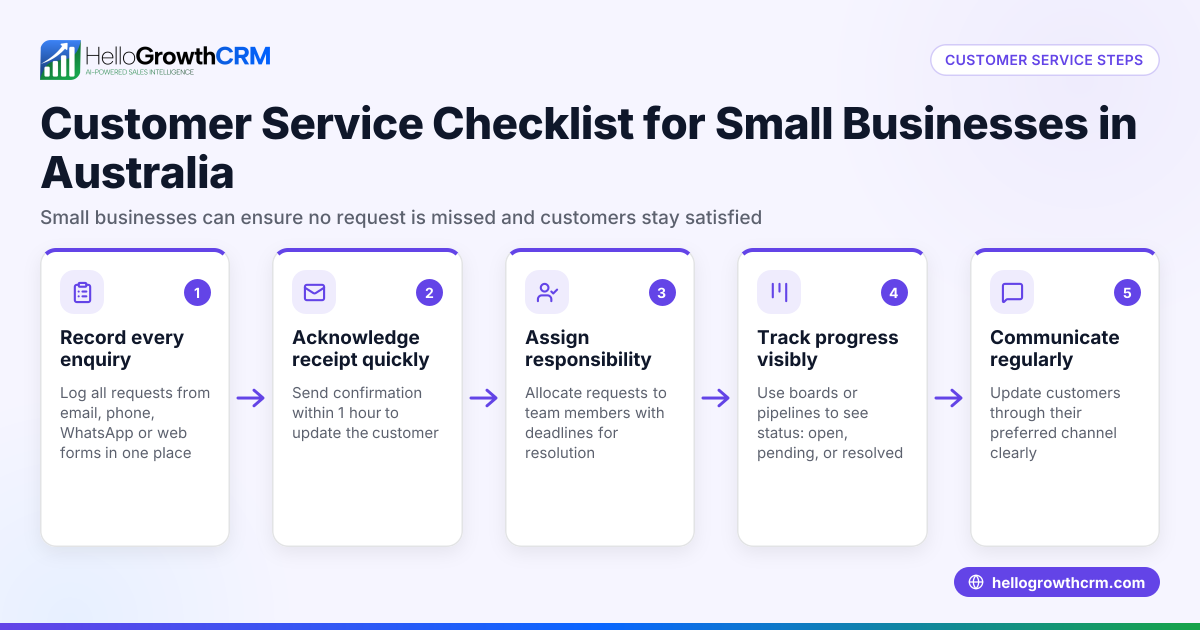
Small-business owners seek to understand customer service call centers because they face challenges like slow response times, lost leads, and inconsistent customer communication. Often, customer inquiries come through phone calls, texts, or emails scattered across different tools, making follow-up difficult. Without a centralized system, businesses lose sales opportunities and damage customer relationships. A call center helps organize communications, track customer issues, and improve service speed.
Step-by-step
- Define your call center goals and scope. Decide if your call center will handle only inbound support calls, outbound sales calls, or both. Set clear objectives such as reducing response time or increasing customer retention.
- Choose communication channels. Determine whether you'll handle calls only or include text messages, email, and WhatsApp. This helps plan your technology needs.
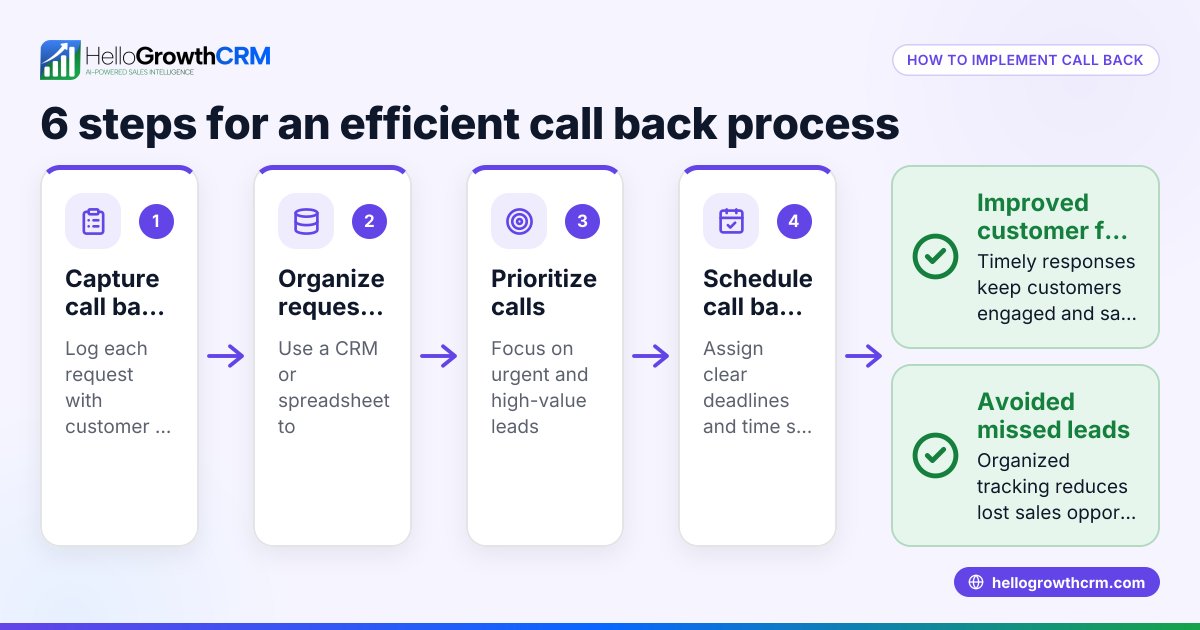
- Select call center software or CRM with calling capability. Look for tools that allow call logging, tracking, and easy follow-up. Check if the software supports integrated dialing and keeps call history linked to customers.
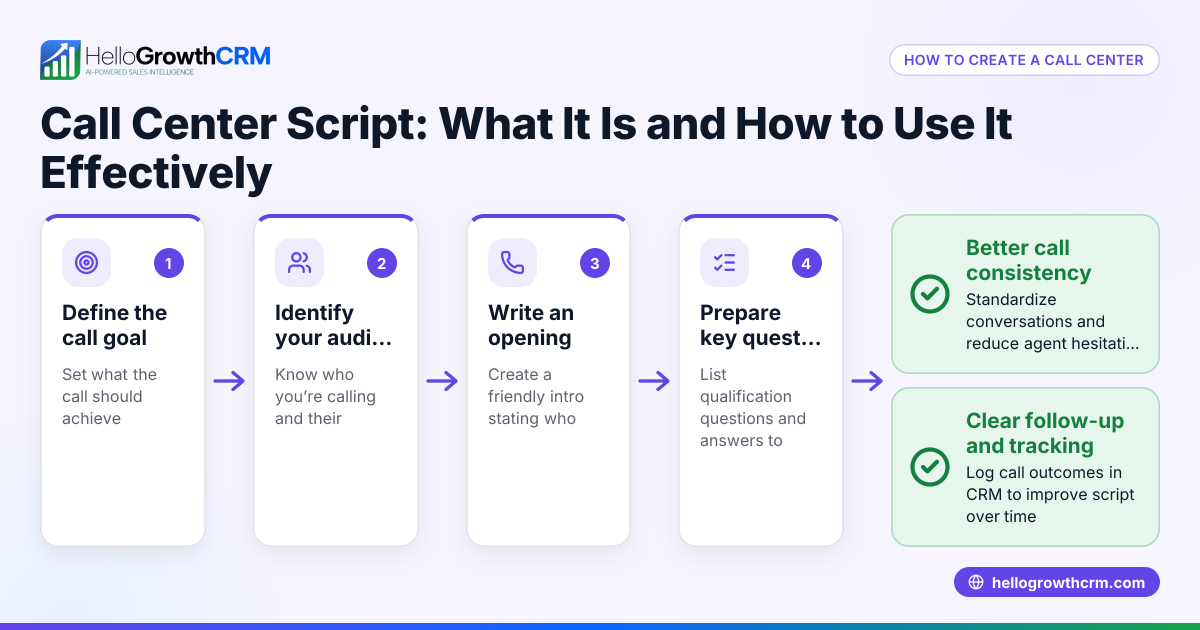
- Hire and train your team. Recruit reps or customer service reps familiar with your products and customer service best practices. Train them on call scripts, handling objections, and logging call outcomes.
- Set up call workflows and scripts. Create step-by-step call flows to guide reps through common scenarios. This ensures consistent customer experience and efficient issue resolution.
- Implement tracking and reporting. Monitor call volume, response times, and resolution rates. Use these metrics to improve performance and customer satisfaction.
- Integrate with your existing sales and support systems. Ensure the call center software links with your CRM or customer database to keep all customer information in one place.
- Test your setup before going live. Run pilot calls to identify and fix any issues in workflows or technology.
Example (fictional figures)
A B2B software reseller in Denver, Colorado, decides to set up a customer service call center to improve lead follow-up and support. They estimate 1,000 calls per month and budget $60,000 annually for the operation.
- Annual salary for 2 full-time reps: $48,000 × 2 = $96,000
- Software subscription with built-in dialer and ticketing: $12,000/year
- Training and onboarding costs: $3,000
- Miscellaneous expenses (headsets, office space): $5,000
Total estimated annual cost = $96,000 + $12,000 + $3,000 + $5,000 = $116,000
They expect that improved follow-up will increase sales by $200,000 annually, justifying the investment.
Common mistakes
- Not defining clear goals. Without specific objectives, the call center may fail to deliver value. Prevent this by setting measurable targets.
- Using multiple disconnected tools. Handling calls, emails, and texts in separate apps leads to lost information. Use software that integrates calling and customer records to keep everything in one place.
- Poor training and scripts. Unprepared reps can damage customer relationships. Provide thorough training and clear call flows.
- Ignoring customer history. Not referencing past interactions wastes time and frustrates customers. Track all calls and tickets on the same customer record to maintain context.
- Failing to monitor performance. Without reporting, it’s hard to improve. Set up regular reviews of call metrics.
Doing this in HelloGrowthCRM
HelloGrowthCRM offers a built-in dialer that lets reps work a call list directly inside the CRM. Each call outcome is logged on the lead record, ensuring no information is lost. After the sale, the customer portal, referrals, tickets, and knowledge base keep service requests and support history on the same customer record as the deal. This unified system helps small businesses manage customer service call centers efficiently and maintain a complete view of customer interactions.
Learn more about the built-in CRM dialer here: built-in CRM dialer and customer health tracking here: customer health score.
Frequently asked questions
What is a customer journey call center? A customer journey call center focuses on guiding customers through their entire experience with a company, not just resolving issues. It supports customers at every stage, from initial inquiry to post-sale support, ensuring consistent communication and satisfaction.
How does a call center help with customer retention? By providing timely and effective support, call centers increase customer satisfaction and loyalty. Prompt responses and problem resolution reduce churn and encourage repeat business.
What is the difference between a customer service call center and a contact center? A customer service call center primarily handles phone calls, while a contact center manages multiple communication channels, including email, chat, SMS, and social media. Contact centers offer more integrated customer engagement.
How does call flow work in customer service? Call flow is the scripted path a customer service rep follows during a call. It includes greeting, identifying the issue, providing solutions, and closing the call. Good call flows improve efficiency and customer experience.
Can small businesses run a customer service call center? Yes, small businesses can run call centers using affordable CRM and communication tools. Starting small with clear goals and scalable software, like HelloGrowthCRM, helps manage costs and grow gradually.
Learn how HelloGrowthCRM supports small businesses in the US here: HelloGrowthCRM for the United States.
Key takeaways
- A customer service call center centralizes customer communications to improve support and sales follow-up.
- Define clear goals, select integrated software, and train your team for effective call center operation.
- Avoid common mistakes like disconnected tools and lack of performance monitoring.
- HelloGrowthCRM’s built-in dialer and customer portal features help manage calls and service requests on one platform.
- Monitoring call metrics and maintaining customer history are essential for retention and service quality.
Start your customer service call center journey with HelloGrowthCRM. Start on the Free Forever plan (200 leads, no credit card).
Ready to put this into practice?
Set up your pipeline, WhatsApp follow-ups, and AI lead scoring in minutes — free, no credit card.
Try HelloGrowthCRM freeGet CRM tips in your inbox
Join thousands of sales professionals who get weekly insights on CRM strategy, AI automation, and pipeline optimization.

The HelloGrowthCRM team publishes guides on CRM strategy, AI sales tools, and revenue operations for small business sales teams.