HelloGrowthCRM software
Built for real small-business sales teams
HelloGrowthCRM helps reps qualify faster, follow up on time, and close more deals—with practical automation in one place.
- AI lead scoring and pipeline visibility
- Built-in dialer, WhatsApp, and email automation
- Sales forecasting and RevOps-ready reporting
Customer service culture is the foundation of how a business interacts with its customers, emphasizing respect, responsiveness, and problem-solving. It affects every aspect of customer experience, from initial contact to post-sale support. A strong customer service culture leads to happier customers and better business outcomes.
Why this comes up / what goes wrong
Small-business owners often face challenges such as inconsistent customer responses, slow issue resolution, and unclear service standards. These problems can stem from a weak or undefined customer service culture. Without shared values and clear expectations, team members may treat customers differently, causing confusion and dissatisfaction. For example, one salesperson might prioritize quick answers, while another focuses on detailed follow-up, leading to mixed experiences. This inconsistency can result in lost leads, poor reviews, and reduced repeat business.
Step-by-step
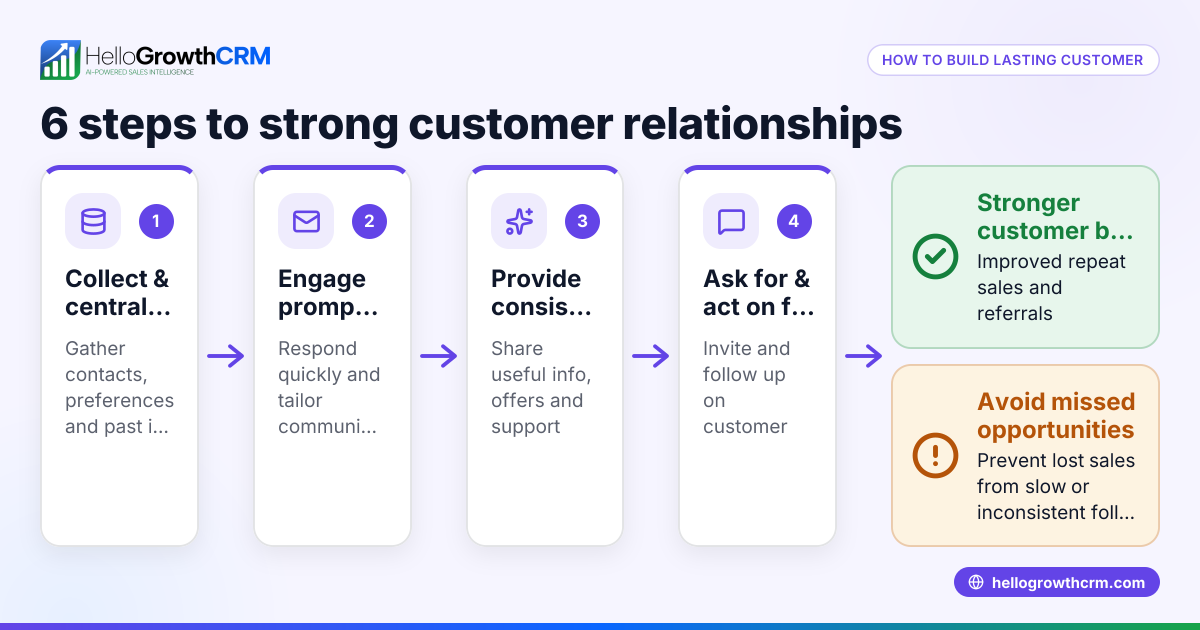
- Define your customer service values: Decide what your business stands for in customer interactions, such as friendliness, honesty, or speed. Write these values down and share them with your team.
- Train your team consistently: Provide training that aligns with your values. Include role-playing common scenarios and clear instructions on how to handle complaints or questions.
- Set clear service standards: Establish measurable goals like response times, issue resolution deadlines, and communication tone. Check regularly if these standards are met.
- Encourage feedback and learning: Ask customers for feedback through surveys or direct questions. Review this feedback with your team and adjust practices accordingly.
- Use tools that support your culture: Implement software that keeps customer details, service requests, and communication history in one place to ensure smooth follow-up and consistency. Check if your current system supports this.
- Recognize and reward good service: Celebrate team members who exemplify your culture. This motivates others and reinforces the desired behaviors.
Example (fictional figures)
Consider "Austin Plumbing Co.", a small plumbing business in Austin, Texas, with 15 employees. They want to improve their customer service culture to reduce lost leads and increase repeat customers.
- Current average customer response time: 48 hours
- Target response time: 12 hours
- Average monthly service requests: 120
They decide to implement these steps:
- Define values: "Promptness, clarity, and respect"
- Train team: 5 hours of customer service training
- Set standards: Respond to all inquiries within 12 hours
Calculation of improvement impact:
Before improvement: 48 hours response time × 120 requests = 5,760 total hours delay
After improvement: 12 hours response time × 120 requests = 1,440 total hours delay
Time saved: 5,760 - 1,440 = 4,320 hours saved monthly
Assuming each hour saved allows for additional service calls that generate $50 each: 4,320 hours × $50 = $216,000 potential monthly revenue increase
This example shows how focusing on customer service culture and standards can directly impact business efficiency and revenue.
Common mistakes
- Ignoring team input: Prevent this by involving employees in defining values and standards to ensure buy-in.
- Lack of consistent training: Schedule regular training sessions and refreshers to keep everyone aligned.
- Not tracking service metrics: Use tools to measure response times and resolution rates; review these regularly.
- Overlooking customer feedback: Actively seek and discuss feedback to identify areas for improvement.
- Failing to document customer interactions: Keep all service requests and communications in one place to avoid repeated questions and delays. HelloGrowthCRM’s customer portal helps with this.
Doing this in HelloGrowthCRM
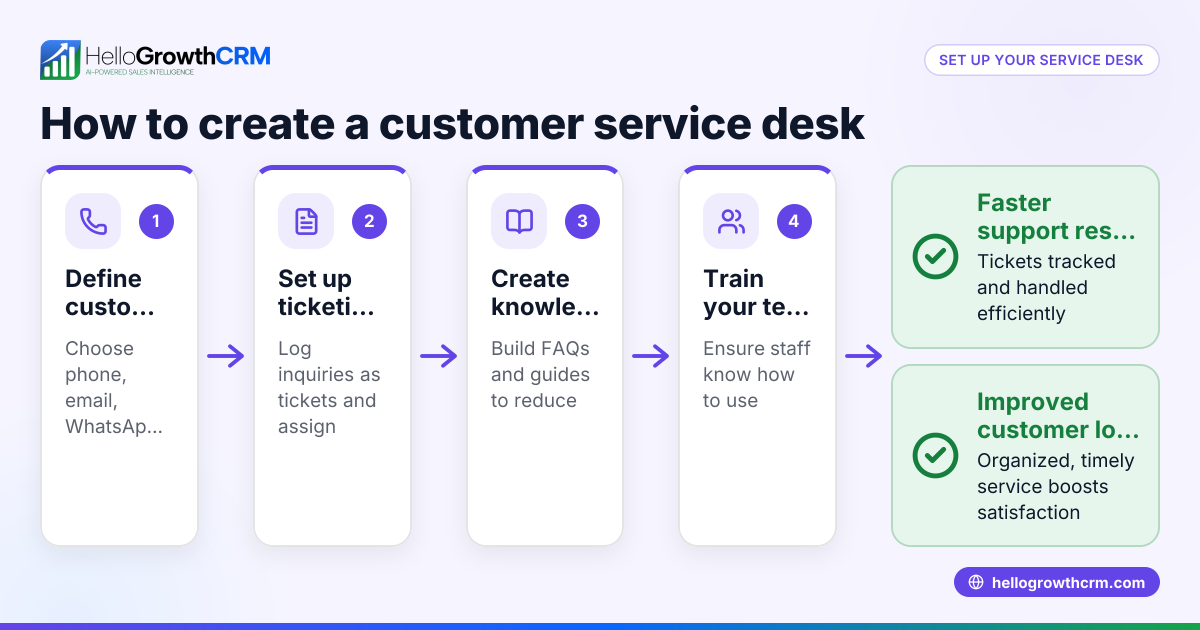
HelloGrowthCRM supports building a strong customer service culture by keeping all service requests, tickets, and customer interactions linked to the same customer record as the deal. Its branded self-service customer portal allows customers to submit and track support tickets, while the knowledge base provides easy access to helpful information. Referral program tracking encourages satisfied customers to bring in new leads, reinforcing positive relationships. These features help your team keep customer service consistent and organized after the sale. Learn more about these features here.
Frequently asked questions
What is the difference between customer service culture and customer experience? Customer service culture is the internal mindset and behaviors your team follows when interacting with customers. Customer experience is the overall impression customers have based on all interactions with your business. A strong customer service culture helps create a positive customer experience.
How can I measure if my customer service culture is effective? Track metrics like customer satisfaction scores, response times, resolution rates, and repeat business. Regularly collect customer feedback and monitor team adherence to service standards. Tools like HelloGrowthCRM can help organize this data.
Can small businesses build a strong customer service culture without a big budget? Yes. Defining clear values, training your team, and using affordable tools to track interactions can create a strong culture. Consistency and leadership commitment matter more than budget.
How does a CRM help improve customer service culture? A CRM centralizes customer information, communication history, and service requests. This ensures your team has the context needed to respond quickly and consistently, reducing errors and delays. HelloGrowthCRM’s customer portal and tickets features support this.
What role does leadership play in customer service culture? Leaders set the tone by modeling desired behaviors, enforcing standards, and rewarding good service. Without leadership support, it’s difficult to maintain a consistent culture.
Key takeaways
- Customer service culture is the shared values and behaviors that guide how your team treats customers.
- Define clear values and service standards, train your team, and track performance regularly.
- Use customer feedback to continuously improve your service practices.
- Avoid common mistakes like inconsistent training and poor communication tracking.
- HelloGrowthCRM helps by keeping service requests and customer interactions organized on one record with a customer portal and tickets.
Building a strong customer service culture takes commitment but leads to happier customers and better business results. To get started easily, explore how HelloGrowthCRM can support your team’s customer service efforts. Start on the Free Forever plan (200 leads, no credit card).
Ready to put this into practice?
Set up your pipeline, WhatsApp follow-ups, and AI lead scoring in minutes — free, no credit card.
Try HelloGrowthCRM freeGet CRM tips in your inbox
Join thousands of sales professionals who get weekly insights on CRM strategy, AI automation, and pipeline optimization.

The HelloGrowthCRM team publishes guides on CRM strategy, AI sales tools, and revenue operations for small business sales teams.