HelloGrowthCRM software
Built for real small-business sales teams
HelloGrowthCRM helps reps qualify faster, follow up on time, and close more deals—with practical automation in one place.
- AI lead scoring and pipeline visibility
- Built-in dialer, WhatsApp, and email automation
- Sales forecasting and RevOps-ready reporting
Customer service duties are the essential tasks a business performs to support and satisfy its customers before, during, and after a sale. These duties include answering questions, resolving complaints, managing returns or repairs, and maintaining positive relationships that encourage customer loyalty. This article covers why these duties matter, detailed steps to perform them well, a practical example with figures, common mistakes to avoid, and how HelloGrowthCRM helps organize service requests.
Why this comes up / what goes wrong
Small business owners in the US often juggle multiple roles, making it difficult to keep customer service organized. Without clear customer service duties and a system to track inquiries, complaints may be delayed or mishandled, leading to lost sales and unhappy customers. Businesses using text messages, email, and spreadsheets to manage sales and service risk missing follow-ups or losing track of customer history. This can frustrate customers and reduce repeat business.
Step-by-step
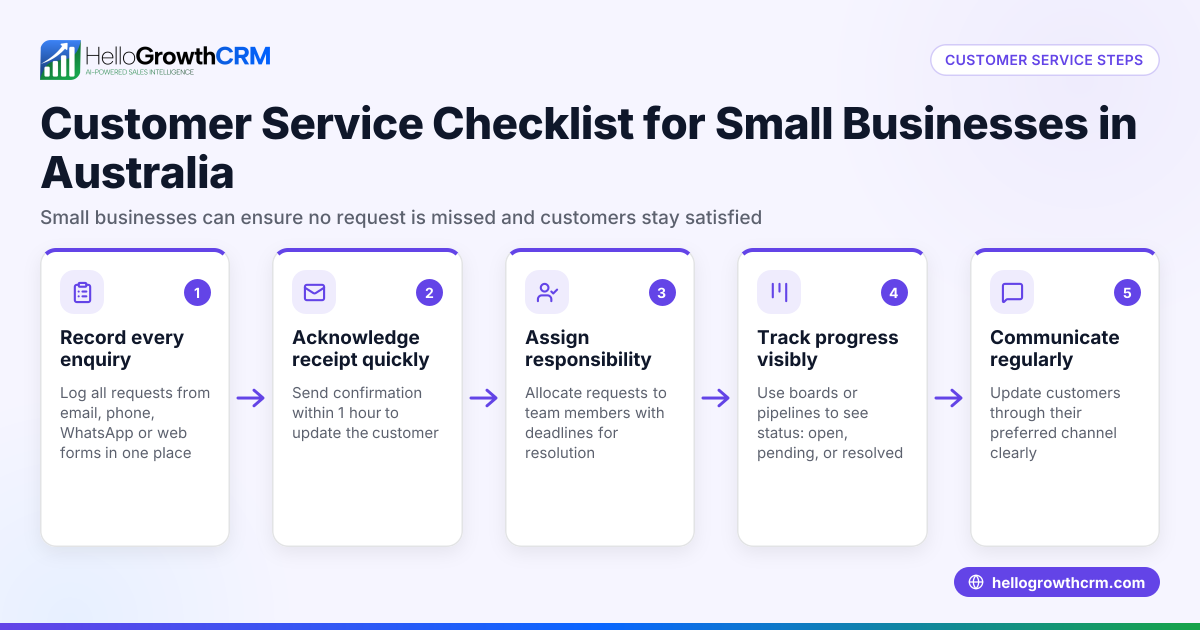
- Receive and log customer inquiries: Collect questions or complaints from phone, email, WhatsApp, or SMS. Check that every inquiry is recorded in a single, accessible place.
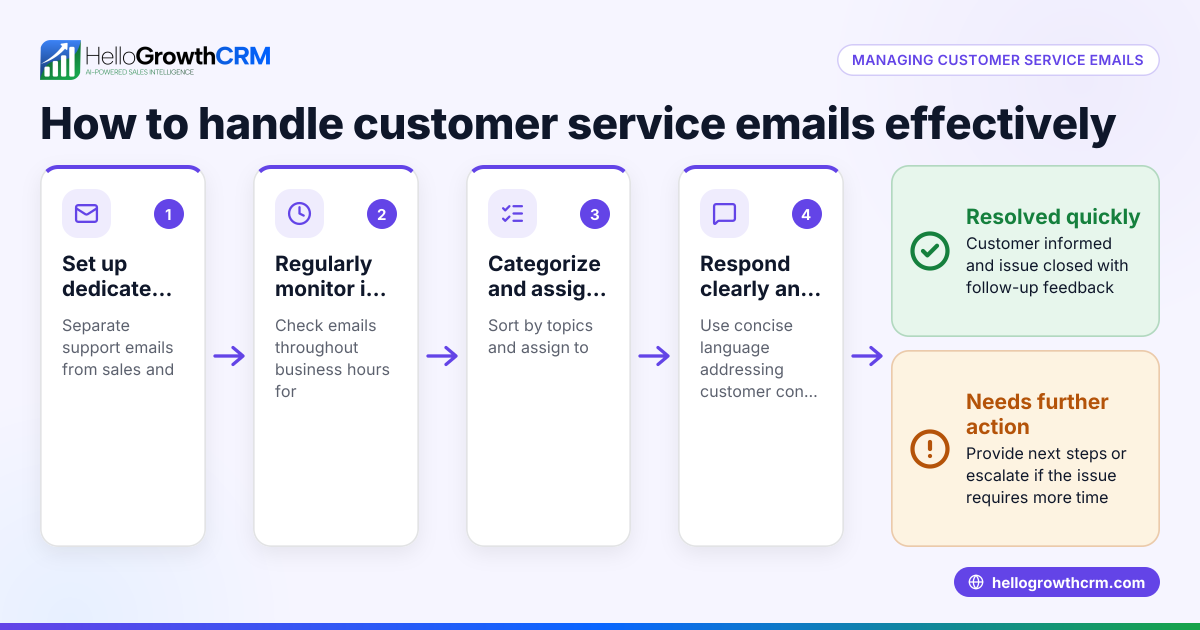
- Acknowledge receipt promptly: Respond quickly to confirm the customer’s message was received and is being addressed.
- Assess the issue: Understand the customer’s need or problem clearly. Check product or service details, purchase history, and any prior communications.
- Provide accurate information or solutions: Answer questions, offer troubleshooting steps, or arrange for returns or repairs. Verify that the solution follows company policies.
- Follow up to confirm resolution: Contact the customer to ensure their issue was resolved satisfactorily and check for additional needs.
- Document the interaction: Update the customer record with inquiry details, actions taken, and outcomes. This helps track recurring issues and improves service quality.
- Escalate when necessary: If the issue cannot be resolved promptly, forward it to a supervisor or specialist. Confirm escalation procedures are followed.
- Analyze service data regularly: Review tickets and feedback to identify trends or gaps. Use this information to improve processes and training.
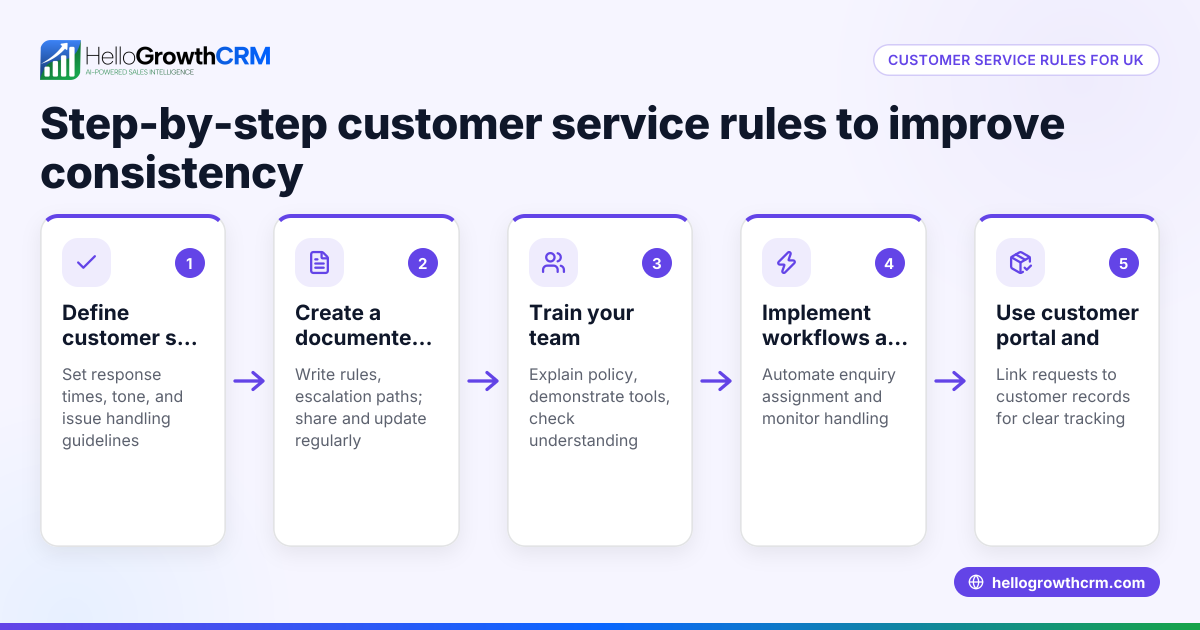
Throughout these steps, ensure communication is clear, polite, and professional. Confirming customer satisfaction strengthens loyalty. Consider tools that provide a customer health score to monitor service effectiveness.
Example (fictional figures)
A two-location dental practice in Columbus, Ohio, handles 150 service requests each month. They aim to respond within 24 hours and resolve most issues on first contact.
- Total monthly service requests: 150
- Target first-contact resolution rate: 85% (assumed illustrative rate)
- Number resolved on first contact = 150 × 85% = 127.5 ≈ 128
- Remaining requiring follow-up = 150 - 128 = 22
The practice assigns 3 staff members to customer service.
- Requests per staff member = 150 ÷ 3 = 50
- Average response time logged = 18 hours
This tracking helps the practice allocate resources efficiently and maintain customer satisfaction.
Common mistakes
- Ignoring or delaying responses: Prevent by setting clear response time goals and monitoring adherence.
- Inconsistent record keeping: Use a centralized system to log all interactions and updates.
- Failing to follow up: Schedule follow-ups as part of the service workflow to confirm resolution.
- Poor communication tone: Train staff on polite and clear communication to avoid misunderstandings.
- Not escalating complex issues: Define escalation paths and check staff compliance.
- Overlooking service data analysis: Regularly review customer service metrics to improve.
Using tools like HelloGrowthCRM’s customer health score can help monitor service effectiveness.
Doing this in HelloGrowthCRM
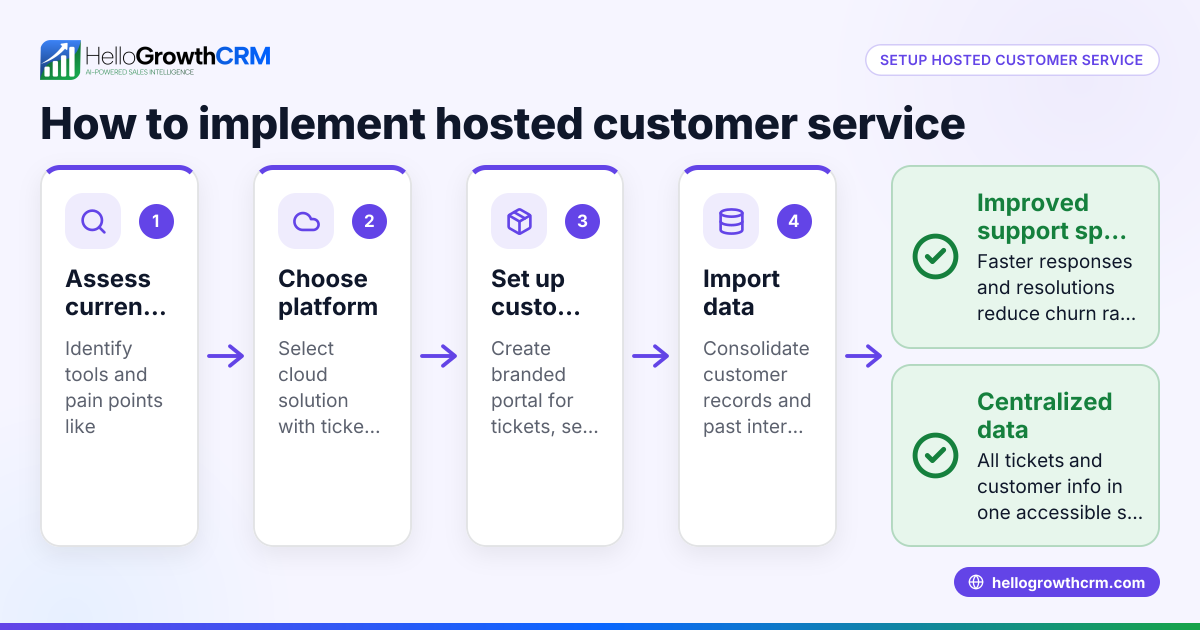
HelloGrowthCRM offers a branded self-service customer portal where customers can submit and track support tickets. After the sale, service requests stay linked to the same customer record as the deal, providing full context for your team. Features include referrals, a knowledge base for quick answers, and ticket management with SLA policies. This helps small businesses keep customer service organized and efficient.
Learn more about HelloGrowthCRM’s capabilities in the HelloGrowthCRM for the United States section and its use as a WhatsApp and SMS CRM.
Frequently asked questions
What are the main duties of customer service? Customer service duties include answering questions, resolving complaints, providing product information, processing returns, and following up to ensure customer satisfaction. These tasks help maintain positive customer relationships.
How can small businesses improve customer service? Small businesses can improve customer service by responding promptly to inquiries, keeping detailed records, training staff on communication, and using HelloGrowthCRM's lead capture, qualification, and interaction management tools to stay organized and efficient.
Why is follow-up important in customer service? Follow-up confirms that the customer’s issue was resolved and shows the business cares about satisfaction. It can prevent repeat complaints and encourage loyalty.
How does a CRM help with customer service duties? A CRM organizes customer information, tracks service requests, and provides a history of interactions. This makes it easier to respond quickly and consistently, improving the overall customer experience.
What is a customer portal? A customer portal is an online interface where customers can submit service tickets, check the status of their requests, and access helpful resources. It empowers customers and reduces the workload on support staff.
Key takeaways
- Customer service duties include inquiry handling, problem resolution, providing information, and follow-up.
- Small businesses must log and respond promptly to customer requests to avoid lost leads and dissatisfaction.
- Use a clear step-by-step process to assess, solve, and document customer issues.
- Common mistakes include slow responses, poor record keeping, and lack of follow-up.
- HelloGrowthCRM’s customer portal, tickets, and knowledge base keep service requests organized on the customer record.
- Regularly analyze service data to improve customer satisfaction and team performance.
Start managing your customer service duties more effectively by trying HelloGrowthCRM. Start on the Free Forever plan (200 leads, no credit card).
Ready to put this into practice?
Set up your pipeline, WhatsApp follow-ups, and AI lead scoring in minutes — free, no credit card.
Try HelloGrowthCRM freeGet CRM tips in your inbox
Join thousands of sales professionals who get weekly insights on CRM strategy, AI automation, and pipeline optimization.

The HelloGrowthCRM team publishes guides on CRM strategy, AI sales tools, and revenue operations for small business sales teams.