HelloGrowthCRM software
Built for real small-business sales teams
HelloGrowthCRM helps reps qualify faster, follow up on time, and close more deals—with practical automation in one place.
- AI lead scoring and pipeline visibility
- Built-in dialer, WhatsApp, and email automation
- Sales forecasting and RevOps-ready reporting
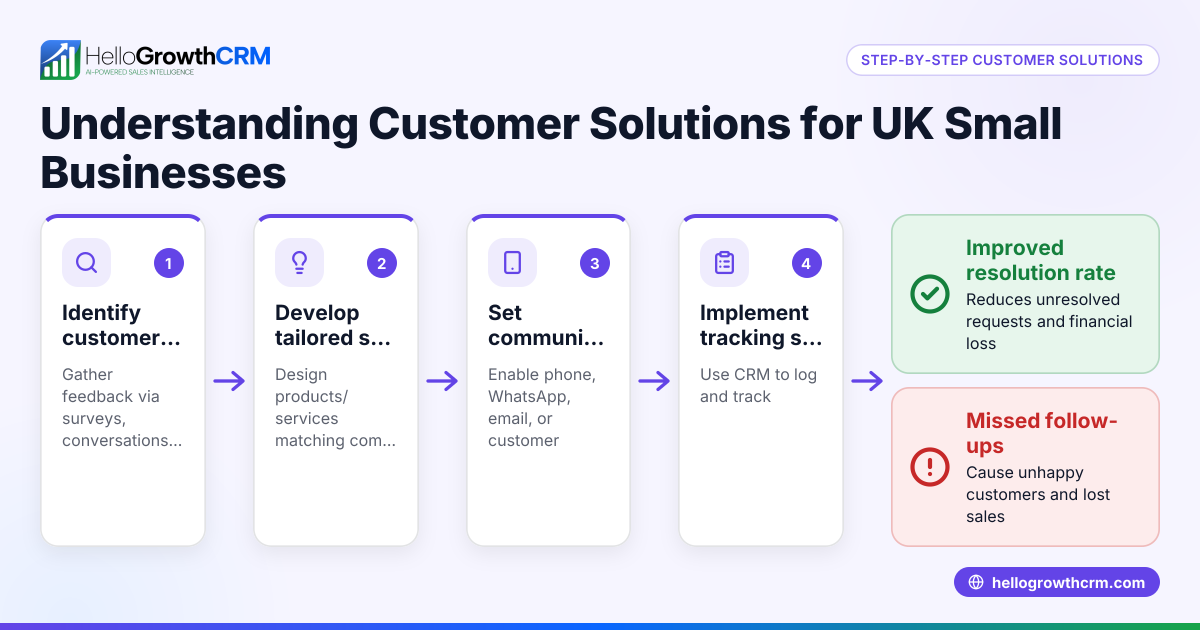
Customer service rules are essential for any small business aiming to keep customers satisfied and loyal. These rules set clear expectations for how to communicate, respond, and resolve issues. They ensure your team follows consistent practices that build trust and improve customer retention.
Why this comes up / what goes wrong
Small business owners often struggle with inconsistent customer service because they lack clear rules or processes. Without rules, some enquiries may be ignored, responses delayed, or complaints mishandled. This leads to lost sales, damaged reputation, and frustrated customers. For example, a small retail shop in London might lose repeat business if staff respond differently to similar issues or fail to follow up quickly. Many small businesses also run sales and support on WhatsApp, email, or spreadsheets, making it hard to track interactions and maintain standards.
Step-by-step
- Define your customer service standards
- Decide how quickly your team should respond to enquiries (e.g., within 24 hours).
- Set tone and language guidelines (polite, helpful, clear).
- Specify how to handle common issues and complaints.
- Check these standards are realistic and communicated to the team.
- Create a documented customer service policy
- Write down your rules clearly.
- Include escalation paths for unresolved issues.
- Make it easily accessible to all staff.
- Review regularly and update when needed.
- Train your team on the rules and tools
- Hold training sessions to explain the policy.
- Demonstrate how to use your CRM or communication tools.
- Check understanding and answer questions.
- Implement workflows and lead routing
- Set up automated workflows to assign enquiries to the right person.
- Use lead validation rules to ensure data quality.
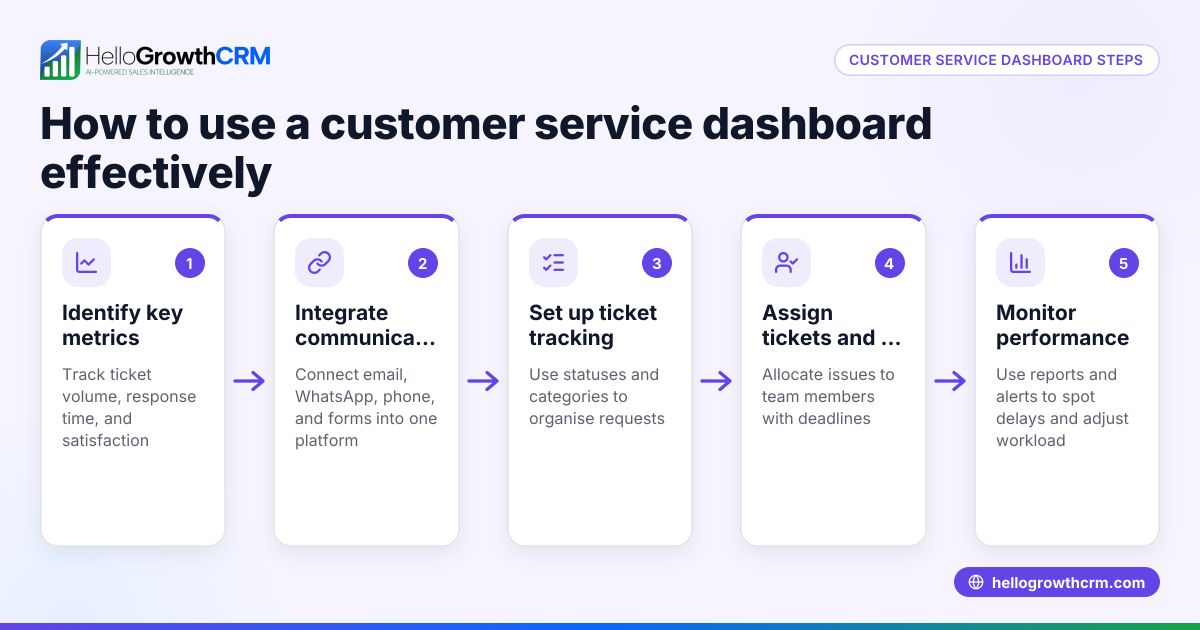
- Monitor task completion and response times.
- Check for gaps or delays in handling customer requests.
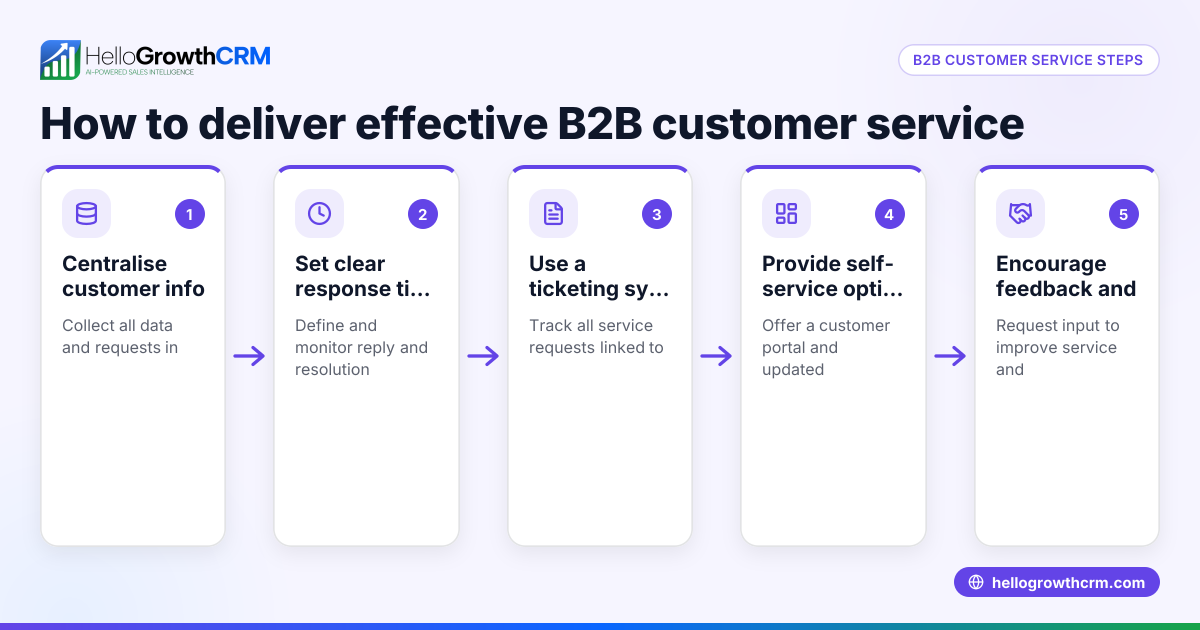
- Use a customer portal and ticketing system
- Provide customers with a portal to submit and track requests.
- Keep all service requests linked to the same customer record.
- Use tickets to manage and prioritise support issues.
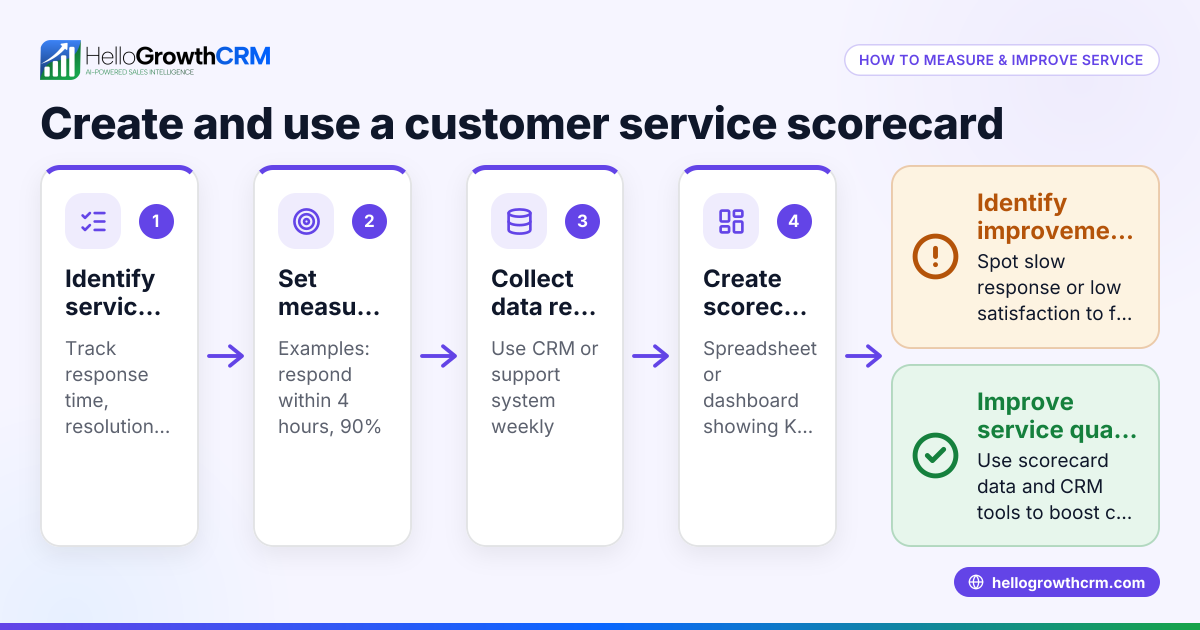
- Regularly review customer feedback and performance
- Collect feedback through surveys or direct contact.
- Analyse response times and resolution rates.
- Adjust rules and training based on findings.
- Ensure compliance with legal and industry standards
- Check any sector-specific customer service regulations.
- Keep data protection and privacy rules in mind.
Example (fictional figures)
A Manchester-based letting agency wants to improve its customer service rules. It sets a goal to respond to all tenant enquiries within 12 hours and resolve maintenance requests within 3 working days.
- Monthly tenant enquiries: 500
- Average staff working hours per day: 7
- Number of staff handling enquiries: 3
Calculate average enquiries per staff per day:
500 enquiries ÷ 30 days = 16.67 enquiries per day
16.67 enquiries per day ÷ 3 staff = 5.56 enquiries per staff per day
With a 7-hour shift, each staff member has:
7 hours ÷ 5.56 enquiries = 1.26 hours per enquiry
So each enquiry can be handled within 1 hour 15 minutes, fitting the 12-hour response target.
They use automated workflows to assign each new enquiry round-robin to staff and create a first-call task automatically. The customer portal logs all maintenance tickets linked to tenant records, keeping communication clear and traceable.
Common mistakes
- No clear response time targets
- Prevent by setting and communicating specific timeframes for replies.
- Inconsistent handling of enquiries
- Prevent by documenting rules and training all team members.
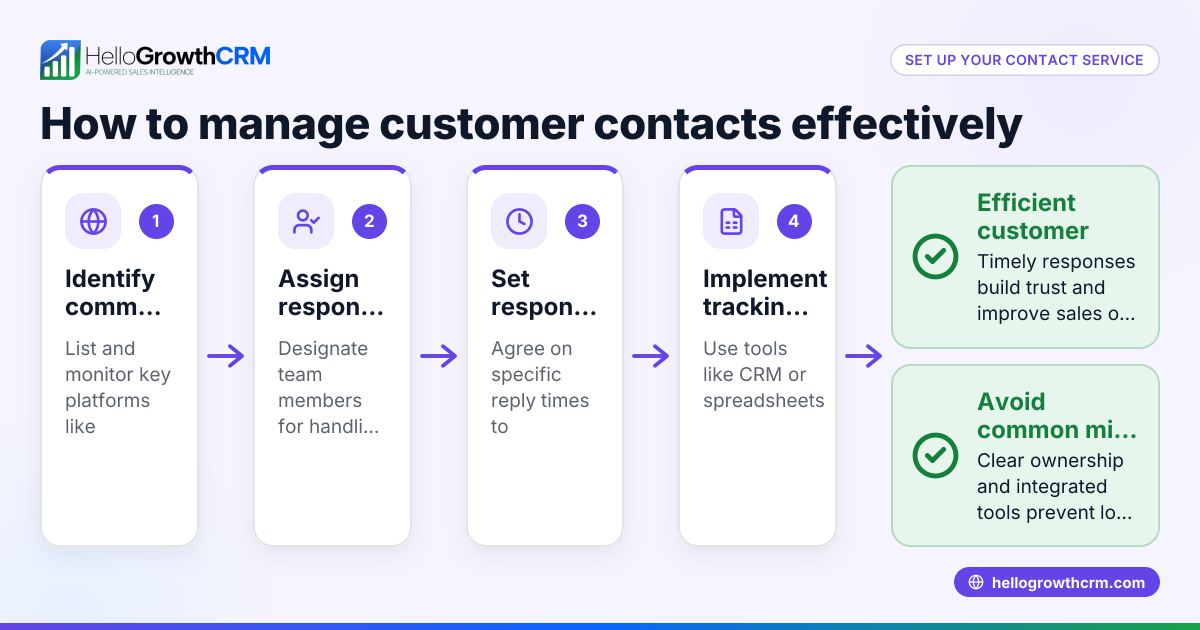
- Using multiple unconnected tools (WhatsApp, email, spreadsheets)
- Prevent by centralising communication in one CRM platform.
- Ignoring customer feedback
- Prevent by regularly collecting and acting on feedback.
- Failing to track service requests properly
- Prevent by using a ticketing system linked to customer records.
- Not assigning enquiries promptly
- Prevent by using automated lead routing and validation rules.
Doing this in HelloGrowthCRM
HelloGrowthCRM helps small businesses follow customer service rules with automated workflows, lead routing, and validation rules. For example, a new web-form enquiry can be assigned round-robin and a first-call task created automatically, ensuring prompt follow-up. After the sale, service requests stay on the same customer record as the deal using the customer portal, referrals, tickets, and knowledge base features. This keeps all communication organised and accessible. Learn more about WhatsApp and SMS CRM and customer health score to improve service quality. HelloGrowthCRM is tailored for the United Kingdom market.
Frequently asked questions
What are the basic customer service rules for small businesses? Basic customer service rules include responding promptly, being polite and clear, handling complaints fairly, and following up until resolution. Documenting these rules and training staff helps maintain consistency.
How can I make sure my team follows customer service rules? Create clear policies, train your team regularly, and use tools like CRM workflows to automate task assignment and reminders. Regularly review performance and customer feedback to identify issues.
Why is it important to keep service requests linked to customer records? Linking requests to customer records ensures all communication history is in one place. This helps your team provide personalised service, avoids repeated questions, and speeds up resolution.
Can I manage customer service rules on WhatsApp and email? Managing service across WhatsApp, email, and spreadsheets can cause lost or delayed responses. Using a CRM like HelloGrowthCRM centralises communication and automates workflows, improving consistency and speed.
How do automated workflows improve customer service? Automated workflows assign enquiries to the right staff, create follow-up tasks, and move deals through stages automatically. This reduces human error and ensures no enquiry is missed.
Key takeaways
- Customer service rules set clear expectations for response times, tone, and complaint handling.
- Document and communicate your rules to ensure team consistency.
- Use automated workflows and lead routing to assign enquiries promptly.
- Keep service requests linked to customer records for better tracking.
- Avoid managing service across unconnected tools like WhatsApp and spreadsheets.
- Regularly review feedback and update your rules accordingly.
Start improving your customer service by using HelloGrowthCRM. Start on the Free Forever plan (200 leads, no credit card).
Ready to put this into practice?
Set up your pipeline, WhatsApp follow-ups, and AI lead scoring in minutes — free, no credit card.
Try HelloGrowthCRM freeGet CRM tips in your inbox
Join thousands of sales professionals who get weekly insights on CRM strategy, AI automation, and pipeline optimization.

The HelloGrowthCRM team publishes guides on CRM strategy, AI sales tools, and revenue operations for small business sales teams.