HelloGrowthCRM software
Built for real small-business sales teams
HelloGrowthCRM helps reps qualify faster, follow up on time, and close more deals—with practical automation in one place.
- AI lead scoring and pipeline visibility
- Built-in dialer, WhatsApp, and email automation
- Sales forecasting and RevOps-ready reporting
Customer service in healthcare means managing patient interactions efficiently from first contact through ongoing care. It involves timely communication, clear information, and smooth issue resolution. This article covers why healthcare businesses struggle with customer service, step-by-step actions to improve it, a realistic example, common mistakes to avoid, and how HelloGrowthCRM supports healthcare providers.
Why this comes up / what goes wrong
Healthcare business owners and accountants often face challenges with customer service because their teams juggle clinical duties with patient communication. Clinics, labs, and healthcare providers must handle appointment scheduling, test result follow-ups, billing questions, and service requests promptly. Slow or disorganized follow-up can lead to patient dissatisfaction, lost revenue, and compliance risks. Many rely on disconnected tools like text messages, emails, and spreadsheets, which cause missed messages and inconsistent responses.
Step-by-step
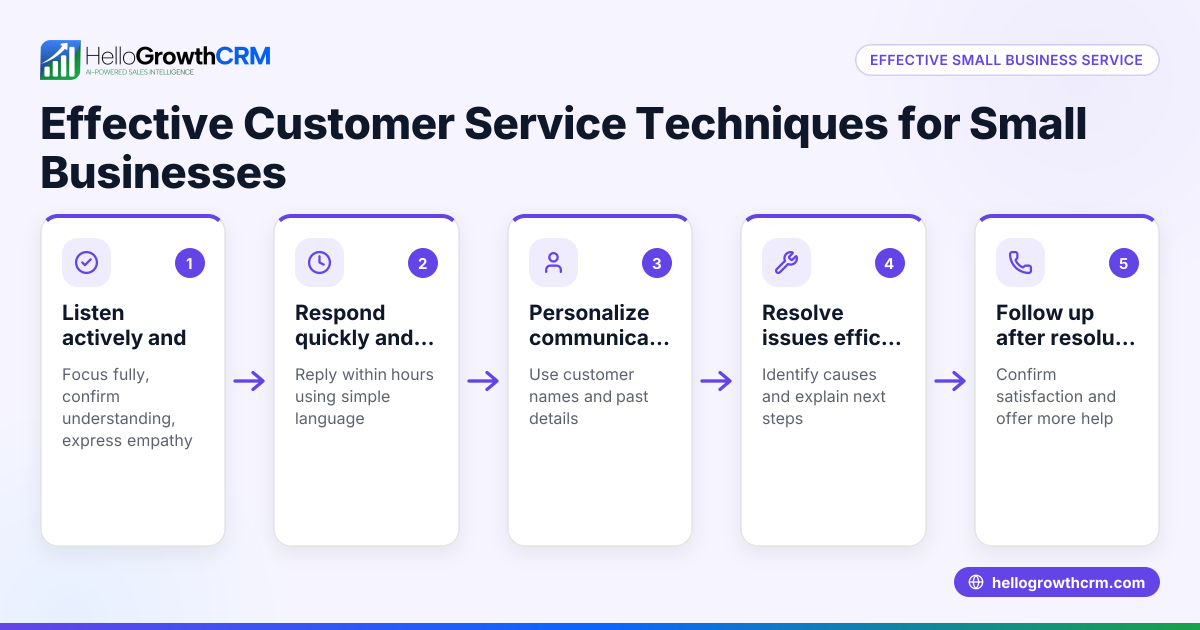
- Centralize patient contact data: Collect all patient information, appointment history, and communication records in one system. Check that details are complete and updated regularly.
- Implement timely follow-up protocols: Set clear timelines for responding to patient inquiries, appointment confirmations, and test results. Check adherence by reviewing response times weekly.
- Use multi-channel communication: Offer patients options like phone calls, SMS, WhatsApp, and email. Check that messages are consistent and logged regardless of channel.
- Train staff on empathetic communication: Ensure front-desk, billing, and clinical staff understand how to handle sensitive healthcare conversations. Check with periodic role-play or feedback sessions.
- Track service requests and issues: Use a ticketing system to log patient problems or requests post-appointment. Check that all tickets are resolved within agreed service levels.
- Gather patient feedback regularly: Use surveys or direct calls to learn about patient satisfaction and areas for improvement. Check trends monthly.
- Analyze customer health score: Monitor patient engagement and satisfaction metrics to identify at-risk patients or those needing extra attention. Check scores before quarterly reviews.
Example (fictional figures)
Healthy Life Clinic is a small healthcare provider in Charlotte, North Carolina, with 15 employees. They want to improve patient follow-up to reduce no-shows and billing disputes.
- Clinic sees 1,000 patients monthly.
- Current no-show rate is 12%, costing approximately $50 per missed appointment.
Calculation of monthly lost revenue from no-shows:
$50 × 1,000 × 12% = $6,000
They implement a follow-up system with reminders via SMS and calls using a built-in dialer.
- After implementation, no-show rate drops to 7%.
New monthly loss:
$50 × 1,000 × 7% = $3,500
Monthly savings:
$6,000 - $3,500 = $2,500
They also track billing inquiries and reduce disputes by 30%, improving cash flow. This example shows how structured customer service reduces revenue loss and improves patient satisfaction.
Common mistakes
- Using multiple unconnected tools: Prevent by centralizing communication and data in one system.
- Ignoring patient preferences for communication channels: Prevent by offering phone, SMS, WhatsApp, and email options.
- Delaying follow-up on inquiries or test results: Prevent by setting and monitoring response time goals.
- Failing to log service requests or patient issues: Prevent by using a ticketing system linked to patient records.
- Not training staff on customer service skills: Prevent by regular training and feedback.
- Overlooking patient feedback and satisfaction trends: Prevent by scheduling regular surveys and reviews.
Doing this in HelloGrowthCRM
HelloGrowthCRM supports healthcare providers with a built-in dialer that lets telecallers work patient lists directly inside the CRM, logging call outcomes on each patient record. After the sale or appointment, service requests, referrals, tickets, and knowledge base articles stay attached to the same customer record as the deal. This keeps all communication and service history in one place, making follow-up and issue resolution more efficient. Learn more about HelloGrowthCRM for the United States and how it fits clinics, labs, and healthcare on the Clinics, labs and healthcare page.
Frequently asked questions
What makes customer service in healthcare different from other industries? Healthcare customer service requires managing sensitive patient information, timely communication about health concerns, and compliance with privacy regulations. Patients expect empathy and clarity, so communication must be handled carefully.
How can healthcare providers reduce patient no-shows? Using reminders through multiple channels like phone calls, SMS, and WhatsApp helps. Tracking these communications efficiently in a CRM ensures follow-ups happen on time.
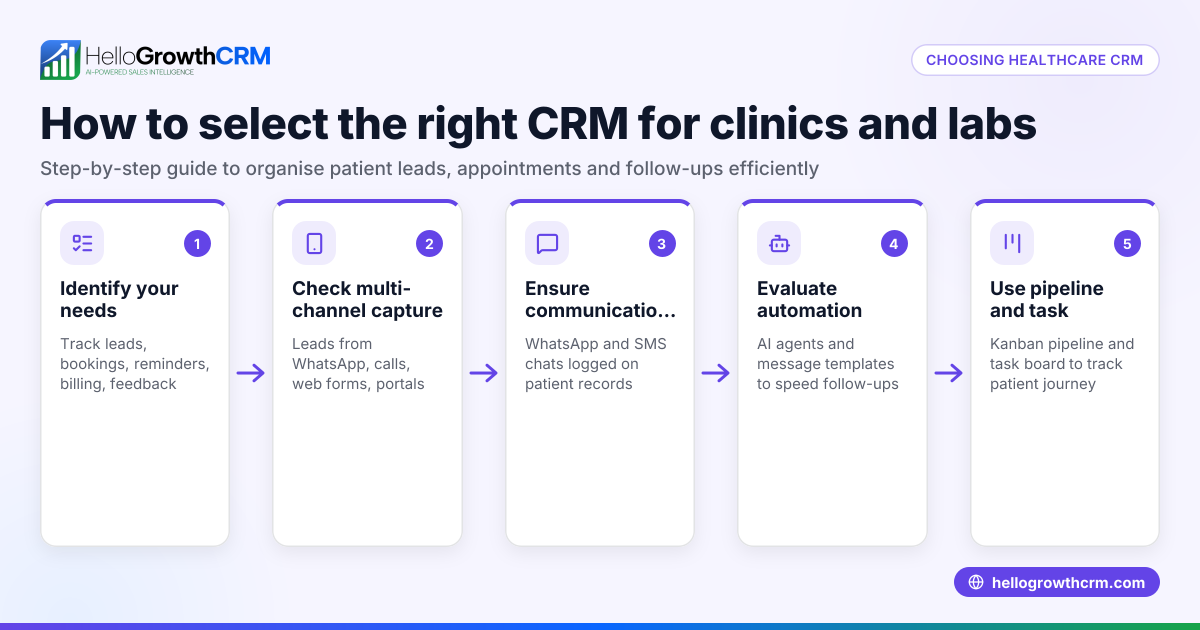
What should I look for in a healthcare CRM? Look for features like a built-in dialer for calls, multi-channel messaging, and the ability to track service tickets and referrals all linked to patient records. This centralization improves response times and patient satisfaction.
How can I measure if my customer service is improving? Track key metrics like response times, patient no-show rates, billing dispute frequency, and patient satisfaction survey results. Using a customer health score can help monitor overall engagement trends. See more on the customer health score page.
Is it possible to handle customer service without specialized software? Yes, but it’s often inefficient and error-prone. Using spreadsheets and separate messaging apps increases the risk of missed follow-ups and inconsistent communication.
Key takeaways
- Centralize patient data and communication for consistent follow-up.
- Use multi-channel messaging including phone, SMS, and WhatsApp.
- Track service requests and patient issues with a ticketing system.
- Train staff regularly on empathetic and clear communication.
- Measure improvements using response times, no-show rates, and patient feedback.
- HelloGrowthCRM offers a built-in dialer and customer service tools tailored for healthcare providers.
Start improving your healthcare customer service today. Start on the Free Forever plan (200 leads, no credit card).
Ready to put this into practice?
Set up your pipeline, WhatsApp follow-ups, and AI lead scoring in minutes — free, no credit card.
Try HelloGrowthCRM freeGet CRM tips in your inbox
Join thousands of sales professionals who get weekly insights on CRM strategy, AI automation, and pipeline optimization.

The HelloGrowthCRM team publishes guides on CRM strategy, AI sales tools, and revenue operations for small business sales teams.