HelloGrowthCRM software
Built for real small-business sales teams
HelloGrowthCRM helps reps qualify faster, follow up on time, and close more deals—with practical automation in one place.
- AI lead scoring and pipeline visibility
- Built-in dialer, WhatsApp, and email automation
- Sales forecasting and RevOps-ready reporting
Customer service in logistics means providing timely updates, resolving shipment issues quickly, and maintaining clear communication with clients throughout the delivery process. It involves tracking shipments accurately, responding promptly to inquiries, and managing service requests efficiently. This article explains why logistics businesses face customer service challenges, offers step-by-step improvement actions, highlights common mistakes, provides a US-based example, and shows how HelloGrowthCRM supports logistics customer service.
Why this comes up / what goes wrong
Logistics businesses in the US often struggle with customer service because of the complexity involved in managing shipments, coordinating with multiple carriers, and meeting tight delivery deadlines. Business owners or accountants typically juggle many tasks and may rely on fragmented communication methods like emails, text messages, and spreadsheets. This scattered approach causes delays in responding to customer inquiries and difficulty tracking service issues. Without a centralized system to log customer interactions and manage service requests, businesses risk losing clients due to poor communication and slow problem resolution.
Step-by-step
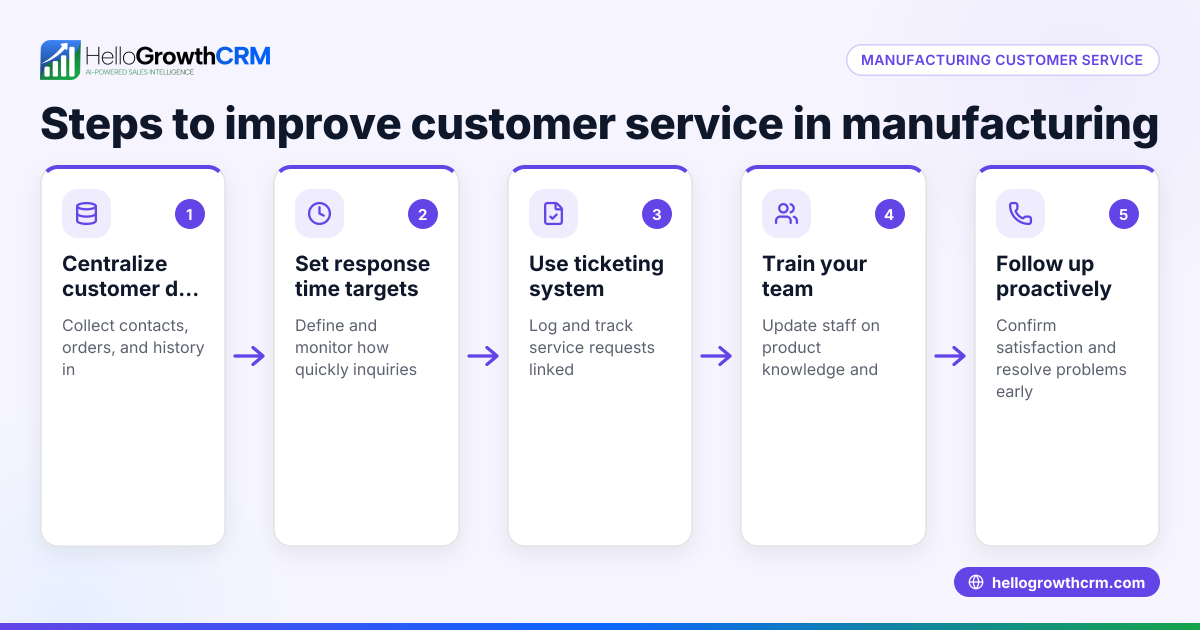
- Centralize all customer communication: Collect all messages—phone calls, emails, texts—into one system. Verify that every inquiry is logged with a timestamp and assigned to a responsible team member.
- Provide real-time shipment tracking: Use tools that update customers on the status of their shipments. Check that tracking information is accurate and accessible to customers.
- Set and monitor response time targets: Define how quickly your team should reply to customer questions or complaints. Regularly check that these targets are met.
- Log and manage service requests with tickets: Create tickets for issues such as damaged goods or delivery delays. Confirm that each ticket has an owner and a deadline for resolution.
- Follow up after resolving issues: Contact customers to ensure their problems are fully addressed. Use their feedback to improve service processes.
- Analyze customer service data: Review common complaint types and shipment delays to identify patterns. Use this data to fix recurring problems upstream.
- Train your team on customer health score: Track customer satisfaction and retention indicators regularly to spot accounts needing attention. Learn more about customer health score.
Example (fictional figures)
Logistics company "SwiftMove Transport" in Phoenix, Arizona, manages 1,200 shipments monthly, focusing on residential deliveries.
- Customer inquiry rate: 4% of shipments = 1,200 × 4% = 48 inquiries/month
- Current average response time: 36 hours; target: 18 hours
- Estimated cost of delayed response per inquiry (lost repeat business): $120
If SwiftMove reduces response time to 18 hours, they expect to improve customer retention by retaining 6 customers who might otherwise be lost.
Lost customers without improvement: 48 × 12.5% = 6 (assumed retention improvement; fictional example)
Revenue saved by retaining customers: 6 × $120 = $720/month
Monthly investment in a CRM system to manage inquiries: $350
Net monthly gain:
$720 - $350 = $370
This example shows how focusing on customer service improvements can positively impact revenue and customer loyalty.
Common mistakes
- Using multiple disconnected communication channels: Prevent this by centralizing all customer interactions in one system.
- Failing to assign ownership of service issues: Prevent by creating tickets and assigning them to specific team members.
- Ignoring follow-ups on open tickets: Prevent by setting reminders and regularly reviewing unresolved issues.
- Not providing customers with shipment visibility: Prevent by integrating shipment tracking and proactively sharing updates.
- Overlooking customer feedback and trends: Prevent by analyzing service data and monitoring customer health scores, see customer health score.
- Overburdening staff without proper tools: Prevent by using tools like HelloGrowthCRM to streamline calling and ticket management.
Doing this in HelloGrowthCRM
HelloGrowthCRM includes a built-in dialer that lets your team call customers directly from the CRM and log call outcomes on each lead. This keeps all communication tied to the customer record, improving follow-up and accountability. After the sale, service requests such as support tickets remain on the same customer record as the deal, making it easier to track and resolve issues quickly. Learn more about how HelloGrowthCRM supports Transporters and logistics and works for HelloGrowthCRM for the United States.
Frequently asked questions
What is the most important aspect of customer service in logistics? Timely and clear communication is essential. Customers expect to know the status of their shipments and be informed immediately if any issues occur.
How can I measure customer service effectiveness in logistics? Track key metrics such as response times, resolution rates, and customer satisfaction scores. Using a customer health score helps identify at-risk accounts and improve retention.
What tools can help improve logistics customer service? A CRM with integrated calling, ticket management, and a customer portal centralizes communication and speeds up issue resolution.
How do I handle customer complaints about delayed shipments? Acknowledge the problem promptly, provide an updated delivery estimate, and offer compensation if appropriate. Logging the complaint in a ticket ensures proper follow-up.
Can improving customer service increase revenue in logistics? Yes. Faster responses and better issue resolution boost customer loyalty, leading to repeat business and referrals.
Key takeaways
- Centralize all customer communication to prevent lost inquiries.
- Provide real-time shipment tracking and updates.
- Use ticketing systems to manage and resolve service requests efficiently.
- Monitor customer health scores to detect and prevent churn.
- Avoid common mistakes like scattered communication and ignoring follow-ups.
- Tools like HelloGrowthCRM help streamline calling and service management.
Improving customer service in logistics requires clear processes and the right tools. Start on the Free Forever plan (200 leads, no credit card) to organize your customer communication and service requests efficiently.
Ready to put this into practice?
Set up your pipeline, WhatsApp follow-ups, and AI lead scoring in minutes — free, no credit card.
Try HelloGrowthCRM freeGet CRM tips in your inbox
Join thousands of sales professionals who get weekly insights on CRM strategy, AI automation, and pipeline optimization.

The HelloGrowthCRM team publishes guides on CRM strategy, AI sales tools, and revenue operations for small business sales teams.