HelloGrowthCRM software
Built for real small-business sales teams
HelloGrowthCRM helps reps qualify faster, follow up on time, and close more deals—with practical automation in one place.
- AI lead scoring and pipeline visibility
- Built-in dialer, WhatsApp, and email automation
- Sales forecasting and RevOps-ready reporting
A daily sales tracker is a tool or system used to record and monitor all sales activities and revenue generated each day. It helps business owners and sales teams keep real-time tabs on performance, identify trends, and ensure timely follow-up. This article explains why daily sales tracking matters, how to set one up step-by-step, common mistakes to avoid, and how HelloGrowthCRM supports daily sales tracking.
Why this comes up / what goes wrong
Small-business owners often face the challenge of losing track of daily sales activities, especially when sales happen across multiple channels like phone calls, text messages, emails, or in-person visits. Without a clear daily sales tracker, leads and deals can be forgotten or delayed, causing lost revenue and missed growth opportunities. Manual tracking using spreadsheets or notes can be slow and error-prone, making it hard to get an accurate picture of daily sales performance. This creates stress and inefficiency for founders and sales teams trying to stay organized and responsive.
Step-by-step
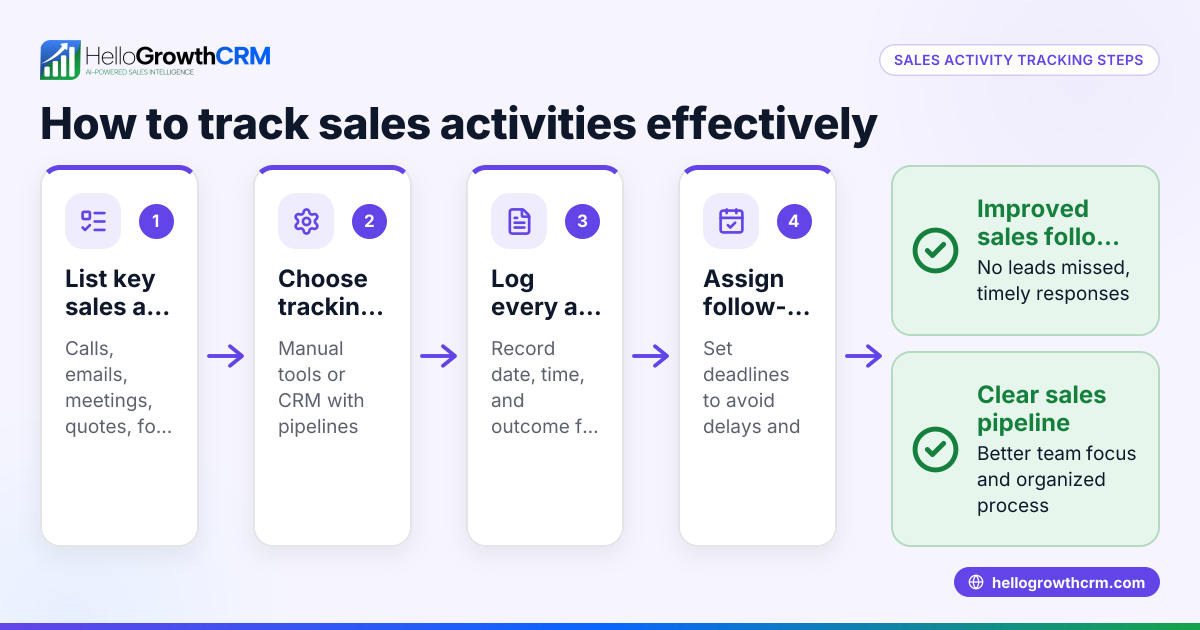
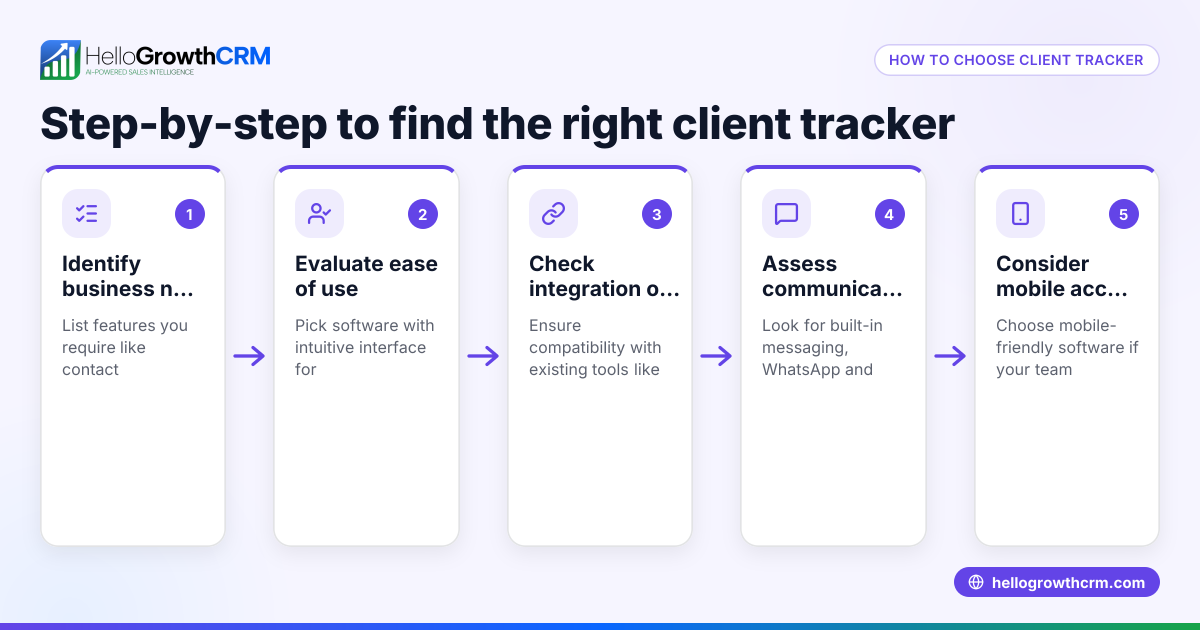
- Choose your tracking method: Decide whether to use a spreadsheet, a simple app, or a CRM system tailored for sales tracking. Ensure it can record daily sales amounts, customer details, and follow-up tasks.
- Set up sales categories: Define categories such as new leads, quotes sent, deals won, and deals lost. This helps organize daily data for clearer insights.
- Record sales daily: At the end of each day, enter all sales transactions, including amounts, customer names, and any next steps or follow-up dates.
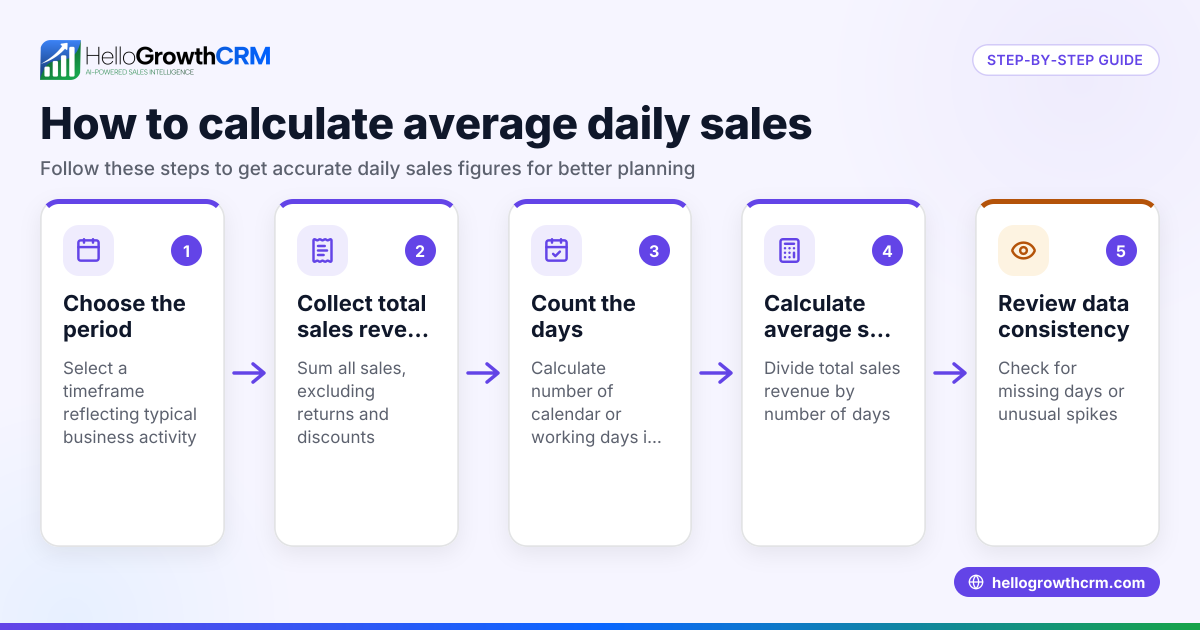
- Review daily totals: Check total sales revenue and number of deals closed each day to monitor performance and spot trends.
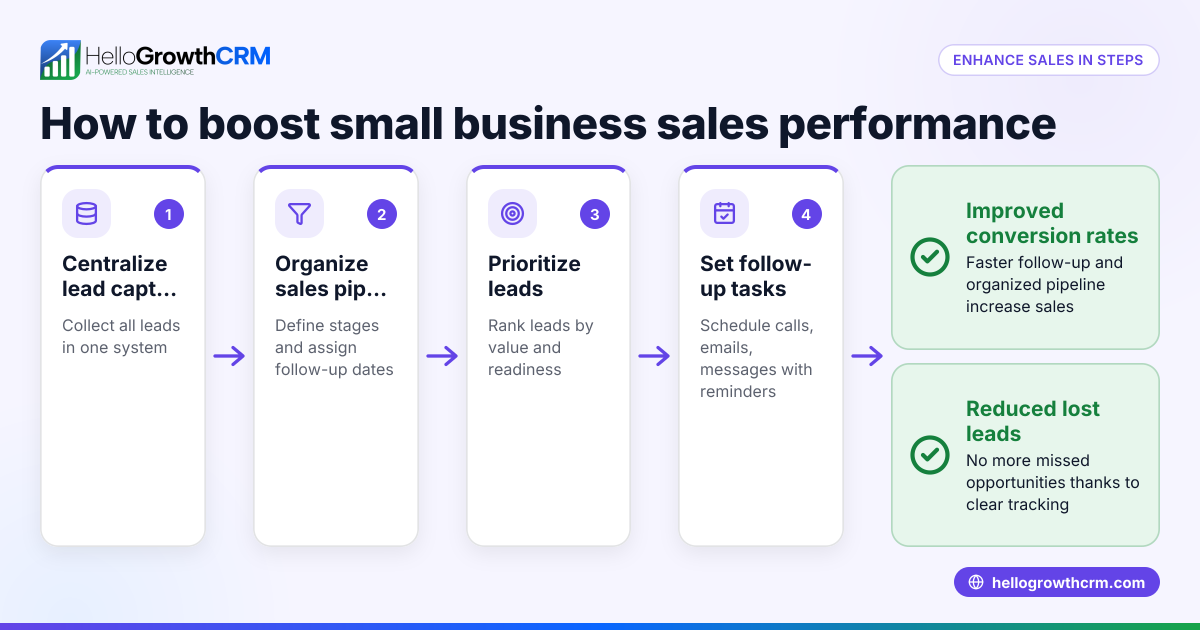
- Schedule follow-ups: For quotes or leads that need action, set reminders or follow-up tasks to avoid losing opportunities.
- Analyze weekly: Summarize daily data weekly to identify patterns, bottlenecks, or areas needing improvement.
- Adjust your process: Use insights from your tracker to improve sales tactics, allocate resources, or train your team.
Make sure the tracking method you choose fits your business size and sales process. For example, HelloGrowthCRM offers a pipeline management layer to track deals from first contact through close, including follow-up dates so no quotation or lead is forgotten. Learn more about its Deals (pipeline).
Example (fictional figures)
A plumbing company in Austin, Texas, uses a daily sales tracker to monitor its sales on 04/15/2026.
- New leads contacted: 5
- Quotes sent: 3 totaling $4,500
- Deals won: 2 totaling $3,200
- Deals lost: 1 worth $1,300
Calculations:
$3,200 + $0 = $3,200 (total revenue from deals won)
$4,500 - $3,200 = $1,300 (value of pending quotes not yet closed)
Daily sales revenue recorded = $3,200
The company logs all these figures daily, notes follow-up dates for pending quotes, and reviews this data weekly to adjust marketing and sales efforts.
Common mistakes
- Not updating daily: Waiting days or weeks to enter sales data leads to forgotten leads and inaccurate reports. Prevent by setting a daily reminder.
- Using overly complex tools: Complicated spreadsheets or software can discourage consistent use. Choose simple, user-friendly tools.
- Ignoring follow-ups: Recording sales but failing to act on quotes or leads causes lost deals. Always set and track follow-up tasks.
- Mixing unrelated data: Combining sales with unrelated business data clouds insights. Keep your sales tracker focused.
- Not reviewing data regularly: Without regular review, patterns and problems go unnoticed. Schedule weekly analysis sessions.
- Failing to assign responsibility: Without a clear owner for sales tracking, data quality suffers. Assign a team member or use managed support.
Using a CRM with features like Territories and field operations can help field sales reps log visits and keep managers informed daily, reducing errors.
Doing this in HelloGrowthCRM
HelloGrowthCRM supports daily sales tracking with its Deals (pipeline) feature, which keeps quotations visible at their current stage with follow-up dates, ensuring no deal is forgotten. For teams with field sales reps, Territory and field operations tools allow logging visits from the phone, giving managers a clear view of daily activity. Founders without a dedicated sales manager can benefit from Managed RevOps, where a revenue specialist regularly works the follow-up queue and cleans the pipeline. Learn more about these features at HelloGrowthCRM for the United States.
Frequently asked questions
What is the best way to track daily sales for a small business? The best way depends on your business size and sales process. Many start with spreadsheets but benefit from a CRM that tracks deals, follow-ups, and sales stages automatically. Consistency and daily updates are key.
How often should I update my daily sales tracker? Ideally, update your sales tracker every day at the close of business. This ensures data is fresh, follow-ups are timely, and performance is accurately monitored.
Can I track sales from multiple channels in one daily sales tracker? Yes. Your tracker should consolidate sales from phone calls, emails, WhatsApp, SMS, and in-person meetings. Using a CRM like HelloGrowthCRM that integrates these channels can simplify this process.
How does a daily sales tracker help improve sales? It provides visibility into daily performance, highlights trends, and prevents leads from slipping through the cracks. This helps prioritize follow-ups and improve closing rates.
Is it necessary to use software like HelloGrowthCRM for daily sales tracking? Not strictly necessary, but software designed for sales tracking reduces manual work, improves accuracy, and provides automation and reporting features that spreadsheets cannot.
Key takeaways
- A daily sales tracker records all sales activities and revenue each day to monitor performance.
- Consistent daily updates and scheduled follow-ups prevent lost leads and deals.
- Choose a simple, focused tracking method suited to your business size and sales channels.
- Regularly review daily data to identify trends and improve sales strategies.
- HelloGrowthCRM offers pipeline management, territory tracking, and managed support to streamline daily sales tracking.
Start tracking your daily sales effectively to avoid lost revenue and improve your business growth. You can Start on the Free Forever plan (200 leads, no credit card) today to try HelloGrowthCRM’s sales tracking features.
Ready to put this into practice?
Set up your pipeline, WhatsApp follow-ups, and AI lead scoring in minutes — free, no credit card.
Try HelloGrowthCRM freeGet CRM tips in your inbox
Join thousands of sales professionals who get weekly insights on CRM strategy, AI automation, and pipeline optimization.

The HelloGrowthCRM team publishes guides on CRM strategy, AI sales tools, and revenue operations for small business sales teams.