HelloGrowthCRM software
Built for real small-business sales teams
HelloGrowthCRM helps reps qualify faster, follow up on time, and close more deals—with practical automation in one place.
- AI lead scoring and pipeline visibility
- Built-in dialer, WhatsApp, and email automation
- Sales forecasting and RevOps-ready reporting
A data driven customer journey uses actual customer data collected from multiple touchpoints to map the path customers take from first contact through purchase and after-sale service. This method helps small businesses understand what drives customer decisions and where improvements are needed to increase conversions and satisfaction.
Why this comes up / what goes wrong
Many small business owners rely on disconnected tools such as text messages, email, and spreadsheets to manage sales and customer service. This fragmentation leads to slow or inconsistent follow-up, lost leads, and poor customer experiences. Without a data driven approach, it's difficult to know which marketing efforts or sales steps are effective. Service requests often get handled separately from sales records, causing confusion and missed opportunities. These issues result in lost revenue and wasted effort.
Step-by-step
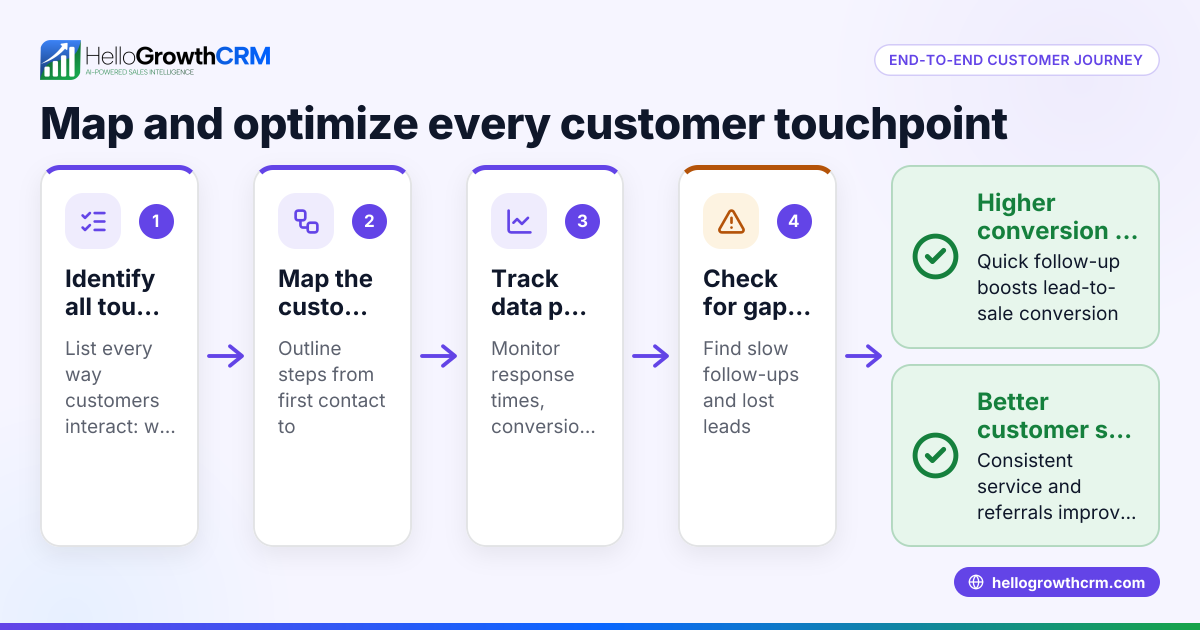
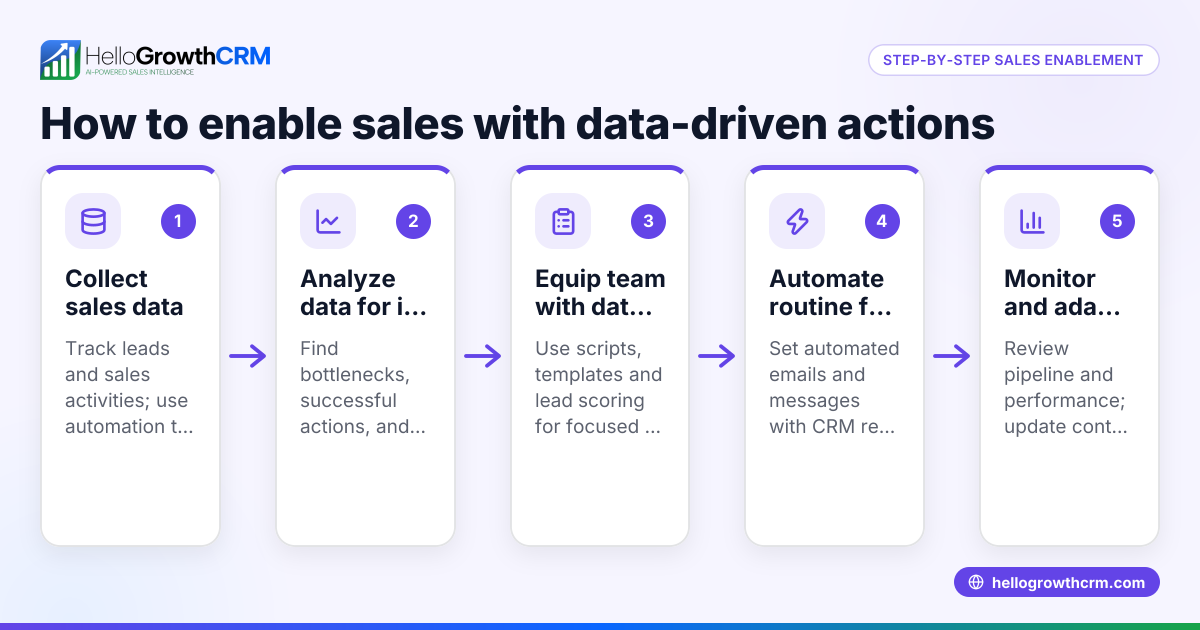
- Collect customer interaction data: Gather data from all communication channels including website forms, phone calls, WhatsApp, SMS, and emails. Check that the data is accurate, complete, and updated regularly.
- Map key journey stages: Define the main stages your customers go through, such as Awareness, Consideration, Purchase, and After-Sale Service. Confirm that these stages reflect real customer actions.
- Analyze customer behavior at each stage: Use your data to identify where customers drop off, slow down, or convert. Check metrics like response times, engagement rates, and conversion percentages.
- Identify bottlenecks and opportunities: Look for stages with low engagement or high drop-off rates. Verify if follow-up is timely and personalized enough to keep customers moving forward.
- Implement improvements: Based on your analysis, adjust marketing messages, speed up follow-up, or improve service quality to address the identified issues.
- Monitor and refine continuously: Regularly review updated data to track changes and adapt your customer journey map to evolving customer behavior.
Throughout this process, ensure that your data handling complies with privacy and security standards.
Example (fictional figures)
Consider a plumbing company in Austin, Texas, tracking its customer journey from initial inquiry to completed job and follow-up service on 04/01/2026.
- They receive 1,200 website form leads.
- 960 of these leads respond to a WhatsApp message within 24 hours.
- 720 schedule a service call.
- 600 complete the job.
- 480 provide feedback via the customer portal.
Calculations:
Lead response rate = (960 ÷ 1,200) × 100 = 80% Service scheduling rate = (720 ÷ 960) × 100 = 75% Job completion rate = (600 ÷ 720) × 100 = 83.33% Feedback rate = (480 ÷ 600) × 100 = 80%
This data shows strong initial engagement but a drop from scheduling to completion, suggesting the company should improve job fulfillment processes to reduce cancellations or no-shows.
Common mistakes
- Ignoring data from some channels: Prevent this by integrating all communication channels, including WhatsApp and SMS, to get a complete view. See how WhatsApp and SMS CRM can help.
- Not updating the journey map regularly: Prevent this by scheduling monthly reviews of customer data to keep the journey accurate.
- Overlooking after-sale service data: Prevent this by including service requests and support tickets on the same customer record, as HelloGrowthCRM supports through its customer portal and tickets.
- Relying on gut feeling instead of data: Prevent this by trusting metrics and customer behavior over assumptions.
- Failing to ensure data privacy and security: Prevent this by using systems compliant with regulations and supporting data residency needs.
Doing this in HelloGrowthCRM
HelloGrowthCRM helps you manage a data driven customer journey by keeping all customer interactions and service requests linked on the same record. After the sale, service tickets stay connected to the deal, giving your team full context for better service. HelloGrowthCRM has completed a SOC 2 Type II examination and supports CCPA data-subject rights. Learn more about these features and compliance at HelloGrowthCRM for the United States.
Frequently asked questions
What is a data driven customer journey? It is a detailed map of the steps a customer takes with your business, created using real data from their interactions. This helps identify what drives sales and where customers drop off.
Why is a data driven customer journey important for small businesses? Small businesses often lose leads due to slow follow-up or disconnected data. A data driven journey helps prioritize actions that improve conversion rates and customer satisfaction.
How do I start creating a data driven customer journey? Start by collecting data from all customer touchpoints. Then map key stages and analyze where customers engage or drop off. Use these insights to adjust your sales and service processes.
Can HelloGrowthCRM help manage my customer journey? Yes. It keeps all customer data, including sales and after-sale service tickets, in one place. It supports communication via WhatsApp, SMS, and email, helping you track and follow up efficiently.
How do I ensure my customer data is secure? Use a CRM like HelloGrowthCRM that complies with security standards and offers options for data residency, protecting your customers’ information.
Key takeaways
- A data driven customer journey maps real customer interactions to improve sales and service.
- Collect data from all channels, including WhatsApp and SMS, for a complete picture.
- Analyze each stage to find and fix bottlenecks in sales and service.
- Keep after-sale service requests linked to customer records for better support.
- Regularly update your journey map based on fresh data.
- Use secure, compliant CRM tools to protect customer data.
Start improving your sales and service by mapping your data driven customer journey today. Start on the Free Forever plan (200 leads, no credit card).
Ready to put this into practice?
Set up your pipeline, WhatsApp follow-ups, and AI lead scoring in minutes — free, no credit card.
Try HelloGrowthCRM freeGet CRM tips in your inbox
Join thousands of sales professionals who get weekly insights on CRM strategy, AI automation, and pipeline optimization.

The HelloGrowthCRM team publishes guides on CRM strategy, AI sales tools, and revenue operations for small business sales teams.