HelloGrowthCRM software
Built for real small-business sales teams
HelloGrowthCRM helps reps qualify faster, follow up on time, and close more deals—with practical automation in one place.
- AI lead scoring and pipeline visibility
- Built-in dialer, WhatsApp, and email automation
- Sales forecasting and RevOps-ready reporting
A dead lead is a potential customer who once showed interest but has since stopped responding to calls, emails, or messages. They no longer engage with your sales efforts, making it unlikely they will convert without renewed effort. Understanding dead leads helps you focus your time on active prospects while deciding whether to re-engage or archive non-responsive ones.
Why this comes up / what goes wrong
Small-business owners often face dead leads because of slow follow-up, inconsistent communication, or lack of organized lead tracking. For example, if you rely on notes, spreadsheets, or scattered text messages, it’s easy to lose track of when you last contacted a lead or what their status is. This can cause leads to go cold and eventually become dead because they feel neglected or lose interest.
Dead leads also arise when prospects are not qualified properly or when their needs change. Without a clear system to prioritize and nurture leads, your sales team may waste time on leads that are unlikely to convert, reducing overall efficiency and revenue.
Step-by-step
- Identify dead leads: Check your lead list for prospects who have not responded after multiple contact attempts over a reasonable period (e.g., 30 days). Make sure to review all communication channels including email, WhatsApp, SMS, and phone calls.
- Review lead history: Look at past interactions to confirm if the lead ever showed genuine interest or if they were unqualified from the start. Check notes, call logs, and messages to understand the context.
- Attempt re-engagement: Send a final follow-up message or call to see if the prospect’s situation has changed. Use a clear, polite message acknowledging their silence and offering help or information.
- Decide next steps: If there is still no response, mark the lead as dead or archive it. This keeps your pipeline clean and focused on active leads.
- Analyze causes: Review why the lead went dead—was it slow follow-up, wrong targeting, or lack of value proposition? Use this insight to improve your lead qualification and follow-up process.
- Set reminders for future check-ins: Sometimes leads come back after months. Schedule periodic reviews or automated reminders to revisit dead leads later.
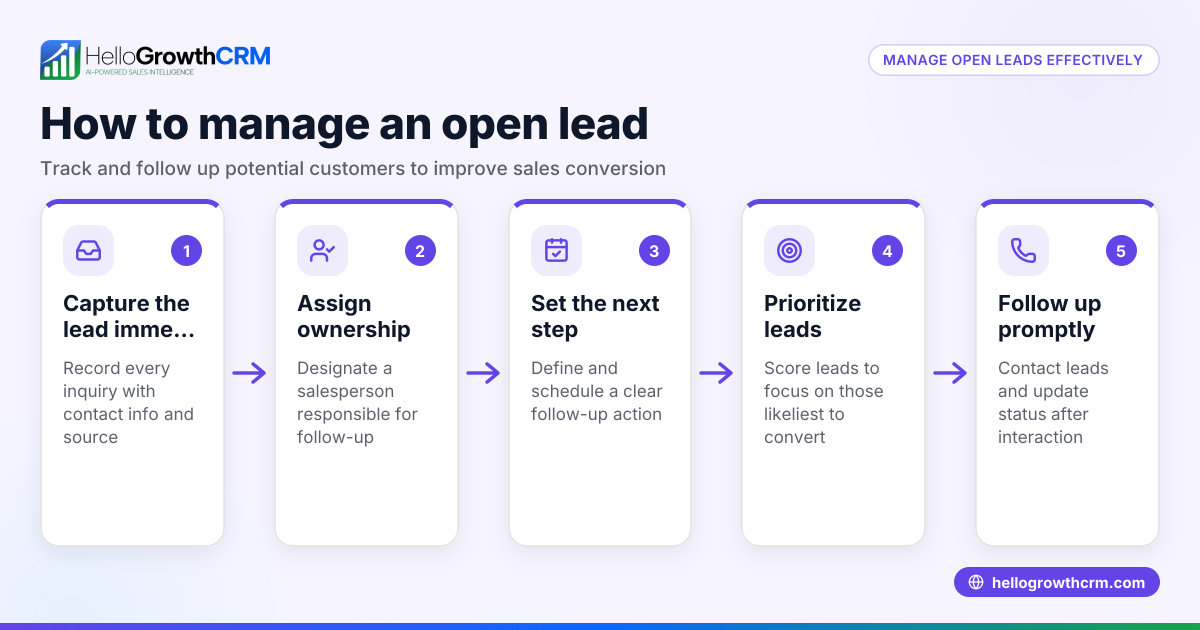
- Keep your CRM updated: Record every action and status change in your CRM to maintain clear visibility and avoid losing leads in spreadsheets or notes.
Example (fictional figures)
A two-location dental practice in Columbus, Ohio, had 200 new leads in January 2026. They followed up with all leads but did not track responses well.
- 200 total leads
- 150 responded initially
- 50 did not respond after 3 contact attempts
- Follow-up period: 30 days
They identified the 50 non-responding leads as dead leads.
They sent a final re-engagement email to these 50 leads:
- 5 responded positively and booked appointments
- 45 remained unresponsive
Calculation:
Dead leads after re-engagement = 50 - 5 = 45
By archiving the 45 dead leads, they focused on the 155 active leads, improving follow-up efficiency and appointment rates.
Common mistakes
- Ignoring dead leads completely: Don’t just delete them; attempt re-engagement or archive with notes to revisit later.
- Not tracking communication properly: Prevent this by using a CRM that records every contact attempt and lead status.
- Following up too infrequently or too late: Set timely reminders to contact leads early before they go cold.
- Failing to qualify leads before follow-up: Use lead scoring to prioritize leads likely to convert, avoiding wasted effort.
- Mixing dead leads with active leads in your pipeline: Keep your sales pipeline clean by segmenting and archiving dead leads.
- Relying on a single communication channel: Use multiple channels like WhatsApp, SMS, email, and calls to increase chances of engagement.
Doing this in HelloGrowthCRM
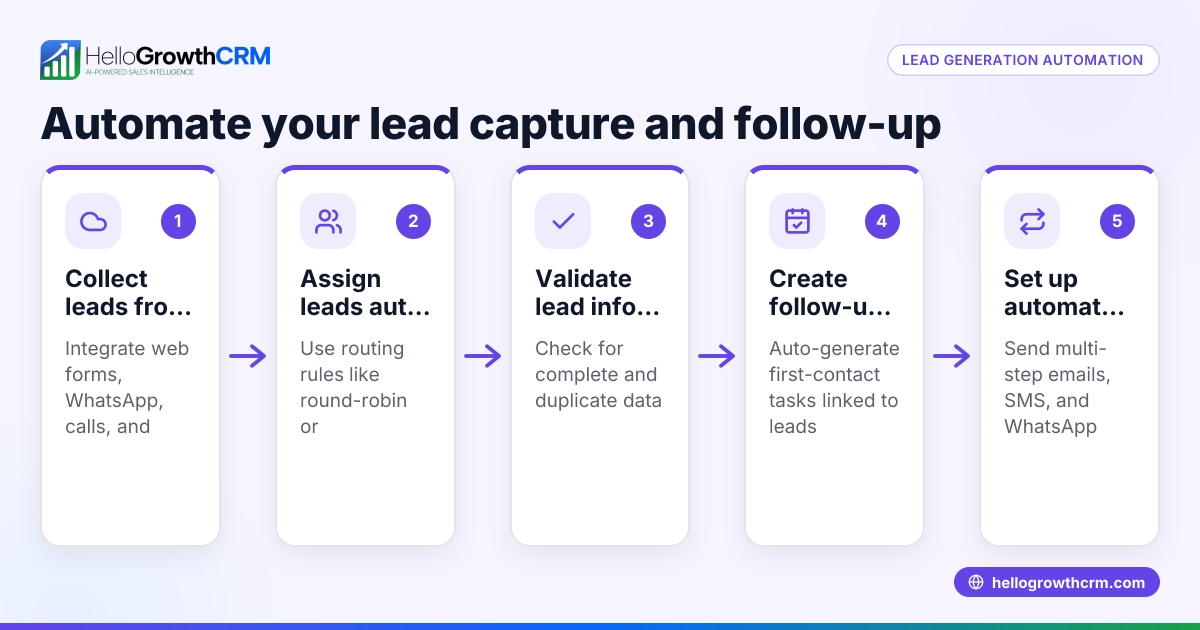
HelloGrowthCRM helps you manage leads efficiently so fewer become dead. Every inquiry from a form, call, or WhatsApp lands as a lead with an owner and a next step, instead of being lost in a notebook. AI lead scoring prioritizes reps to call leads most likely to convert first. Automated workflows, lead routing, and validation rules assign new leads round-robin and create first-call tasks automatically, ensuring timely follow-up. Learn more about AI lead scoring and WhatsApp and SMS CRM. See how HelloGrowthCRM supports US businesses at HelloGrowthCRM for the United States.
Frequently asked questions
What exactly is a dead lead? A dead lead is a prospect who has stopped responding to your outreach and shows no current interest in buying. They are unlikely to convert without renewed effort.
How long should I wait before marking a lead as dead? Typically, if a lead has not responded after multiple contact attempts over 30 days, it can be considered dead. However, this depends on your sales cycle and industry.
Can dead leads be revived? Sometimes yes. A final re-engagement message or call can reignite interest. Scheduling periodic reviews helps catch leads whose situation changes.
Why do leads become dead? Common reasons include slow follow-up, poor lead qualification, lack of organized tracking, or changes in the prospect’s needs.
How can I avoid dead leads? Use a CRM to track every lead and follow-up, prioritize leads with AI lead scoring, and automate workflows to ensure timely contact.
Key takeaways
- A dead lead is a non-responsive prospect unlikely to convert without renewed effort.
- Identify dead leads by reviewing response history and communication attempts.
- Attempt a final re-engagement before archiving to keep your pipeline clean.
- Avoid common mistakes like poor tracking, slow follow-up, and mixing dead leads with active ones.
- Use HelloGrowthCRM’s lead capture, AI lead scoring, and workflows to reduce dead leads and improve follow-up.
Start managing your leads better today. Start on the Free Forever plan (200 leads, no credit card).
Ready to put this into practice?
Set up your pipeline, WhatsApp follow-ups, and AI lead scoring in minutes — free, no credit card.
Try HelloGrowthCRM freeGet CRM tips in your inbox
Join thousands of sales professionals who get weekly insights on CRM strategy, AI automation, and pipeline optimization.

The HelloGrowthCRM team publishes guides on CRM strategy, AI sales tools, and revenue operations for small business sales teams.