HelloGrowthCRM software
Built for real small-business sales teams
HelloGrowthCRM helps reps qualify faster, follow up on time, and close more deals—with practical automation in one place.
- AI lead scoring and pipeline visibility
- Built-in dialer, WhatsApp, and email automation
- Sales forecasting and RevOps-ready reporting
Drip marketing examples are automated workflows that send scheduled messages to prospects or customers over time. These messages guide leads through the sales funnel by providing timely information or calls to action. Typical drip campaigns include a welcome email series for new subscribers, follow-up sequences after demos, and reminders for abandoned shopping carts. They use channels like email, SMS, and WhatsApp, sending messages at set intervals until the lead responds or converts.
Why this comes up / what goes wrong
Small business owners often struggle to maintain consistent follow-up with leads because they rely on manual outreach via texts, emails, or spreadsheets. This approach is slow, error-prone, and leads to missed sales opportunities when prospects lose interest or forget about the business. Without a clear drip marketing plan, leads can fall through the cracks due to inconsistent timing or lack of personalization. Understanding drip marketing examples helps owners visualize practical ways to automate follow-up, keep prospects engaged, and improve conversion rates with less effort.
Step-by-step
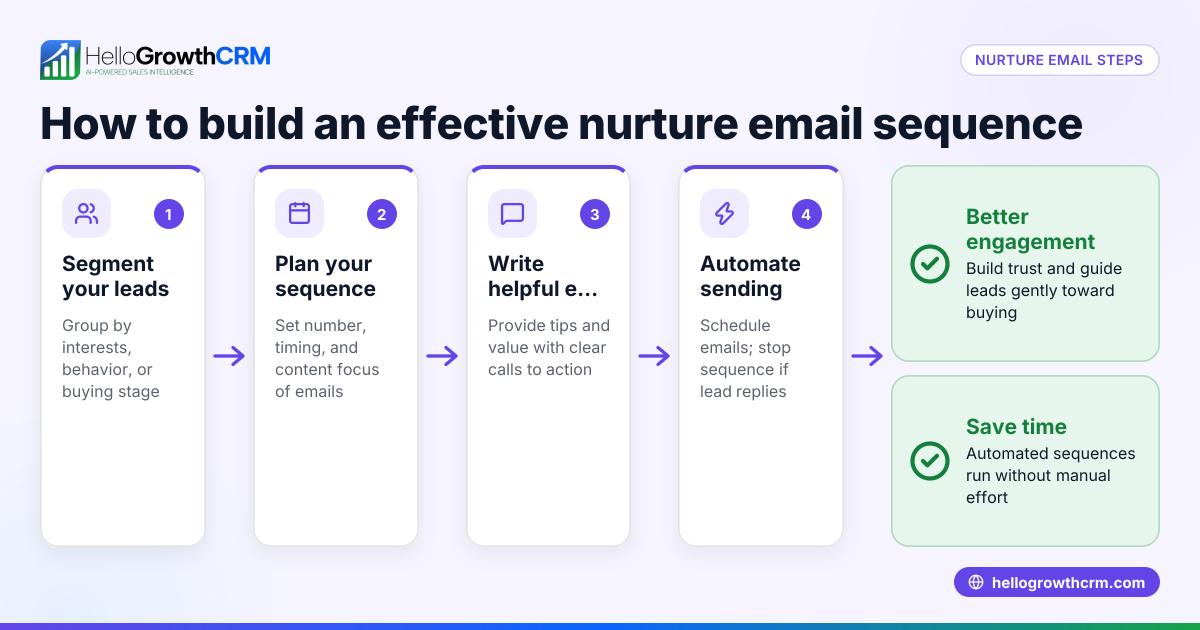
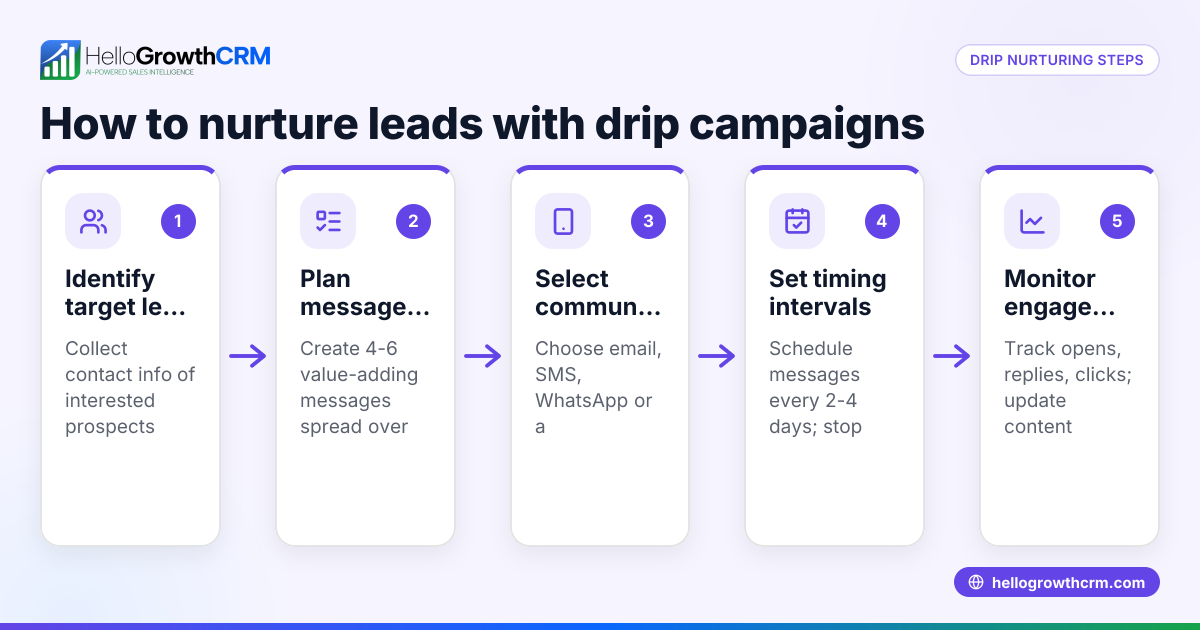
- Define your goal: Decide what you want your drip campaign to achieve, such as welcoming new leads, following up after a product demo, or re-engaging inactive customers.
- Segment your audience: Group contacts by their stage in the sales process or interests to tailor your messages effectively.
- Craft your messages: Write concise, clear messages for each step—for example, an introduction, a benefit highlight, a testimonial, and a call to action.
- Set the schedule: Determine the timing between messages, like sending the first message immediately, then follow-ups after 3, 7, and 14 days.
- Establish triggers to stop: Configure your campaign so it stops automatically when the prospect replies or completes the desired action.
- Test the sequence: Send test messages to yourself or your team to verify message flow, links, and timing.
- Launch and monitor: Start the campaign and track key metrics like opens, replies, and conversions to refine your approach.
Using tools with multi-channel capabilities such as email, SMS, and WhatsApp can improve reach. For example, explore email automation and sequences to simplify setup and management.
Example (fictional figures)
A residential real estate team in Phoenix, Arizona, wants to nurture new leads who inquire about homes.
They plan a 5-step drip campaign over 14 days:
- Day 0: Welcome message with a link to listings
- Day 3: Highlight a featured property
- Day 7: Share a client testimonial
- Day 10: Offer a free home valuation
- Day 14: Invite the lead to schedule a call
Assuming 100 new leads enter the sequence monthly and the drip campaign improves conversion from 5% to 10%:
100 leads × 10% conversion = 10 sales
Average commission per sale = $5,000
Total commission = 10 × $5,000 = $50,000
Without drip marketing:
100 leads × 5% conversion = 5 sales
Commission = 5 × $5,000 = $25,000
Additional revenue due to drip marketing = $50,000 - $25,000 = $25,000
Common mistakes
- Sending messages too frequently: Bombarding prospects can annoy them. Prevent this by spacing messages 2-3 days apart.
- Using generic content: Non-personalized messages lower engagement. Use segmentation and personalization tokens.
- Ignoring prospect replies: Continuing to send messages after a reply causes confusion. Set sequences to stop automatically upon response.
- Failing to test sequences: Errors in links or timing waste opportunities. Always test before launching.
- Limiting to one channel: Relying on email only can miss prospects who prefer SMS or WhatsApp. Use multi-channel tools like those described in WhatsApp and SMS CRM.
Doing this in HelloGrowthCRM
HelloGrowthCRM provides sequences and campaigns that automate multi-step outreach workflows across email, SMS, and WhatsApp. You can set up a five-step follow-up over two weeks that runs automatically and stops the moment the prospect replies. This automation ensures consistent, timely follow-up without manual effort. Learn more at email automation and sequences.
Frequently asked questions
What is drip marketing? Drip marketing is an automated communication strategy that sends scheduled messages to leads or customers over time to nurture relationships and encourage action.
How often should I send drip messages? Messages are commonly spaced 2-4 days apart to keep prospects engaged without overwhelming them. The ideal schedule depends on your sales cycle length.
Which channels work best for drip marketing? Email is widely used, but adding SMS and WhatsApp can improve reach and response rates, especially for small businesses using personal communication.
Can I stop a drip campaign if a prospect replies? Yes, effective drip marketing tools automatically stop sequences when a prospect responds to avoid redundant messages.
How do I measure drip marketing success? Track open rates, reply rates, and conversions from your sequences. Use this data to adjust timing and content for better results.
Is it hard to set up drip campaigns? With tools offering pre-built sequences and easy scheduling, setting up drip campaigns is straightforward even without technical skills. Testing and monitoring help ensure smooth operation.
Key takeaways
- Drip marketing uses automated sequences to nurture leads with timed messages.
- Clear goals and audience segmentation improve campaign effectiveness.
- Space messages appropriately and personalize content to avoid spamming.
- Stop sequences immediately upon prospect reply to maintain good communication.
- Use multi-channel automation including email, SMS, and WhatsApp for better reach.
- Test sequences before launching to catch errors and optimize timing.
Start automating your follow-up and lead nurturing today. Start on the Free Forever plan (200 leads, no credit card) to try sequences and campaigns that simplify drip marketing.
Ready to put this into practice?
Set up your pipeline, WhatsApp follow-ups, and AI lead scoring in minutes — free, no credit card.
Try HelloGrowthCRM freeGet CRM tips in your inbox
Join thousands of sales professionals who get weekly insights on CRM strategy, AI automation, and pipeline optimization.

The HelloGrowthCRM team publishes guides on CRM strategy, AI sales tools, and revenue operations for small business sales teams.