HelloGrowthCRM software
Built for real small-business sales teams
HelloGrowthCRM helps reps qualify faster, follow up on time, and close more deals—with practical automation in one place.
- AI lead scoring and pipeline visibility
- Built-in dialer, WhatsApp, and email automation
- Sales forecasting and RevOps-ready reporting
An ecommerce buyer persona is a semi-fictional representation of your ideal customer built from market research and actual customer data. The customer journey maps the path this persona takes from initial awareness through purchase and post-purchase stages. Understanding both helps ecommerce businesses tailor marketing, sales, and support efforts effectively.
Why this comes up / what goes wrong
US ecommerce business owners and accountants often face challenges like slow sales growth, poor customer retention, or lost leads because they lack clear, detailed buyer personas and mapped customer journeys. Managing sales through text messages, email, and spreadsheets can lead to disorganized data and missed follow-ups. Without defined personas and journey maps, marketing messages may miss their target, and customers may drop out due to confusing or incomplete experiences.
Step-by-step
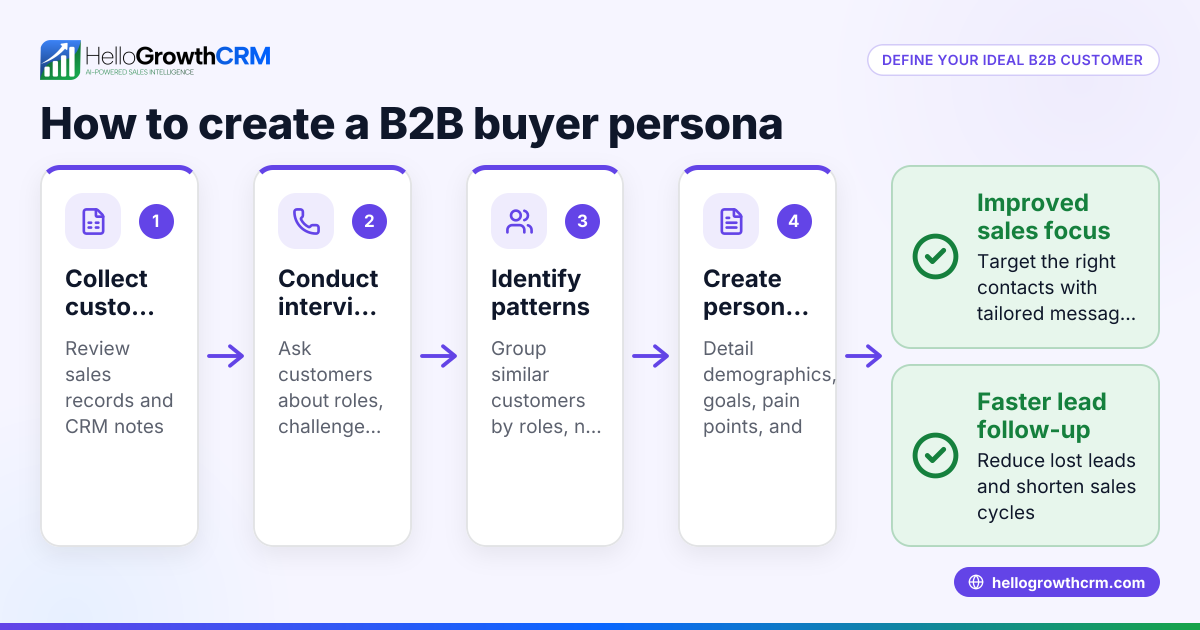
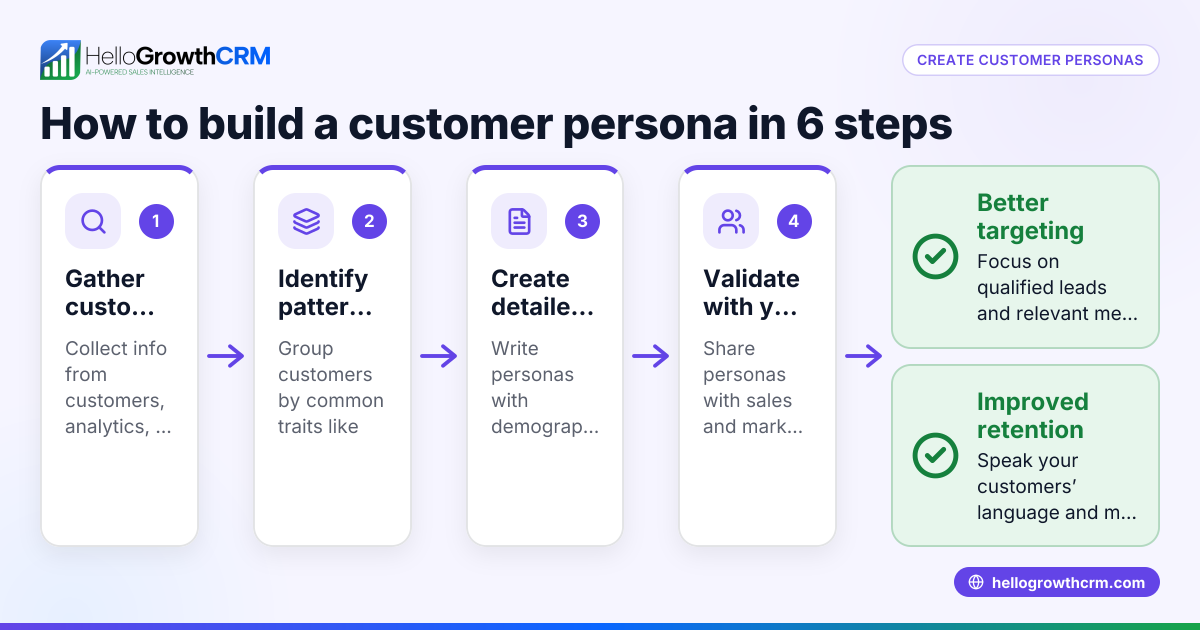
- Gather customer data: Collect quantitative data such as age, location, purchase history, and qualitative data like customer feedback and motivations from your ecommerce platform, surveys, and social media.
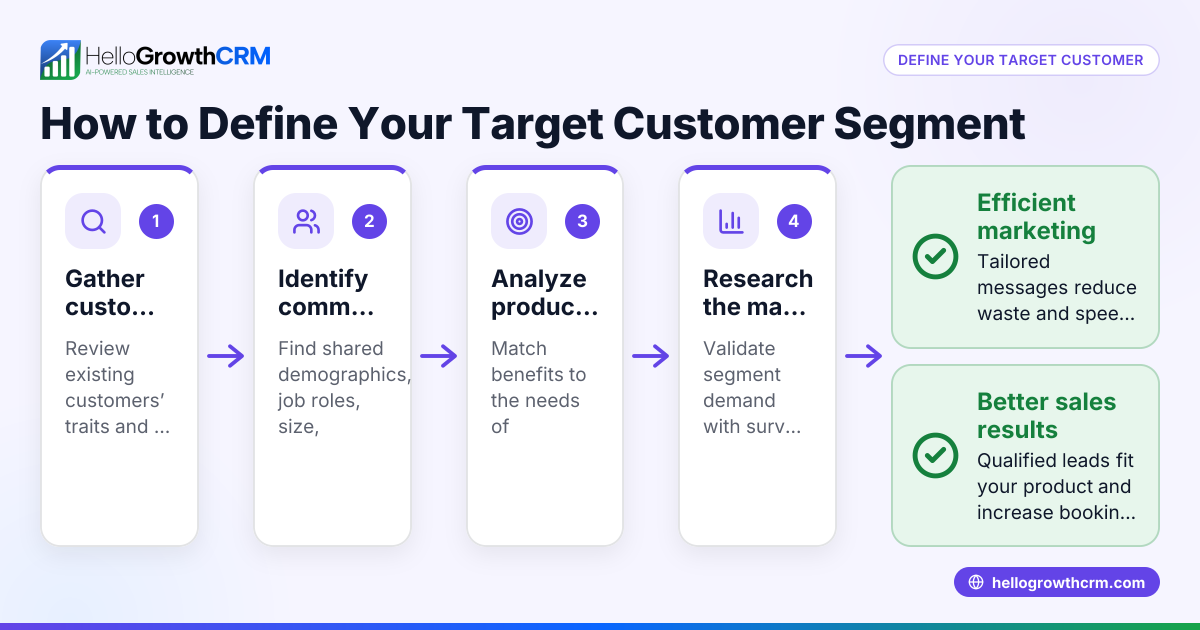
- Identify buyer segments: Group customers by shared traits such as demographics, shopping habits, or product preferences.
- Create detailed buyer personas: For each segment, develop a persona including name, age, occupation, goals, challenges, preferred communication channels, and buying triggers.
- Map the customer journey stages: Define phases such as Awareness, Consideration, Purchase, Retention, and Advocacy.
- List customer actions and touchpoints for each stage: For example, Awareness may include seeing ads or reading reviews; Purchase includes adding items to cart and checkout.
- Identify pain points and opportunities: Note where customers drop off or experience frustration and where you can improve engagement.
- Align marketing and sales tactics to the journey: Tailor messaging and follow-ups to each stage and persona.
- Review and update regularly: Buyer personas and journeys evolve; revisit them every 6-12 months using new data.
Check that your personas reflect actual customer diversity and that your journey maps cover all key touchpoints, including mobile and social channels like WhatsApp and SMS, which are common for ecommerce buyers. For managing these steps, consider tools like HelloGrowthCRM that support multi-channel engagement and task management.
Example (fictional figures)
Consider "Austin Outdoor Gear," an ecommerce store in Austin, Texas, selling camping equipment.
- Data shows 60% of customers are aged 25-40, mostly urban professionals.
- Two buyer segments identified: "Weekend Adventurers" and "Serious Campers."
- The Weekend Adventurer persona is "Sarah," a 32-year-old marketing manager who shops for lightweight, easy-to-use gear.
Sarah's customer journey stages and actions:
- Awareness: Sees Instagram ads and blog posts about weekend trips.
- Consideration: Reads product reviews and compares prices.
- Purchase: Adds a tent costing $350 and a sleeping bag costing $150 to cart and uses a 10% promo code.
- Retention: Receives follow-up emails with care tips.
- Advocacy: Shares photos using the gear on social media.
Calculations for Sarah's purchase:
Tent price = $350 Sleeping bag price = $150 Subtotal = $350 + $150 = $500 Promo discount = $500 × 10% = $50 Total after discount = $500 - $50 = $450
Austin Outdoor Gear uses these personas and journeys to tailor marketing and follow-ups, improving engagement and sales.
Common mistakes
- Creating generic personas: Avoid vague profiles. Use real data to make personas specific and actionable.
- Ignoring post-purchase stages: Many focus only on the sale, missing retention and advocacy opportunities. Map the full customer journey including these stages.
- Not updating personas: Customer preferences change over time; schedule regular reviews every 6-12 months.
- Overlooking mobile and messaging channels: Ecommerce buyers often use WhatsApp or SMS for questions. Integrate these channels to avoid missing leads.
- Relying solely on spreadsheets: This can cause data loss and slow follow-up. Use CRM tools to centralize information and automate tasks.
- Failing to assign clear follow-up tasks: Without task boards or reminders, leads fall through cracks. Using task boards helps keep follow-ups on schedule.
Doing this in HelloGrowthCRM
HelloGrowthCRM supports ecommerce teams by keeping customer data, service requests, and sales interactions on one record through its Customer portal, referrals, tickets, and knowledge base features. After the sale, service requests stay linked to the deal, helping with retention and support. Activities and task boards turn follow-ups into manageable tasks with due dates, so your team never misses calls or messages. WhatsApp and SMS messaging are logged directly on lead records, enabling timely, channel-appropriate engagement. For US ecommerce sellers, these tools help map and manage the customer journey efficiently. Learn more about HelloGrowthCRM for the United States and how it fits ecommerce needs at HelloGrowthCRM for the United States.
Frequently asked questions
What is the difference between a buyer persona and a customer journey? A buyer persona is a detailed profile of your ideal customer, while the customer journey maps the stages and touchpoints that persona experiences when interacting with your business. Both are needed to tailor marketing and sales effectively.
How often should I update my ecommerce buyer personas? Update your personas every 6 to 12 months or when you notice significant changes in customer behavior or market trends. This keeps your marketing relevant and effective.
Can I create multiple buyer personas for my ecommerce store? Yes, most ecommerce businesses have multiple buyer personas representing different customer segments. This helps you customize messaging and offers for each group.
How does HelloGrowthCRM help with managing customer journeys? HelloGrowthCRM logs WhatsApp and SMS conversations on lead records, uses task boards to schedule follow-ups, and keeps service tickets linked to deals, ensuring a smooth customer journey from lead capture to post-sale support. See more about its customer health score and task boards at customer health score and sales task boards.
Why is mapping the customer journey important for ecommerce? Mapping the journey identifies where customers drop off and what influences their decisions. This insight helps improve marketing strategies, reduce lost leads, and increase sales.
Key takeaways
- Define ecommerce buyer personas using real customer data and segment them clearly.
- Map the complete customer journey including post-purchase stages.
- Use task boards and messaging channels like WhatsApp and SMS to prevent lost leads.
- Regularly update personas and journeys to reflect changing customer behavior.
- Avoid managing sales and follow-ups solely with spreadsheets; use CRM tools.
- HelloGrowthCRM supports ecommerce teams by centralizing customer data, managing follow-ups, and logging multi-channel conversations.
Start optimizing your ecommerce sales process by defining your buyer personas and customer journeys with clear steps and tools. To get started easily, Start on the Free Forever plan (200 leads, no credit card).
Ready to put this into practice?
Set up your pipeline, WhatsApp follow-ups, and AI lead scoring in minutes — free, no credit card.
Try HelloGrowthCRM freeGet CRM tips in your inbox
Join thousands of sales professionals who get weekly insights on CRM strategy, AI automation, and pipeline optimization.

The HelloGrowthCRM team publishes guides on CRM strategy, AI sales tools, and revenue operations for small business sales teams.