HelloGrowthCRM software
Built for real small-business sales teams
HelloGrowthCRM helps reps qualify faster, follow up on time, and close more deals—with practical automation in one place.
- AI lead scoring and pipeline visibility
- Built-in dialer, WhatsApp, and email automation
- Sales forecasting and RevOps-ready reporting
A B2B buyer persona is a semi-fictional representation of your ideal business customer. It includes key details about the decision-makers and influencers in the companies you sell to, such as their job titles, goals, challenges, and communication preferences. This profile guides your sales and marketing teams to focus on the right prospects with messages that resonate, improving lead follow-up and conversion rates.
Why this comes up / what goes wrong
Small-business owners often face slow sales follow-up and lost leads because they don’t clearly know who they are selling to within other businesses. Without a defined B2B buyer persona, sales teams might contact the wrong people or use generic messages that fail to connect. This causes longer sales cycles, wasted effort, and missed opportunities. Creating a buyer persona clarifies your target contacts, helps tailor your outreach, and aligns your team around shared knowledge.
Step-by-step
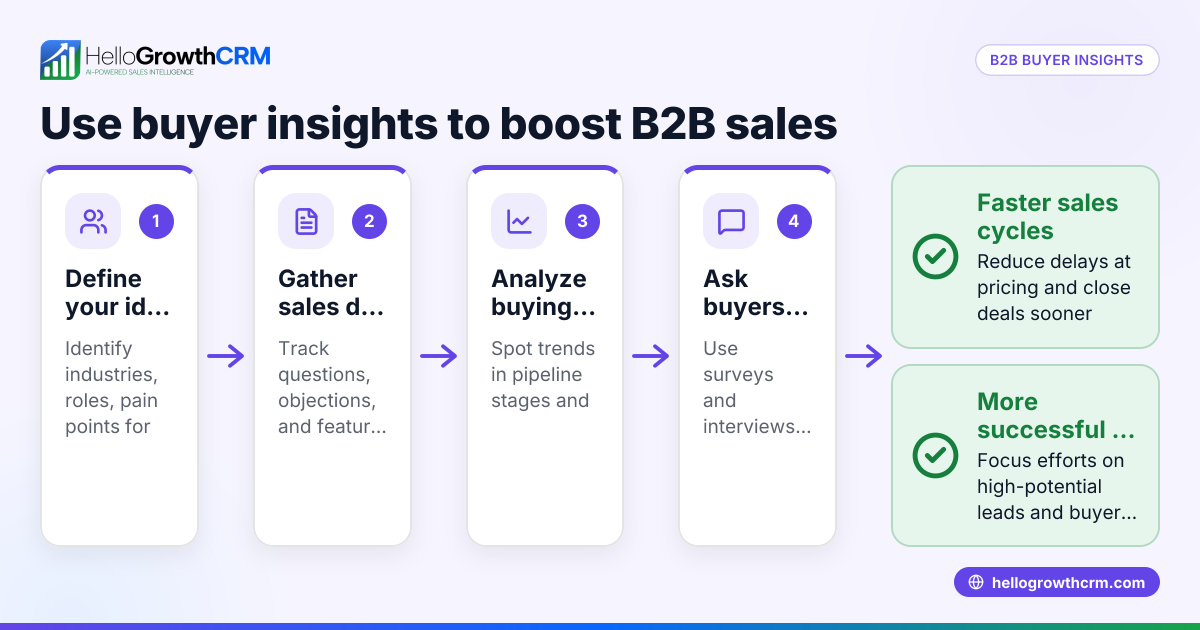
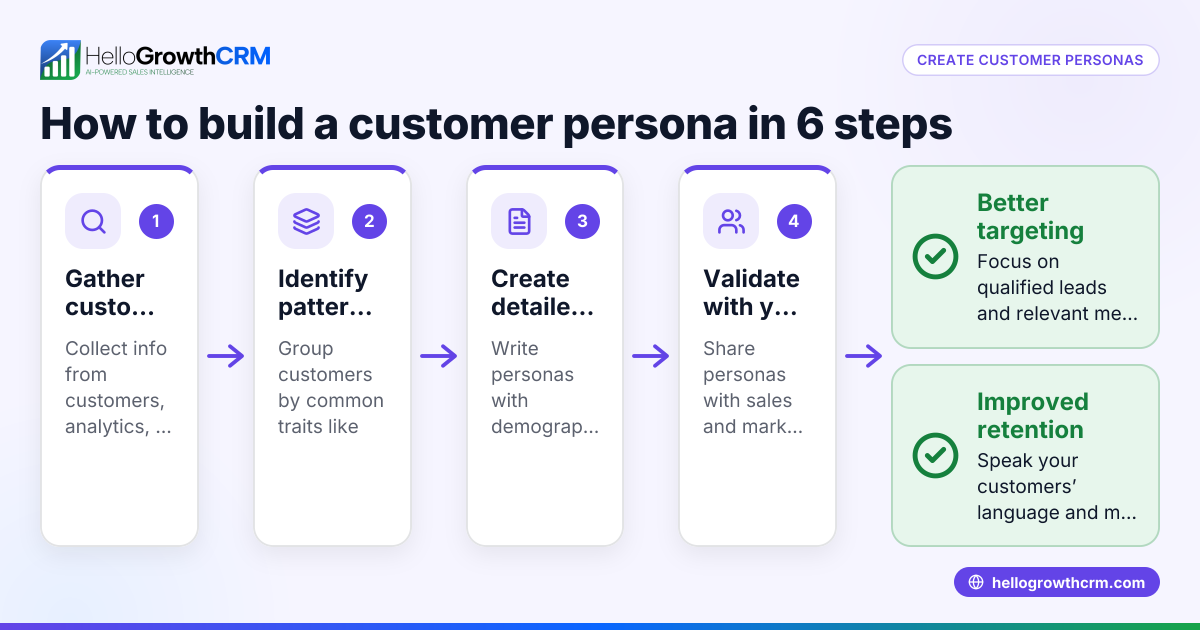
- Collect customer data: Start with your existing customers and leads. Review sales records, CRM notes, and any communication you have. Look for common attributes like company size, industry, job titles, and purchase history.
- Conduct interviews: Speak directly with current customers or prospects. Ask about their roles, responsibilities, challenges they face, and what influences their buying decisions. Understand their priorities and preferred communication channels.
- Identify patterns: Group customers with similar traits and behaviors. For example, you might discover that operations managers in mid-sized manufacturing companies prioritize cost savings and efficiency.
- Create persona profiles: Write detailed descriptions for each group. Include demographics (job title, company size), goals, pain points, buying triggers, and communication preferences.
- Validate and update: Use these personas in your sales and marketing efforts. Gather feedback from your team and customers to refine and update the personas regularly as your market changes.
- Share with your team: Ensure everyone in sales and marketing understands and uses the personas. This alignment improves messaging, lead qualification, and follow-up prioritization.
Example (fictional figures)
Consider Mike, a sales manager at a Charlotte, North Carolina landscaping company with $3,000,000 in annual revenue. Mike’s company wants a CRM to improve lead tracking and customer communication.
- Mike’s goals: Reduce lost leads and speed up response times.
- Pain points: Current system uses scattered text messages, emails, and spreadsheets causing delays.
- Buying criteria: Integration with WhatsApp and SMS, built-in dialer for calls, and AI lead scoring.
You create a B2B buyer persona named "Sales Manager Mike":
- Job title: Sales Manager
- Company size: 50 employees
- Industry: Landscaping
- Goals: Streamlined sales process, better lead management
- Challenges: Disorganized communication tools
- Preferred channels: WhatsApp, SMS, email
Using this persona, your team tailors messages that highlight how your CRM consolidates communication and automates lead prioritization.
Calculations for ROI example:
Assume Mike’s company loses 10% of leads due to slow follow-up. They currently handle 1,000 leads per year.
Leads lost = 1,000 × 10% = 100 leads
Average sale value = $5,000
Lost revenue = 100 × $5,000 = $500,000
If the CRM reduces lost leads by half (50 leads saved):
Revenue saved = 50 × $5,000 = $250,000
This shows the financial benefit of targeting the right buyer persona and improving follow-up.
Common mistakes
- Creating personas without real data: Avoid guessing. Base personas on actual customer research and interviews.
- Making personas too broad: Focus on specific roles and company types to keep messaging relevant.
- Ignoring updates: Buyer needs and markets evolve. Review and revise personas regularly.
- Not sharing personas with the team: A persona is only useful if everyone understands and uses it.
- Focusing only on demographics: Include motivations, challenges, and communication preferences for a complete picture.
Frequently asked questions
What is a persona B2B? A persona B2B is another term for a B2B buyer persona. It’s a detailed profile of your ideal business customer, focusing on their role, needs, and buying behavior to guide sales and marketing.
How do I create a B2B buyer persona? Collect data from your customers and leads, conduct interviews, identify common patterns, and write detailed profiles. Validate and update your personas regularly to keep them accurate.
Why is a B2B buyer persona important? It helps your team focus on the right contacts with tailored messages, improving lead follow-up, shortening sales cycles, and increasing conversions.
Can a small business benefit from buyer personas? Yes. Even small businesses gain clarity and efficiency by understanding who their ideal customers are and what drives their decisions.
How do buyer personas relate to CRM use? Personas help you customize your CRM workflows and communication. For example, using a WhatsApp and SMS CRM can align with your buyer’s preferred channels, improving engagement. Learn more about WhatsApp and SMS CRM and the built-in CRM dialer that support these needs.
Key takeaways
- A B2B buyer persona is a detailed profile of your ideal business customer.
- Creating personas requires collecting data, interviewing customers, and identifying patterns.
- Use personas to tailor your messaging and prioritize leads effectively.
- Avoid assumptions and update your personas regularly.
- Share personas with your sales and marketing teams to ensure alignment.
- Align your CRM tools with your buyer’s communication preferences for better engagement.
Understanding and creating a B2B buyer persona can improve your sales efficiency and lead follow-up. For a CRM designed for US businesses that supports WhatsApp, SMS, and integrated calling, explore HelloGrowthCRM for the United States.
Start on the Free Forever plan (200 leads, no credit card) to put your buyer personas into action today.
Ready to put this into practice?
Set up your pipeline, WhatsApp follow-ups, and AI lead scoring in minutes — free, no credit card.
Try HelloGrowthCRM freeGet CRM tips in your inbox
Join thousands of sales professionals who get weekly insights on CRM strategy, AI automation, and pipeline optimization.

The HelloGrowthCRM team publishes guides on CRM strategy, AI sales tools, and revenue operations for small business sales teams.