HelloGrowthCRM software
Built for real small-business sales teams
HelloGrowthCRM helps reps qualify faster, follow up on time, and close more deals—with practical automation in one place.
- AI lead scoring and pipeline visibility
- Built-in dialer, WhatsApp, and email automation
- Sales forecasting and RevOps-ready reporting
A target customer segment is a clearly defined group of potential customers your business focuses on serving. These customers share common traits such as age, location, buying behavior, or specific needs. Defining your target customer segment helps you tailor your products, marketing, and sales efforts to the right audience, saving time and resources.
Why this comes up / what goes wrong
Many small business owners try to sell to everyone or a vague audience. This often leads to wasted marketing spend, slow sales follow-up, and lost leads because the messaging or sales process doesn’t resonate. Without a clear target segment, your sales team may chase unqualified leads, and your offers may not solve the right problems. This causes confusion internally and frustrates potential customers, reducing sales effectiveness.
Step-by-step
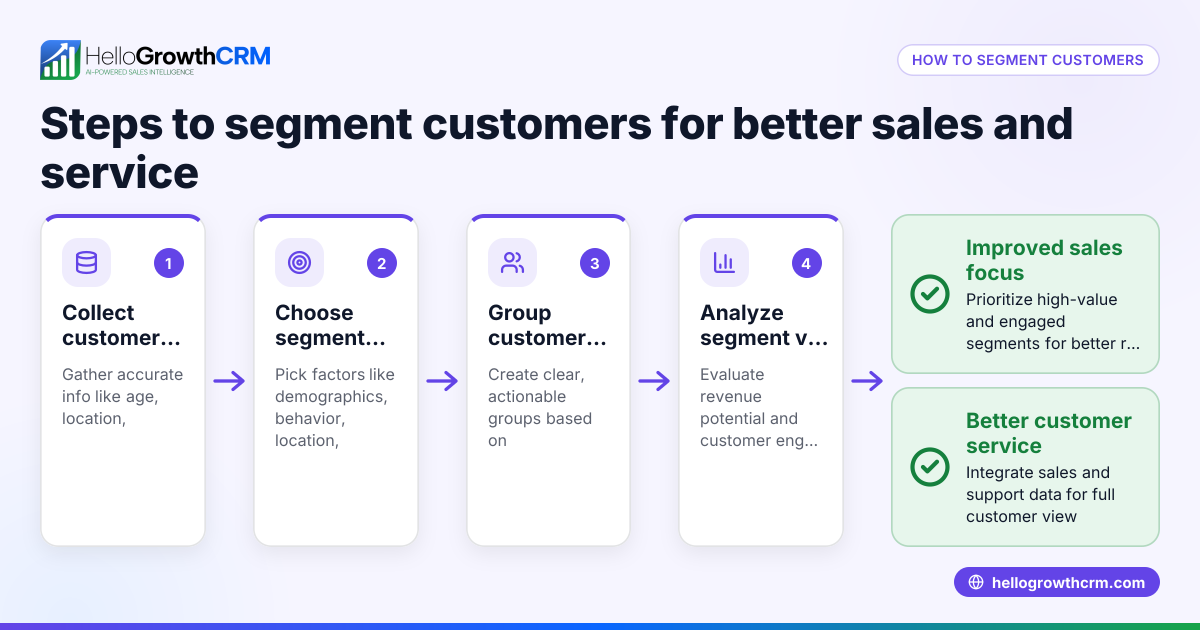
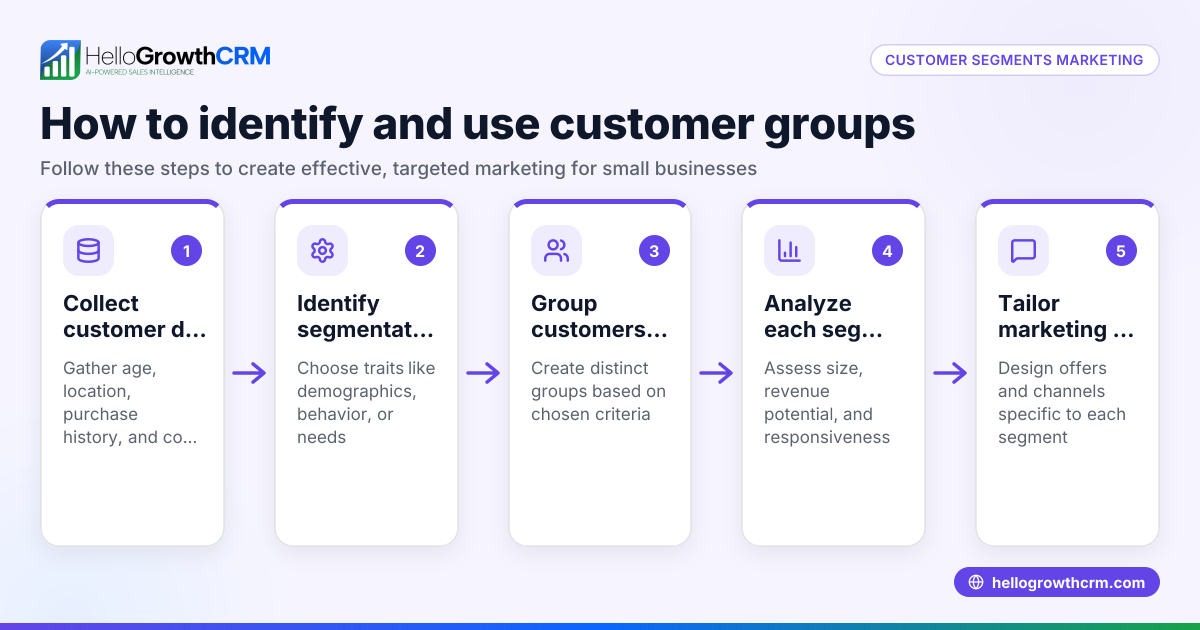
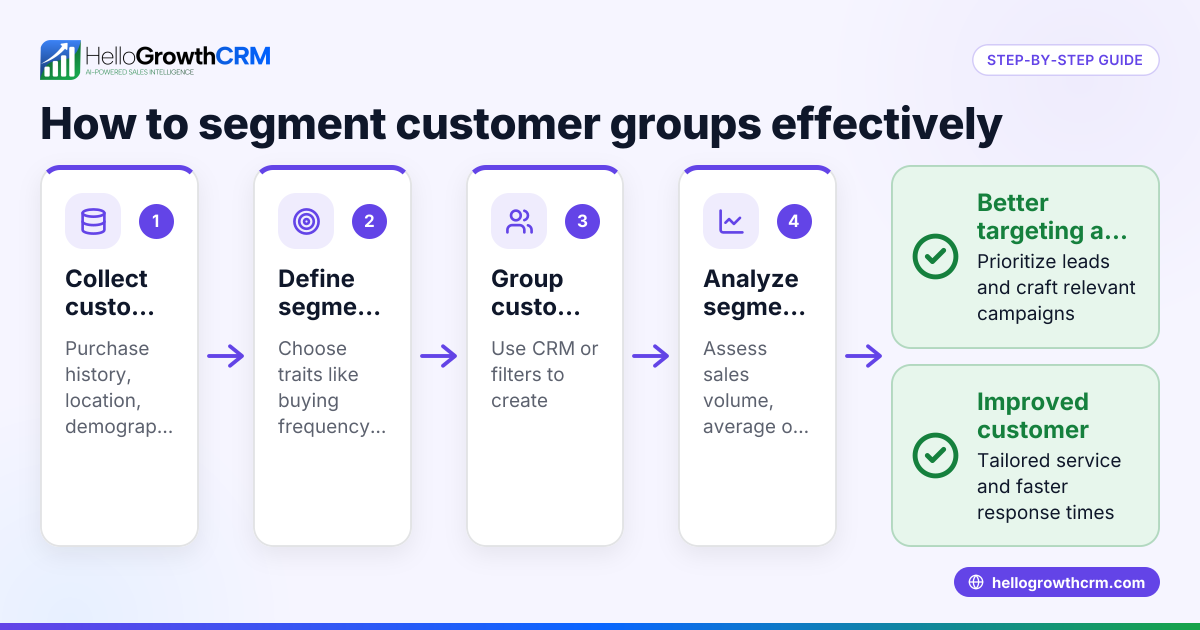
- Gather existing customer data: Review your current customers to identify who buys most often or spends the most. Check demographics like age, location, income level, business size, or industry.
- Identify common characteristics: Look for shared traits such as age range, job roles, company size, or specific challenges your product solves.
- Analyze your product fit: Match your product’s benefits to customer needs. Determine which group gains the most value from what you offer.
- Research the market: Use surveys, competitor analysis, or online tools to validate demand in your chosen segment.
- Define your segment clearly: Write a profile including demographics, behaviors, and pain points.
- Test and refine: Run targeted marketing campaigns or sales outreach to this segment and track results.
- Use CRM tools to track and manage leads: Organize your leads by segment to prioritize follow-up and tailor communication.
Check your segment regularly and adjust as your business or market changes.
Example (fictional figures)
A two-location dental practice in Columbus, Ohio, wants to define its target customer segment.
- They review their current patients and find 70% are families with children aged 5-15.
- Common characteristics: Parents aged 30-45, middle-income households, living within 10 miles of either location.
- Their service offers pediatric dental care and family plans.
- They survey local families and confirm a demand for affordable pediatric dental services.
- Defined segment: Families with children aged 5-15, parents 30-45, middle income, Columbus metro area.
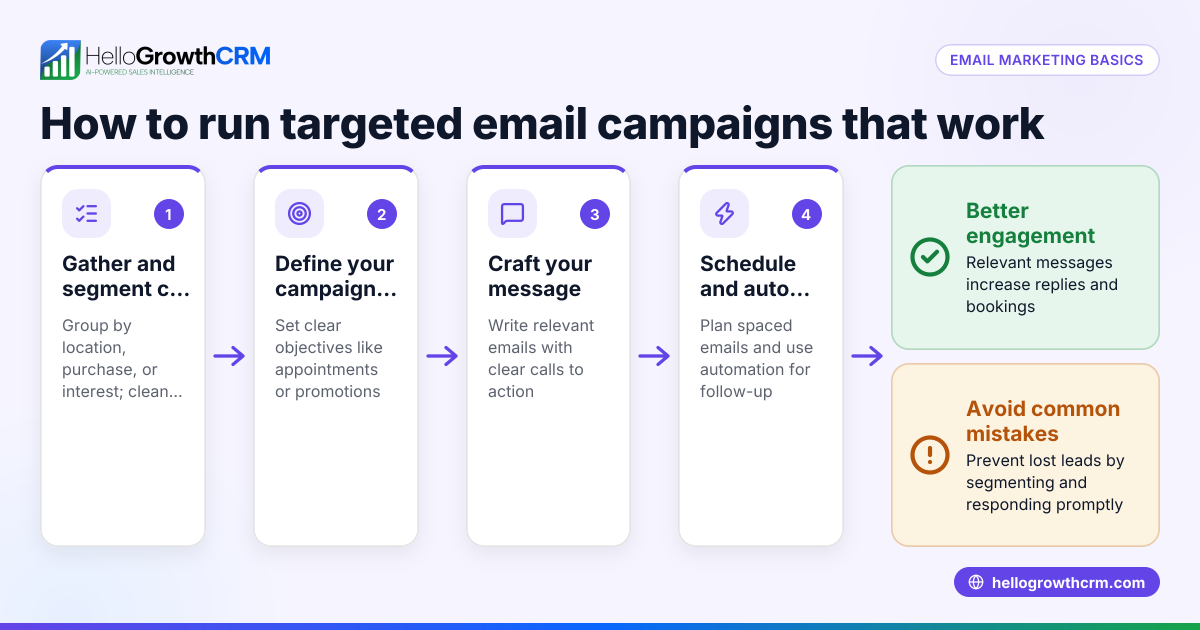
- They launch targeted Facebook ads and email campaigns aimed at this group.
- They use their CRM to tag leads fitting this profile and prioritize appointment scheduling.
The practice tracked appointment bookings before and after targeting this segment:
- Appointments before targeting: 1,200 per year
- Increase in bookings after targeting: 300 per year
- New total appointments: 1,200 + 300 = 1,500 per year
This focus helped increase bookings by 25% (300 ÷ 1,200 × 100).
Common mistakes
- Trying to serve everyone: Prevent by narrowing your focus to a specific group with shared needs.
- Ignoring data: Prevent by analyzing actual customer info, not assumptions.
- Skipping market validation: Prevent by researching demand before investing fully.
- Not updating the segment: Prevent by reviewing and refining regularly to stay relevant.
- Poor lead management: Prevent by using tools like HelloGrowthCRM to track customer interactions and segment leads effectively. See how WhatsApp and SMS CRM can help.
Doing this in HelloGrowthCRM
After defining your target customer segment, HelloGrowthCRM helps you manage customers and service requests efficiently. Its customer portal, referrals, tickets, and knowledge base keep all service requests linked to the same customer record as the deal, ensuring your team has full context. This streamlines post-sale support and keeps your customer relationships organized. Learn more about these features and how they support customer health scoring at customer health score.
Frequently asked questions
What is the difference between a target customer and a target customer segment? A target customer is an individual ideal buyer, while a target customer segment is a group of similar customers sharing key traits. Segments help tailor marketing to broader groups efficiently.
How do I know if my target customer segment is too narrow? If your segment is so small that it limits sales opportunities or growth, it may be too narrow. Test your segment size with market research and adjust to balance focus and scale.
Can my business have more than one target customer segment? Yes, many businesses serve multiple segments. Prioritize segments by potential value and tailor messaging to each. Use CRM tools to manage leads from different segments effectively.
How often should I revisit my target customer segment? Review your segments at least annually or when you notice changes in sales patterns or market conditions. This keeps your business aligned with customer needs.
How can CRM software help with managing target customer segments? CRM software organizes leads and customers by segment, tracks communication, and automates follow-ups. HelloGrowthCRM’s WhatsApp and SMS CRM features help maintain quick contact and personalized messaging. See HelloGrowthCRM for the United States for details.
Key takeaways
- A target customer segment is a specific group of customers sharing traits and needs.
- Defining your segment focuses marketing and sales to improve efficiency.
- Use data, research, and testing to define and refine your segment.
- Avoid common mistakes by narrowing focus, validating demand, and managing leads well.
- HelloGrowthCRM supports customer management after the sale with integrated service requests and customer records.
Start focusing your sales and marketing on the right customers today. To get started managing your leads and customers efficiently, Start on the Free Forever plan (200 leads, no credit card).
Ready to put this into practice?
Set up your pipeline, WhatsApp follow-ups, and AI lead scoring in minutes — free, no credit card.
Try HelloGrowthCRM freeGet CRM tips in your inbox
Join thousands of sales professionals who get weekly insights on CRM strategy, AI automation, and pipeline optimization.

The HelloGrowthCRM team publishes guides on CRM strategy, AI sales tools, and revenue operations for small business sales teams.