HelloGrowthCRM software
Built for real small-business sales teams
HelloGrowthCRM helps reps qualify faster, follow up on time, and close more deals—with practical automation in one place.
- AI lead scoring and pipeline visibility
- Built-in dialer, WhatsApp, and email automation
- Sales forecasting and RevOps-ready reporting
An email automation platform is software that sends automated, timed email sequences to prospects or customers to nurture leads and save time. This article explains why small businesses look for these platforms, the key steps to evaluate them, a practical example, common mistakes to avoid, and how HelloGrowthCRM supports email automation with features like sequences, shared inboxes, and AI agents.
Why this comes up / what goes wrong
Small business owners often struggle to keep up with timely follow-up on leads and customers. They may rely on manual emailing through personal inboxes, spreadsheets, or text messages, which leads to missed opportunities and inconsistent communication. The need for an email automation platform arises when the business grows beyond what manual outreach can handle efficiently. Owners want software that can send follow-ups automatically, segment contacts, and track responses without adding complexity or requiring a steep learning curve.
Step-by-step
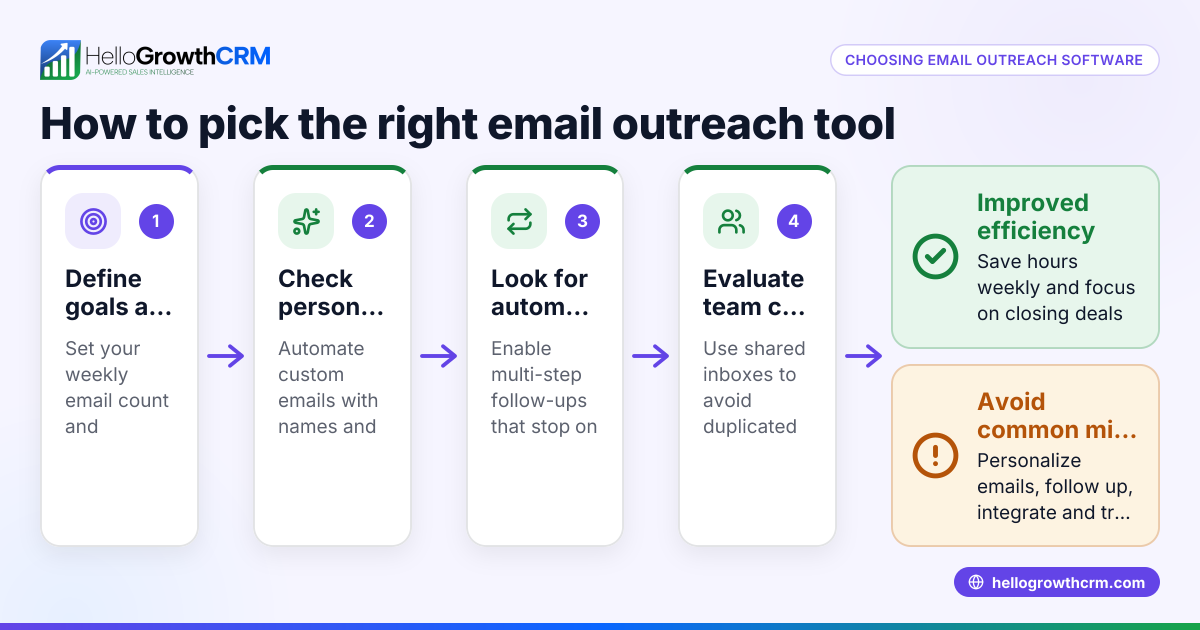
- Identify Your Email Outreach Goals
- Decide if you need simple drip campaigns, multi-channel sequences (email, SMS, WhatsApp), or broadcast campaigns.
- Check if you want automated responses that stop when a prospect replies.
- Check Integration and Lead Capture Options
- Ensure the platform can capture leads from your website forms or CRM.
- Confirm if it integrates with other tools you use, like your CRM or dialer.
- Evaluate Automation Features
- Look for multi-step sequences that run on their own over days or weeks.
- Consider if A/B testing is available to optimize messages.
- Assess Team Collaboration Tools
- Check if the platform has a shared inbox so your team can see replies and avoid duplicated efforts.
- Review AI Assistance
- See if AI can draft follow-up messages or update records to reduce manual work.
- Consider Usability and Support
- The platform should be easy to use for your sales team without heavy training.
- Look for good customer support and documentation.
- Compare Pricing and Plans
- Understand what features come with each plan and any limits on contacts or sequences.
- Test with a Trial or Free Plan
- Try the platform with your actual leads to see how well it fits your workflow.
Example (fictional figures)
A residential real-estate team in Phoenix, Arizona, wants to automate email follow-up to new leads from their website.
- They receive 100 new leads per month.
- Each lead requires 5 follow-up emails over two weeks.
- Without automation, a salesperson spends 3 minutes per email manually.
Manual time spent per lead: 100 leads × 5 emails × 3 minutes = 1,500 minutes = 25 hours monthly
If the salesperson earns $25/hour: 25 hours × $25/hour = $625 monthly in labor cost
With an email automation platform that runs sequences automatically, the salesperson saves 25 hours monthly, freeing time for calls and closing deals. The platform stops sending follow-ups when the lead replies, preventing unnecessary emails.
Common mistakes
- Not defining clear goals before choosing a platform: Prevent by listing your must-have features and outreach targets first.
- Ignoring multi-channel capabilities: Many platforms now support SMS and WhatsApp sequences; consider these to increase reach.
- Overlooking team collaboration features: Without a shared inbox, teams risk duplicated replies or lost messages. Choose platforms with shared inboxes.
- Failing to test automation workflows before going live: Run sequences on a test list to catch errors and timing issues.
- Choosing complexity over usability: A complicated platform can reduce adoption. Pick one your team will actually use.
- Skipping AI features that save time: AI agents that draft messages can reduce repetitive tasks and speed up follow-up.
Doing this in HelloGrowthCRM
HelloGrowthCRM offers Sequences and campaigns that automate multi-step follow-ups over two weeks and stop immediately when a prospect replies. Its HelloMail shared inbox lets your whole sales team see replies to quotation emails without switching apps, reducing missed responses. Additionally, AI agents (in beta) draft follow-up messages after calls so reps only review and send them, saving time on manual writing. Learn more about these features on the email automation and sequences page and the AI CRM page. HelloGrowthCRM is tailored for US businesses and growing sales teams; see details at HelloGrowthCRM for the United States.
Frequently asked questions
What is an email automation platform? An email automation platform is software that sends pre-scheduled email sequences to prospects or customers automatically. It helps businesses nurture leads without manual effort, improving follow-up speed and consistency.
How does email automation improve sales follow-up? Automation ensures timely, repeated contact with leads, increasing chances of engagement. It frees sales reps from manual emailing so they can focus on calls and closing deals.
Can I use email automation with other channels? Yes, many platforms, including HelloGrowthCRM, support multi-channel sequences that include SMS and WhatsApp, expanding your outreach options.
What should I look for in an email automation platform for a small business? Look for ease of use, multi-step sequences, shared inbox features for team collaboration, and AI assistance to draft messages. Also, verify integration with your existing tools.
Is AI useful in email automation? AI can draft follow-up emails based on previous calls or interactions, saving time and ensuring personalized messaging without extra manual work.
Key takeaways
- An email automation platform sends timed, multi-step email sequences that stop when prospects reply.
- Clear goals and understanding your outreach needs are essential before choosing a platform.
- Multi-channel support and team collaboration features like shared inboxes improve follow-up efficiency.
- Testing workflows and choosing user-friendly platforms increase adoption and results.
- AI drafting agents can reduce manual work and speed up sales communication.
- HelloGrowthCRM offers these capabilities tailored for small and mid-sized US businesses.
Start automating your email follow-up and improve your sales process. Start on the Free Forever plan (200 leads, no credit card).
Ready to put this into practice?
Set up your pipeline, WhatsApp follow-ups, and AI lead scoring in minutes — free, no credit card.
Try HelloGrowthCRM freeGet CRM tips in your inbox
Join thousands of sales professionals who get weekly insights on CRM strategy, AI automation, and pipeline optimization.

The HelloGrowthCRM team publishes guides on CRM strategy, AI sales tools, and revenue operations for small business sales teams.