HelloGrowthCRM software
Built for real small-business sales teams
HelloGrowthCRM helps reps qualify faster, follow up on time, and close more deals—with practical automation in one place.
- AI lead scoring and pipeline visibility
- Built-in dialer, WhatsApp, and email automation
- Sales forecasting and RevOps-ready reporting
Email marketing questions are common among small-business owners who want to engage leads and customers effectively without wasting time or resources. These questions usually revolve around how to create campaigns, follow up on leads, and measure success. This article explains why these questions arise, provides a clear step-by-step process for email marketing, includes a realistic example with USD figures, highlights common pitfalls, and describes how HelloGrowthCRM supports your email marketing efforts.
Why this comes up / what goes wrong
Small-business owners often struggle with email marketing because they juggle multiple roles and lack dedicated marketing resources. They ask questions like: How often should I email my leads? What should I say in follow-ups? How do I avoid annoying prospects? Without a clear process, many rely on manual emails, risking slow follow-up or inconsistent messaging. They may also lose track of replies when using personal email accounts, causing missed opportunities. These challenges lead to questions about how to organize and automate email outreach effectively.
Step-by-step
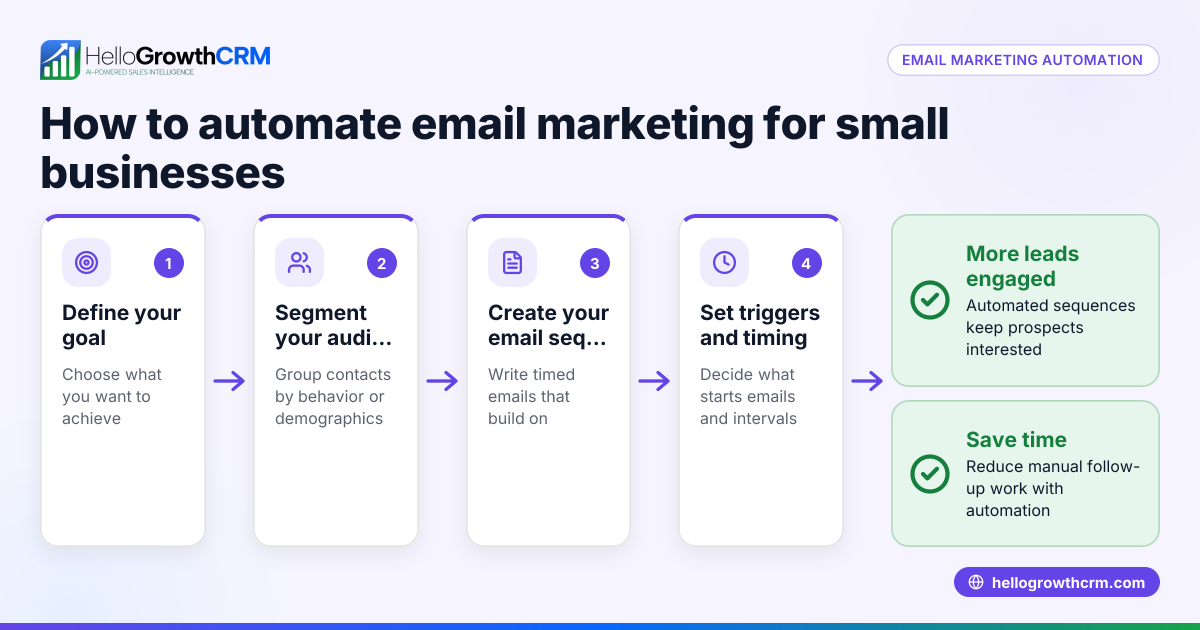
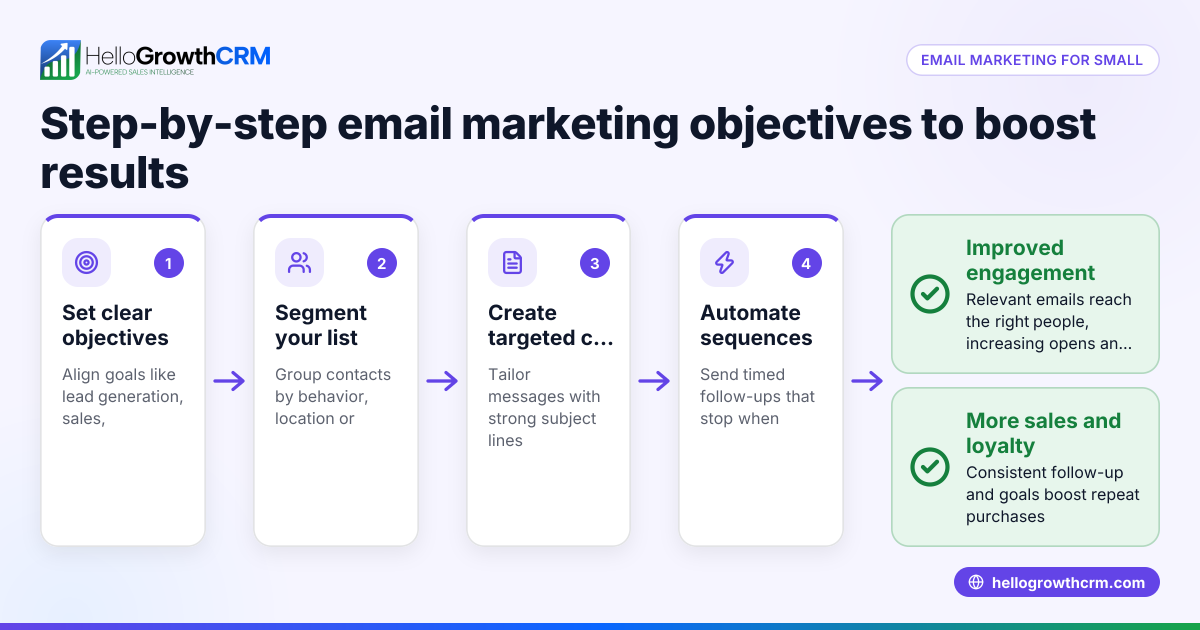
- Collect and organize your email list: Gather leads from web forms, events, or purchases. Check that emails are valid and segment your list by interest or sales funnel stage.
- Craft your email content: Write clear, concise messages tailored to your audience. Include a strong call to action and keep subject lines engaging but honest.
- Set a follow-up schedule: Plan a sequence of emails spaced over days or weeks. Ensure your system stops follow-ups immediately when a prospect replies to avoid over-contacting.
- Send emails using an automation tool: Use software that sends emails automatically and tracks opens and replies. Check that it supports shared inboxes so your team can see all replies.
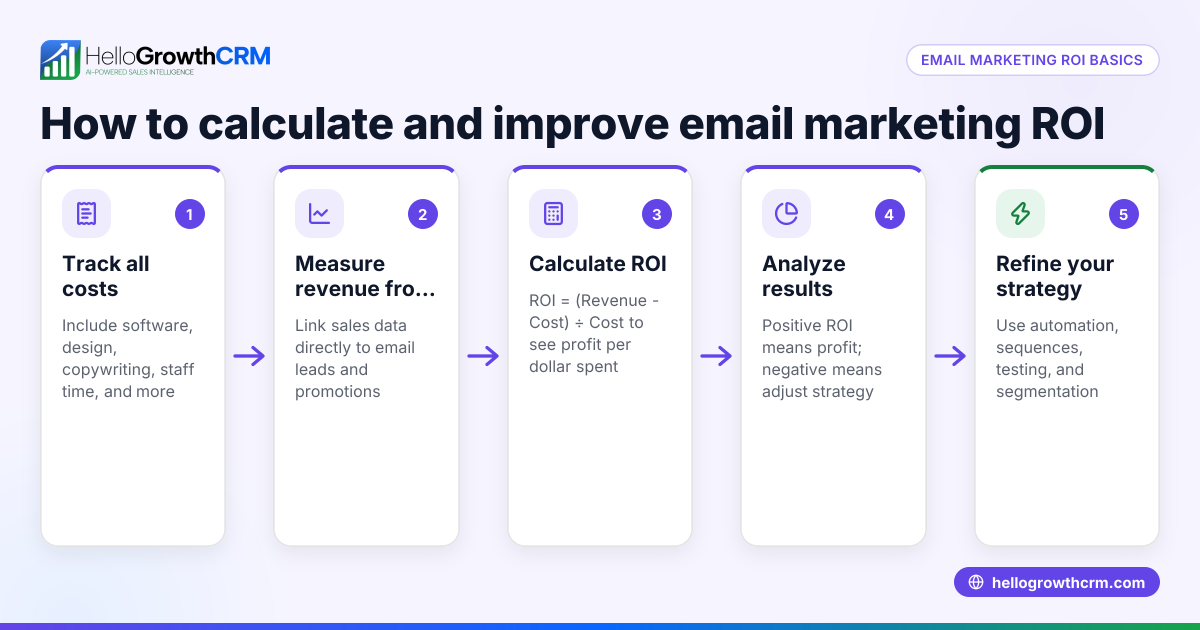
- Monitor responses and adjust: Review which emails get replies or clicks. Refine your messaging or timing based on performance data.
- Keep your list clean: Regularly remove unengaged contacts to maintain deliverability and engagement.
For more on automating follow-ups and managing team email visibility, see email automation and sequences.
Example (fictional figures)
A landscaping contractor in Charlotte, North Carolina, wants to launch a five-step email follow-up sequence to convert web leads.
- Lead list size: 500 emails
- Open rate assumption: 30%
- Click rate assumption: 10%
- Conversion rate assumption: 5%
Step 1: Send initial email to 500 leads.
Step 2: After 3 days, send follow-up to those who did not reply (assume 350 remain).
Step 3: Continue sending follow-ups every 3 days up to 5 emails total.
Calculations:
Initial emails sent = 500
Replies after 1st email = 500 × 30% × 5% = 7.5 ≈ 8 leads
Remaining leads = 500 - 8 = 492
Assuming similar response rates for follow-ups, total converted leads after sequence ≈ 25
This example shows how a structured sequence can nurture leads and increase conversions over time.
Common mistakes
- Not following up consistently: Leads often need multiple contacts. Prevent this by setting automated sequences that run on schedule.
- Ignoring replies: If a prospect replies, continuing to send emails annoys them. Use tools that stop sequences immediately upon reply.
- Using personal email accounts: This causes lost visibility and coordination issues. Use a shared inbox to keep the team informed.
- Sending irrelevant content: Generic messages reduce engagement. Segment your list and tailor emails accordingly.
- Over-emailing: Too many emails can cause unsubscribes. Space emails appropriately and monitor engagement.
For tips on managing inbound emails and sequences, see WhatsApp and SMS CRM.
How to Know If Your Email Marketing Is Working
You want to make sure your efforts pay off. Here are signs your email marketing is on the right track:
- Consistent engagement: You see steady opens and clicks from your recipients.
- Increasing responses: More prospects reply or take your desired action over time.
- Low unsubscribe rates: Few people opt out, indicating your content remains relevant.
- Positive feedback: Customers or leads mention your emails or respond with questions.
- Improved sales or leads: Your email campaigns contribute to business growth.
If you don’t see these signs, review your subject lines, message clarity, timing, and list segmentation. Regularly analyzing these factors helps you adjust and improve your strategy for better results.
Doing this in HelloGrowthCRM
HelloGrowthCRM offers a HelloMail shared inbox so your team can see replies to quotation emails on the deal, preventing missed responses. Its Sequences and campaigns feature lets you build automated five-step follow-ups over two weeks that stop as soon as a prospect replies. This automation saves time and keeps your outreach consistent without manual effort.
Frequently asked questions
How often should I send marketing emails? Send initial emails and follow-ups spaced a few days apart, typically over one to two weeks. Avoid daily emails to prevent overwhelming your leads.
What should I include in my email content? Focus on clear value propositions, a strong call to action, and personalization if possible. Keep emails concise and relevant to the recipient’s interests.
How do I track if my emails are working? Use email tools that track open rates, click rates, and replies. Analyze this data to adjust your messaging and timing.
Can I automate email follow-ups without spamming? Yes, automation sequences that stop immediately when a prospect replies prevent over-contacting. Segmenting your list also helps target the right audience.
How do I manage team responses to emails? A shared inbox inside your CRM lets your team see all replies linked to deals, improving coordination and follow-up.
For more on managing automated outreach, see email automation and sequences.
Key takeaways
- Organize and segment your email list before starting campaigns.
- Plan and automate multi-step follow-ups with clear stopping rules.
- Use shared inboxes for team visibility on email replies.
- Tailor email content to your audience and avoid over-emailing.
- Track engagement metrics to refine your approach.
- HelloGrowthCRM supports these steps with built-in email automation and shared inbox features.
Start improving your email marketing today. Start on the Free Forever plan (200 leads, no credit card).
Ready to put this into practice?
Set up your pipeline, WhatsApp follow-ups, and AI lead scoring in minutes — free, no credit card.
Try HelloGrowthCRM freeGet CRM tips in your inbox
Join thousands of sales professionals who get weekly insights on CRM strategy, AI automation, and pipeline optimization.

The HelloGrowthCRM team publishes guides on CRM strategy, AI sales tools, and revenue operations for small business sales teams.